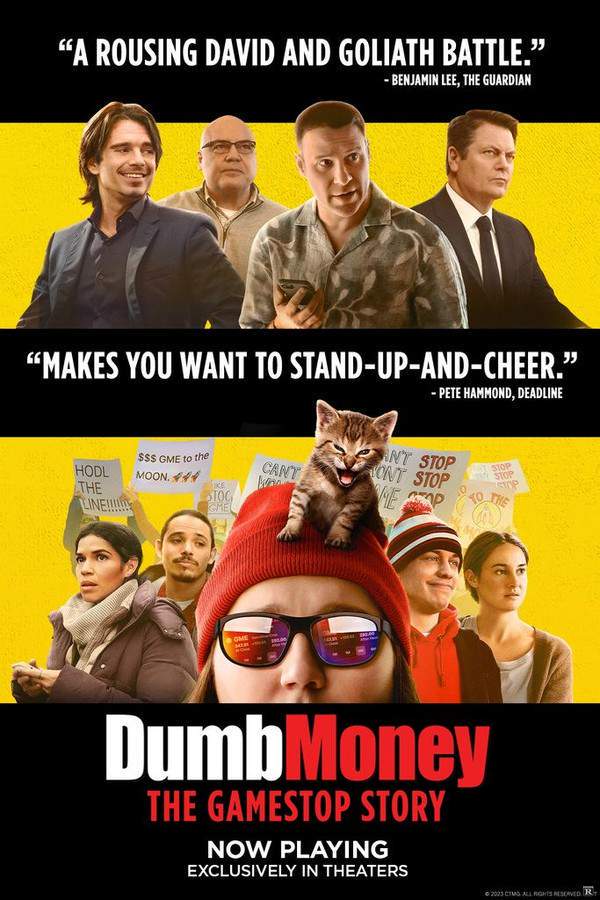
What Is Dumb Money About?
The premise of Dumb Money in 278 words, with nothing given away. The full story and the ending follow below.
In the early days of a pandemic‑shaken world, the clamor of Wall Street collides with the restless energy of internet forums where anyone with a Wi‑Fi signal can shout advice into a digital sea. The film captures that feverish blend of uncertainty and opportunity, painting a financial landscape that feels both absurd and oddly intimate—a place where a meme can echo louder than a quarterly report and a subreddit becomes a battlefield for everyday people.
Keith Gill is the unlikely heart of this storm. By day he crunches numbers as a modest analyst for a regional insurance firm, but by night he transforms into the fast‑talking, charismatic livestreamer known as “Roaring Kitty,” guiding a growing audience through the bewildering corridors of stock trading. At home, his steady partner Caroline offers a grounded counterpoint to his high‑octane pursuits, while his brother Kevin—ever skeptical—provides the familial tension that keeps his ambitions in check.
Around him, a rag‑tag community of ordinary investors discovers the thrill of collective action. United by a shared belief that the market’s gatekeepers can be challenged, they rally on platforms that feel part rally‑cry, part digital playground. The tone oscillates between sharp humor and electric urgency, reflecting a world where humor masks anxiety and where a single “buy” button can feel like an act of rebellion.
As the story unfolds, the audience is drawn into the palpable mix of hope, risk, and chaotic optimism that defines this modern crusade. The film asks what happens when everyday folks decide to rewrite the rules of a game long guarded by seasoned financiers, leaving viewers perched on the edge of a financial revolt that feels both personal and universally resonant.
What Happens in Dumb Money?
The complete story of Dumb Money, from the first scene to the last, in 658 words (about 3 minutes). Spoilers throughout. Names in the text link to 9 cast member pages.
Spoilers ahead
Keith Gill, portrayed by Paul Dano, is an average guy trying to make ends meet as a financial analyst at Mass Mutual in Brockton, Massachusetts. Despite his day job, he frequently immerses himself in the vibrant world of the stock market through the SubReddit r/WallStreetBets, where he livestreams his thoughts as the charismatic “Roaring Kitty.” Living with his wife, Caroline, played by Shailene Woodley, Keith often faces ridicule from his brother, Kevin, a hapless delivery driver portrayed by Pete Davidson, who dismisses his online escapades as frivolous nonsense.
As July 2020 arrives, alongside the ongoing COVID-19 pandemic, Keith makes a pivotal decision after noticing the plummeting stock prices of video game retailer GameStop. Believing it’s undervalued at just $3.85 per share, he invests his life savings and sells off $50,000 worth of other stocks to double down on GameStop’s potential. He passionately argues that a significant portion of gamers still purchase physical discs and that many buy used games through GameStop. His livestreams gain traction, attracting a growing audience of 412 loyal viewers who heed his stock advice.
As his followers begin buying shares, GameStop’s price rises to $10. However, skeptics like Kevin and peers continue to deride the venture. By January 2021, online activity on r/WallStreetBets alerts various hedge funds, including Melvin Capital Management, led by Gabe Plotkin, played by Seth Rogen, who have been short-selling GameStop, convinced it’s headed for failure.
In a twist of fate, Keith and the online traders rally to defend the stock against these hedge fund managers, sending GameStop’s stock price upwards, reaching $20. Under the belief that GameStop is a lost cause, Gabe shorts an additional 600,000 shares. This prompts a massive movement among retail investors, including Marcos, a GameStop employee played by Anthony Ramos, and a couple, Riri and Harmony, portrayed by Myha’la Herrold and Talia Ryder respectively, to buy up shares, mobilizing the full force of online traders.
Through the Robinhood trading app, this surge causes immense financial turmoil among hedge fund executives, culminating in Keith being celebrated as an unlikely financial wizard as GameStop stock skyrockets to $65, bringing him an astonishing $11 million in paper profits. Frustrated by his success, Gabe watches as Keith’s followers refuse to sell even when the price soars to $123, despite having lost $6.8 billion in short positions.
With retail investors now numbering around 8 million and maintaining their positions, the stock escalates to a staggering $350 a share, catching the attention of prominent financial circles, and even stirring discussions in the White House about the emerging conflict between retail investors and traditional finance.
However, complications arise when r/WallStreetBets faces temporary suspension due to inappropriate content, triggering panic and a sell-off of GameStop shares. The fallout forces Keith’s employers at MassMutual to threaten him with termination unless he resigns. Meanwhile, the Robinhood platform, co-founded by Vlad Tenev and Baiju Bhatt, played by Sebastian Stan and Rushi Kota, respectively, halts all buying of GameStop shares under pressure from Citadel LLC, leading to a dramatic plummet in stock price—from $483 to $140.
This intervention, however, triggers congressional investigations into the hedge funds, trading platforms, and the stock trades themselves, with Keith being interrogated as a supposed manipulator of the fervor surrounding GameStop. In a bold statement, he refutes any allegations of wrongdoing and champions the actions of retail traders.
As the dust settles, Keith remains steadfast in his shares, inspiring his audience to reengage with GameStop trading. The aftermath reveals how the financial landscape has shifted: investments have been lost, people’s lives have changed, and the financial markets are now wary of the power of retail investors. With the hedge funds stripped of their underestimations, Keith enjoys a quieter life as he capitalizes on his opportunity, gifting his brother an expensive car while deciding to step back from his online presence. In a closing remark, it serves as a stark reminder that the once-derided retail traders have irrevocably changed the dynamics of Wall Street.
Dumb Money Timeline: Every Key Event in Order
15 key events in the order they happen, from “Keith Gill's Financial Analyst Job” to “The Legacy of the Retail Investors”.
- 1
Keith Gill's Financial Analyst Job
Keith Gill works as a financial analyst at MassMutual in Brockton, Massachusetts. Despite his conventional job, he finds a passion for the stock market, engaging with others in online forums.
Where:Brockton, Massachusetts
- 2
Emergence of Roaring Kitty
In his free time, Keith adopts the persona 'Roaring Kitty' while livestreaming on the SubReddit r/WallStreetBets. His engaging personality earns him a loyal following of viewers interested in his stock market insights.
- 3
GameStop's Stock Plummet
In July 2020, amid the COVID-19 pandemic, Keith notices GameStop's stock plummeting to just $3.85 per share, which he believes is significantly undervalued. Seeing an opportunity, he decides to invest his life savings to capitalize on this potential.
When:July 2020
- 4
Investment and Livestream Growth
To invest heavily in GameStop, Keith sells off $50,000 worth of other stocks, positioning himself as a champion of the company. His conviction resonates with a growing audience, leading his livestreams to attract 412 enthusiastic viewers.
- 5
Initial Stock Price Surge
As more followers heed Keith's advice and buy shares, GameStop's price rises to $10. However, skepticism continues from his brother Kevin and others, who view this venture as nothing more than a gamble.
- 6
Hedge Funds Take Notice
By January 2021, r/WallStreetBets garners substantial online activity that catches the attention of various hedge funds, including Melvin Capital Management, led by Gabe Plotkin. They are concerned that the rising interest in GameStop could threaten their short positions.
When:January 2021
- 7
Retail Investor Rally
In a surprising turn, Keith and fellow retail investors push back against hedge fund short-sellers, causing GameStop's stock price to shoot up to $20. Gabe responds by shorting an additional 600,000 shares, further igniting retail excitement.
- 8
GameStop Price Explosion
Through the Robinhood app, retail investors collectively drive GameStop's stock to a staggering $65, resulting in Keith accumulating $11 million in paper profits. His success triggers outrage among hedge fund managers who are losing billions.
- 9
Stock Market Frenzy
As the number of retail investors swells to around 8 million, GameStop's shares soar to $350. This surge sparks conversations in financial circles and even reaches the White House, highlighting the stark dichotomy between retail and institutional investors.
- 10
Suspension of r/WallStreetBets
The subreddit faces a brief suspension due to inappropriate content, inciting panic among its investors. As fear commands the trading floor, there is a sell-off of GameStop shares, drastically affecting its market value.
Show the other 5 events of Dumb Money Hide the last 5 events
- 11
Robinhood's Trading Suspension
Under intense pressure from institutional players, the Robinhood app abruptly halts all buying of GameStop shares. This drastic measure results in the stock's rapid decline, plunging from $483 to $140 and igniting criticism from retail investors.
- 12
Congressional Investigations
In the aftermath of the trading chaos, congressional investigations are launched to probe the activities of hedge funds and trading platforms, with Keith called to testify. He firmly defends the retail investors, arguing their right to engage in the market they believe in.
- 13
Keith's Continued Commitment
Despite the controversies and pressure surrounding him, Keith remains resolute in holding onto his GameStop shares. His outer composure inspires his followers to trust in the investment, inciting them to continue trading amidst the turbulence.
- 14
Reflections on Retail Power
As the dust settles, it becomes evident that the dynamics of Wall Street have irreversibly changed. Keith experiences a quieter life but also chooses to gift his brother an expensive car, reflecting on the journey that brought him unexpected success.
- 15
The Legacy of the Retail Investors
The narrative concludes with a powerful observation that retail traders, once dismissed by the financial elite, have forever altered the economic landscape. Keith chooses to step back from his online presence, concluding his tale with newfound respect and understanding.
Who Are the Main Characters in Dumb Money?
5 characters, among them Keith Gill (Paul Dano), Caroline Gill (Shailene Woodley) and Gabe Plotkin (Seth Rogen): who each one is and the part they play in the story. Every profile links to the actor’s page.
-

Keith Gill (Paul Dano)
Played by Paul Dano
Keith Gill is a passionate financial analyst who immerses himself in the world of online trading while managing personal skepticism from those around him. Known as 'Roaring Kitty,' he exhibits a blend of charisma and determination, rallying everyday traders to believe in the potential of GameStop. His passion and risk-taking ultimately thrust him into the financial spotlight.
- 👨💼 Finance
- 📊 Risk-taker
- 🎤 Charismatic
-

Caroline Gill (Shailene Woodley)
Played by Shailene Woodley
Caroline Gill, Keith's supportive wife, balances reality with his ambitious ventures into the stock market. She represents the grounding presence that helps Keith navigate the highs and lows of financial upheaval. Her relationship with Keith highlights the personal stakes involved in investing.
- 👩❤️👨 Supportive
- 🤝 Partner
- 💬 Communicative
-
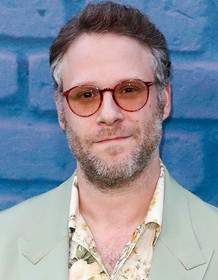
Gabe Plotkin (Seth Rogen)
Played by Seth Rogen
Gabe Plotkin is a hedge fund manager whose strategies come under fire due to Keith's actions in the stock market. His character personifies the clash between traditional finance and the growing power of retail investors. He represents the skepticism of established finance towards the changing dynamics.
- 💼 Hedge Fund
- ⚖️ Contrasting
- 🧩 Complex
-

Kevin Gill (Pete Davidson)
Played by Pete Davidson
Kevin Gill is Keith's younger brother, often dismissive of Keith's online stock trading ventures. He embodies skepticism and represents the voice of doubt among friends and family regarding unconventional strategies in finance. His character adds emotional weight to Keith's journey.
- 🚚 Delivery Driver
- 🤔 Skeptical
- 👨👦 Brother
-

Marcos Garcia (Anthony Ramos)
Played by Anthony Ramos
Marcos Garcia is a GameStop employee who becomes part of the movement inspired by Keith's views. His character reflects the everyday investor's perspective and the impact of community effort against established financial powers. He symbolizes the broader reach of retail investors.
- 💻 Employee
- 🌍 Community-focused
- 📊 Investor
Where and When Is Dumb Money Set?
Dumb Money is set in Brockton and Massachusetts (July 2020 - January 2021). Here is why the time and place matter to the story.
When
July 2020 - January 2021
This time period is marked by the COVID-19 pandemic, impacting everyday life and economic activities. It also witnessed a significant event in the stock market centered around GameStop, highlighting the conflict between retail investors and traditional financial institutions. It was a time where social media and online trading began to reshape the financial landscape.
Where
Brockton, Massachusetts
Brockton is a city in Massachusetts known for its rich history and vibrant community. It serves as the backdrop for Keith Gill's journey as he navigates the complexities of the stock market while living his everyday life. The city offers a juxtaposition of average living against the high-stakes world of finance.
- 📍 Location
- 💼 Finance
What Are the Themes of Dumb Money?
3 ideas the story keeps returning to, among them Financial Revolution, Online Communities and Underdog Triumph.
-
01
Financial Revolution
The movie explores the theme of a financial revolution brought by retail investors challenging hedge funds. It showcases the empowerment of individual traders resonating with communal strength through platforms such as r/WallStreetBets. The dynamics of Wall Street are irrevocably altered, reflecting a changing financial landscape.
-
02
Online Communities
The power of online communities is foregrounded where shared interests and goals lead to collective action. Keith's journey showcases how individuals can band together through digital platforms to create significant market movements. This theme reflects the changing nature of social connectivity in modern finance.
-
03
Underdog Triumph
Keith Gill’s rise from an average financial analyst to a celebrated figure highlights the classic underdog story. It represents how unconventional wisdom and passion can lead to significant outcomes, even against established giants. The triumph of the common man against odds becomes a central narrative.
How Does Dumb Money End?
The last act of Dumb Money and what it means, in 200 words. The ending lands as bittersweet. Big spoilers: read the plot summary first if you have not seen it.
The final act, in full
Dumb Money concludes with the ongoing impact of the GameStop short squeeze and the personal choices of those involved. After the chaos of the movement, Keith Gill, the central figure, remains unsure whether to sell his shares or hold onto them. In the end, he decides to buy more, feeling fulfilled that he has achieved his goal of challenging the big Wall Street firms and supporting the struggling company he believes in. His decision reflects the broader theme of the story—ordinary individuals taking a stand against powerful financial institutions, even if ultimately the market’s outcome is complicated and mixed. The film ends with Keith celebrating with his brother, signifying his personal victory and the moment when the ordinary crowd managed to make a significant impact on the stock market, challenging the narrative that only big money can control financial destiny. Despite the legal and technical battles that followed—including investigations and the controversial actions of trading platforms like Robinhood—the story highlights the resilience of everyday investors and their desire to fight back against perceived corporate unjustice. The ending leaves viewers with a sense of triumph, ambiguity, and hope for the power of collective action, even when the long-term consequences remain uncertain.
What Kind of Film Is Dumb Money?
Tense in tone, with fast pacing and a moderate story, going by the plot summary.
- Tone
- Tense
- Pacing
- Fast
- Story
- Moderate
- Intensity
- High
- Ending
- Bittersweet
A fast-paced and tense underdog story that builds into a chaotic financial frenzy, capturing the anxious thrill and bitter consequences of a modern-day class rebellion against Wall Street.
- underdog
- anxious
- triumphant
- frenetic
- urgent
- chaotic
- class warfare
- financial rebellion
- underdog story
- social media influence
Content notes: financial peril, pandemic setting.
Quiz
How well do you remember Dumb Money? Test yourself on the story.