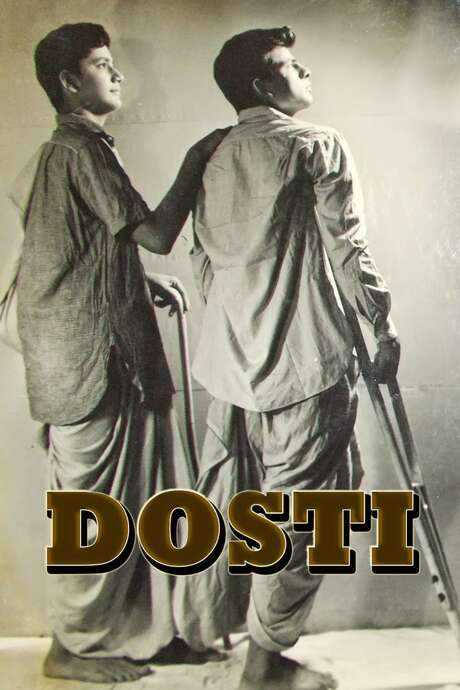
Dosti 1964

Directed by

Satyen Bose
Made by

Rajshri Productions
Where to Watch Dosti
See current US streaming, rental, and purchase options for Dosti (1964) via JustWatch.


Streaming availability powered by 
Dosti Plot Summary
Read the complete plot summary and ending explained for Dosti (1964). From turning points to emotional moments, uncover what really happened and why it matters.
Ramnath “Ramu” Gupta’s father, a factory worker, dies in an accident. When the factory refuses to pay the compensation due, his mother faints from shock and falls down the stairs. Ramu is also injured in an accident and becomes crippled. After being thrown out of his home, he roams the streets of Mumbai, penniless and broken.
There he meets Mohan [Sudhir Kumar], a blind boy with a similar hard background. Mohan’s sister Meena has left for Mumbai to work as a nurse to pay for her brother’s treatment. Mohan eventually left the village after his caretaker died.
Ramu is skilled at playing the harmonica, while Mohan excels at singing. They form a street duo, performing on the road to earn coins from passersby. They soon befriend a young girl, Manjula [Farida Dadi], sister of a wealthy man, Ashok [Sanjay Khan]. Manjula suffers from rheumatic heart disease, and the two boys hope she might help them change their fortunes.
The two friends visit Manjula and ask for a loan of sixty rupees—the exact amount needed for Ramu’s admission to school. Manjula’s brother rebuffs them and offers only five rupees. Feeling insulted, Mohan raises the rest by singing. Ramu is admitted to the school after an impressive entrance test. They move to a new house in a slum after someone tries to steal their savings while they sleep on the footpath. Their new neighbor, Mausi [Leela Mishra], lives with her teenage daughter and son, and warmly raises them as her own.
In school, Ramu shines academically despite being the regular target of ridicule by wealthier students who view him as a “street beggar.” The Headmaster [Abhi Bhattacharya] and the School Teacher [Nana Palsikar] look after him, and Sharma Ji eventually declares himself Ramu’s guardian. When Sharma Ji visits Ramu’s house, he notices the poor living conditions and suggests that Ramu move in with him, but Ramu refuses to leave Mohan.
One day, while singing, Mohan hears Ashok calling out to Meena and rushes to embrace his long‑lost sister, but she is ashamed of Mohan’s beggar state and refuses to recognize him. Meena is looking after Manjula, and a budding romance develops between her and Ashok. Meena confesses to him, and he consoles her that she will be with her brother soon.
Mohan senses Manjula while sleeping and tells Ramu about it. The two decide to visit her, but she dies. Ashok brings Mohan home one day and gives him Manjula’s chime as a remembrance. When he tries to tell Mohan about Meena, Mohan lashes out in rage and says that he feels alone in the world save for his friend Ramu.
Soon after, Ramu gets into trouble with some ruffians and is mistakenly arrested during a burglary. Sharma Ji goes to the police station and bails out Ramu on the condition that he will live with Sharma Ji and cut off contact with Mohan. Mohan, heartbroken, decides to visit him, but Sharma Ji does not allow him to talk to Mohan. Sad, Mohan roams the streets singing.
Sharma Ji suddenly dies, leaving Ramu devastated. Ramu is unable to pay the final exam fees and contemplates not taking the test. Mohan hears of this and decides to raise the money by singing in the streets, despite his ill health. He succeeds in earning the money and pays the fees without Ramu’s knowledge before falling ill and being admitted to the hospital. Meena cares for Mohan as he recuperates.
Ramu places first in the exams and learns of Mohan’s sacrifice. He rushes to the hospital to seek forgiveness, where Mohan tells him that he was never angry. The doctor informs Mohan about Meena, and Mohan forgives her. The movie ends with all of them in a loving embrace.
Dosti Timeline
Follow the complete movie timeline of Dosti (1964) with every major event in chronological order. Great for understanding complex plots and story progression.
Ramu's family tragedy and disability
Ramu's father dies in a factory accident, and the factory refuses to pay the due compensation. His mother faints from the shock and falls down the stairs. Ramu is also injured in an accident and becomes crippled.
Thrown out and hit the streets of Mumbai
After losing his home, a crippled and penniless Ramu roams the streets of Mumbai. He meets Mohan, a blind boy with a similar background who has a sister Meena in Mumbai. Mohan had left his village after his caretaker died.
Music as a lifeline
Ramu plays the harmonica while Mohan sings, and they sing on the road to earn money from passersby. The burgeoning duo becomes friends with a small girl named Manjula, sister of a rich man Ashok. Manjula suffers from rheumatic heart disease and the boys hope she might help them.
A loan bid and a sudden setback
Ramu and Mohan visit Manjula to ask for sixty rupees to enable Ramu's admission to school. Ashok's brother rebuffs them and gives only five rupees. Insulted, Mohan raises the rest by singing, and Ramu is admitted to the school after a strong entrance test.
New home and a surrogate family
On the eve of the next phase, someone tries to steal their money while they sleep on the footpath, forcing them to move to a new slum. They befriend Mausi and her teen children, who welcome them as their own.
Ramu excels at school; Sharma Ji intervenes
Ramu excels academically despite being mocked by wealthier classmates who see him as a 'street beggar.' The headmaster and a teacher named Sharma Ji watch over him, and Sharma Ji becomes his guardian. When Sharma Ji suggests Ramu move in with him, Ramu declines to stay away from Mohan.
Meena, Mohan, and the tragedy of Manjula
Mohan recognizes Meena after hearing her call to Ashok, but she is ashamed of his beggar status. Meena ministers to Manjula, who dies later. Ashok returns Manjula's chime to Mohan as a memory, and Mohan lashes out, feeling utterly alone except for Ramu.
A wrongful arrest and Sharma Ji's ultimatum
Ramu gets into trouble with ruffians and is arrested during a burglary. Sharma Ji visits the police station to bail him out, but only if Ramu will live with him and cut ties with Mohan. Mohan is heartbroken and wanders the streets, singing sad songs.
Sharma Ji's death and a failed final exam
Sharma Ji dies suddenly, leaving Ramu devastated. Ramu cannot afford the final exam fees, so he decides not to take it. Mohan is moved to raise the necessary money by singing, even while ill.
Mohan's sacrifice and Meena's care
Mohan collects money through singing on the streets, pays the exam fees unseen by Ramu, then falls ill and is admitted to the hospital. Meena cares for him during his recovery, keeping his condition a secret from Ramu.
Ramu's triumph and forgiveness
Ramu achieves first place in the examinations and learns of Mohan's sacrifice. He rushes to Mohan in the hospital to seek forgiveness, where Mohan says he was never angry with him. The doctor reveals that Meena's care helped Mohan recover, and forgiveness ensues.
A united embrace
The story ends with Ramu, Mohan, and Meena together in a warm embrace, symbolizing their enduring friendship and hope for the future. They vow to support each other in continuing their studies and pursuing their dreams, despite the hardships they've faced. The film closes on a note of shared resilience and a brighter, united future.
Dosti Characters
Explore all characters from Dosti (1964). Get detailed profiles with their roles, arcs, and key relationships explained.
Ramnath 'Ramu' Gupta
Ramu is the son of a factory worker who dies, leaving his family broken. He is crippled after an accident and ends up penniless on the streets of Mumbai. He discovers his talent for the harmonica and, with Mohan, uses street performances to earn a living while pursuing education and truth in friendships.
Mohan (Sudhir Kumar)
Mohan is a blind boy who shares Ramu's harsh background. He sings on the streets to survive and forms a close bond with Ramu. He sacrifices his own health and comfort to raise money for Ramu's tuition, and his unwavering friendship sustains them both.
Manjula
Manjula is the sister of Ashok and suffers from rheumatic heart disease. Her illness and presence set off emotional currents—she becomes a focal point for the boys' hopes and for a budding romance with Ashok—and her death marks a turning point in the story.
Ashok (Sanjay Khan)
Ashok is a wealthy young man, Manjula's brother, who becomes emotionally involved with Meena. He embodies the tension between affluence and compassion, offering sympathy and support to Meena while navigating family duty and romantic feelings.
Meena
Meena is Mohan's sister who leaves her village for Mumbai to work as a nurse to finance her brother's treatment. She cares for Manjula and Meena's relationship with Ashok adds a layer of social complexity, with a sense of duty to family balanced against personal love.
Mausi
Mausi runs a small home and treats Ramu and Mohan as her own sons. She, along with her teenage daughter and son, provides warmth, shelter, and a sense of family in the slums.
Mrs. Gupta
Ramu's mother, whose collapse after her husband's death embodies the fragility of families facing industrial hardship. Her pain and vulnerability reflect the costs of poverty and tragedy on a mother's heart.
Sharma Ji
A respected teacher who becomes a guardian figure for Ramu. He notices the neighborhood's dangers and offers support, even as circumstances pull him toward a deeper guardianship later in the story.
Headmaster (Abhi Bhattacharya)
The head of the school who, along with the School Teacher, looks after Ramu and supports his education context, helping him navigate the early hardships of joining school life.
School Teacher (Nana Palsikar)
A supportive figure at the school who aids Ramu's adjustment and learning, contributing to a sense of belonging within the educational environment.
Ashok's Employee
Moolchand serves as a worker in Ashok's household, representing the everyday staff who keep a wealthy household functioning and who witness the interactions between class and family.
Dosti Settings
Learn where and when Dosti (1964) takes place. Explore the film’s settings, era, and how they shape the narrative.
Time period
1960s
The film is set in post-independence India, during a time of rapid urban growth and economic disparity in cities like Mumbai. Street life, street performances, and a push for education reflect the era's social dynamics. The period highlights the emergence of modern institutions alongside enduring poverty, shaping the characters' opportunities and choices.
Location
Mumbai, India
The story unfolds on the crowded streets and cramped slums of Mumbai, shifting between street corners where Ramu and Mohan sing and small, modest homes like Mausi's. The city acts as both a harsh backdrop and a source of small mercies, where education and friendship can arise amid poverty. The contrast between the slums and the more affluent circles around Ashok's family frames the characters' struggles and hopes.
Dosti Themes
Discover the main themes in Dosti (1964). Analyze the deeper meanings, emotional layers, and social commentary behind the film.
🤝
Friendship
Ramu and Mohan form a deep, supportive bond that sustains them through poverty and social ridicule. Their partnership blends mutual aid with shared dreams of education and a better life. The film uses their friendship to explore loyalty, trust, and the healing power of companionship.
🕊
Sacrifice
Mohan's decision to raise money for Ramu's tuition, despite his own illness, stands at the heart of sacrifice in the story. He endures hardship to keep a promise of friendship and to help his friend succeed. The narrative shows that selflessness can be quiet and steadfast, binding the characters together.
⚖️
Inequality
Ramu faces ridicule from wealthier peers, highlighting class divides within education and urban society. The school environment and guardianship dynamics challenge social hierarchies and expectations. The urban contrast between slum life and formal institutions frames the characters' choices and aspirations.
🎶
Music
Music and singing are lifelines for the main characters, turning street performances into moments of dignity and connection. The harmonies and songs symbolize hope and solidarity in the face of adversity. Through their music, Ramu and Mohan navigate loneliness and find a path toward education and friendship.

Coming soon on iOS and Android
The Plot Explained Mobile App
From blockbusters to hidden gems — dive into movie stories anytime, anywhere. Save your favorites, discover plots faster, and never miss a twist again.
Sign up to be the first to know when we launch. Your email stays private — always.
Explore the mobile appDosti Spoiler-Free Summary
Discover the spoiler-free summary of Dosti (1964). Get a concise overview without any spoilers.
In the bustling, rain‑slick streets of Bombay, a young boy grapples with the sudden loss of his family. The tragedy leaves him alone, navigating a city that pulses with both opportunity and indifference. Beneath the humming traffic and crowded markets, his world is defined by the constant search for stability and a glimpse of a future that feels just out of reach.
Amid the chaos he encounters Mohan, a blind street musician whose voice carries the sorrow and hope of countless passersby. Their meeting sparks an unlikely partnership: one with a talent for playing the harmonica, the other whose singing draws crowds. Together they turn the city’s sidewalks into a stage, their performances a fragile bridge between survival and aspiration, echoing the rhythm of a city that never truly sleeps.
Their journey soon intertwines with that of Meena, a nurse who has left her hometown in pursuit of a cure for her brother’s ailment, and Manjula, a kindly girl burdened by a fragile heart. Both women become focal points of the boys’ dreams, offering glimpses of compassion and the promise of education that could lift them from the margins. The quartet moves through the layered neighborhoods of the metropolis, each step tinged with the quiet determination to rewrite their destinies.
The film breathes a blend of grit and tenderness, painting Bombay as both a relentless obstacle course and a cradle of unexpected alliances. Its tone balances stark realism with an undercurrent of optimism, inviting viewers to feel the pulse of street life while rooting for the resilient spirits that refuse to surrender to circumstance. The story is a heartfelt portrait of friendship, perseverance, and the simple yet profound desire to belong.
Movies with Similar Twists and Themes
Uncover films that echo the narrative beats, emotional arcs, or dramatic twists of the one you're exploring. These recommendations are handpicked based on story depth, thematic resonance, and spoiler-worthy moments — perfect for fans who crave more of the same intrigue.



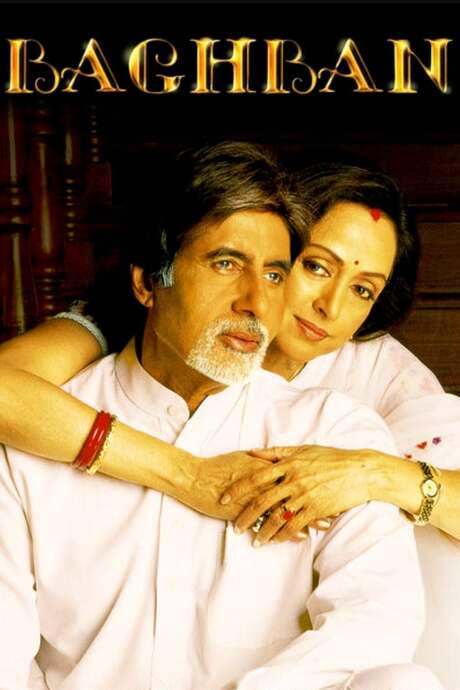


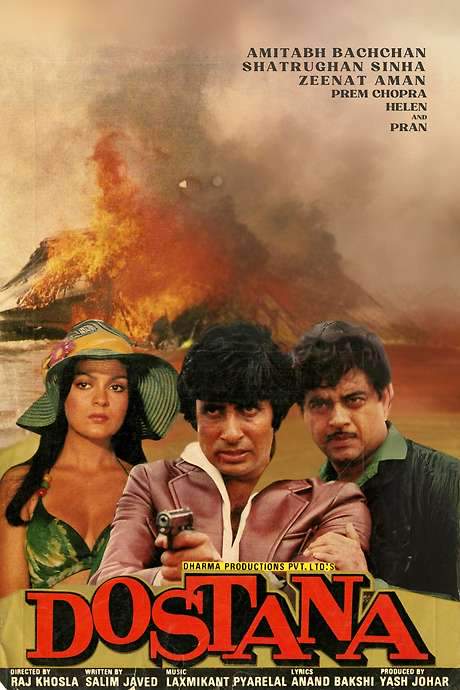
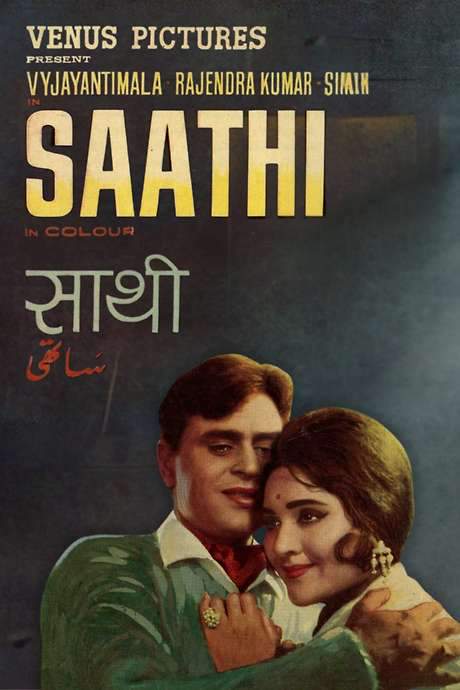

Featured on this page

What's After the Movie?
Not sure whether to stay after the credits? Find out!
Check out our other apps:

SAT Sphere
Build confidence for the Digital SAT.

Mori Atlas
Discover wild places worth protecting.

Luntero
Search smarter for a home in Amsterdam.

Plot Explained
Unravel movie endings and hidden clues.

Pokechamp
Dive into Pokémon data and battle logic.

Driving Theory
Get ready for your European theory test.

Movie Dust
Plan your next cinema trip with ease.

Musemap
Find art and culture as you travel.

Selkobase
Compare credentials before committing.

Local Manual
Turn an unfamiliar country into practical next steps.

Lernavi
Compare school systems before your next move.

GymRoam
Find a workout stop wherever your plans take you.
Explore Our Movie Platform
New Movie Releases (2026)
Famous Movie Actors
Top Film Production Studios
Movie Plot Summaries & Endings
Major Movie Awards & Winners
Best Concert Films & Music Documentaries
Movie Collections and Curated Lists
© 2026 What's After the Movie. All rights reserved.
Privacy Policy