
Donald Trump’s The Art of the Deal: The Movie 2016

Directed by
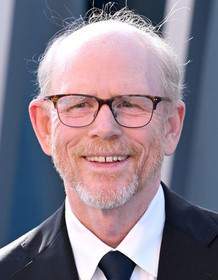
Ron Howard
Made by
Funny or Die
Donald Trump’s The Art of the Deal: The Movie Plot Summary
Read the complete plot summary and ending explained for Donald Trump’s The Art of the Deal: The Movie (2016). From turning points to emotional moments, uncover what really happened and why it matters.
Director Ron Howard presents a curious, tongue‑in‑cheek look at a long‑lost “movie of the week” that pretends to adapt Donald Trump’s The Art of the Deal, with Johnny Depp portraying the businessman. The film opens in 1986, when a young boy stumbles into Trump’s office clutching a copy of the book, and a call from Merv Griffin, Patton Oswalt, sets the stage as Griffin refuses to sell him the Taj Mahal Casino and Resort in Atlantic City. Trump proceeds to recount his background and personal history to educate the boy.
Chapter 1: The Art of Intimidating Rent Controlled Tenants
Set in 1983, the story follows Trump meeting a homeless vagrant and persuading him to terrify the tenants living in one of his buildings, illustrating his ruthless approach to expanding his real estate empire and the leverage he believes he can wield.
Chapter 2: The Art of Defeating Totally Bogus Discrimination Lawsuits
In a 1973 frame, Trump clashes with Mayor Ed Koch, [Henry Winkler], and scouts a path around civil rights charges by aligning with club owner Igor Cassini. He hires Roy Cohn, [Paul Scheer], to lead the fight, and their efforts manage to win. After Cohn’s death from AIDS, Jerry Schrager becomes Trump’s new lawyer, a change that shapes the legal maneuvers surrounding his ventures, as the narrative moves through a rapid sequence of confrontations and courtroom strategies.
Trump also performs a rap about litigation with hip‑hop group The Fat Boys, a moment that heightens the sense of spectacle and satirical tone as the plot shifts into the next chapter.
Chapter 3: The Art of Suing Those Losers at the NFL
Trump recounts his feud with Pete Rozelle over the ownership and status of the New Jersey Generals, initiating a high‑profile antitrust lawsuit. A judge ultimately rules in Trump’s favor, but the damages awarded are a symbolic $1, underscoring the performative nature of the conflict. As the narrative unfolds, the young boy’s name is revealed to be Jose, prompting a brief commercial cut that leads to another replacement—this time a new, Caucasian boy stepping into the scene.
Ivana enters the office, Michaela Watkins recounting her time at Trump Castle in Atlantic City and her perspective on the enterprise, adding a personal lens to the saga.
Chapter 4: The Art of Buying a Casino from the Hilton Family
Trump’s journey to acquire a casino continues as he meets Barron Hilton, [Stephen Merchant], who agrees to sell him the property, marking a pivotal expansion of his entertainment footprint and signaling the ongoing push to consolidate influence in Atlantic City.
Chapter 5: The Art of Marrying a Gorgeous Immigrant
The tale moves to 1977, recounting Trump’s marriage to Ivana, and noting that ALF served as best man, a detail that adds to the absurdity and surreal humor threading through the chapters. [Paul Fusco] brings ALF to life in this retelling, blending celebrity satire with pop‑culture iconography.
Trump’s effort to renegotiate with Griffin persists, while his architect Der Scutt presents his design for the Taj Mahal. [Jack McBrayer] appears in the cast as Der Scutt, contributing to the sense of whimsy and parody that threads the film’s sections together.
As the production continues, the replacement of boys who circulate through the office underscores the satirical commentary on publicity, image, and manufactured eras, while the story moves toward a denouement that ties together ambition and consequence.
The Taj Mahal and the Trump Tower arc concludes with a tense sequence in which Trump negotiates the air rights and visual impact of his constructed vision. He consults Walter Hoving, [Robert Morse], of Tiffany & Co., about air rights above the building, while protesters from the Metropolitan Museum of Art voice objections to the project. The narrative underscores a tension between cultural preservation and a sprawling, logo‑driven empire.
After the boy finally finishes his lesson, Merv Griffin relents and sells Trump the Taj Mahal, enabling the film’s late‑stage ambitions to reach their apex. A time traveler from 2016 then enters, intent on stopping Trump from running for president. The 2016 Trump appears and eliminates the time traveler, even seemingly killing Doc Brown, [Christopher Lloyd], to prevent his Back to the Future legacy from ever existing. The climactic moment hints at a body swap as the two attempt to redefine what will come next, with the birthday candles for Trump’s 40th birthday providing a bizarre capstone to the meta‑narrative.
In a post‑credit moment, Ron Howard reflects on the project’s unintended consequences, suggesting the film’s flaws have forced him to question his passion for filmmaking as he disposes of the videotape.
Overall, the piece unfolds as a sprawling, satirical collage that blends real names with fantastical detours, tracking a fictionalized portrait of ambition, media spectacle, and the sometimes slippery line between narrative and self‑advertisement.
Donald Trump’s The Art of the Deal: The Movie Timeline
Follow the complete movie timeline of Donald Trump’s The Art of the Deal: The Movie (2016) with every major event in chronological order. Great for understanding complex plots and story progression.
Opening scene in 1986: boy visits Trump's office
The film opens with a young boy stumbling into Trump's office while clutching a copy of The Art of the Deal. A phone call from Merv Griffin sets the stage as Griffin refuses to sell him the Taj Mahal. Trump then proceeds to recount his background and personal history to educate the boy.
Chapter 1: Intimidating rent-controlled tenants (1983)
Set in 1983, Trump encounters a homeless vagrant and pressures him to terrify the tenants in one of his buildings. The move illustrates his ruthless approach to expanding his real estate empire. The scene uses the mock-lesson framing to show how he wields intimidation as a business tool.
Chapter 2: 1973 clash with Ed Koch and allies
In a 1973 frame, Trump clashes with Mayor Ed Koch and explores ways to dodge civil rights charges by aligning with club owner Igor Cassini. He hires Roy Cohn to lead the legal fight, setting a pattern of aggressive, high-profile tactics. The chapter presents the beginnings of a long, combative legal era.
Chapter 2: Roy Cohn hired to lead the defense
Roy Cohn is brought in to direct the civil battles, shaping the defense and courtroom strategies. The narrative follows the aggressive maneuvers that define Trump's early legal battles. The chapter foreshadows the later transition to Jerry Schrager after Cohn's death.
Chapter 2: Cohn's death and Schrager takes over
The death of Roy Cohn ushers in a shift as Jerry Schrager becomes Trump's new lawyer, changing the tone of the legal maneuvers surrounding his ventures. The narrative emphasizes the turnover in legal strategy amid ongoing battles. The moment marks a transition to new approaches in the courtroom.
Chapter 2: The Fat Boys rap about litigation
Trump performs a rap about litigation with the Fat Boys, heightening the satirical tone of his legal battles. The musical interlude adds a layer of theatricality to the proceedings. It signals a shift in the film's mood toward spectacle and parody.
Chapter 3: NFL/USFL feud and antitrust ruling
Trump recounts his feud with Pete Rozelle over ownership of the New Jersey Generals and a high-profile antitrust lawsuit. A judge ultimately rules in Trump's favor, but the damages awarded are a symbolic $1, underscoring the performative nature of the conflict. The episode emphasizes the performative, theatrical side of his battles.
Chapter 3: Ivana's entrance and Trump Castle anecdotes
Ivana enters the office, and a personal perspective on the empire is offered through a recounting of time at Trump Castle. The scene broadens the cast of voices and adds a domestic lens to the tale. Her account helps frame the enterprise as a public spectacle as well as a business.
Chapter 4: Buying a casino from the Hilton family
Trump pursues a casino purchase from Barron Hilton, marking a pivotal expansion of his Atlantic City footprint. Hilton's sale signals a turning point in consolidating influence over the gaming landscape. The sequence heightens the sense of a growing, multi-front empire.
Chapter 5: Marrying Ivana and ALF as best man
The tale moves to 1977, recounting Trump's marriage to Ivana, with ALF serving as best man. Der Scutt presents his design for the Taj Mahal, blending architectural ambition with the film’s whimsical humor. The chapter ties personal life to the ongoing production and publicity machine.
The Taj Mahal and Trump Tower air-rights arc
The arc culminates in tense negotiations over air rights and the visual impact of the constructions, drawing protest from Met Museum insiders. Trump consults Walter Hoving of Tiffany & Co. as concerns about scale and cultural costs rise. The sequence frames a clash between spectacle and cultural preservation.
Griffin relents and sells the Taj Mahal
After the boy finishes his lesson, Merv Griffin relents and sells Trump the Taj Mahal, enabling the project’s late-stage ambitions to reach their apex. The sale marks a turning point in Trump’s Atlantic City empire. The moment ties together the film’s satire with tangible forward motion.
Time travel arrives: 2016
A time traveler from 2016 enters, intent on stopping Trump from running for president. The meta-fictional device introduces a time-travel motif that threads through the film's final act. The sequence blurs the line between history and fantasy.
Climax: 2016 Trump defeats time traveler and Doc Brown
The 2016 Trump appears and eliminates the time traveler, seemingly killing Doc Brown to prevent Back to the Future’s legacy from existing. The moment plays as a surreal reversal of cinematic history. It reinforces the film’s chaotic satire about destiny and fame.
Birthday candles: 40th birthday capstone
The climactic meta-narrative places Trump at his 40th birthday, with surreal candle moments that cap the film’s wild ride. The scene laces personal milestone with the broader commentary on ambition and spectacle. It leaves the audience with a bizarre, symbolic image of the era.
Post-credits: director’s reflection
In a post-credits moment, Ron Howard reflects on the project’s unintended consequences and disposes of the videotape. The director’s aside casts a final wink at the film’s self‑aware critique of Hollywood and publicity. It closes the metafictional loop with a quiet, reflective note.
Donald Trump’s The Art of the Deal: The Movie Characters
Explore all characters from Donald Trump’s The Art of the Deal: The Movie (2016). Get detailed profiles with their roles, arcs, and key relationships explained.
Donald J. Trump (Johnny Depp)
The central figure and narrator of the piece, a brash real-estate mogul whose gleaming ambition drives him to manipulate markets, people, and public perception. He revels in power plays, persuasive rhetoric, and larger-than-life spectacle, often blurring fact and performance. His arc demonstrates how a relentless appetite for control shapes both empire-building and personal myth.
Ivana Trump (Michaela Watkins)
A key voice in recounting Trump Castle and the personal side of the empire, she provides a candid look at life inside the glittering business machine. Her perspective adds a human dimension to the spectacle, highlighting relationships, power dynamics, and private ambition within a public enterprise. Her presence anchors the marriage-as-brand motif in the narrative.
Roy Cohn (Paul Scheer)
Trump's hired legal firebrand, leading aggressive strategies to defy charges and push through his plans. His ruthless, combative approach encapsulates a cynical view of law as a tool for advantage. The character’s arc foreshadows the lasting consequences of power-driven legal maneuvering.
Barron Hilton (Stephen Merchant)
Hotelier who becomes a gatekeeper and negotiator in Trump's casino acquisition, signaling a pivotal expansion of influence. His involvement marks a turning point in the empire-building narrative, balancing business pragmatism with the drama of high-stakes deals. He embodies the intersect of corporate power and entertainment ambition.
Der Scutt (Jack McBrayer)
Architect of the Taj Mahal's vision and a symbolic figure of design-driven spectacle. His role highlights how architecture becomes a stage for ambition, branding, and public display. He also appears in a way that underlines the film’s playful, surreal tone.
Merv Griffin (Patton Oswalt)
Media mogul who holds the line on selling the Taj Mahal, then relents later, illustrating the tension between prestige and negotiation. His role frames the deal-making as entertainment and power, echoing the era's media-industrial complex. The character's interaction with Trump heightens the satire of celebrity-led commerce.
Ed Koch (Henry Winkler)
Mayor who appears during a critical clash over discrimination and political maneuvering, representing urban governance and its conflicts with Trump's expansion. His involvement places the story within a larger city-politics context. The portrayal blends real historical figures with the film’s satirical framing.
Walter Hoving (Robert Morse)
Tiffany & Co. executive consulted on air rights and the building's cultural footprint, illustrating the clash between luxury branding and architectural scale. His guidance emphasizes the veneer of refinement in a sprawling, consumer-culture empire. The scene underscores the tension between artful display and practical constraints.
Doc Brown (Christopher Lloyd)
A meta-time traveler figure whose presence introduces a sci-fi twist and a cliff-hanging body-swap energy at the narrative’s end. His interactions with Trump contribute to the film’s playful critique of legacy and history. The character embodies the film's surreal approach to storytelling.
Alf (Paul Fusco)
Pop-cultural icon who appears as best man in a joke-heavy moment, blending celebrity whimsy into the real estate saga. His cameo heightens the film’s collage-like structure, adding another layer of absurdity. The moment reinforces the satire of celebrity-sponsored events in business life.
Kid #4 (Jacob Tremblay)
A young observer in the office who serves as the lens through which the audience experiences the tale’s moral and speculative turns. The character’s narrative arc underscores the film’s commentary on publicity, image, and the making of a public figure. His interactions anchor the chapter-driven structure of the story.
Donald Trump’s The Art of the Deal: The Movie Settings
Learn where and when Donald Trump’s The Art of the Deal: The Movie (2016) takes place. Explore the film’s settings, era, and how they shape the narrative.
Time period
1973–1986, with a 2016 meta twist
The narrative unfolds across the 1970s and 1980s, charting key years like 1973, 1977, 1983, and 1986 as chapter anchors. It follows Trump’s real estate blitz, court battles, and casino ambitions against the backdrop of political figures and cultural touchstones of those decades. A 2016 time-travel interruption introduces a post-2010s frame that recontextualizes the tale as satire about legacy and media spectacle.
Location
New York City, Atlantic City
The action weaves between New York City and Atlantic City, reflecting Trump's ascent from a Manhattan office to the casino belt of New Jersey. Atlantic City serves as the primary playground for high-stakes deals, hotel openings, and elaborate spectacle around the Taj Mahal and Trump Castle. The story uses the boardwalks, glitzy hotels, and waterfront skyline to contrast public triumph with private maneuvering.
Donald Trump’s The Art of the Deal: The Movie Themes
Discover the main themes in Donald Trump’s The Art of the Deal: The Movie (2016). Analyze the deeper meanings, emotional layers, and social commentary behind the film.
💼
Ambition
Ambition drives the central narrative, pushing Trump toward ever larger bets and bold public personae. The film satirizes how calculated risk, branding, and performance propel a business empire forward. Each chapter showcases strategic moves that blend personal desire with public showmanship.
⚖️
Power & Law
The pursuit of influence collides with legal and political obstacles, from discriminatory lawsuits to antitrust skirmishes. The cast hires aggressive lawyers and maneuver around regulations to shape outcomes. The satire reveals how money, fame, and legal tricks can bend rules and realities.
🎬
Media Satire
The story treats publicity as a weapon, turning headlines, cameos, and pop-culture icons into plot devices. It revels in surreal set-pieces—musical rap about litigation, time-travel cameos, and celebrity crossovers—to question authenticity and spectacle. The film uses meta-narrative glitches to poke fun at the era’s obsession with image.

Coming soon on iOS and Android
The Plot Explained Mobile App
From blockbusters to hidden gems — dive into movie stories anytime, anywhere. Save your favorites, discover plots faster, and never miss a twist again.
Sign up to be the first to know when we launch. Your email stays private — always.
Explore the mobile appDonald Trump’s The Art of the Deal: The Movie Spoiler-Free Summary
Discover the spoiler-free summary of Donald Trump’s The Art of the Deal: The Movie (2016). Get a concise overview without any spoilers.
In a self‑referential swirl of business myth‑making, a lost‑looking feature is presented as a cinematic companion to a famous bestseller. Ron Howard opens the film by claiming he has unearthed a forgotten piece of cinema that was written, directed, and even starred around the charismatic mogul whose name has become synonymous with ambition. Set against the glittering backdrop of 1980s Manhattan and the neon‑lit promise of Atlantic City, the world feels simultaneously opulent and absurd, a place where skyscraper silhouettes dominate the skyline and boardroom negotiations echo like high‑stakes theater. The premise positions the audience inside the private office of a man who has turned deal‑making into an art form, inviting a curious look at the mechanics behind his rise.
At the heart of the story sits the larger‑than‑life figure of Donald Trump, a man whose confidence and flair for spectacle are as much a part of his brand as the properties that bear his name. He is surrounded by a cast of colorful personalities—a brash talk‑show host, a seasoned real‑estate designer, and a striking partner whose own background adds an international flavor to the narrative. Their interactions are delivered with a tone that oscillates between earnest business lecture and tongue‑in‑cheek satire, blending glossy production design with moments of playful meta‑commentary. The film’s style leans into bold color palettes, kinetic editing, and a soundtrack that hints at the era’s excess, all while maintaining a slightly satirical edge that keeps the viewer aware of its own theatricality.
The story promises a deep dive into the “art” of negotiation, real‑estate ventures, and the pursuit of a luxurious lifestyle, all framed through a mix of personal anecdote and larger cultural commentary. By weaving in a hint of surreal, time‑defying intrigue and breaking the fourth wall, the film crafts a mood that is both immersive and questioning, leaving the audience eager to discover what drives a man who has turned every deal into a public performance.
Featured on this page

What's After the Movie?
Not sure whether to stay after the credits? Find out!
Check out our other apps:

SAT Sphere
Build confidence for the Digital SAT.

Mori Atlas
Discover wild places worth protecting.

Luntero
Search smarter for a home in Amsterdam.

Plot Explained
Unravel movie endings and hidden clues.

Pokechamp
Dive into Pokémon data and battle logic.

Driving Theory
Get ready for your European theory test.

Movie Dust
Plan your next cinema trip with ease.

Musemap
Find art and culture as you travel.

Selkobase
Compare credentials before committing.

Local Manual
Turn an unfamiliar country into practical next steps.

Lernavi
Compare school systems before your next move.

GymRoam
Find a workout stop wherever your plans take you.
Explore Our Movie Platform
New Movie Releases (2026)
Famous Movie Actors
Top Film Production Studios
Movie Plot Summaries & Endings
Major Movie Awards & Winners
Best Concert Films & Music Documentaries
Movie Collections and Curated Lists
© 2026 What's After the Movie. All rights reserved.
Privacy Policy