
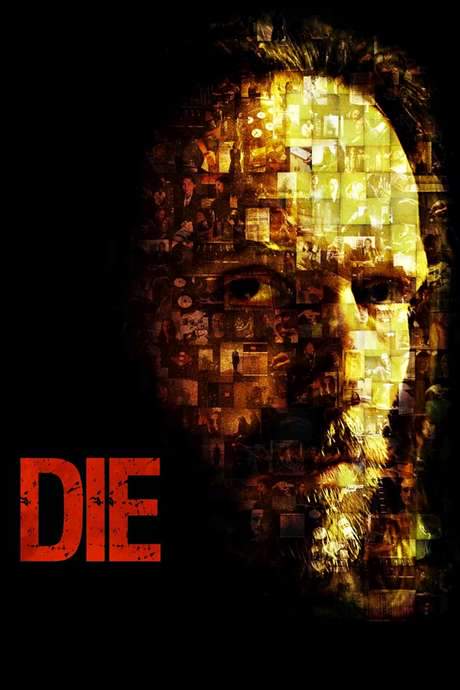
Die 2010

Directed by

Peter Miller
Made by

Caramel Films
Die Plot Summary
Read the complete plot summary and ending explained for Die (2010). From turning points to emotional moments, uncover what really happened and why it matters.
Six people on the road to self-destruction wake up in cells inside a surreal facility, with no memory of how they arrived or why they’re there. The situation quickly tightens into a tense and unsettling game, as an insane captor corners them and imposes a ruthless test that will decide each other’s fates. The captives—Sofia Valenti, Caterina Murino; Mark Murdock, Elias Koteas; Jacob, John Pyper-Ferguson; Diane Robinson, Patricia McKenzie; Melody Chambers, Katie Boland; and Claire, Simone-Elise Girard—find themselves stripped of their pasts and forced into a deliberate dance of risk and consequence.
As the game unfolds, the captives are arranged into pairs and must confront a chilling decision mechanism: one member must roll a die to determine how many bullets the other will face, a grim rule that transforms chance into survival. The film presents the dice-and-deadly-setup with a stark, clinical urgency, illustrating how fear, guilt, and desperation drive each choice. For instance, a man who had planned to end his own life is pressed to roll and define the number of chances he’ll grant the other captive to keep living or to fall victim to the next move in the macabre sequence. The tension of these moments—and the way the die’s result twists a relationship from trust to betrayal—becomes the beating heart of the narrative.
Meanwhile, the captives’ backstories surface in fragments, pieces of guilt and past trauma that the film uses to color the stakes—but these backstories are, in the view of some viewers, not particularly rich or surprising. The sections with the villain and the people carrying out the cruelty land the film’s strongest, most unsettling notes, delivering the core suspense and menace that keep the hour moving. The cinematography leans into the claustrophobia of glass prison cubes and dim, clinical lighting, intensifying the sense that every action could tip the balance between life and death.
Interwoven with the central experiment are pursuit threads that show up as investigators piece together clues. A pair of FBI or investigative figures works to track the kidnapped individuals and connect the scattered breadcrumbs left by the captor’s elaborate scheme, gradually pulling the threads toward a fuller, if still partial, understanding of the why behind the nightmare.
The movie aims for a lean, high-stakes horror premise—a PG-13 take on a Saw-like scenario—focusing on dialogue, tension, and the moral calculus of each choice under pressure. While some moments meet that goal with effective dread and a chilling cat-and-mouse rhythm, other parts drift toward conventional thriller territory, with predictability dampening the impact for some viewers. That said, the film still lands several memorable beats, particularly in the dynamic between the captors and the forced participants, and it offers a compact, watchable ride for fans of restrained, cerebral horror. If you’re drawn to stories where a game of chance collides with the fragility of human life, the setup provides enough intrigue and grim atmosphere to leave an impression, even as the heavier emotional payload and some narrative twists may feel underdeveloped in the final stretch.
Die Timeline
Follow the complete movie timeline of Die (2010) with every major event in chronological order. Great for understanding complex plots and story progression.
Awakening in a surreal facility
Six strangers wake up in uneasy cells within a surreal facility. They have no memory of how they arrived or why they are there, and the atmosphere hints at something deliberate and dangerous. Confusion and fear set the tone for what feels like a twisted trap.
Captives introduced one by one
The film introduces each captive to the audience, hinting at troubled pasts and the reasons they might have sought self-destruction. The introductions build a sense of personal baggage that the game will exploit. Viewers are invited to compare the six lives quickly presented to them.
The glass prison and a chilling mandate
The captives realize they are confined in glass prison cubes as a man appears to inform them that they must play a life-or-death game. The setup is clinical and cold, emphasizing control and spectators. The rules of the game are about to unfold before their eyes.
Past suicides become the trigger
It is revealed that each captive has, at some point, attempted suicide, tying their fates to the game. They are told they will be paired in teams and that one person will roll a die to determine how many bullets the other must face. The premise weaponizes their own histories against them.
Teams formed and the die is cast
Pairs are formed, and the dice become the controlling mechanic of life and death. The roll determines the number of bullets in a revolver that will be directed at a partner. The tension rises as the players anticipate the impossible choice.
First deadly roll and the trigger
In one brutal moment, a roll dictates how many bullets must be loaded, forcing a partner to squeeze the trigger. The outcome is fatal or near-fatal, and the survivors are left stunned and uneasy. The game proves to be more unpredictable than they anticipated.
Rounds continue, some live, some die
As rounds progress, several captives are killed while others survive. The deaths demonstrate the ruthlessness of the game and the cruel calculus behind the captor's design. The survivors struggle to understand whether there is any mercy left in the challenge.
Backstories and tension
Interwoven flashbacks reveal a bit more about the captives' troubled pasts, though the summary notes the backstories are not particularly compelling. These moments heighten the emotional stakes and provide motive for their attempts at self-destruction. The game weaponizes these memories as the captor manipulates them.
The captor's charisma and the villains' scenes
The scenes with the villain and the captors are described as the strongest part of the film. The antagonist exerts control through dialogue and intimidation, turning the game into a psychological battleground. The captor's presence dominates the tense atmosphere.
Meanwhile, investigators close in
Two FBI agents begin tracking the kidnapped and missing people, trying to connect the dots. Their investigation runs in parallel to the brutal game and offers a rational counterpoint to the claustrophobic horror. Clues start to hint at how the six were chosen and captured.
Piecing the puzzle together
The agents work to connect disparate clues, uncovering patterns that tie the missing to the surreal facility and the game's orchestrator. The pursuit of truth adds a broader menace beyond the immediate danger in the chamber. The body count and clues begin forming a larger narrative thread.
The ethics and futility of the game
The summary notes that the film's core idea is a PG-13 take on a Saw-like game, with dialogue-driven tension and predictable twists. The capsule of who survives is a commentary on self-destruction and coercive moral tests. The captors' game mechanism remains the central engine of the film's drama.
Die Characters
Explore all characters from Die (2010). Get detailed profiles with their roles, arcs, and key relationships explained.
Mark Murdock (Elias Koteas)
A measured, intense participant whose cool exterior hides mounting anxiety as the game unfolds. He tends to analyze others’ moves and keep his own cards close, revealing a willingness to manipulate when cornered. His past hinted resilience is tested, making him a volatile ally or dangerous opponent under pressure.
Sofia Valenti (Caterina Murino)
A quick-witted, resourceful presence whose confident demeanor masks a reluctance to trust. She seeks to steer group dynamics to survive, often challenging the captor’s rules with calm pragmatism. Her past shows a history of risk-taking, a trait that both helps and endangers the others in the game.
Lisa (Emily Hampshire)
A guarded, observant participant who watches others closely to anticipate threats. She frequently weighs moral choices against self-preservation, revealing inner conflict under the game's pressure. Her quiet presence becomes a strategic asset as trust within the group shifts.
Jacob (John Pyper-Ferguson)
A pragmatic, sometimes impulsive player who struggles to reconcile his instincts with the rules of the game. He gauges risk quickly and can pivot between cooperation and conflict as the stakes rise. His past experiences amplify a fierce determination to survive.
Melody Chambers (Katie Boland)
A compassionate yet stubborn participant who uses empathy as a shield and a weapon. She challenges others’ assumptions and pushes for a humane approach when possible. Her resolve is tested as the game tightens its grip on the group.
Diane Robinson (Patricia McKenzie)
A steady, protective figure who looks out for others while carrying the weight of her own burdens. She tries to mediate conflicts and maintain some sense of humanity in an increasingly brutal scenario. Her resolve to protect others becomes crucial as trust fractures within the group.
Die Settings
Learn where and when Die (2010) takes place. Explore the film’s settings, era, and how they shape the narrative.
Location
Surreal facility, Glass prison cubes
Most of the action unfolds inside a surreal, high-tech facility where glass prison cubes confine the six captives. The setting feels like a controlled laboratory of fear, designed to monitor reactions under stress. Its maze-like layout and stark lighting create a claustrophobic atmosphere that amplifies paranoia and mistrust. The facility itself becomes a character, representing the manipulation and control at the heart of the game.
Die Themes
Discover the main themes in Die (2010). Analyze the deeper meanings, emotional layers, and social commentary behind the film.
🧠
Psychology
The six troubled individuals are forced into a high-stakes psychological experiment where fear, guilt, and past traumas shape their decisions. The game serves as a mirror, revealing how personal history can override rational judgment when survival hangs in the balance. The captor exploits these vulnerabilities, turning cooperation into competition and trust into suspicion. The film uses claustrophobic confinement to intensify emotional reactions, illustrating the fragility of self-control under coercion.
🎭
Morality
Under the threat of death, characters must decide whether to protect themselves or risk sacrificing others. The story explores the ethics of judgment, blaming the victims for their past while questioning the true character of the captors. The dice-based mechanism introduces randomness; outcomes reveal biases and preconceptions about who is 'deserving' of life. Viewers are forced to confront their own reactions to desperation and the ease with which morality can flip when lives are on the line.
🔒
Confinement
The glass cube cells create an architectural metaphor for locked identities and inescapable fate. The setting's design eliminates escape options, pushing characters to reveal secrets and hidden alliances. The film uses lighting and sound to intensify paranoia; the physical barrier becomes a psychological barrier. As the plot progresses, confinement becomes a catalyst for confrontation and upheaval within the group.

Die Spoiler-Free Summary
Discover the spoiler-free summary of Die (2010). Get a concise overview without any spoilers.
In a dimly lit labyrinth of concrete and glass, six strangers awaken to find themselves isolated in stark cells, each bearing the invisible weight of past failures. The facility feels both clinical and warped, as if reality itself has been stretched into a nightmarish puzzle. The air hums with an unsettling silence, broken only by distant mechanical whirs that suggest something larger is watching, waiting for the occupants to make sense of their confinement.
The atmosphere is deliberately claustrophobic, with muted lighting that casts long shadows across the barren walls, reinforcing a mood that teeters between psychological thriller and horror‑driven suspense. Dialogue drips with tension, each character’s voice revealing fragments of personal anguish while the setting amplifies a sense of helplessness. A subdued, almost clinical score underscores the uneasy equilibrium, inviting viewers to linger on the characters’ inner turmoil as much as on the eerie surroundings.
Among the captives, the man portrayed by Elias Koteas stands out, his seasoned presence hinting at deeper layers beneath the surface. The others, each hinted at through brief, stark introductions, embody different facets of despair—people on the brink, drawn together by circumstances they cannot yet comprehend. Their interactions crackle with an uneasy mix of suspicion, reluctant camaraderie, and the faint spark of curiosity about the unknown force that gathered them.
Against this backdrop, a simple object—a die—emerges as a symbol of chance and control, framing the central premise of a game that will test every participant’s resolve. The notion of rolling for fate infuses the story with a relentless, ticking uncertainty, turning the sterile corridors into a stage where psychological endurance is as critical as any physical escape. The tone remains taut, inviting the audience to wonder how far each individual will go when the line between survival and surrender blurs.
Featured on this page

What's After the Movie?
Not sure whether to stay after the credits? Find out!




Explore Our Movie Platform
New Movie Releases (2025)
Famous Movie Actors
Top Film Production Studios
Movie Plot Summaries & Endings
Major Movie Awards & Winners
Best Concert Films & Music Documentaries
Movie Collections and Curated Lists
© 2025 What's After the Movie. All rights reserved.