What Is Deathrow About?
The premise of Deathrow in 357 words, with nothing given away. The full story follows below.
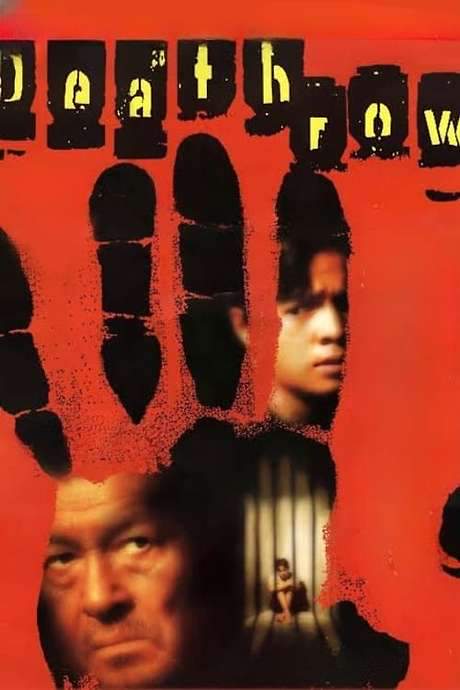
In the bustling shadows of Manila’s slums, a young orphan named Sonny Corpus grows up navigating narrow alleys and the desperate hopes of relatives who can barely make ends meet. When a moment of misguided loyalty drags him into a crime far beyond his years, the justice system delivers a verdict that shatters any notion of a second chance, casting him into the unforgiving world of death row while he is still barely a teenager. The film opens on this stark juxtaposition—an innocent‑looking youth thrust into an adult nightmare, forced to confront the weight of a sentence that seems designed for the fully convicted.
Inside the concrete walls, the prison breaths a heavy, claustrophobic rhythm where every corridor hums with hidden economies and unspoken codes. The atmosphere is raw and unrelenting, a place where power is negotiated in whispers and the line between survival and surrender is razor‑thin. Guards and inmates alike move through a system that feels both bureaucratically cold and ferociously personal, creating a backdrop of tension that presses against every breath the inmates draw. The tone is gritty and somber, yet it never abandons the flicker of humanity that stubbornly persists in the darkest corners.
Amid this oppressive environment, Lolo Sinat, a weathered veteran of the prison’s hierarchy, emerges as an unexpected beacon. At seventy‑seven, his presence commands a mixture of reverence and fear, and his quiet mentorship offers Sonny a fragile anchor in a sea of uncertainty. Their unlikely bond is built on shared moments of counsel, a subtle exchange of wisdom that hints at the possibility of retaining one’s soul even when the world seems intent on stripping it away.
The film thus draws the viewer into a world where survival is measured not only by physical endurance but by the capacity to hold onto dignity. Its style is uncompromisingly realistic, painting Manila’s streets and the prison’s corridors with a muted palette that underscores the starkness of the characters’ plight. As Sonny learns to navigate this hostile landscape, the story invites contemplation of how an individual’s future can be reshaped by the unlikely alliances forged in places where hope is most scarce.
What Happens in Deathrow?
The complete story of Deathrow, from the first scene to the last, in 1,035 words (about 5 minutes). Spoilers throughout. Names in the text link to 8 cast member pages.
Spoilers ahead
From the crowded streets of Manila to the cold confines of a death row cell, the film follows Sonny Corpus as he is swept into a brutal, fragile world where power, fear, and loyalty collide. Cogie Domingo frames a life that begins with a reckless night and spirals into a fight for survival inside a brutal prison system.
Sonny, a 16-year-old whose days are spent wandering the slums with his friends Celso, Jimmy, and Rodel, becomes an unwilling participant in a bold house robbery. The plan goes awry when Celso fires accidentally, striking the homeowner and triggering a rapid cascade of violence. The police arrive; Jimmy and Rodel die, and Sonny is left frozen as Celso flees. At the scene, the authorities arrest him, and the courtroom drama that follows casts a long shadow over the rest of his life. Despite his minor status, Sonny is convicted of murder and sentenced to death row, a verdict that shocks him and his family, and inaugurates a grueling journey through prison life.
Inside the prison, Sonny confronts a harsh reality: the system, the guards, and the inmates all shape daily life in a place where every decision can be fatal. The warden, known as Fajardo, operates with a complicity that blurs the line between punishment and corruption. A tense web of power forms around a cocaine-smuggling operation run by the aging figure known as “Mayor” Mio, with Gabino as his second-in-command, and the prison’s own labyrinth of alliances amplifying the dangers Sonny faces. The drug trade is not a distant crime here—it is the currency that sustains the prison’s uneasy order, and Sonny’s fate becomes entwined with whether he participates or resists. Spanky Manikan is credited as the warden, whose presence signals a deeper rot within the system, while Gabino, played by Pen Medina, works to draw Sonny into the scheming circle that could upend Mio’s fragile control.
Into this perilous environment steps Lolo Sinat, a 77-year-old veteran of the jail who has earned his place at the top of the hierarchy. Eddie Garcia brings a quiet gravity to the role as he takes Sonny under his wing, offering hard-won advice about how to survive without surrendering one’s humanity. Sinat’s influence offers Sonny a counterpoint to the drug trade’s temptations and the violence that perfumes every corridor of the prison. Lukas, a younger ally within the system, also offers support, and Sonny finds himself navigating a delicate balance between obedience and defiance in a world where misstep can be fatal. Mon Confiado lends support to the tension with his portrayal of Lukas, a figure who can either open doors or close them with a single move.
A high-ranking official’s visit to the facility becomes a turning point. Sonny admits his involvement in the drug business, and the admission triggers a brutal chain of revenge and retaliation. Gabino punishes Sonny with a vicious beating and an assault that leaves him scarred, while the broader consequences of the power struggles ripple through the entire cellblock. The prison’s moral complexity deepens as Sonny seeks help from Gina, a public attorney who also handles Lolo Sinat’s case. Gina’s presence introduces a glimmer of legal strategy and humanity into an environment designed to crush both hope and resolve. The two form an uneasy alliance as Gina explains the legal paths that might still rescue Sonny from the gallows. Throughout this, Lolo Sinat hints at his own past and the reasons he fights to keep his own sense of justice intact, even as the system pressures him to silence his conscience.
The search for justice expands beyond the courtroom, with Gina and Sonny contemplating an escape that could grant them a second chance. The escape attempt is dramatic but short-lived, and they’re recaptured the following day. As Sonny’s fate appears sealed, Gina informs Lolo Sinat that his execution could come the following week, intensifying the countdown toward death. The cell’s dynamics shift again when Gabino tries to assault Sonny once more; Sonny defends himself with a bread knife, killing Gabino in a moment of desperate self-defense. In a final act of loyalty and protection, Lolo Sinat covers up for Sonny, underscoring the fragile trust that has grown between them in a world where betrayal is a constant risk. Before the lethal injection, Lolo Sinat entrusts Sonny with a Walkman, a small beacon of personal memory and humanity in a place designed to erase both.
In the weeks that follow, Gina’s appeal work bears fruit. The legal effort garners momentum, Celso’s own case is revisited, and the wider net of justice begins to close around the original crime. Sonny’s conviction is overturned and he is released, stepping back into a life that feels newly earned and profoundly fragile. The story ends on a note of cautious relief, with Sonny set free from the shackles of a system that had twice tried to define him by a single night and a single mistake, but the scars—physical, emotional, and moral—remain a part of who he is.
This film builds a patient, hard-edged portrait of a boy on the edge of adulthood, forced to navigate a prison economy built on fear, loyalty, and survival. It contrasts brutal power plays with small, human moments of vulnerability and resilience, showing how a young life can be shaped—and, in the end, saved—by a network of unlikely allies who fight to keep their humanity intact in the face of overwhelming odds. The performances trace a careful arc from desperation to hardened resolve, with the cast delivering stark, unsentimental realism that anchors the film’s unflinching moral center.
- Featured cast moments are woven throughout the narrative, including the strong central turn by Eddie Garcia as Lolo Sinat and the pivotal performances by Jaclyn Jose as Gina and Pen Medina as Gabino, whose actions push the story toward its most heated confrontations. The fateful arc is anchored by the quiet endurance of Mon Confiado as Lukas and the weight of Tony Mabesa as Governor Asunta, with Spanky Manikan contributing a crucial presence as Fajardo, the warden whose complicity underscores the system’s cruelty. Nanding Josef as Bangaw adds another layer to the prison’s micro-society, illustrating how every character exists within a larger, unforgiving machinery.
Deathrow Timeline: Every Key Event in Order
15 key events in the order they happen, from “Robbery night and homeowner shot” to “Gina's appeal succeeds and Sonny is released”. 15 events name a place, across 7 locations.
- 1
Robbery night and homeowner shot
Sonny Corpus, a 16-year-old from Manila's slums, teams up with friends Celso, Jimmy, and Rodel to plan a house robbery. During the raid, Celso accidentally shoots and kills the homeowner. As police arrive, Jimmy and Rodel are killed and Sonny freezes while Celso flees.
When:Night of the robbery Where:Owner's house, Manila slums
- 2
Arrest at the scene
The police locate Sonny at the scene and arrest him for the incident. He is detained and cross-examined about his role, but the authorities struggle to prove direct murder against him. Ultimately, he is found guilty of murder and sentenced to death row.
When:Soon after the raid Where:Scene of the robbery
- 3
Death sentence and transfer to prison
Despite his youth, Sonny is convicted of murder and given a death sentence. He is processed into the prison system, where his status as a minor initially complicates his fate but does not change the outcome. The transition marks the start of life on death row.
When:Court day and immediate aftermath Where:Courtroom and prison intake
- 4
Harsh first days on death row
Sonny enters prison life and struggles to adapt to the brutal hierarchy and constant danger. He grapples with the court's verdict while trying to find a way to survive among seasoned inmates. The environment tests his resolve from the very first days.
When:Early days Where:Death row block
- 5
Mio recruits Sonny into drug trafficking
Mayor Mio, a powerful inmate, recruits Sonny into a cocaine-smuggling operation within the prison. Sonny hesitantly accepts as a means of protection and influence, though he remains uneasy about the illegal enterprise. The warden Fajardo and Mio's inner circle become aware of the arrangement.
When:Early in imprisonment Where:Prison
- 6
Gabino schemes to seize power
Gabino, Mio's second-in-command, begins secret preparations for a coup against Mio. His plans reveal the dangerous power struggles simmering inside the prison walls, with the warden potentially in on the scheme. The stage is set for further conflict behind bars.
When:Mid imprisonment Where:Prison
- 7
Lolo Sinat becomes Sonny's mentor
Lolo Sinat, the 77-year-old inmate seen as the most powerful on death row, take Sonny under his wing. He advises Sonny to step away from the drug business and uses his life lessons to guide the boy. A bond forms as Sonny begins to trust the elder inmate.
When:Early to mid imprisonment Where:Death row
- 8
Official visit and Sonny's confession
A high-ranking official visits the prison, prompting Sonny to confess his involvement in the drug scheme. The admission heightens the risk of retaliation from rival factions and deepens Sonny's entanglement in the prison's drug network. The event tests his resolve and loyalty.
When:During the official's visit Where:Prison
- 9
Gabino brutalizes Sonny
Following the confession, Gabino exacts revenge by delivering a severe beating and subjecting Sonny to torture, including rape. The assault leaves Sonny traumatized and further entangles him in the violent prison politics. Lolo Sinat watches with wary concern as power dynamics shift.
When:After the confession Where:Prison
- 10
Gina enters Sonny's case and recounts Sinat's past
Gina, a public attorney who also handles Lolo Sinat's case, begins working on Sonny's appeal. She is initially met with distrust by Sinat, who challenges her, but he eventually opens up about his own past. The unlikely alliance forms as Sonny and Gina prepare for a legal fight.
When:Mid imprisonment Where:Prison
Show the other 5 events of Deathrow Hide the last 5 events
- 11
Escape attempt with Lukas
With guidance from Lolo Sinat, Sonny attempts an escape from the prison, aided by Lukas. The plan is foiled, and they are caught the following day. The failed escape heightens the stakes and tightens the grip of prison authorities.
When:Next day after the attempt Where:Prison
- 12
Execution date announced and appeal arises
Gina informs Lolo Sinat that Sonny faces execution in the following week, prompting renewed urgency for the appeal. The news intensifies the pressure on all sides, driving Gina to push harder to overturn the sentence. The clock starts ticking toward the pending date.
When:Weeks before execution Where:Prison
- 13
Sonny kills Gabino in self-defense
Gabino makes a second attempt to rape Sonny, but Sonny fights back using a bread knife and kills him. Lolo Sinat helps cover up the killing to protect Sonny, recognizing the dangerous consequences if the truth comes out. The incident marks a pivotal turning point in Sonny's case.
When:Later securing the cover-up Where:Prison
- 14
Walkman departure and final loyalties
Before being taken to the lethal injection chamber, Lolo Sinat gives Sonny his old Walkman as a symbol of trust and guidance. The gesture underscores the bond formed between the boy and the aging inmate. Sonny clings to the gift as the old man faces his own fate.
When:Moment before execution Where:Prison
- 15
Gina's appeal succeeds and Sonny is released
Weeks after the brutal events, Gina's appeal on Sonny's behalf succeeds, overturning the death sentence. Celso is found and brought to justice for the original robbery, allowing Sonny to walk free from prison. The ending resolves the immediate threat to Sonny's life, though the scars remain.
When:Several weeks later Where:Prison and outside world
Who Are the Main Characters in Deathrow?
5 characters, among them Sonny Corpus (Cogie Domingo), Lolo Sinat (Eddie Garcia) and Gina (Jaclyn Jose): who each one is and the part they play in the story. Every profile links to the actor’s page.
- SC
Sonny Corpus (Cogie Domingo)
Played by Cogie Domingo
A 16-year-old from Manila's slums who becomes entangled in a botched robbery and is wrongfully convicted of murder. He is thrust into a brutal system that tests his resilience, loyalty, and will to survive. Though inexperienced, Sonny fights to maintain hope and moral integrity amid coercion and danger.
- 🎯 Protagonist
- LS
Lolo Sinat (Eddie Garcia)
Played by Eddie Garcia
A 77-year-old gangster who sits atop the death row hierarchy and becomes a reluctant mentor to Sonny. He offers counsel on how to navigate prison life, while wrestling with his own desire to do something meaningful before his end. His bond with Sonny evolves into a chance at redemption, even in a hopeless setting.
- 👴 Elder
- G(
Gina (Jaclyn Jose)
Played by Jaclyn Jose
A public attorney who handles Sonny’s case and fights for an appeal. She is smart, skeptical of the prison system, and pushes back against intimidation from powerful inmates. Her involvement provides Sonny with a glimmer of legal possibility and moral guidance.
- ⚖️ Lawyer
- G(
Gabino (Pen Medina)
Played by Pen Medina
Mio's second-in-command and a brutal player in the prison’s power struggles. He beats Sonny and becomes a threat through coercion and violence. His opportunism and ruthlessness contribute to the film’s sense of danger and moral ambiguity.
- ⚔️ Violent
- L(
Lukas (Mon Confiado)
Played by Mon Confiado
A fellow inmate who collaborates with Lolo Sinat and Sonny in an escape attempt. He represents the pragmatic side of survival, easing the path to risky decisions while sharing the goal of breaking free from the system’s hold.
- 🧭 Ally
Where and When Is Deathrow Set?
Deathrow is set in Manila, Philippines and Death Row Prison. Here is why the place matters to the story.
Where
Manila, Philippines, Death Row Prison
Manila's urban slums form the backdrop for Sonny's troubled youth, marked by poverty, street gangs, and limited opportunities. The story also moves into a brutal, overcrowded death row prison where hierarchies and corruption shape daily life. The film uses these settings to explore how environments influence choices and fates.
- 🏙️ Urban slums
- 🏛️ Prison environment
What Are the Themes of Deathrow?
4 ideas the story keeps returning to, among them Justice & Injustice, Found Family and Prison Power & Corruption.
-
01
Justice & Injustice
The film scrutinizes the fairness of the justice system, exposing how a minor can be treated as an adult offender. Sonny, a 16-year-old, is convicted of murder and faces the death penalty despite not killing anyone, highlighting systemic flaws. The courtroom dynamics reveal how evidence and advocacy are often insufficient, pushing characters toward alternative forms of relief or protest. Through Sonny's fate, the story questions whether true justice is ever served.
-
02
Found Family
In the harsh world of prison life, unlikely bonds evolve into a surrogate family. Lolo Sinat, the elder inmate, becomes a mentor who guides Sonny through danger and moral choices. Gina, the public attorney, offers hope and legal avenues, while Lukas provides a second ally who helps in critical moments. Together, these relationships give Sonny a reason to resist despair and fight for his future.
-
03
Prison Power & Corruption
Power within the prison is a currency, with Mio and the warden controlling illicit operations and smoothing over violence. The drug trade is a private economy that Sonny is pressured to join, revealing how inmates and guards collude to maintain order. Gabino seeks to exploit Sonny to further a coup against Mio, showing how ambition corrupts justice. The system's opacity allows brutality to persist behind protected doors.
-
04
Violence & Trauma
The narrative does not shy away from brutal acts: beating, rape, and torture puncture Sonny's experience and mark his psyche. The violence is framed as both punishment and a mechanism of control within the prison hierarchy. Characters grapple with trauma while trying to preserve a sense of humanity. The climax tracks Sonny's struggle to survive without losing his moral core.
What Kind of Film Is Deathrow?
Dark in tone, with steady pacing and a moderate story, going by the plot summary.
- Tone
- Dark
- Pacing
- Steady
- Story
- Moderate
- Intensity
- High
- Ending
- Bittersweet
A grim and unflinching prison drama that delivers a tense, emotionally punishing journey through systemic injustice and survival, ultimately finding a cautious, hard-won hope.
- grim
- oppressive
- anxious
- desperate
- harsh
- hopeful
- prison survival
- injustice
- corruption
- mentorship
Content notes: murder, prison violence, sexual assault, capital punishment, wrongful conviction.
Quiz
How well do you remember Deathrow? Test yourself on the story.
Where to Watch Deathrow
. US availability and prices from JustWatch.
Streaming availability in the US, powered by