Logo What's After the Movie

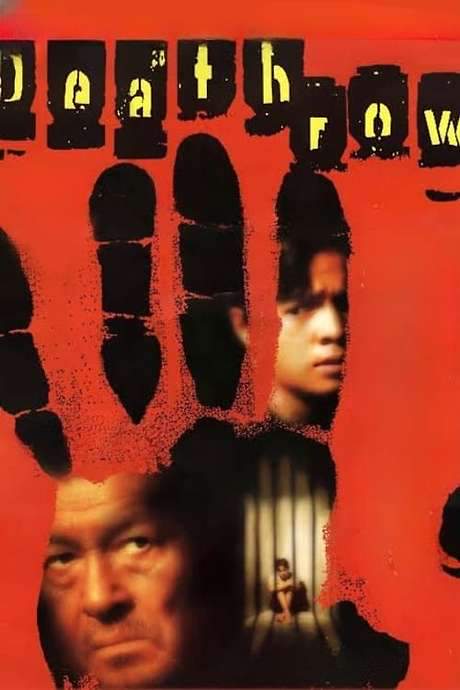
Deathrow 2000

Raised in Manila’s slums by impoverished relatives, an orphan is forced into a robbery that ends in murder. Though a minor, he cannot prove his innocence and is sentenced to death row. There he meets a feared 70‑year‑old inmate who becomes his protector, profoundly shaping his survival and future beyond the prison walls.

Raised in Manila’s slums by impoverished relatives, an orphan is forced into a robbery that ends in murder. Though a minor, he cannot prove his innocence and is sentenced to death row. There he meets a feared 70‑year‑old inmate who becomes his protector, profoundly shaping his survival and future beyond the prison walls.

Does Deathrow have end credit scenes?

No!

Deathrow does not have end credit scenes. You can leave when the credits roll.

Take the Ultimate Deathrow Movie Quiz

Challenge your knowledge of Deathrow with this fun and interactive movie quiz. Test yourself on key plot points, iconic characters, hidden details, and memorable moments to see how well you really know the film.


Deathrow (2000) Quiz: Test your knowledge of the Philippine film *Deathrow* (2000), covering its plot, characters, and cast.

What is the name of the 16‑year‑old protagonist who is sentenced to death row?

Full Plot Summary and Ending Explained for Deathrow

See more

Read the complete plot summary of Deathrow, including all major events, twists, and the full ending explained in detail. Explore key characters, themes, hidden meanings, and everything you need to understand the story from beginning to end.


From the crowded streets of Manila to the cold confines of a death row cell, the film follows Sonny Corpus as he is swept into a brutal, fragile world where power, fear, and loyalty collide. Cogie Domingo frames a life that begins with a reckless night and spirals into a fight for survival inside a brutal prison system.

Sonny, a 16-year-old whose days are spent wandering the slums with his friends Celso, Jimmy, and Rodel, becomes an unwilling participant in a bold house robbery. The plan goes awry when Celso fires accidentally, striking the homeowner and triggering a rapid cascade of violence. The police arrive; Jimmy and Rodel die, and Sonny is left frozen as Celso flees. At the scene, the authorities arrest him, and the courtroom drama that follows casts a long shadow over the rest of his life. Despite his minor status, Sonny is convicted of murder and sentenced to death row, a verdict that shocks him and his family, and inaugurates a grueling journey through prison life.

Inside the prison, Sonny confronts a harsh reality: the system, the guards, and the inmates all shape daily life in a place where every decision can be fatal. The warden, known as Fajardo, operates with a complicity that blurs the line between punishment and corruption. A tense web of power forms around a cocaine-smuggling operation run by the aging figure known as “Mayor” Mio, with Gabino as his second-in-command, and the prison’s own labyrinth of alliances amplifying the dangers Sonny faces. The drug trade is not a distant crime here—it is the currency that sustains the prison’s uneasy order, and Sonny’s fate becomes entwined with whether he participates or resists. Spanky Manikan is credited as the warden, whose presence signals a deeper rot within the system, while Gabino, played by Pen Medina, works to draw Sonny into the scheming circle that could upend Mio’s fragile control.

Into this perilous environment steps Lolo Sinat, a 77-year-old veteran of the jail who has earned his place at the top of the hierarchy. Eddie Garcia brings a quiet gravity to the role as he takes Sonny under his wing, offering hard-won advice about how to survive without surrendering one’s humanity. Sinat’s influence offers Sonny a counterpoint to the drug trade’s temptations and the violence that perfumes every corridor of the prison. Lukas, a younger ally within the system, also offers support, and Sonny finds himself navigating a delicate balance between obedience and defiance in a world where misstep can be fatal. Mon Confiado lends support to the tension with his portrayal of Lukas, a figure who can either open doors or close them with a single move.

A high-ranking official’s visit to the facility becomes a turning point. Sonny admits his involvement in the drug business, and the admission triggers a brutal chain of revenge and retaliation. Gabino punishes Sonny with a vicious beating and an assault that leaves him scarred, while the broader consequences of the power struggles ripple through the entire cellblock. The prison’s moral complexity deepens as Sonny seeks help from Gina, a public attorney who also handles Lolo Sinat’s case. Gina’s presence introduces a glimmer of legal strategy and humanity into an environment designed to crush both hope and resolve. The two form an uneasy alliance as Gina explains the legal paths that might still rescue Sonny from the gallows. Throughout this, Lolo Sinat hints at his own past and the reasons he fights to keep his own sense of justice intact, even as the system pressures him to silence his conscience.

The search for justice expands beyond the courtroom, with Gina and Sonny contemplating an escape that could grant them a second chance. The escape attempt is dramatic but short-lived, and they’re recaptured the following day. As Sonny’s fate appears sealed, Gina informs Lolo Sinat that his execution could come the following week, intensifying the countdown toward death. The cell’s dynamics shift again when Gabino tries to assault Sonny once more; Sonny defends himself with a bread knife, killing Gabino in a moment of desperate self-defense. In a final act of loyalty and protection, Lolo Sinat covers up for Sonny, underscoring the fragile trust that has grown between them in a world where betrayal is a constant risk. Before the lethal injection, Lolo Sinat entrusts Sonny with a Walkman, a small beacon of personal memory and humanity in a place designed to erase both.

In the weeks that follow, Gina’s appeal work bears fruit. The legal effort garners momentum, Celso’s own case is revisited, and the wider net of justice begins to close around the original crime. Sonny’s conviction is overturned and he is released, stepping back into a life that feels newly earned and profoundly fragile. The story ends on a note of cautious relief, with Sonny set free from the shackles of a system that had twice tried to define him by a single night and a single mistake, but the scars—physical, emotional, and moral—remain a part of who he is.

This film builds a patient, hard-edged portrait of a boy on the edge of adulthood, forced to navigate a prison economy built on fear, loyalty, and survival. It contrasts brutal power plays with small, human moments of vulnerability and resilience, showing how a young life can be shaped—and, in the end, saved—by a network of unlikely allies who fight to keep their humanity intact in the face of overwhelming odds. The performances trace a careful arc from desperation to hardened resolve, with the cast delivering stark, unsentimental realism that anchors the film’s unflinching moral center.

  • Featured cast moments are woven throughout the narrative, including the strong central turn by Eddie Garcia as Lolo Sinat and the pivotal performances by Jaclyn Jose as Gina and Pen Medina as Gabino, whose actions push the story toward its most heated confrontations. The fateful arc is anchored by the quiet endurance of Mon Confiado as Lukas and the weight of Tony Mabesa as Governor Asunta, with Spanky Manikan contributing a crucial presence as Fajardo, the warden whose complicity underscores the system’s cruelty. Nanding Josef as Bangaw adds another layer to the prison’s micro-society, illustrating how every character exists within a larger, unforgiving machinery.

Uncover the Details: Timeline, Characters, Themes, and Beyond!

Mobile App Preview

Coming soon on iOS and Android

The Plot Explained Mobile App

From blockbusters to hidden gems — dive into movie stories anytime, anywhere. Save your favorites, discover plots faster, and never miss a twist again.

Sign up to be the first to know when we launch. Your email stays private — always.

Discover Film Music Concerts Near You – Live Orchestras Performing Iconic Movie Soundtracks

Immerse yourself in the magic of cinema with live orchestral performances of your favorite film scores. From sweeping Hollywood blockbusters and animated classics to epic fantasy soundtracks, our curated listings connect you to upcoming film music events worldwide.

Explore concert film screenings paired with full orchestra concerts, read detailed event information, and secure your tickets for unforgettable evenings celebrating legendary composers like John Williams, Hans Zimmer, and more.

Concert Film CTA - Music Note
Concert Film CTA - Green Blue Wave

Deathrow Themes and Keywords

Discover the central themes, ideas, and keywords that define the movie’s story, tone, and message. Analyze the film’s deeper meanings, genre influences, and recurring concepts.


male nuditymurderconvictedprisonerdrugsdeath rowone word titlehuman rights lawyerlawyerjuvenile delinquentsodomyprison sentencelethal injectionjaildeath penaltycapital punishmentalcoholism
Movie Wiki CTA - Movie Book

Unlock the World of Movies with Our Comprehensive Wiki

Dive into our Movie Wiki for in-depth film encyclopedia entries, including cast biographies, production trivia, plot synopses, behind-the-scenes facts, and thematic analyses. Whether you’re researching iconic directors, exploring genre histories, or discovering hidden easter eggs, our expertly curated movie database has everything you need to fuel your cinematic passion.

Movie Wiki CTA - Green Blue Wave

Similar Movies To Deathrow You Should Know About

Browse a curated list of movies similar in genre, tone, characters, or story structure. Discover new titles like the one you're watching, perfect for fans of related plots, vibes, or cinematic styles.


© 2025 What's After the Movie. All rights reserved.