

What Is Death by Hanging About?
The premise of Death by Hanging in 297 words, with nothing given away. The full story follows below.
In a stark, institutional Japan the camera glides through a sterile corridor that leads to a lone death chamber, its metal walls humming with an unsettling quiet. The opening voice‑over, delivered by Nagisa Ôshima, reads like a clinical documentary, inviting the audience to observe a world where law and procedure sit on a cold, polished stage. The atmosphere is both hyper‑real and unsettlingly detached, setting a tone that feels like an experiment in observation rather than conventional narrative.
At the centre of this measured machinery is R, an ethnic Korean condemned to die by hanging. When the execution is carried out, something inexplicable occurs: the man survives, his mind a fog of fragmented memory. His unexpected resilience throws the prison’s routine into chaos, prompting the officials to confront a legal paradox that has never been written into a rule book. The premise hinges on the uneasy question of what a state can demand when the very subject of its judgment cannot even acknowledge the charge against him.
Overseeing the fallout is the prison warden, Kei Satô, whose devotion to protocol is matched only by his inability to anticipate such an anomaly. He, along with a cadre of officials, must navigate a maze of bureaucratic protocol, moral philosophy, and personal restraint. Their deliberations are rendered in a precise, almost surgical dialogue that underscores a cold, intellectual horror—making the audience feel the weight of an institution grappling with its own limits.
The film’s style blurs the line between documentary realism and staged performance, turning each procedural moment into a visual tableau that hints at deeper questions about memory, guilt, and authority. It remains a measured, contemplative meditation on the machinery of punishment, inviting viewers to linger in the uneasy silence that follows an act that should have been final.
What Happens in Death by Hanging?
The complete story of Death by Hanging, from the first scene to the last, in 804 words (about 3 minutes). Spoilers throughout. Names in the text link to 4 cast member pages.
Spoilers ahead
Opening with a documentary-like voiceover by Nagisa Ôshima, the film invites us into a stark, clinical world where a death chamber sits at the center of a tense drama. The man slated for execution, an ethnic Korean known only as R, Do-yun Yu somehow survives the hanging and awakens with a foggy memory that refuses to cohere. The scene is overseen by the prison warden Kei Satô, a figure of rigid procedure, as a roomful of officials and witnesses wrestle with an impossible legal question: can you execute someone who cannot acknowledge their guilt or the punishment that follows? The debate is sharp, rational, and chilling, because it hinges on what the law can or cannot demand when memory is erased and motive feels opaque.
In a bid to resolve the stalemate, the officials decide to press R to accept guilt by revisiting the crimes he is accused of, hoping that a confession will restore the sense of justice the law requires. This moral act quickly morphs into a theatrical experiment, a film-within-a-film that unsettles the boundary between truth and performance. The narrative shifts into a series of staged scenes that blend documentary realism with ritualized reenactment, turning the death chamber into a stage where memory, guilt, and power play out like a grim tableau. The tension intensifies as the men and women who run the system enact R’s alleged past, stepping through each scene with a clinical detachment that gradually reveals their own complicity in violence and control.
The reenactments begin with a troubling recreation of R’s first crime, the rape of a young woman, performed as if memory itself could be manufactured to fit a verdict. The room fills with a disquieting mix of method and menace, a choreography that leaves the witnesses unsettled even as they press forward. As the attempt to conjure memory falters, the officials pivot to reconstructing R’s childhood through crude, racist stereotypes about Koreans—an offense that exposes the raw prejudice that sometimes underpins the machinery of punishment. The satire slides into something more dangerous as they travel to an abandoned high school, the scene of another alleged crime, where the reenactment spirals out of control and one of the officials commits murder in the process. The room darkens with the weight of what they are willing to do to force a legal resolution.
Back in the death chamber, a new player enters the uneasy drama: a woman who claims to be R’s sister. Akiko Koyama portrays this figure, stepping into the officials’ circle with a plea that his crimes might be justified by a broader cause. Her appearance heightens the moral pressure and unsettles the narrative further, until she is herself hanged, a shocking pivot that blurs the lines between witness, accomplice, and victim. As the celebration of her death unfolds at a drinking party, the officials reveal their own guilt-ridden, violent pasts—pasts that seem to haunt the very room in which they seek to control the truth. R and his spectral sister lie among them, their bodies a stark reminder of the psychological theater that has become the film’s core.
A prosecutor’s hand reaches toward an unexpected resolution: the chance to walk free. Yet when the door is opened, a sudden, blinding light spills in from outside, forcing R to retreat and defying the sequence the officials have constructed. The moment crystallizes a core question: does freeing a man absolve the state of its own culpability, or does it simply transfer the burden of murder from one body to another? R responds not with triumph but with a paradoxical claim of innocence, insisting that if the officers execute him, they, too, become murderers. The room shifts again as the tension between justice and mercy fractures the rational voice that sought to control events.
In the film’s most unresolved image, R confronts the final ambiguity of his fate. During a second hanging, his body vanishes, leaving only an empty noose still suspended beneath the gallows. The disappearance is not a neat twist but a disturbing, almost spectral statement about memory, guilt, and the limits of punitive power. The ceremonial world the officials have designed dissolves into a blank space where the truth remains slippery, and where the act of trying to determine guilt may itself erase the line between perpetrator and judge.
This work uses its documentary-adjacent opening and its performative core to probe how systems of authority manufacture guilt, memory, and meaning. It asks questions about responsibility, the moral cost of enforcing laws, and the ways in which people in power can manipulate reality to fit a narrative of punishment. The result is an unsettling, morally intricate meditation that lingers long after the final image—a stark reminder that stories about guilt can reveal as much about those who tell them as about those who are accused.
Death by Hanging Timeline: Every Key Event in Order
11 key events in the order they happen, from “Death chamber opening and R's survival” to “Second hanging and disappearance”. 11 events name a place, across 6 locations.
- 1
Death chamber opening and R's survival
The execution unfolds in a stark death chamber, but R surprisingly survives the hanging and emerges with memory loss. Officials crowd around, perplexed by the anomaly and unsure how to proceed. This failure marks the start of a reinterpretation of guilt within the room.
Where:Death chamber
- 2
Legal dilemma: memory loss and guilt
Faced with memory loss, the officials debate whether the law can apply to a man who cannot recognize his crimes or punishment. They consider whether forcing a confession is even possible or ethical. The scene frames a legal dilemma that could derail any straightforward execution.
Where:Death chamber
- 3
Decision to persuade confession via reenactments
To secure a conviction, they decide to have R confront his alleged crimes through staged reenactments. The officials hope that simulated scenes will trigger guilt or reveal a truth that justifies execution. The approach shifts the scene from a trial to a theater of coercion.
Where:Death chamber / reenactment space
- 4
First reenactment: the rape scene
In a sequence of disturbing theater, the officials stage R's alleged rape of a young woman. The performance aims to evoke guilt but becomes a troubling commentary on justice and manipulation. The line between truth and performance blurs in the chamber.
Where:Reenactment space
- 5
Reenactment of childhood with racist stereotypes
They attempt to reconstruct R's childhood using crude racist depictions of Koreans, revealing the officials' biases and moral corruption. The scenes expose how prejudice can masquerade as reconstruction of memory. The project devolves into a critique of power and propaganda.
Where:Reenactment space
- 6
Visit to the abandoned high school and the murder
Seeking another facet of R's past, the group travels to an abandoned high school for further reenactments. In a moment of zeal, one official murders a girl, turning a supposed exploration into a real crime. The violence underscores the moral ruin at the heart of their project.
Where:Abandoned high school
- 7
The sister figure appears and is hanged
Back in the death chamber, a woman claiming to be R's sister appears to persuade him that his crimes are justified by Korean nationalism. When she fails to sway him, she is hanged, intensifying the officials' sense of collective guilt. The scene deepens the cycle of punishment and conspiracy.
Where:Death chamber
- 8
Drinking party and confessions of guilt
At a party celebrating the sister's hanging, the officials reveal their own guilt-ridden pasts. R and the sister lie among the revelers as the men confront the darkness of their psychology. The gathering exposes how violence and complicity permeate even celebratory moments.
Where:Officers' party location
- 9
Prosecutor offers a free man, then the door of truth is shut
The prosecutor invites R to walk free, but when he opens the door, a blinding light from outside shatters the moment and blocks escape. The scene tests the boundary between punishment and unknown truth. The room seems to fracture as light invades the ritual of justice.
Where:Death chamber / doorway
- 10
R confesses but proclaims innocence
R finally admits to the crimes but asserts his own innocence, arguing that executing him would make the officials murderers as well. This reversal reframes guilt as shared complicity rather than a solitary verdict. The supposed justice system collapses under the weight of mutual responsibility.
Where:Death chamber
- 11
Second hanging and disappearance
In his second hanging, R's body disappears, leaving an empty noose swinging beneath the gallows. The disappearance leaves the fate of R and the ethics of the proceedings unresolved. The scene ends with an eerie sense of unresolved guilt and ambiguity.
Where:Death chamber
Who Are the Main Characters in Death by Hanging?
8 characters, among them Prison warden (Kei Satô), Narrator (Nagisa Ôshima) and Guard (Takashi Ueno): who each one is and the part they play in the story. Every profile links to the actor’s page.
-
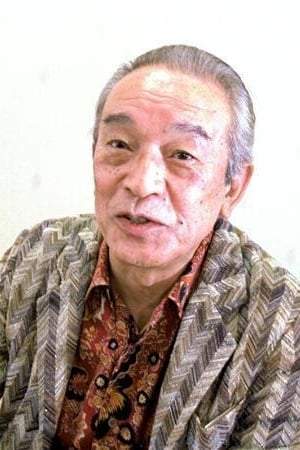
Prison warden (Kei Satô)
Played by Kei Satô
A central figure of the death chamber, the warden oversees the ritualized proceedings with measured authority. He embodies institutional power, guiding officials through reenactments and the push for confessions. His calm demeanor hints at the moral detachment that accompanies the machinery of execution.
- 🧭 Authority
- 🗝️ Control
- N(
Narrator (Nagisa Ôshima)
Played by Nagisa Ôshima
The film's frame narrator guides the viewer through the theatrical sequence, blending documentary realism with deliberate artifice. The narrator foregrounds observation and the manipulation of reality within the death-penalty process. This voice anchors the film's meta-commentary on guilt and memory.
- 🎙️ Meta
- 🧠 Insight
- G(
Guard (Takashi Ueno)
Played by Takashi Ueno
A line officer who participates in the procedural debates and staged recollections of crime. His role underscores the complicity of ordinary functionaries within the system of capital punishment.
- 👮 Authority
- 🧰 Duty
- CO
Chief of Guards (Masao Adachi)
Played by Masao Adachi
Leads the guards in orchestrating the sequences and contributes to the collective guilt exposed during the revelations. His actions illustrate the pressures of hierarchical power within the death machinery.
- ⚖️ Hierarchy
- 🧠 Guilt
- DA
District attorney (Hōsei Komatsu)
Played by Hōsei Komatsu
Represents the legal authority pushing for a confessed guilt to justify execution. He weighs procedural demands against moral considerations as the case unravels.
- ⚖️ Legal
- 🧭 Decision
- R(
R (Do-yun Yu)
Played by Do-yun Yu
The ethnic Korean man who survives a hanging and loses his memory, becoming the central focus of the officials' attempt to assign guilt. He oscillates between memories and amnesia, ultimately articulating his stance on innocence and culpability.
- 🧠 Identity
- 🗝️ Guilt
- W(
Woman (Akiko Koyama)
Played by Akiko Koyama
A woman who claims to be R's sister and tries to justify his crimes through nationalist rhetoric before herself being hanged. Her presence intensifies the examination of guilt, manipulation, and political motive within the officials' ritual.
- 🧭 Identity
- 🕊️ Truth
- P(
Priest (Toshir Ishidō)
Played by Toshirō Ishidō
A religious figure present in the chamber, offering moral ballast as events unfold. The priest's participation underscores the moral ambiguity surrounding punishment and absolution.
- 🙏 Morality
- 🗝️ Ritual
Where and When Is Death by Hanging Set?
Death by Hanging is set in Death chamber, Abandoned high school and Japan. Here is why the place matters to the story.
When
The events unfold within a contemporary, institutional frame where the countdown to execution structures the pacing. The narrative moves between the death chamber and staged reenactments, lending the proceedings a documentary-like immediacy. The atmosphere hints at a period of postwar reckoning, where legal ritual is used to confront past violence.
Where
Death chamber, Abandoned high school, Japan
The setting centers on a formal death chamber in a Japanese institutional context, where an execution is imminent. Reenactments spill into an abandoned high school, turning spaces of memory and neglect into stages for the state’s moral theater. The stark contrast between clinical procedural rooms and derelict locales underscores how power, guilt, and memory intersect within the machinery of capital punishment.
- 🏛️ Death chamber
- 🏫 Abandoned high school
- 🇯🇵 Japan
What Are the Themes of Death by Hanging?
5 ideas the story keeps returning to, among them Guilt, Power & Justice and Memory & Truth.
-
01
Guilt
Officials attempt to force a confession by replaying R's crimes, blurring lines between justice and vengeance. Their own violent histories surface as the ritual escalates, revealing how power can corrupt truth-seeking. The film interrogates whether the law can truly absolve guilt or merely reproduce it in ceremonial form.
-
02
Power & Justice
The death chamber becomes a controlled stage where state authority wields life-and-death decisions. Prosecutors, guards, and officials debate procedure and legitimacy, exposing the coercive edges of the legal system. The narrative questions whether justice requires suppression of memory or accountability for past actions.
-
03
Memory & Truth
R's memory loss and eventual confession drive the central tension between remembered truth and constructed narratives. The 'sister' figure and the reenactments reveal how memory can be manipulated to frame guilt. The film examines whether truth can survive under performative ritual.
-
04
Performance
Reenactments of crime, childhood, and national stereotypes turn law into theater. The officials' self-revealing guilt-party underscores how ritualized procedures can mask personal and collective violence. The film treats justice as a dangerous performance that unsettles ethical certainties.
-
05
Identity & Racism
The portrayal of Korean identity through racist stereotypes in the reenactments highlights ethnic tensions embedded in the justice system. R’s status as an ethnic Korean adds another dimension to the moral calculus of punishment. The narrative critiques how nationality can distort guilt and legal outcomes.
What Kind of Film Is Death by Hanging?
Dark in tone, with steady pacing and a very complex story, going by the plot summary.
- Tone
- Dark
- Pacing
- Steady
- Story
- Very complex
- Intensity
- High
- Ending
- Ambiguous
A deeply unsettling and intellectually demanding satire that uses a surreal, theatrical execution scenario to create a claustrophobic and morally complex critique of racism, justice, and state authority.
- unsettling
- brechtian
- claustrophobic
- satirical
- moral questioning
- theatrical
- capital punishment
- injustice
- racism
- memory and guilt
Content notes: sexual assault, murder, execution, racial prejudice, psychological manipulation.
Quiz
How well do you remember Death by Hanging? Test yourself on the story.


