Death by Hanging 1968


A Korean man is sentenced to death in Japan but somehow survives his execution, sending the authorities into a panic about what to do next.


Does Death by Hanging have end credit scenes?
No!
Death by Hanging does not have end credit scenes. You can leave when the credits roll.
Meet the Full Cast and Actors of Death by Hanging
Explore the complete cast of Death by Hanging, including both lead and supporting actors. Learn who plays each character, discover their past roles and achievements, and find out what makes this ensemble cast stand out in the world of film and television.
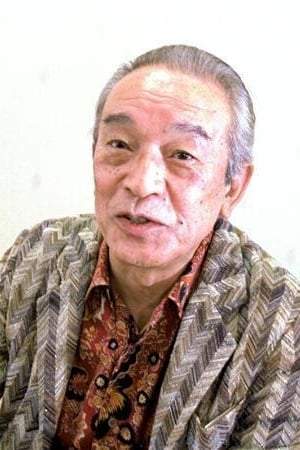
Kei Satô
Prison warden

Takashi Ueno
Guard
Masao Adachi
Chief of Guards
Hōsei Komatsu
District attorney
Masao Matsuda
Secretary of the D.A.
Fumio Watanabe
Education Officer
Rokkō Toura
Doctor
Akiko Koyama
Woman
Toshirō Ishidō
Priest
Do-yun Yu
R
Shizuo Satô
Guard
Keiko Sakurai
Takao Usui
Daiji Ozeki
Masayuki Hoshi
Akiko Terayima
Yuki Osaka
Kurumi Suzuki
External Links and Streaming Options
Discover where to watch Death by Hanging online, including streaming platforms, rental options, and official sources. Compare reviews, ratings, and in-depth movie information across sites like IMDb, TMDb, Wikipedia or JustWatch.





Take the Ultimate Death by Hanging Movie Quiz
Challenge your knowledge of Death by Hanging with this fun and interactive movie quiz. Test yourself on key plot points, iconic characters, hidden details, and memorable moments to see how well you really know the film.
Death by Hanging Quiz: Test your knowledge of the 1968 film Death by Hanging, its plot, characters, and themes.
What is the nationality of the prisoner known only as R?
Full Plot Summary and Ending Explained for Death by Hanging
Read the complete plot summary of Death by Hanging, including all major events, twists, and the full ending explained in detail. Explore key characters, themes, hidden meanings, and everything you need to understand the story from beginning to end.
Opening with a documentary-like voiceover by Nagisa Ôshima, the film invites us into a stark, clinical world where a death chamber sits at the center of a tense drama. The man slated for execution, an ethnic Korean known only as R, Do-yun Yu somehow survives the hanging and awakens with a foggy memory that refuses to cohere. The scene is overseen by the prison warden Kei Satô, a figure of rigid procedure, as a roomful of officials and witnesses wrestle with an impossible legal question: can you execute someone who cannot acknowledge their guilt or the punishment that follows? The debate is sharp, rational, and chilling, because it hinges on what the law can or cannot demand when memory is erased and motive feels opaque.
In a bid to resolve the stalemate, the officials decide to press R to accept guilt by revisiting the crimes he is accused of, hoping that a confession will restore the sense of justice the law requires. This moral act quickly morphs into a theatrical experiment, a film-within-a-film that unsettles the boundary between truth and performance. The narrative shifts into a series of staged scenes that blend documentary realism with ritualized reenactment, turning the death chamber into a stage where memory, guilt, and power play out like a grim tableau. The tension intensifies as the men and women who run the system enact R’s alleged past, stepping through each scene with a clinical detachment that gradually reveals their own complicity in violence and control.
The reenactments begin with a troubling recreation of R’s first crime, the rape of a young woman, performed as if memory itself could be manufactured to fit a verdict. The room fills with a disquieting mix of method and menace, a choreography that leaves the witnesses unsettled even as they press forward. As the attempt to conjure memory falters, the officials pivot to reconstructing R’s childhood through crude, racist stereotypes about Koreans—an offense that exposes the raw prejudice that sometimes underpins the machinery of punishment. The satire slides into something more dangerous as they travel to an abandoned high school, the scene of another alleged crime, where the reenactment spirals out of control and one of the officials commits murder in the process. The room darkens with the weight of what they are willing to do to force a legal resolution.
Back in the death chamber, a new player enters the uneasy drama: a woman who claims to be R’s sister. Akiko Koyama portrays this figure, stepping into the officials’ circle with a plea that his crimes might be justified by a broader cause. Her appearance heightens the moral pressure and unsettles the narrative further, until she is herself hanged, a shocking pivot that blurs the lines between witness, accomplice, and victim. As the celebration of her death unfolds at a drinking party, the officials reveal their own guilt-ridden, violent pasts—pasts that seem to haunt the very room in which they seek to control the truth. R and his spectral sister lie among them, their bodies a stark reminder of the psychological theater that has become the film’s core.
A prosecutor’s hand reaches toward an unexpected resolution: the chance to walk free. Yet when the door is opened, a sudden, blinding light spills in from outside, forcing R to retreat and defying the sequence the officials have constructed. The moment crystallizes a core question: does freeing a man absolve the state of its own culpability, or does it simply transfer the burden of murder from one body to another? R responds not with triumph but with a paradoxical claim of innocence, insisting that if the officers execute him, they, too, become murderers. The room shifts again as the tension between justice and mercy fractures the rational voice that sought to control events.
In the film’s most unresolved image, R confronts the final ambiguity of his fate. During a second hanging, his body vanishes, leaving only an empty noose still suspended beneath the gallows. The disappearance is not a neat twist but a disturbing, almost spectral statement about memory, guilt, and the limits of punitive power. The ceremonial world the officials have designed dissolves into a blank space where the truth remains slippery, and where the act of trying to determine guilt may itself erase the line between perpetrator and judge.
This work uses its documentary-adjacent opening and its performative core to probe how systems of authority manufacture guilt, memory, and meaning. It asks questions about responsibility, the moral cost of enforcing laws, and the ways in which people in power can manipulate reality to fit a narrative of punishment. The result is an unsettling, morally intricate meditation that lingers long after the final image—a stark reminder that stories about guilt can reveal as much about those who tell them as about those who are accused.

Coming soon on iOS and Android
The Plot Explained Mobile App
From blockbusters to hidden gems — dive into movie stories anytime, anywhere. Save your favorites, discover plots faster, and never miss a twist again.
Sign up to be the first to know when we launch. Your email stays private — always.
Explore the mobile appDiscover Film Music Concerts Near You – Live Orchestras Performing Iconic Movie Soundtracks
Immerse yourself in the magic of cinema with live orchestral performances of your favorite film scores. From sweeping Hollywood blockbusters and animated classics to epic fantasy soundtracks, our curated listings connect you to upcoming film music events worldwide.
Explore concert film screenings paired with full orchestra concerts, read detailed event information, and secure your tickets for unforgettable evenings celebrating legendary composers like John Williams, Hans Zimmer, and more.


Death by Hanging Themes and Keywords
Discover the central themes, ideas, and keywords that define the movie’s story, tone, and message. Analyze the film’s deeper meanings, genre influences, and recurring concepts.
Death by Hanging Other Names and Titles
Explore the various alternative titles, translations, and other names used for Death by Hanging across different regions and languages. Understand how the film is marketed and recognized worldwide.
Similar Movies To Death by Hanging You Should Know About
Browse a curated list of movies similar in genre, tone, characters, or story structure. Discover new titles like the one you're watching, perfect for fans of related plots, vibes, or cinematic styles.


Quick Links: Summary, Cast, Ratings, More

What's After the Movie?
Not sure whether to stay after the credits? Find out!
Check out our other apps:

SAT Sphere
Build confidence for the Digital SAT.

Mori Atlas
Discover wild places worth protecting.

Luntero
Search smarter for a home in Amsterdam.

Plot Explained
Unravel movie endings and hidden clues.

Pokechamp
Dive into Pokémon data and battle logic.

Driving Theory
Get ready for your European theory test.

Movie Dust
Plan your next cinema trip with ease.

Musemap
Find art and culture as you travel.

Selkobase
Compare credentials before committing.

Local Manual
Turn an unfamiliar country into practical next steps.

Lernavi
Compare school systems before your next move.

GymRoam
Find a workout stop wherever your plans take you.
Explore Our Movie Platform
New Movie Releases (2026)
Famous Movie Actors
Top Film Production Studios
Movie Plot Summaries & Endings
Major Movie Awards & Winners
Best Concert Films & Music Documentaries
Movie Collections and Curated Lists
© 2026 What's After the Movie. All rights reserved.
Privacy Policy