What Is Corsage About?
The premise of Corsage in 262 words, with nothing given away. The full story and the ending follow below.
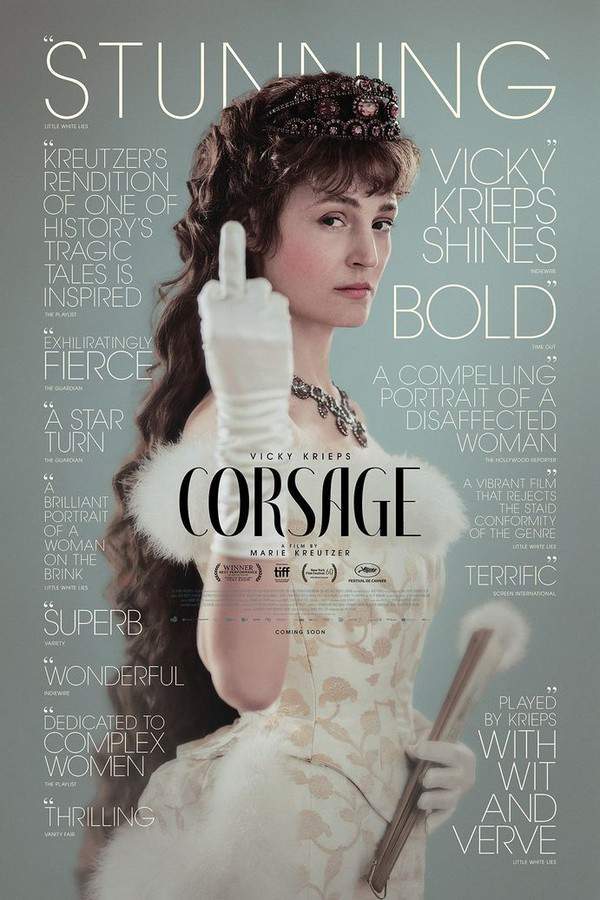
In the gilded halls of 19th‑century Vienna, a momentous birthday celebration becomes the catalyst for an inner reckoning. Elisabeth, the Empress, finds the pomp of her 40th year suddenly feel like a mask, amplifying the weight of expectation that has long defined her existence. The film paints a world of sumptuous courts and rigid protocol, where every gesture is measured against a lineage of duty, yet beneath the elegant surface a quiet longing simmers for something beyond the prescribed role.
Surrounded by a cast of close confidants and family—her husband Franz Joseph, their daughter Marie Valerie, and a circle of courtiers—the story explores the delicate dance between public façade and private yearning. The imperial couple’s relationship is rendered with a fragile intimacy, hinting at both affection and distance, while the young princess offers a glimpse of innocence that both comforts and unsettles the Empress. Through intimate conversations and lingering glances, the film suggests the relentless pressure to project an unblemished image, even as personal desires pulse beneath the surface.
Visually, the drama unfolds with a measured, observational style that lingers on the textures of silk, the crispness of a well‑kept garden, and the stark emptiness of a solitary bedroom. The tone is contemplative, balancing the grandeur of empire with the quiet rebellion of a woman seeking agency. As Elisabeth navigates the intricate expectations of royalty, the narrative invites the audience to linger on the subtle moments where duty and desire intersect, promising a portrait of a historical figure who, despite her title, grapples with the same universal quest for meaning and freedom.
What Happens in Corsage?
The complete story of Corsage, from the first scene to the last, in 727 words (about 3 minutes). Spoilers throughout. Names in the text link to 6 cast member pages.
Spoilers ahead
Empress Elisabeth of Austria Vicky Krieps is semi-estranged from her philandering husband Emperor Franz Joseph Florian Teichtmeister, and together they reluctantly mark her 40th birthday, a public celebration that masks a home thick with loneliness and unspoken friction. Elisabeth grapples with a sense of fading beauty and a stubborn ache for agency, turning inward to control her life in small, precise ways—most notably by obsessively managing her weight. The strain of court life intensifies when Elisabeth’s youngest daughter, Marie Valerie, falls ill after Elisabeth takes her for a nighttime ride, a moment that sows discord between Elisabeth and Franz and sets a tentative, fragile tension between the pair.
Rudolf Aaron Friesz invites Elisabeth and Marie Valerie on a journey that becomes a stage for Elisabeth’s flirtations and fantasies. On the road she tests the limits of companionship and vanity, engaging in a flirtation with her riding instructor Bay Colin Morgan and enjoying a breezy encounter with the aspiring filmmaker Louis Le Prince Finnegan Oldfield. Bay’s eventual rebuff—an acknowledgment of Elisabeth’s vanity—leaves her momentarily chastened, yet the spark of desire remains a persistent echo as she returns to Vienna. There she attempts to physically reconnect with Franz, but the effort only underscores the growing distance between them. Rumors of Franz’s affair with a much younger woman intensify Elisabeth’s sense of isolation and disturbance.
When Rudolf returns to Prague to begin his military education, Elisabeth’s sense of urgency about leaving Vienna grows. She voices a desire to depart with Valerie, a move that further angers Franz and triggers a sharp confrontation. The argument escalates, and in a moment of desperation Elisabeth moments the line between peril and hope by jumping out of a window, surviving with only minor injuries but wounded in ways that go beyond the physical.
Elisabeth seeks solace in Bavaria, spending time with her cousin Ludwig II, a figure she regards as a kindred spirit in their shared reverence for a romantic, irreducible freedom. Yet that visit fails to lift her spirits in any lasting way, and she remains unable to influence the broader currents of the world around Sarajevo and the war she cannot easily escape. In a bid to placate her, Franz finances an extension of the mental ward she frequently visits, a gesture that speaks to the complex, tangled web of care, control, and dependency that defines their relationship.
Health continues to plague Elisabeth, and she is prescribed heroin in hope of easing her body’s strain. The drug ushers in a curious sense of liberation as she cuts her hair, feeling a renewed sense of self and possibility. To manage her public image, she enlists her lady-in-waiting, Marie Festetics, to stand in for her in public appearances, and she commands Marie to impose strict dietary limits—an inversion of the very autonomy she seeks. Elisabeth also negotiates her husband’s public life by inviting Franz’s rumored mistress into the palace circle, a bold, albeit fraught, attempt to reclaim some measure of agency within the narrow margins of imperial life.
Trips continue to punctuate Elisabeth’s long arc of longing. A voyage to Ancona with her entourage—where a veiled Marie travels beside her—turns poignant as Elisabeth, buoyed by fierce determination and fragility in equal measure, chooses one last, defiant act: she dives into the sea, an impulsive gesture that crystallizes the tension between her craving for freedom and the weight of her duties.
Throughout the film, Elisabeth’s struggle is framed by the people around her: Bay Middleton and Louis Le Prince offer glimpses of joy and risk; Rudolf serves as a constant reminder of duty and lineage; and Ludwig II anchors her in a world where charisma and tragedy collide. The narrative is intimate and observational, favoring a lens that captures Elisabeth’s quiet revolutions as much as her outward spectacle. The result is a portrait of a woman who both commands and constrains her own fate, navigating the spaces between duty, desire, and the inexorable tides of history.
In the end, Elisabeth’s story is one of continued pursuit: a chase for autonomy within a life that both elevates and confines her. The film never pretends to render her choices as simple triumphs or tragic downfalls; instead, it presents a continuous, human struggle to shape meaning in a world that never stops asking for more from a woman who has long been defined by the gaze of others.
Corsage Timeline: Every Key Event in Order
15 key events in the order they happen, from “40th birthday and reignited struggle for control” to “Trip to Ancona and final dive into the sea”. 15 events name a place, across 5 locations.
- 1
40th birthday and reignited struggle for control
Empress Elisabeth is semi-estranged from Emperor Franz Joseph and marks her 40th birthday unhappily. She embarks on an obsessive routine of weight management as a way to reclaim agency over her life and appearance.
Where:Vienna
- 2
Marie Valerie falls ill after a nighttime ride
Elisabeth takes her daughter Marie Valerie on a nighttime ride, but Valerie falls ill afterward, straining the relationship between Elisabeth and Franz. The incident underscores the fragility of family harmony and Elisabeth's fraught dependence on her daughters for meaning.
Where:Vienna
- 3
Trip with Rudolf and Marie Valerie begins
Rudolf joins Elisabeth and Marie Valerie on a trip, giving Elisabeth a chance to escape the palace but also exposing her to new social temptations. The journey sets the stage for flirtations and vanity to surface more openly.
Where:Austria
- 4
Flirtation with riding instructor Bay and a jaunt with Louis Le Prince
During the trip, Elisabeth amuses herself with a flirtation with her riding instructor Bay and enjoys a jaunt with aspiring filmmaker Louis Le Prince. The interactions reveal her vanity and craving for attention beyond her role as empress.
Where:Austria
- 5
Bay rejects Elisabeth; vanity becomes apparent
Bay rejects Elisabeth after recognizing her vanity, leaving her momentarily humiliated. The rejection deepens Elisabeth's sense of isolation and her need for external validation.
Where:Austria
- 6
Return to Vienna; failed attempt to reconnect physically with Franz
Elisabeth returns to Vienna and tries to physically reconnect with Franz Joseph, but she fails to rekindle their intimate life. The failed attempt widens the emotional distance between them and intensifies Elisabeth's loneliness.
Where:Vienna
- 7
Rumors of Franz's affair with a younger woman
Elisabeth hears rumors of Franz's affair with a much younger woman, fueling her insecurities and sense of political and personal vulnerability. The whispers compound her existing sense of exclusion from the emperor's life.
Where:Vienna
- 8
Rudolf departs for Prague to begin military education
Rudolf leaves Vienna for Prague to begin his military education, creating further distance within the imperial family. Elisabeth's world narrows as the next generation prepares for its own paths.
Where:Prague
- 9
Elizabeth and Valerie's departure plan sparks argument; window jump
Elisabeth expresses a desire to depart with Valerie, angering Franz. In the heated aftermath, she jumps from a window and survives with minor injuries, a dramatic act signaling her desperation.
Where:Vienna
- 10
Visit to Bavaria with Ludwig II yields little joy
She spends time with her cousin Ludwig II in Bavaria, seeking kinship and solace. The visit fails to lift her mood or alter the course of her discontent, highlighting the limits of personal escapes.
Where:Bavaria
Show the other 5 events of Corsage Hide the last 5 events
- 11
Franz finances extension of Elisabeth's mental ward
Franz finances an extension of the mental ward she frequently visits, a practical but uneasy gesture that underscores the strain in their marriage. Elisabeth's private struggles receive a public echo in imperial policy and care.
Where:Vienna
- 12
Heroin prescribed; hair cut signals new freedom
Elisabeth is prescribed heroin to ease her health woes, and she impulsively cuts her hair, a symbolic act of shedding the old constraints on her identity. The drug and the haircut reflect her pursuit of personal freedom despite medical risks.
Where:Vienna
- 13
Marie Festetics stands in; diet restrictions imposed
Her lady-in-waiting Marie Festetics stands in for her in public, and Elisabeth commands Marie to restrict her diet as part of controlling her image. The arrangement shows how Elisabeth remains controlling even in absence of full presence.
Where:Vienna
- 14
Elisabeth invites Franz's rumored mistress to entertain the emperor
Elisabeth invites Franz's rumored mistress to entertain the emperor regularly, blurring lines between personal life and political theater. The arrangement demonstrates Elisabeth's willingness to manipulate the dynastic public image for her own sense of power.
Where:Vienna
- 15
Trip to Ancona and final dive into the sea
Elisabeth travels to Ancona with her ladies, including a veiled Marie, during which she jumps into the sea. The act epitomizes her ongoing defiance and search for liberation from constraints.
Where:Ancona, Italy
Who Are the Main Characters in Corsage?
8 characters, among them Elisabeth (Vicky Krieps), Franz Joseph (Florian Teichtmeister) and Bay Middleton (Colin Morgan): who each one is and the part they play in the story. 6 of them link to the actor’s page.
-
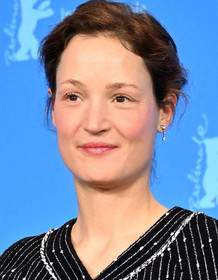
Elisabeth (Vicky Krieps)
Played by Vicky Krieps
Elisabeth is a powerful yet restless empress who feels constrained by a loveless marriage and rigid court norms. Frustrated by loneliness and aging, she seeks moments of autonomy through dieting, flirtations, and bold public acts. Her craving for freedom clashes with royal expectations, driving a cycle of daring choices and personal risk.
- 👑 Royalty
- 💃 Vanity
- 🪞 Public image
-

Franz Joseph (Florian Teichtmeister)
Played by Florian Teichtmeister
Emperor Franz Joseph is a duty-bound ruler who oscillates between stern authority and distant detachment. He struggles to reconcile Elisabeth's independence with the demands of state and marriage, reacting with frustration to her actions. His distance and suspicion fuel the couple's conflicts and push Elisabeth toward drastic acts.
- 👑 Monarchy
- 💔 Marriage
- 🧭 Duty
-

Bay Middleton (Colin Morgan)
Played by Colin Morgan
Bay is a skilled riding instructor who becomes a tempting but ultimately unattainable figure in Elisabeth's life. He recognizes her vanity and maintains emotional distance, resisting becoming part of her reinvention. His restraint highlights Elisabeth's longing for a genuine connection beyond courtly games.
- 🏇 Rider
- 💬 Attraction
- 🧭 Boundaries
-

Louis Le Prince (Finnegan Oldfield)
Played by Finnegan Oldfield
Louis Le Prince is an aspiring filmmaker who embodies Elisabeth's fascination with youth, art, and new media. Their flirtations reveal her desire for novelty and significance outside ceremonial duties. He approaches creativity with a practical edge, challenging Elisabeth's fantasies while offering a glimpse of modernity.
- 🎬 Filmmaker
- 🎨 Artist
- 💡 Innovation
- R(
Rudolf (Aaron Friesz)
Played by Aaron Friesz
Rudolf is Elisabeth's son, joining her on a journey before beginning his military education in Prague. He represents filial duty and the burden of legacy within a turbulent empire. His presence underscores Elisabeth's desire to protect her family while still seeking personal freedom.
- 🧒 Heir
- 👨👦 Family
- 🛡️ Duty
-

Ludwig II, King of Bavaria (Manuel Rubey)
Played by Manuel Rubey
Ludwig II is Elisabeth's Bavarian cousin and kindred spirit, a romantic and imaginative monarch who shares cultural ties with Elisabeth. Their meetings offer emotional resonance within the imperial circle, though the solace they provide is limited by courtly constraints.
- 👑 Bavarian Royalty
- 🌟 Kindred Spirit
- 🎭 Romance
- MF
Marie Festetics
Marie Festetics is Elisabeth's devoted lady-in-waiting, serving as a stand-in in public appearances and enforcing Elisabeth's dietary and ceremonial rules. She carries Elisabeth's secrets and helps maintain appearances under intense scrutiny.
- 👗 Attendant
- 🤝 Trust
- 🗝️ Secrets
- MV
Marie Valerie
Marie Valerie is Elisabeth's younger daughter whose illness after a nighttime ride becomes a domestic crisis. The episode intensifies Elisabeth's urgency to protect her family while managing personal pursuits.
- 👶 Family
- 💞 Love
- 🩺 Health
Where and When Is Corsage Set?
Corsage is set in Vienna, Austria; Bavaria, Germany; Ancona, Italy; Sarajevo, Bosnia and… (1877). Here is why the time and place matter to the story.
When
1877
The events unfold in the late 19th century, during Emperor Franz Joseph's reign. It is a period of rigid court protocol, emerging public scrutiny, and evolving notions of femininity and power within the empire. The narrative centers on Elisabeth's 40th birthday and her attempts to redefine her identity amid marriage, duty, and public expectations.
Where
Vienna, Austria; Bavaria, Germany; Ancona, Italy; Sarajevo, Bosnia and Herzegovina; Prague, Czech Republic
The film moves across the Habsburg Empire, focusing on the imperial court in Vienna with excursions into Bavaria and other imperial domains. It contrasts opulent palaces and private chambers with medical wards and seaside retreats, illustrating Elisabeth's shifting moods and needs. The journey touches Ancona and Sarajevo, highlighting the empire's vast reach and the political stakes of its ruling family.
- 🏰 Court life
- 🗺️ Empire travel
- 🕰️ 19th century
What Are the Themes of Corsage?
4 ideas the story keeps returning to, among them Autonomy, Beauty & Age and Power & Rumor.
-
01
Autonomy
Elisabeth pursues personal agency in a world that confines her to ceremonial duties and beauty standards. She experiments with weight, flirtation, and bold public acts to reclaim control over her life. This pursuit of independence clashes with court scrutiny and her husband’s disapproval, showing the fragile balance between freedom and tradition.
-
02
Beauty & Age
Beauty is portrayed as both currency and burden, pressuring Elisabeth to maintain relevance as she ages. Her dieting, hair changes, and dramatic gestures signal a struggle between self-definition and public perception. The pursuit of youth becomes a manifestation of power, while also exposing vulnerability.
-
03
Power & Rumor
Rumors about Franz Joseph's affairs invade Elisabeth’s life, shaping her public image and private decisions. She navigates a male-dominated system by orchestrating appearances and alliances, revealing how personal scandals intersect with imperial politics. The story links Elisabeth's actions to broader concerns about war, influence, and duty.
-
04
Addiction & Mental Health
Elisabeth is prescribed heroin as a misguided remedy for chronic distress, introducing a dangerous coping mechanism. The drug becomes a temporary escape that deepens vulnerability and reliance on precarious support systems. The plot uses this to explore how distress is medicalized and how true reinvention depends on stability and care.
How Does Corsage End?
The last act of Corsage and what it means, in 254 words. The ending lands as ambiguous. Big spoilers: read the plot summary first if you have not seen it.
The final act, in full
The film “Corsage” presents a poignant depiction of Empress Elisabeth’s final act of rebellion against the constraints of her royal life. Throughout the film, Elisabeth is shown battling her aging, her obsession with her appearance, and her longing for freedom. Her act of chopping off her hair symbolizes her rejection of the oppressive beauty standards and the rigid expectations placed upon her as a royal. This act allows her to momentarily shed her identity as the perfect, eternal young empress and to feel a sense of liberation. The climax of her journey comes when she chooses to leap into the sea, away from the watchful eyes and judgments of her royal observers. It can be interpreted as her final assertion of autonomy, a move to reclaim her life on her own terms. Instead of succumbing to her predicted death by illness or being killed by authority, Elisabeth’s decision to jump into the sea signifies her desire to escape her suffering and to embrace the unknown. The film ends with her entering the vast ocean, symbolizing her ultimate break from the expectations that have defined her existence, leaving her to be remembered as a woman who sought her own freedom, even if it meant risking everything. This ending underscores her profound yearning for independence and her refusal to be merely a figure confined by history and duty. Ultimately, Elisabeth’s act of jumping into the sea is a powerful statement of self-determination, ending her story not with resignation but with a daring pursuit of personal liberation.
What Kind of Film Is Corsage?
Melancholic in tone, with slow pacing and a moderate story, going by the plot summary.
- Tone
- Melancholic
- Pacing
- Slow
- Story
- Moderate
- Intensity
- Medium
- Ending
- Ambiguous
A slow, intimate, and melancholic portrait of a 19th-century empress in crisis, filled with quiet desperation, small acts of defiance, and a persistent yearning for freedom against suffocating constraints.
- lonely
- introspective
- melancholic
- claustrophobic
- defiant
- yearning
- royalty and duty
- female rebellion
- identity crisis
- marital estrangement
Content notes: suicide attempt, self harm, drug use, emotional abuse.
Quiz
How well do you remember Corsage? Test yourself on the story.