
Colossal Youth 2006

Directed by
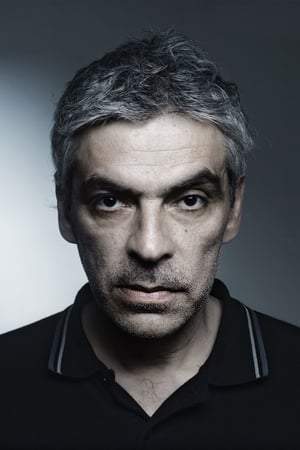
Pedro Costa
Made by

Ventura Film
Colossal Youth Plot Summary
Read the complete plot summary and ending explained for Colossal Youth (2006). From turning points to emotional moments, uncover what really happened and why it matters.
Ventura anchors a quiet, intimate drama at the edge of urban decay, a film that follows a 75-year-old man whose presence threads through a network of neighbors in a run-down neighborhood. Time and space drift between shots, leaving the sequence of events oddly elusive: it isn’t always clear who is responsible for the furniture being hurled out a second-floor window, nor whether the person the woman is railing about is the man we come to know as Ventura. The casting unfolds with a sense of realism, and like much of the film, the performances are delivered by nonprofessional actors, lending an almost documentary-like feel to the proceedings.
The narrative spends a great deal of its running time tracing Ventura’s visits to people in his area, a circle of relationships he often calls his “children.” In turn, those he helps sometimes address him as “Papa.” These small, intimate exchanges establish a fragile web of kinship and dependence, creating a portrait of a community bound together by routine, memory, and mutual care even as the neighborhood awaits destruction. The dynamic between the elderly man and his neighbors is tender, patient, and observational, inviting the viewer to observe how ordinary acts of telling, listening, and sharing shape a sense of belonging.
Visually, the film contrasts the brightness of a newly provided government apartment with the grim, shadowy tenements that stand to be demolished. The new space feels almost clinical in its cleanliness and light, a stark counterpoint to the squalor of the old buildings. This juxtaposition is reinforced by a high-contrast cinematographic style that makes the decayed rooms unexpectedly beautiful, turning everyday interiors into striking canvases that carry a quiet, contemplative mood. In these images, everyday life glows with a strange, almost tactile beauty, inviting viewers to linger on textures, light, and small gestures rather than on overt dramatic plot turns.
A recurring thread centers on a request from a fellow Cape Verdean, Alberto ‘Lento’ Barros, who asks Ventura to compose a love letter for his wife. Ventura’s recitation of the letter becomes a thematic throughline, a formal device that weaves memory, desire, and communal ties into the fabric of the film. The act of writing and voicing the letter recurs, shaping moments of introspection and connection across the characters’ lives. This motif elevates the everyday task into something tactile and honoring, underscoring how language and sentiment travel across generations and boundaries within the community.
Throughout the film, there are subtle allusions to past lives in the Cape Verde Islands and to Portugal’s political history, lending a broader resonance to the narrative. The title, Youth on the March, lands with an ironical weight, suggesting movement, progress, and idealism that contrast with the quiet, enduring rhythms of the characters’ daily lives. This irony sits at the heart of the film’s exploration of memory, migration, and the legacies we carry with us.
Taken together, the movie is a quiet meditation on belonging, aging, and the intimate bonds that endure amid upheaval. It favors a restrained, observant pace over loud drama, inviting viewers to notice the small, almost sacred moments—the ways a neighbor sits with another, the sound of a door closing, the glow of a sunlit wall in a stark, formerly tenement room. The result is a thoughtful, beautifully composed portrait of community, memory, and resilience, told through a lens that values human connection as much as any explicit plot payoff.
Colossal Youth Timeline
Follow the complete movie timeline of Colossal Youth (2006) with every major event in chronological order. Great for understanding complex plots and story progression.
Opening doorway chaos
The film opens with a doorway in a run-down neighborhood as furniture crashes onto the pavement from a second-floor window. A woman clutches a knife and rants, suggesting danger and tension. The sequence leaves the viewer unsure whether she is the one throwing the furniture or whether Ventura, the 75-year-old main figure, is connected to the outburst.
Introduction of Ventura
The film introduces Ventura, a 75-year-old man who serves as its central figure. He is notably played by a nonprofessional actor, which gives the performance a documentary-like texture. The opening frames hint at a life lived on the margins, shaping how he moves through the neighborhood.
Ventura visits his 'children'
Much of the film follows Ventura visiting different residents he regards as his children. In return, some refer to him as "Papa," establishing a chosen family dynamic among neighbors. These visits illuminate social bonds that anchor the narrative.
Ventura's bright government apartment
Ventura lives in a bright but nearly empty government-provided apartment, a stark contrast to the squalid tenements awaiting demolition. The clean, luminous space stands out against the surrounding decay and hints at displacement and renewal simultaneously.
The old tenements and impending destruction
The film juxtaposes the old tenements slated for destruction with the new apartment, underscoring how long-time residents are displaced. The old spaces are shot in high-contrast lighting, turning hardship into a strangely beautiful visual poem.
The love letter request
Ventura is asked to write a love letter for his wife by a fellow Cape Verdean named Lento. The exchange becomes a recurring prompt that threads memory, longing, and speech through the film. The act of writing and sharing the letter anchors the narrative in intimate history.
Recitation as motif
Ventura's recitation of the love letter becomes a recurring motif, resurfacing in different scenes as a personal ritual. Each delivery deepens his voice and connection to loved ones, while revealing fragments of his past.
Allusions to Cape Verde and Portugal
The film alludes to past lives in the Cape Verde Islands and to Portugal's political history, weaving historical memory into personal stories. These references help explain the characters' sense of time as fluid and cyclical.
The ironic title
The title Youth on the March is presented as ironic given the elder-centered tales at its core. The contrast invites viewers to rethink what youth and momentum mean within a community facing erasure.
Casting and realism
Like many characters, Ventura is portrayed by a nonprofessional actor, reinforcing the documentary-like texture. The casting blurs the line between fiction and reality, inviting empathy for the neighborhood's inhabitants.
Fragmented sense of time and space
The relationships between shots often blur time and space, making the narrative feel cyclical and open to interpretation. The editing encourages viewers to assemble the story from memory rather than a linear sequence.
The papa-children dynamic
The recurring dynamic of Ventura as "Papa" and others as his "children" reveals a kinship network among residents. This nonbiological family illustrates solidarity and care within a precarious urban community.
Colossal Youth Characters
Explore all characters from Colossal Youth (2006). Get detailed profiles with their roles, arcs, and key relationships explained.
Ventura
Ventura is a 75-year-old man whose steady, unassuming presence anchors the film. He moves through a run-down neighborhood, visiting people who become part of his improvised family. Known to his neighbors as 'Papa,' he embodies a calm patriarchal role that sustains a sense of community amid hardship. The film follows his gentle interactions and captures how memory and care persist in everyday moments.
Lento
Lento is a fellow Cape Verdean who forms a key bond with Ventura. He asks Ventura to write a love letter for his wife, turning an intimate gesture into a recurring motif in the film. Through Lento, the diaspora's personal ties and daily concerns are threaded into the neighborhood’s fabric.
Clotilde
Clotilde is a neighbor in the same area who interacts with Ventura and the other residents. Her presence helps illuminate the close-knit yet precarious life of people who share space and stories in a neighborhood under redevelopment. She participates in the everyday rhythms that keep the community alive.
Vanda
Vanda is another neighbor who appears in Ventura's circle, contributing to the film's portrait of a durable, interdependent community. Through Vanda, everyday conversations and small acts of care reveal the neighborhood's resilience. She embodies the social fabric that sustains residents amid uncertainty.
Cila Cardoso
Cila Cardoso appears as a resident within the same community, highlighting the multiplicity of lives that intersect with Ventura's. Her presence adds texture to the film's depiction of everyday life in a crowded, evolving urban space.
Beatriz Duarte
Beatriz Duarte is another figure among the neighborhood's residents, contributing to the mosaic of characters who populate Ventura's world. She represents the ordinary lives that persist even as redevelopment looms.
Colossal Youth Settings
Learn where and when Colossal Youth (2006) takes place. Explore the film’s settings, era, and how they shape the narrative.
Location
Cape Verdean immigrant neighborhood in Portugal
Set in a decaying urban area, the film follows Ventura and his neighbors as they navigate poverty and the constant threat of demolition. One side of the city features a bright, government-provided apartment that stands in stark contrast to the dark, squalid tenements the area will lose. Ventura's daily visits to residents—whom he calls his 'children'—create a makeshift family that anchors the community.
Colossal Youth Themes
Discover the main themes in Colossal Youth (2006). Analyze the deeper meanings, emotional layers, and social commentary behind the film.
🧓
Aging & Community
Ventura, at 75, anchors the film with a calm, observant presence within a marginalized neighborhood. The relationships he cultivates with residents show a chosen family that sustains itself through daily routines and care. The film uses his aging body and patient pace to explore memory, belonging, and continuity as the city around them changes.
🏚️
Displacement
The juxtaposition of a bright government apartment against the dark, crumbling tenements slated for destruction highlights social inequality. Redevelopment pressures threaten spaces that house memories and daily life, forcing residents to navigate an uncertain future. The film suggests resilience through shared routines and mutual support in the face of urban change.
🗺️
Memory & Diaspora
Allusions to the Cape Verde Islands and Portugal's political past thread through the film, connecting past lives with present realities. Ventura's recitation of the love letter for Lento's wife becomes a thread of memory carried across time and generations. The ironic title Youth on the March frames aging as a quiet, persistent force within a changing world.

Coming soon on iOS and Android
The Plot Explained Mobile App
From blockbusters to hidden gems — dive into movie stories anytime, anywhere. Save your favorites, discover plots faster, and never miss a twist again.
Sign up to be the first to know when we launch. Your email stays private — always.
Explore the mobile appColossal Youth Spoiler-Free Summary
Discover the spoiler-free summary of Colossal Youth (2006). Get a concise overview without any spoilers.
In the shifting landscape of Lisbon’s periphery, the demolition of a slum forces a profound and disorienting transition upon its residents. Ventura, a 75-year-old immigrant from Cape Verde, finds himself uprooted from the crumbling, squalid tenements he has long called home and relocated to a stark, modern housing project. This physical displacement creates a jarring visual and emotional contrast: the dark, textured chaos of the old neighborhood, filmed with a strange, high-contrast beauty, stands in opposition to the bright, almost barren silence of his new government-provided apartment. The environment itself becomes a character, reflecting the dislocation of a generation left behind by urban renewal.
The narrative drifts through Ventura’s solitary routines, observing him as a spectral figure caught between two worlds. As he wanders through the hallways of the new estate and revisits the ruins of his former neighborhood, he encounters various people he refers to as his “children,” a term that suggests a deep, paternal bond within the community. Through these interactions, the film constructs a portrait of a man whose identity is inextricably linked to those around him, even as the physical structures that housed their shared history begin to vanish. The lines between past and present blur, creating an atmosphere where relationships and spatial realities are open to interpretation, guided by non-professional actors who bring a raw authenticity to the screen.
Amidst this atmosphere of transition, recurring motifs emerge that tether the characters to their personal and collective history. A request for Ventura to write a love letter for a friend becomes a rhythmic, emotional anchor that weaves through the visual silence of the new apartments, hinting at enduring connections and unspoken desires. The film’s tone is one of quiet introspection, punctuated by allusions to Cape Verdean heritage and Portugal’s political past. The title stands as an ironic counterpoint to the protagonist’s advanced age, suggesting a tension between the relentless march of progress and the lingering vitality of memory.
Movies with Similar Twists and Themes
Uncover films that echo the narrative beats, emotional arcs, or dramatic twists of the one you're exploring. These recommendations are handpicked based on story depth, thematic resonance, and spoiler-worthy moments — perfect for fans who crave more of the same intrigue.
Featured on this page

What's After the Movie?
Not sure whether to stay after the credits? Find out!
Check out our other apps:

SAT Sphere
Build confidence for the Digital SAT.

Mori Atlas
Discover wild places worth protecting.

Luntero
Search smarter for a home in Amsterdam.

Plot Explained
Unravel movie endings and hidden clues.

Pokechamp
Dive into Pokémon data and battle logic.

Driving Theory
Get ready for your European theory test.

Movie Dust
Plan your next cinema trip with ease.

Musemap
Find art and culture as you travel.

Selkobase
Compare credentials before committing.

Local Manual
Turn an unfamiliar country into practical next steps.

Lernavi
Compare school systems before your next move.

GymRoam
Find a workout stop wherever your plans take you.
Explore Our Movie Platform
New Movie Releases (2026)
Famous Movie Actors
Top Film Production Studios
Movie Plot Summaries & Endings
Major Movie Awards & Winners
Best Concert Films & Music Documentaries
Movie Collections and Curated Lists
© 2026 What's After the Movie. All rights reserved.
Privacy Policy