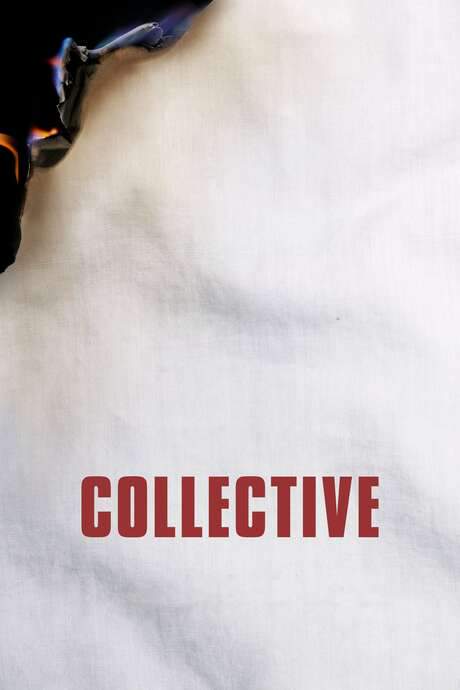
Collective 2019


Directed by

Alexander Nanau
Made by

Samsa Film
Where to Watch Collective
See current US streaming, rental, and purchase options for Collective (2019) via JustWatch.

Dox Amazon Channel
HD
Magnolia Selects Amazon Channel
HD
Philo
HD
Hoopla
SD
Kanopy
HD
Tubi TV
SD
Xumo Play
HD
YouTube Free
HD
Amazon Video
SD
Apple TV Store
HD
Fandango At Home
SD
Google Play Movies
SD
YouTube
SD Streaming availability powered by 
Collective Plot Summary
Read the complete plot summary and ending explained for Collective (2019). From turning points to emotional moments, uncover what really happened and why it matters.
In October 2015, tragedy struck Bucharest, Romania, when a devastating fire erupted at the Colectiv nightclub, resulting in the immediate deaths of 27 individuals and leaving 180 others injured. The disaster exposed severe safety violations, particularly the absence of adequate fire exits, which fueled widespread outrage across the country. The public’s anger was so intense that thousands took to the streets, demanding accountability and justice. As a response, the government, led by the Social Democratic Party, resigned, and a temporary technocrat administration was established to govern until the next elections, in an effort to restore public trust.
Over the following months, despite the initial hope for reform, 37 more victims succumbed to their injuries in hospitals. These tragic deaths intensified concerns about the healthcare system’s quality and management. Many hospitals appeared to mishandle patient care, with errors and negligence leading to preventable fatalities. Official statements from hospital authorities claimed that all necessary procedures were being followed and that the hospitals were operating normally, but this was soon proven false through investigative efforts.
A team of dedicated local journalists from the Sports Gazette began digging into this issue, uncovering evidence of systemic mismanagement. Their investigation revealed that many patients were dying from bacterial infections because of unsafe hospital conditions, and they suspected that hospital disinfectants might be part of the problem. Through sources within the healthcare system, they learned that disinfectants used in numerous hospitals might be diluted, rendering them ineffective. They obtained documents suggesting that the disinfectant solutions supplied by Hexi Pharma—a major pharmaceutical company—were being falsely labeled as properly concentrated.
The journalists arranged for rigorous testing of the disinfectants, which confirmed that the solutions provided were diluted to just ten percent of their proper strength. This discovery pointed to widespread negligence and intent to deceive, prompting the Sports Gazette to publish a detailed investigation into Hexi Pharma’s practices and the government’s failure to monitor or regulate the quality of medical supplies. The article also exposed how the government, including the Minister of Health, had been dismissive of the evidence, claiming that the disinfectants were still effective in 95 percent of cases, despite contrary laboratory results. The health minister’s repeated assertions, despite mounting evidence, fueled public suspicion of corruption and cover-ups.
Further investigation uncovered a long-standing connection between Hexi Pharma and Dan Condrea, the company’s head, who was secretly involved in a complex scheme. Source documents revealed that Condrea had been bribing government officials, inflating the prices of diluted disinfectants, and storing enormous sums of money in offshore accounts. This illegal scheme enabled him to wield significant influence over health policies and hospital management, contributing to the continued unsafe conditions in hospitals across Romania.
As the scandal unraveled, Condrea was tragically killed in a car crash, with suspicion swirling about whether it was an accident or an orchestrated murder to prevent him from potentially revealing damaging information. Meanwhile, the government faced mounting pressure to address the crisis. A new health minister, Vlad, a former patient rights activist, stepped into the spotlight, promising transparency and a commitment to reform. He publicly vowed to investigate and dismantle the corrupt hospital management system, though he encountered formidable bureaucratic resistance.
Vlad was appalled to discover that hospitals were still using diluted disinfectants, and he endeavored to enforce strict regulations on hospital managers, many of whom had bought their positions through bribery. Nonetheless, corruption was deeply entrenched, and reform proved difficult. The Sports Gazette gained access to audio recordings of abusive hospital managers who had been stealing funds through fake invoices and had even built private clinics abroad, illustrating the extent of financial corruption draining public resources.
Amidst this chaos, one of the Colectiv victims, Tedy, who was severely disfigured, was fitted with a robotic hand. She participated in an art exhibit, sharing her story through portraits that vividly displayed the physical and emotional scars from the tragedy. Vlad assured her and other victims that the government planned to fund treatments abroad and had renovated the burn unit to better serve future patients. However, he also confronted the painful truth: the previous administration had prioritized profits and political interests over patient care, delaying critical treatments and contributing to avoidable deaths.
As reform efforts intensified, Vlad pushed forward with comprehensive regulations, including vetting hospital managers and establishing protections for whistleblowers. Despite strong opposition, he persisted in trying to root out systemic corruption—an effort almost compared to “teaching a pig to dance.” Yet, the pervasive corruption remained a formidable barrier.
Meanwhile, the investigation revealed that some hospitals had falsified transplant certifications under political pressure, prompting Vlad to announce plans to send transplant patients abroad, despite resistance from within the medical community. The discovery of ongoing accreditation fakes and bribery scandals underscored how deep-rooted the issues were. As tensions rose, Vlad declared that the entire system was rotten, and expressed concern about upcoming elections, fearing that a low voter turnout might allow the corrupt political forces to regain control.
The political landscape continued to be turbulent—campaigns and accusations intensified, and the Medialogica team faced threats from organized crime figures warning them to be cautious. As voters ultimately turned out in low numbers, the Social Democrats secured a sweeping majority, leaving many victims’ families devastated and Vlad feeling that much progress had been lost. Amidst all this, the nation mourned the systemic failures that led to the tragedy, while calls for justice and accountability persisted, highlighting how corruption, negligence, and greed had perpetuated a cycle of suffering for years.
Collective Timeline
Follow the complete movie timeline of Collective (2019) with every major event in chronological order. Great for understanding complex plots and story progression.
Fire Breaks Out at Colectiv Club
In October 2015, a devastating fire erupts at the Colectiv club in Bucharest, Romania, killing 27 people instantly and injuring 180. The event exposes severe issues with fire safety regulations including the lack of proper fire exits, igniting public outrage. The tragedy becomes a catalyst for protests against corruption and governmental negligence.
Protests Lead to Government Resignation
Mass protests erupt across Romania, demanding accountability for the disaster and exposing systemic corruption. The protests pressure the government to resign, forcing the Social Democratic administration to step down. A temporary technocratic government is installed to oversee the country until the next elections.
Victims Continue to Die in Hospitals
Over the subsequent months, 37 more victims succumb to their injuries in hospitals, raising questions about medical care and hospital management. Hospitals claim that all necessary measures are being taken, but reports of errors and poor care suggest otherwise. The public's outrage deepens with each avoidable death.
Journalists Investigate Hospital Mismanagement
Local journalists from the Sports Gazette begin investigating the hospitals' handling of burn victims. They uncover that many patients die from bacterial infections, and suspect improper use of disinfectants. Evidence suggests that hospitals may be using diluted disinfectants, compromising patient safety.
Testing Confirms Diluted Disinfectants
Laboratory tests reveal that disinfectants supplied by Hexi Pharma are diluted to only ten percent of their intended potency. The media exposes the falsification, implicating the company and indicating governmental inaction despite available evidence. The scandal sparks national outrage over healthcare corruption.
Government Claims Disinfectants Are Effective
The Ministry of Health holds a press conference asserting that the disinfectants are 95% effective, dismissing reports of dilution as unsubstantiated and claiming that all patients are safe. The Minister dodges questions about conflicting test results, fueling public suspicion of governmental deceit.
Investigation and Resignation of Health Minister
Journalist Catalin Tolontan uncovers documents from a source that details the long-standing knowledge of the bacterial infection issues. The health minister resigns amidst mounting pressure, leaving without taking questions, as police launch investigations into Hexi Pharma's operations.
Death of Hexi Pharma CEO
Hexi Pharma's CEO, Dan Condrea, dies in a mysterious car crash just before he can be questioned. Authorities and the media speculate whether it was an accident, murder, or suicide, fearing Condrea may have revealed government corruption and bribes involving the company.
New Minister Promises Transparency
Vlad, a former patient rights activist, becomes Romania’s interim Minister of Health. He pledges to fight corruption, implement stricter regulations, and bring transparency to hospital management. He begins efforts to remove compromised hospital managers and probe systemic issues.
Revelations of Hospital Corruption and Neglect
The Gazette uncovers evidence of hospital managers creating fake invoices, misappropriating funds, and even building clinics abroad. An audio recording of abusive hospital staff highlights systemic corruption. These findings confirm widespread mismanagement, undermining public trust.
Vlad Enforces New Regulations
Vlad pushes through strict policies for hospital administrators, aiming to root out corruption. He advocates for transparency, including restrictions on political affiliations and establishing whistleblower protections. His reforms face intense opposition from entrenched interests.
Systemic Failures in Medical Transplant Accreditation
Vlad learns that some hospitals faked transplant accreditation under political pressure. He announces plans to send transplant patients abroad and exposes these falsifications publicly, provoking controversy about the quality and safety of Romanian healthcare.
Election Results and Political Shift
In the upcoming elections, voter turnout remains low, and the social democrats secure a sweeping victory, reinstating the old corrupt regime. Vlad’s father criticizes his efforts, telling him to leave Romania, reflecting the entrenched political barriers against reform.
Post-Election Challenges and Pressures
Journalists face threats from organized crime figures warning them to be cautious. The mayor appoints an unqualified hospital manager, demonstrating ongoing systemic decay. Victims' families continue mourning, symbolizing the unresolved trauma and corruption.
Collective Characters
Explore all characters from Collective (2019). Get detailed profiles with their roles, arcs, and key relationships explained.
Cătălin Tolontan
An investigative journalist dedicated to exposing governmental and corporate corruption. His relentless pursuit of the truth drives the story forward, risking his safety to reveal the atrocities caused by falsified disinfectants and political bribery.
Vlad Voiculescu
The health minister and reformist, committed to transparency and systemic change. Despite facing immense bureaucratic resistance, his efforts aim to improve hospital management and fight corruption, representing hope for reform.
Tedy Ursuleanu
A burn victim with severe disfigurement, she symbolizes the human cost of systemic negligence. Her journey includes receiving a robotic hand and advocating for victims, embodying resilience amidst tragedy.
Dan Condrea
Head of Hexi Pharma, involved in the scheme of diluting disinfectants and bribery. His mysterious death raises questions about justice and cover-ups, illustrating the dangerous reach of corruption.
Collective Settings
Learn where and when Collective (2019) takes place. Explore the film’s settings, era, and how they shape the narrative.
Time period
2015
The movie takes place during the year 2015, a period marked by social and political upheaval in Romania. The events reflect the aftermath of the Colectiv nightclub fire and the ensuing protests, highlighting issues of healthcare corruption and governmental accountability that dominated the year.
Location
Bucharest, Romania
The film is set in Bucharest, Romania's capital, a city marked by a mix of historic architecture and modern urban challenges. It highlights the urban environment where corruption, hospital management issues, and public protests unfold. Bucharest's vibrant street life and political unrest serve as a backdrop for the story's themes of systemic failure.
Collective Themes
Discover the main themes in Collective (2019). Analyze the deeper meanings, emotional layers, and social commentary behind the film.
🔥
Corruption
Corruption pervades various levels of Romanian society, from hospitals to government officials. The film explores how corruption compromises safety, medical care, and public trust, ultimately leading to systemic collapse. It underscores the devastating impact of greed and dishonesty within institutions meant to serve the public.
⚖️
Accountability
The narrative emphasizes the lack of accountability in both healthcare systems and governmental structures. Journalistic investigations reveal cover-ups and falsified data, highlighting the importance of transparency and justice. The film portrays the struggle of individuals fighting to uncover the truth amidst institutional resistance.
🩺
Healthcare Failures
The story critically examines the Romanian healthcare system's failures, including inadequate hospital management, unsafe disinfection practices, and neglect of burn victims. It portrays how systemic corruption directly leads to patient deaths and widespread medical negligence, calling for reform.

Coming soon on iOS and Android
The Plot Explained Mobile App
From blockbusters to hidden gems — dive into movie stories anytime, anywhere. Save your favorites, discover plots faster, and never miss a twist again.
Sign up to be the first to know when we launch. Your email stays private — always.
Explore the mobile appCollective Spoiler-Free Summary
Discover the spoiler-free summary of Collective (2019). Get a concise overview without any spoilers.
In the wake of a devastating nightclub fire that has shaken Bucharest, the city teeters between grief and a restless demand for accountability. The tragedy exposes cracks in a healthcare system already strained by bureaucracy, while the nation grapples with a temporary technocratic government trying to steady a populace that refuses to be silenced. The atmosphere is dense with protest chants, sleepless nights, and a lingering sense that something far larger than the blaze itself is at work.
Against this backdrop, a small team of investigative reporters at a modest newspaper begins to turn the public’s outrage into a relentless search for answers. Catalin Tolontan leads the effort, driven by a personal conviction that truth must break through official denials. Beside him, Mirela balances fierce curiosity with a cautious awareness of the unseen forces that guard the status quo. Together, they navigate a labyrinth of official statements, hidden documents, and reluctant sources, their newsroom becoming a micro‑cosm of the larger battle between transparency and obfuscation.
At the heart of the institutional response is a newly appointed health minister, Vlad, a former patient‑rights activist thrust into a role that forces him to confront the very structures he once critiqued. His earnest attempts to bring reform clash with entrenched interests and a bureaucratic machinery resistant to change. As he steps into the public eye, his resolve is tested by the weight of expectations from victims, their families, and a society hungry for genuine progress.
The film unfolds in a tone that blends stark realism with an almost tactile urgency, allowing the audience to feel the pulse of a nation in crisis. Cinematography captures the cold sterility of hospital corridors juxtaposed with the raw energy of street protests, while the narrative’s quiet moments invite contemplation on the cost of silence. Through nuanced character dynamics and an unflinching look at systemic decay, the story invites viewers to wonder how far the pursuit of truth can travel when power prefers the shadows.
Movies with Similar Twists and Themes
Uncover films that echo the narrative beats, emotional arcs, or dramatic twists of the one you're exploring. These recommendations are handpicked based on story depth, thematic resonance, and spoiler-worthy moments — perfect for fans who crave more of the same intrigue.

Featured on this page

What's After the Movie?
Not sure whether to stay after the credits? Find out!
Check out our other apps:

SAT Sphere
Build confidence for the Digital SAT.

Mori Atlas
Discover wild places worth protecting.

Luntero
Search smarter for a home in Amsterdam.

Plot Explained
Unravel movie endings and hidden clues.

Pokechamp
Dive into Pokémon data and battle logic.

Driving Theory
Get ready for your European theory test.

Movie Dust
Plan your next cinema trip with ease.

Musemap
Find art and culture as you travel.

Selkobase
Compare credentials before committing.

Local Manual
Turn an unfamiliar country into practical next steps.

Lernavi
Compare school systems before your next move.

GymRoam
Find a workout stop wherever your plans take you.
Explore Our Movie Platform
New Movie Releases (2026)
Famous Movie Actors
Top Film Production Studios
Movie Plot Summaries & Endings
Major Movie Awards & Winners
Best Concert Films & Music Documentaries
Movie Collections and Curated Lists
© 2026 What's After the Movie. All rights reserved.
Privacy Policy