What Is Videocracy About?
The premise of Videocracy in 316 words, with nothing given away. The full story follows below.
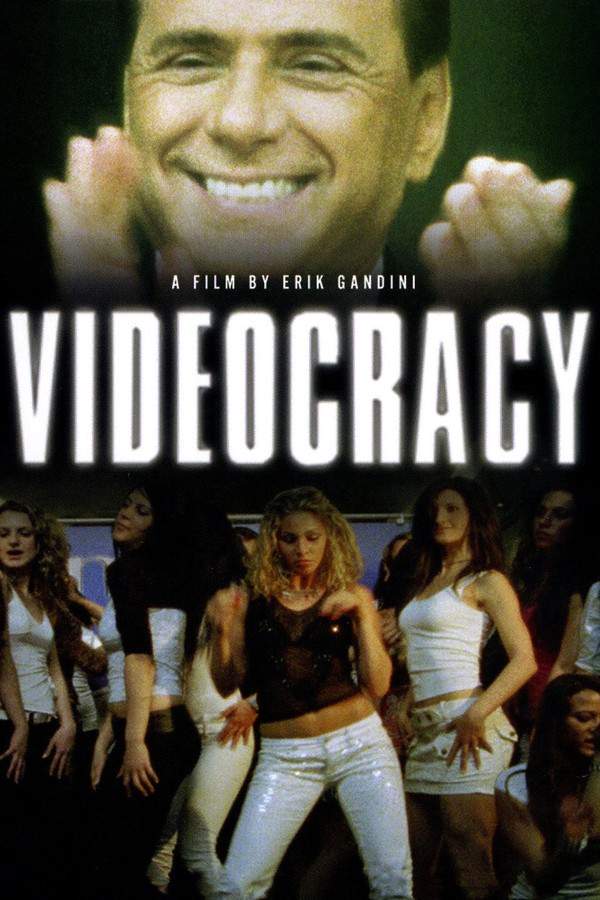
In the glittering, image-obsessed world of Italian television, where celebrity and political power intertwine with unsettling ease, a documentary pulls back the curtain on a media empire that has shaped a nation. Director Erik Gandini ventures into the orbit of Silvio Berlusconi’s vast broadcasting influence, where politics, entertainment, and personal ambition blur into a single, intoxicating spectacle. The film sets an immediate tone of cultural critique, tracing the origins of what Gandini describes as “the President’s television.”
At the heart of the film are the dreamers and gatekeepers caught within this sprawling ecosystem. A young factory worker named Riccardo “Ricky” Canevali spends his days off auditioning for screen time, navigating a system where appearance and presence often outweigh traditional talent. Meanwhile, established figures like talent manager Lele Mora and the flamboyant Fabrizio Corona embody the industry’s more extravagant tendencies. Their world is one of villas, exclusive parties, and carefully cultivated personas, where wealth and visibility have become the ultimate currencies.
The documentary immerses viewers in a culture where the boundaries between news, entertainment, and propaganda have all but dissolved. Casting calls for aspiring starlets unfold in shopping malls, while powerful figures relax along Sardinia’s luxurious Emerald Coast. Gandini’s camera captures the rituals of fame and influence with a detached yet penetrating gaze, revealing how television functions as both mirror and architect of Italian society. Conversations among his subjects hint at deeper ideological currents that linger beneath the glossy surface, suggesting a nation still reckoning with its own history.
Throughout, the film maintains an atmosphere of uneasy fascination. Its subjects speak openly about their strategies, philosophies, and desires, offering an unguarded window into a world that operates on spectacle and self-promotion. As Gandini weaves these threads together, the documentary presents a portrait of a country caught in the grip of its own media obsession, where every screen reflects something about power, image, and the price of attention.
What Happens in Videocracy?
The complete story of Videocracy, from the first scene to the last, in 573 words (about 2 minutes). Spoilers throughout.
Spoilers ahead
The documentary begins with a striking segment from the 1977 quiz show Spogliamoci insieme, where a woman gradually removes her clothing in response to questions answered correctly by the audience. The narrator, Gandini, notes that in the aftermath of these broadcasts, reports emerged of working-class men feeling too exhausted to go to work—a phenomenon he terms “the President’s television.”
In the north-western region of Lombardy, we meet Riccardo “Ricky” Canevali, a 26-year-old factory worker with dreams of stardom. Driven to audition for various shows on the Mediaset network, Ricky expresses his frustrations regarding the unequal odds he faces compared to women in the pursuit of fame. He remarks that for women, beauty and looks often overshadow talent, a subject that leads to an explanation of the Italian veline phenomenon. The documentary highlights a casting call at a mall, showcasing young women who are judged on their appearance, methodically measured, and required to dance as part of the selection process.
The narrative then transitions to the luxurious Emerald Coast in Sardinia, a favored retreat for Silvio Berlusconi and his entourage, which includes politicians and celebrities like Lele Mora and Fabrizio Corona. In an intimate interview setting within his villa, Mora praises Berlusconi, drawing parallels between him and Benito Mussolini and boasting about owning various fascist videos on his phone, even displaying a montage visually characterized by Nazi symbols paired with the song Faccetta Nera.
Fabrizio Corona, riding through the night in an unmarked car with his paparazzo assistant, describes his work as a modern-day Robin Hood. He claims to exploit the wealth of the famous but keeps the earnings for himself, arguing that those with even more money and fame are less deserving. His notoriety skyrocketed following a conviction for extortion, which he now capitalizes on as a form of celebrity. The documentary does not shy away from showing explicit content, including a scene where Corona is filmed decidedly naked while showering.
As he is released from prison after his involvement in the Vallettopoli scandal, Corona addresses the media in a calculated speech. His intentions are clear: to frame himself as a victim while diverting attention from his criminal past. When given the opportunity, he openly admits that he crafted plans for his future career while incarcerated.
However, his journey back into the spotlight proves challenging. Although he attempts multiple paid appearances at local events, they garner little interest. In a controversial move, he asks a grieving father to wear a T-shirt of his struggling agency for a promotional photo, but the father declines. Not deterred, he then approaches the Cappa twins—witnesses in the trial linked to the tragic 2007 murder of Chiara Poggi—but they deny his request as well.
This incident provokes public outrage, prompting media coverage. During a segment of TG5, Mora observes Corona’s encounter and hastily distances himself from him, capturing the moment with a biting phone call, criticizing him for his recent erratic and inappropriate remarks.
The documentary culminates with a sweeping aerial shot of numerous antennas atop residential complexes, symbolizing the pervasive nature of television. In a climactic moment, Ricky finally achieves his aspiration of appearing on prime-time television through a game show. Meanwhile, the aspiring veline from the mall perform aimlessly on a platform, and the screen eventually fades to black. The film closes with revealing statistics on the state of Italian television, leaving the audience to ponder the implications of fame, fortune, and the industry’s inherent challenges.
Videocracy Timeline: Every Key Event in Order
13 key events in the order they happen, from “1977 Quiz Show Footage” to “Documentary Conclusion”. 4 events name a place, across 4 locations.
- 1
1977 Quiz Show Footage
The documentary opens with engaging footage from the 1977 quiz show 'Spogliamoci insieme', where female contestants progressively stripped off their clothing as audience members answered questions. This ritualistic display highlighted societal norms that created a significant cultural impact, leading to observations about men's fatigue after the show's airings, marking the inception of what Gandini refers to as 'the President's television'.
When:1977
- 2
Riccardo's Ambitions
In north-western Lombardy, 26-year-old factory worker Riccardo 'Ricky' Canevali strives to achieve television fame and auditions for various Mediaset shows. He candidly expresses his frustration about the disparity in celebrity status attainment between men and women, attributing it to the superficial nature of the industry that prioritizes looks above all else.
Where:Lombardy
- 3
The Veline Phenomenon
The documentary delves into the Italian veline phenomenon where aspiring actresses, notably young women, go through rigorous auditions demonstrating their beauty and grace. This portrayal includes footage of a casting call at a mall, emphasizing the physical measurements, poses, and dance routines that potential veline undergo to capture the attention of producers.
Where:Mall
- 4
Berlusconi's Retreat
A shift in focus brings the viewer to Sardinia's Emerald Coast, frequented by Silvio Berlusconi along with a circle of influential politicians and celebrities. Key figures like manager Lele Mora share their admiration for Berlusconi, comparing him to Benito Mussolini and discussing the shared traits of both figures while revealing uncomfortable fascist sentiments.
Where:Sardinia's Emerald Coast
- 5
Fabrizio Corona's Operations
Fabrizio Corona, accompanied by a paparazzo, operates under the cover of night to capture compromising photographs of celebrities. He justifies his actions by likening himself to a modern Robin Hood, rationalizing that he exploits wealthy individuals while gaining fame through public scandals, even capitalizing on his criminal past.
- 6
Release from Prison
Upon his release from prison related to the Vallettopoli scandal, Corona stands before a crowd of reporters delivering a meticulously crafted speech. He skillfully portrays himself as a victim of circumstance, which Erik recognizes as a strategy to rebuild his public image while diverting attention away from his recent legal troubles.
Where:Prison
- 7
Struggling Comeback
After his release, Corona participates in various paid appearances aimed at reigniting his celebrity status, yet these attempts yield disappointing results. His fleeting engagements with the public highlight his diminishing relevance in the entertainment industry, forcing him to seek more provocative ways to regain media attention.
- 8
Attempt to Exploit Grief
In a desperate bid for fame, Corona requests a grieving father to model in promotional gear for his agency, but the father promptly declines. Following this, he approaches the Cappa twins, recent witnesses in a murder investigation, but they also refuse to engage, leading to another public relations setback for him.
- 9
Public Backlash
The fallout from Corona's aggressive promotional tactics ignites public outrage, subsequently covered by news media. A specific incident occurs as Erik's crew films Mora witnessing Corona's unfavorable interaction with the Cappa sisters during a TG5 news segment, which paints Corona in an unflattering light and damages his already tenuous reputation.
- 10
Mora's Disavowal
Upon realizing the negative attention surrounding Corona, Mora distances himself by making a phone call to criticize Corona's mental stability and extravagant behavior. This conversation marks a turning point, emphasizing Mora's desire to sever ties with Corona as both men navigate the precarious world of celebrity.
Show the other 3 events of Videocracy Hide the last 3 events
- 11
Ricardo's Prime Time Breakthrough
The documentary culminates with a wide-angle shot showcasing numerous antennas atop residential buildings symbolizing the pervasive reach of television. Finally achieving his dream, Ricky makes his debut in prime time television on a game show, showcasing the significant impact of media on contemporary culture.
- 12
Veline Dance Performance
In a celebratory moment, aspiring veline dance on a platform during Ricky's moment on television, representing the superficial yet glamorous nature of fame they're all chasing. This sequence starkly contrasts with the earlier examinations of the darker, exploitative aspects of fame and television culture.
- 13
Documentary Conclusion
As the documentary draws to a close, it presents a final reflection on Italian television through statistics that reveal its pervasive influence on society. The film terminates with a cut to black, leaving viewers to ponder the complexities of fame and the morality behind the entertainment industry.
Who Are the Main Characters in Videocracy?
3 characters, among them Riccardo 'Ricky' Canevali, Fabrizio Corona and Lele Mora: who each one is and the part they play in the story.
- R'
Riccardo 'Ricky' Canevali
Ricky is a 26-year-old factory worker whose dreams of television stardom illustrate the struggles of many seeking fame in a visually oriented society. He grapples with the challenges of being a man in a medium that favors looks, revealing the societal pressures and superficial nature of fame. His journey from obscurity to prime-time television represents both personal ambition and broader cultural critiques.
- 👨💼 Aspiration
- 📺 Fame
- FC
Fabrizio Corona
Fabrizio is a controversial figure in the documentary, portraying himself as a victim of circumstance while adeptly manipulating the media for his gains. His complex character embodies the intersection of celebrity, morality, and public persona, as he capitalizes on notoriety while presenting his own justifications for his actions. Corona's narrative challenges audiences to consider the consequences of media fame.
- 👤 Celebrity
- 💰 Controversy
- LM
Lele Mora
Lele Mora is a media manager who represents the intertwining of celebrity culture and politics in Italy. His admiration for Berlusconi and the controversial opinions he expresses reveal the complexities of loyalty and ethics in the entertainment industry. Through his interactions with other personalities, Mora showcases the dynamics of social standing and media influence in shaping public narratives.
- 🎭 Influence
- 📰 Media
Where and When Is Videocracy Set?
Videocracy is set in Lombardy and Sardinia's Emerald Coast (1970s). Here is why the time and place matter to the story.
When
1970s
The 1970s in Italy were marked by significant social and cultural changes with the rise of television as a dominant force in entertainment. This era saw the emergence of various television phenomena, alongside a shift in public perception influenced by media portrayal and celebrity culture. The decade also ushered in political complexities, as figures like Berlusconi began to shape the media landscape in Italy.
Where
Lombardy, Sardinia's Emerald Coast
Lombardy is a region in northern Italy known for its industrial heartland and vibrant cities, particularly Milan. It serves as the backdrop for the aspirations of factory workers like Riccardo 'Ricky' Canevali, highlighting the stark contrasts between work and fame. Meanwhile, Sardinia's Emerald Coast is renowned for its breathtaking beaches and luxury retreats, often frequented by Italy's elite, where political figures and celebrities gather.
- 🌆 City
- 🏖️ Beach
What Are the Themes of Videocracy?
2 ideas the story keeps returning to, among them Media Influence and Morality and Fame.
-
01
Media Influence
The documentary explores the pervasive influence of television on society, particularly how visual media shapes public perceptions and personal aspirations. It examines the commodification of fame, highlighting the lengths individuals will go to pursue celebrity status. The interaction of politics and media is also scrutinized, suggesting a blurring of ethics in the pursuit of entertainment.
-
02
Morality and Fame
The theme of morality in the pursuit of fame weaves throughout the documentary, as figures like Fabrizio Corona illustrate the often questionable ethics behind celebrity culture. By positioning himself as a modern Robin Hood, Corona exemplifies the twisted values associated with fame and the public's response to such moral dilemmas. This theme provokes reflection on the nature of respectability and its erosion in the quest for notoriety.
What Kind of Film Is Videocracy?
Dark in tone, with steady pacing and a moderate story, going by the plot summary.
- Tone
- Dark
- Pacing
- Steady
- Story
- Moderate
- Intensity
- High
- Ending
- Bleak
A cynical and unsettling documentary that lingers on the rot beneath Italian celebrity culture, exposing how media, politics, and exploitation feed each other in a society sedated by television.
- cynical
- unsettling
- voyeuristic
- oppressive
- disquieting
- detached
- media manipulation
- political corruption
- celebrity culture
- exploitation
Content notes: sexual exploitation, extortion, fascist references, exploitation of grief, manipulation, nudity.
Quiz
How well do you remember Videocracy? Test yourself on the story.