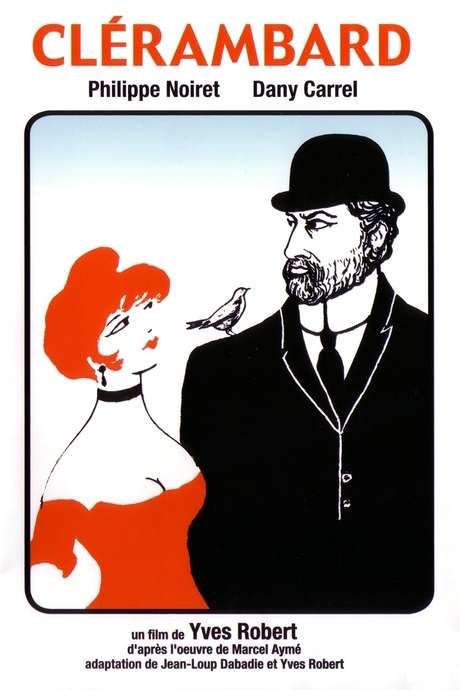
Clerambard 1969

Directed by

Yves Robert
Made by

Les Productions de la Guéville
Clerambard Plot Summary
Read the complete plot summary and ending explained for Clerambard (1969). From turning points to emotional moments, uncover what really happened and why it matters.
In a crumbling medieval castle, the penniless Count Hector de Clérémbard, Philippe Noiret, tyrannizes his wife, his son Octave, and his mother-in-law. Their income comes from knitting pullovers and whatever meat he can shoot nearby, leaving the family dependent on his sporadic schemes. The local lawyer, Maître Galuchon, Claude Piéplu, offers to wipe away the Count’s vast debts if Octave will marry the eldest of his three daughters: the youngest is a beauty, the next pretty, and the eldest a fright. While the Count is eager to seize this convenient solution, Octave rebels. Though he has never been able to afford her, he is in love with La Langouste, the town’s prostitute, Dany Carrel.
Gustalin, a neighboring farmer fed up with his livestock disappearing to the Count’s gun, decides to give him a fright. Dressing as St. Francis of Assisi, he suddenly appears before him and presents a book detailing the saint’s deeds, a moment that sparks a profound shift. On reading it, the Count renounces worldly goods and, after selling the castle to Maître Galuchon, decides to hit the road with his family in a gypsy caravan, choosing a life of simplicity, poverty, and a closer bond with nature. If Octave truly loves La Langouste, why shouldn’t he marry her? She is half-convinced about retiring from her trade and even offers Octave a free session.
When Galuchon arrives to sign the deed for the sale of the castle, he brings his three daughters: Etienette Galuchon, Françoise Arnaud; Louise, Martine Sarcey; and Evelyne Galuchon, Josiane Lévêque. Octave, emboldened by his experience with La Langouste, takes the youngest into the empty caravan and later tells Galuchon that he will marry her in return for an annual allowance. The Count is sorry that La Langouste has been jilted and says she can join them in the caravan anyway.
Gustalin reappears to say that he is sorry to have misled the Count, who has now lost his castle, but the Count doesn’t mind as he is set on his new life. In the town square, two angels are seen harnessing his horse to the caravan, and the entire town follows the procession out into the countryside.
Clerambard Timeline
Follow the complete movie timeline of Clerambard (1969) with every major event in chronological order. Great for understanding complex plots and story progression.
Tyranny in the castle
In a crumbling medieval castle, the penniless Count of Clérembard rules with fear over his wife, his son Octave, and his mother-in-law. Their income comes from knitting pullovers and what the Count can shoot for meat, leaving them hungry and dependent. The castle's grandeur has faded into tyranny and want.
A debt-clearing bargain
The local lawyer Galuchon offers a solution: he will clear the Count’s mounting debts if Octave agrees to marry Galuchon’s daughter. Galuchon has three daughters—the eldest is described as a fright, the middle as pretty, and the youngest as a beauty—and the arrangement is set up to resolve the Count’s problems through marriage.
Octave’s rebellion
Octave resists the deal, declaring his love for La Langouste, the town’s prostitute. He has never been able to afford her, but his heart pulls him toward a life beyond the castle gates.
Gustalin’s frightful gambit
Gustalin, a neighboring farmer fed up with his lost livestock, dresses as St Francis of Assisi and confronts the Count, presenting him with a book of the saint’s deeds. The gesture is meant to awaken the Count to a different, humbler path.
Renunciation and departure
Reading the saint’s deeds inspires the Count to renounce worldly goods and sell the castle to Galuchon. He decides to take to the road with his family in a gypsy caravan, embracing poverty and a simple life close to nature.
La Langouste’s offer
Emboldened by his experience with La Langouste, Octave begins to imagine marrying her. La Langouste, half-convinced about retiring from her trade, offers Octave a free session as a sign of her tentative commitment.
Galuchon arrives for the deed
Galuchon arrives to sign the deed for the castle’s sale and brings his three daughters. The moment marks a formal turning point as the old arrangement collides with new desires.
The youngest contender joins the caravan
Emboldened by La Langouste’s influence, Octave takes Galuchon’s youngest daughter into the caravan and later tells Galuchon that he will marry her in return for an annual allowance.
La Langouste’s fate clarified
The Count expresses sorrow that La Langouste has been jilted, but he allows her to join them in the caravan anyway. He seems ready to embrace the new life they will share on the road.
Gustalin’s apology and new life
Gustalin reappears to apologize for having misled the Count about the plan, and the Count, though he has lost his castle, is set on a hopeful, new life on the road.
The caravan departs, aided by angels
In the town square, two angels harness the Count’s horse to the caravan and the townspeople join the procession as they head out into the countryside. The exit marks a radical shift from tyranny to a communal, nomadic life.
Clerambard Characters
Explore all characters from Clerambard (1969). Get detailed profiles with their roles, arcs, and key relationships explained.
Count Hector de Clérambard (Philippe Noiret)
The penniless, domineering patriarch who tyrannizes his wife, son, and mother-in-law. His greed drives most of the early schemes—debts, hunting for income, and orchestrating marriages for advantage. The Count’s eventual renunciation marks a dramatic shift from coercive power to a precarious pursuit of freedom.
Octave (Gérard Lartigau)
The Count’s son, torn between obedience and rebellion. He loves La Langouste and resists the marriage he is pressured into, embodying the clash between romantic impulse and family obligation. His journey catalyzes the move from castle life to the caravan and a different kind of happiness.
La Langouste (Dany Carrel)
The town’s prostitute who captures Octave’s affection. She is at once pragmatic and dreamlike about leaving her trade behind, becoming a spark that challenges the social order. Her presence tests the limits of loyalty, love, and economic necessity.
Maître Galuchon (Claude Piéplu)
The local lawyer who offers to settle the Count’s debts if Octave marries his daughter. Calculating and practical, he represents the transactional logic of a collapsing feudal system. His arrival triggers the marriage plot and the castle’s eventual sale.
Evelyne Galuchon (Josiane Lvêque)
One of Galuchon’s daughters who is part of the arranged-match scheme. Her role reflects the pick-and-choose nature of alliances among families trying to secure future security. She is a test case for how social expectations shape individual destinies.
Brigitte Galuchon (Lyne Chardonnet)
Another Galuchon daughter involved in the marriage plot. She represents the different personalities within the same family navigating the same system of alliances. Her presence underscores the commodification of young women in these schemes.
Etiennette Galuchon (Françoise Arnaud)
The eldest Galuchon daughter who factors into the debt-motivated marriage plan. Her position highlights how aging traditions insist on securing lineage through arranged marriages. Her role helps illustrate the generational tug between old rules and new freedoms.
Gustalin (Robert Dalban)
A neighboring farmer fed up with the Count’s thefts who disguises himself as Saint Francis to frighten the Count. His ruse precipitates a turning point, nudging the Count toward renunciation and a radically different lifestyle.
Vicar (Roger Carel)
A local religious figure who appears during the town’s social theater. He offers a sense of moral framing to the Count’s choices, contributing to the satirical texture of the story.
Notary (Jean Pieuchot)
The Notary who witnesses the sale of the castle and the legal formalities tying the family to a new, itinerant life. His role punctuates the practical consequences of the Count’s decisions.
Dragoon (Daniel Breton)
A cohort of soldiers who populate the world of the castle and the road. Their presence signals the military and feudal backdrop against which the family navigates their fate.
Clerambard Settings
Learn where and when Clerambard (1969) takes place. Explore the film’s settings, era, and how they shape the narrative.
Time period
The film presents a timeless atmosphere that blends remnants of feudal life with a light, satirical tone. It feels like a fairy-tale past rather than a precise historical year. The events unfold as a move away from wealth and status toward a freer, simpler existence, without anchoring to a specific era.
Location
Clérambard Castle, the town square, the countryside, the gypsy caravan
Clérambard Castle stands as a crumbling fortress at the heart of a decaying noble world. The surrounding town square and markets provide the stage for schemes and social tension, while the nearby countryside offers the escape route the family seeks. In the end, the castle is sold and the family joins a wandering gypsy caravan, turning their urban decline into a road-bound quest for freedom.
Clerambard Themes
Discover the main themes in Clerambard (1969). Analyze the deeper meanings, emotional layers, and social commentary behind the film.
🕊️
Freedom
The Count’s renunciation of worldly goods after Gustalin’s Saint Francis ruse reframes wealth as a prison rather than a path to happiness. The family's abandonment of the castle and departure in a caravan embodies a pursuit of liberation from debt, status, and control. This turn emphasizes that true meaning may lie in shared life and nature rather than material possession.
💖
Love vs Social Expectation
Octave’s affection for La Langouste challenges the rigid marriage economics driven by Galuchon’s debts. The romance becomes a catalyst for renegotiating family loyalties and social norms, pushing Octave toward a personal truth rather than a calculated alliance. The narrative uses love to critique arranged outcomes and highlight personal choice.
🎭
Satire of Aristocracy
The Count’s pomp and eventual downfall expose the absurdities of noble privilege. The plot’s farcical twists—debts, marriages of convenience, and a sudden plunge into poverty—ridicule aristocratic pretensions. The townspeople and ensemble cast participate in the comedy, underscoring how social hierarchies can be uprooted by whim and circumstance.

Coming soon on iOS and Android
The Plot Explained Mobile App
From blockbusters to hidden gems — dive into movie stories anytime, anywhere. Save your favorites, discover plots faster, and never miss a twist again.
Sign up to be the first to know when we launch. Your email stays private — always.
Explore the mobile appClerambard Spoiler-Free Summary
Discover the spoiler-free summary of Clerambard (1969). Get a concise overview without any spoilers.
In the shadow of a crumbling medieval fortress, a once‑proud lineage clings to survival with the solemnity of a folk tale. Count Hector de Clerambard reigns over the dilapidated stronghold with a harsh hand, his authority enforced through petty schemes and a diet of wild game and hand‑knit pullovers. Around him swirl a weary wife, a sardonic mother‑in‑law, and his teenage son Octave, whose restless spirit hints at a longing for something beyond the castle’s decaying walls. The atmosphere is tinged with a dry, wry humor, as the everyday hardships of feudal life are juxtaposed against the absurdity of a noble family whose riches have evaporated.
Into this precarious order steps Gustalin, a neighboring farmer whose grievances with the Count’s relentless hunting lead him to an unconventional ruse: he dons the garb of Saint Francis of Assisi and presents a humble book of the saint’s deeds. The encounter feels both surreal and reverent, casting a quiet yet unsettling light on the Count’s conscience. Though the villagers view the Count’s newfound piety with suspicion, his own household reacts with bewilderment, fearing madness and moving to confine him in hopes of protecting the estate they hope to sell.
The looming sale of the ancestral castle becomes the backdrop for a gentle clash of values. Maître Galuchon, the local lawyer, circles the decaying property with the promise of financial relief, while his three daughters—each a distinct personality—add a subtle current of romantic intrigue that tugs at the family’s fragile dynamics. Meanwhile, the town’s most outspoken resident, La Langouste, a charismatic prostitute with a surprisingly tender side, watches the unfolding drama from the fringes, offering a glimpse of a world far removed from the castle’s stone corridors. As the Count’s inner transformation quietly gains momentum, the ensemble of characters hovers on the brink of change, their intertwined desires and doubts painting a portrait of a society caught between tradition and an unexpected, possibly redemptive, shift in perspective.
Movies with Similar Twists and Themes
Uncover films that echo the narrative beats, emotional arcs, or dramatic twists of the one you're exploring. These recommendations are handpicked based on story depth, thematic resonance, and spoiler-worthy moments — perfect for fans who crave more of the same intrigue.

Featured on this page

What's After the Movie?
Not sure whether to stay after the credits? Find out!
Check out our other apps:

SAT Sphere
Build confidence for the Digital SAT.

Mori Atlas
Discover wild places worth protecting.

Luntero
Search smarter for a home in Amsterdam.

Plot Explained
Unravel movie endings and hidden clues.

Pokechamp
Dive into Pokémon data and battle logic.

Driving Theory
Get ready for your European theory test.

Movie Dust
Plan your next cinema trip with ease.

Musemap
Find art and culture as you travel.

Selkobase
Compare credentials before committing.

Local Manual
Turn an unfamiliar country into practical next steps.

Lernavi
Compare school systems before your next move.

GymRoam
Find a workout stop wherever your plans take you.
Explore Our Movie Platform
New Movie Releases (2026)
Famous Movie Actors
Top Film Production Studios
Movie Plot Summaries & Endings
Major Movie Awards & Winners
Best Concert Films & Music Documentaries
Movie Collections and Curated Lists
© 2026 What's After the Movie. All rights reserved.
Privacy Policy