
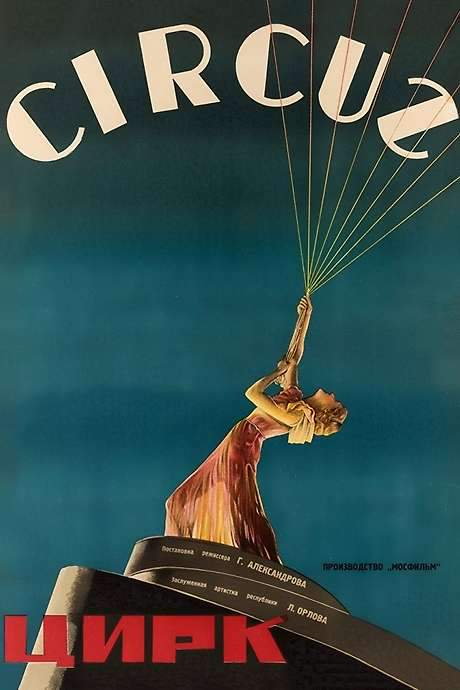
Circus 1936

Directed by

Grigori Aleksandrov
Made by

Mosfilm
Circus Plot Summary
Read the complete plot summary and ending explained for Circus (1936). From turning points to emotional moments, uncover what really happened and why it matters.
Marion Dixon, a celebrated white American circus artist, is forced to flee for her life with her black baby to escape a lynch mob in a rural town. The fate of the baby’s father is left unstated, but it is heavily implied that he was killed. Dixon finds shelter with Franz von Kneishitz, a sinister German theatrical agent whose imposing mustache and commanding demeanor echo the era’s fascist rhetoric. Kneishitz exploits Dixon, coercing her into becoming his lover while using her fame to serve his own ambitions.
Dixon survives, sustained by her deep love for her son, [Jimmy] (the infant at the center of the story). When she travels to Moscow as a guest performer, the arc of her life appears shattered; the Soviet heartland sees her as spiritually worn, a perception shaped by her past hardships. In Moscow’s bustling circus scene, the troupe’s director, Ludvig, proposes a new, dazzling act to outshine Dixon’s famous “Trip to the Moon.” To achieve this, he enlists the Arctic explorer Ivan Petrovich Martynov to design the show’s centerpiece, a spectacle meant to push the boundaries of what the crowds expect from the ring.
Within this charged atmosphere, Rayechka—Ludvig’s fiery daughter—sparks a tumultuous relationship with Shurik Skameykin, a worker in the circus who is drawn into a tangled personal web. As Dixon and Martynov’s collaboration deepens, a forbidden love blossoms between them, igniting Kneishitz’s fury. The agent retaliates with a brutal, punitive lash, a stark reminder of the power he wields over everyone around him.
Dixon yearns to stay in Moscow with Martynov, believing she has found real happiness again. But Kneishitz manipulates the situation by diverting a love letter Dixon means for Martynov to Shurik Skameykin, turning the circus into a powder keg of jealousy and heartbreak. Rayechka’s anger flares against Skameykin, while Martynov’s sorrow deepens at the apparent eclipse of his romance. In a moment of wild improvisation, Skameykin slips into a lion cage and must calm the roaring beasts with nothing but a bouquet, a risky act that underscores the precariousness of the troupe’s world.
As Dixon’s feelings for Martynov intensify, she becomes increasingly reluctant to leave Moscow. When Martynov does not respond to her letter, she teeters on the brink of joining Kneishitz again, only to be saved by Rayechka, who finally reveals the truth and helps her escape the coercive grip of the agent. The circus, meanwhile, must press on. Late for the night’s show, Ludvig forces the program forward and delivers the crowd’s long-awaited spectacle: the top act of 1903, the “miracle of technology,” designed to awe the audience with daring machinery.
The climactic moment arrives when Martynov and Dixon appear in tandem to perform their joint act, now titled the “Trip to the Stratosphere.” Kneishitz interrupts the performance, threatening to reveal Dixon’s secret unless she returns to him. Dixon refuses, provoking a Hitler-like tirade from Kneishitz that the audience immediately recognizes as an exhibition of racial hatred. In a powerful reversal, Ludvig declares that the people of the Soviet Union do not share Kneishitz’s obsession with racial purity; Dixon’s family—especially her black son—receives warmth and acceptance from the crowd.
As Kneishitz makes a last, desperate grab for Jimmy, the audience unites to protect him. In the resulting stand against bigotry, a chorus of courage erupts from the theater’s seats. Red Army soldiers in the audience help block Kneishitz, who retreats in fear, his plan thwarted by a community that refuses to let prejudice win. The film moves to a poignant, unifying finale: a lullaby is sung to Jimmy by representatives of various Soviet ethnicities, each taking a turn to voice the comforting lullaby in different languages.
The lullaby’s lyrics, sung in multiple tongues, resonate as a declaration of inclusivity and shared destiny. The International Lullaby asserts a hopeful message of belonging where differences are celebrated, and the scene is underscored by a striking image: a Black American man dressed in a Soviet naval officer’s uniform, accompanied by his white Russian wife, symbolizing solidarity beyond race. The moment reinforces the film’s core idea—that the Soviet Union embraces diversity rather than fear it.
As the lullaby fades, Dixon and Martynov declare their love for one another, while Rayechka and Skameikin become engaged, signaling a personal reconciliation amid the broader social shift. The movie closes with a public testament to unity: Dixon and Rayechka march together in the May Day parade, proudly carrying banners bearing the faces of Lenin and Stalin, a final tableau that ties personal redemption to a larger national narrative.
Sleep comes to your doorstep/Sleep very, very soundly/A hundred paths, a hundred doorways/Are open to you.
Circus Timeline
Follow the complete movie timeline of Circus (1936) with every major event in chronological order. Great for understanding complex plots and story progression.
Escape from Lynch Mob
Marion Dixon flees a lynch mob in a rural American town, clutching her baby as she fights to slip away. The fear of violence and the will to protect her child drive her into the uncertain future.
Kneishitz's Exploitation Begins
Franz von Kneishitz seizes Dixon's vulnerability and coerces her into becoming his lover, using blackmail to keep her under his control. The arrangement binds her to a man who profits from her talent and misery.
Flight to Moscow as Guest Performer
Dixon travels to Moscow to perform as a guest artist, entering a world of prestige and peril far from home. The environment tests her resolve as she navigates new dangers and opportunities.
Martynov Brought to Design a New Act
Ludvig, the Moscow circus director, hires Arctic explorer Ivan Martynov to craft a new act that will outshine Dixon's famous 'Trip to the Moon'. Martynov's presence signals a showdown of talent and ambition.
Dixon and Martynov Fall in Love
Dixon and Martynov develop genuine affection, offering Dixon a glimpse of happiness she thought unattainable. Their growing bond complicates loyalty and stirs Kneishitz's jealousy and rage.
Kneishitz's Physical Abuse
Kneishitz's anger explodes in savage discipline as he beats Dixon with his whip. The cruelty underscores the power he wields over her and the danger she faces.
Letter Theft Stirs Chaos
Kneishitz diverts Dixon's love letter to Skameikin, sowing jealousy and tearing at the fragile web holding the performances together. The circus is plunged into turmoil as loyalties collide.
Rayechka Helps Dixon Escape
Rayechka learns the truth about the lovers and aids Dixon in escaping Kneishitz's grasp. The act of defiance shifts Dixon from victim to survivor planning a future with Martynov.
Late Arrival Forces a New Top Act
Dixon and Martynov arrive late to the circus, forcing Ludvig to attempt the top act of 1903, the 'miracle of technology', to keep the audience engaged. The stakes rise as the show must go on.
Trip to the Stratosphere Debuts
Dixon and Martynov perform their dangerous 'Trip to the Stratosphere' act together, signaling their renewed partnership and defiance of Kneishitz's control. The crowd responds with awe as the romance anchors the spectacle.
Kneishitz's Public Humiliation
Kneishitz interrupts the performance to reveal Dixon's secret and demand Jimmy, but the audience rejects him, laughing at his racially charged tirade. The director Ludvig reframes the moment as a demonstration that race and purity have no place in the Soviet audience.
Lullaby and May Day Ending
A lullaby is sung to Jimmy by representatives of various Soviet ethnicities, uniting the crowd in a message of inclusion. Dixon and Martynov declare their love as Rayechka and Skameikin become engaged, and the film closes with a May Day parade under banners honoring Lenin and Stalin.
Circus Characters
Explore all characters from Circus (1936). Get detailed profiles with their roles, arcs, and key relationships explained.
Marion Dixon (Lyubov Orlova)
An American circus artist who flees a lynch mob and becomes entangled with Kneishitz's scheme. She struggles to protect her son while navigating exploitation and danger. Dixon's resilience and capacity to love drive her through a hostile world; she finds renewed happiness in Moscow and with Martynov.
Franz von Kneishitz (Pavel Massalsky)
A sinister German theatrical agent whose mustache and manner resemble Hitler; he blackmails Dixon into becoming his lover and uses her for his own gain. His contempt for Dixon's child drives his attacks and his authoritarian displays.
Ludvig (Vladimir Volodin)
Circus director in Moscow who hires Martynov to create a top act; he seems pragmatic and capable of supporting performers, driving the plot forward through organizational ambition.
Ivan Petrovich Martinov (Sergei Stolyarov)
An Arctic explorer tasked with designing the breakthrough act that will surpass Dixon's performance. He becomes a romantic partner to Dixon, complicating the love triangle and uplifting the circus with his technical ingenuity.
Rayechka (Yevgeniya Melnikova)
Ludvig's fiery daughter who engages in a tumultuous relationship with Skameikin; she embodies the combustible mix of youth, ambition, and romance within the circus. She plays a key role in the social dynamics that unfold.
Shurik Skameykin (Aleksandr Komissarov)
A youthful worker who is drawn into the drama between performers; his actions trigger moments of tension, including an infamous moment in the lion cage. He navigates love, loyalty, and self-preservation.
Jimmy (James Lloydovich Patterson)
Marion Dixon's black son, around whom the central conflict of racism and unity revolves. His safety and future become a focal point for the crowd's reaction and for the film's lullaby finale.
Circus Settings
Learn where and when Circus (1936) takes place. Explore the film’s settings, era, and how they shape the narrative.
Time period
1930s
Set in the 1930s Soviet Union, during a period of intense social change and cultural investment in performance arts. The narrative leans on public spectacles like May Day parades and grand circus acts to portray unity and propaganda. It references the 1903 miracle of technology as a historical backdrop for the circus’s fantastical acts.
Location
Rural American town, Moscow, Circus
The story begins in a rural American town where a lynch mob threatens Dixon. The plot then moves to Moscow, where the circus becomes Dixon's stage and battleground. The circus world, spanning American and Soviet sensibilities, serves as the backdrop for romance, danger, and social commentary.
Circus Themes
Discover the main themes in Circus (1936). Analyze the deeper meanings, emotional layers, and social commentary behind the film.
🤝
Racial Unity
The narrative places race at the center of the social conflict, culminating in the audience's refusal to accept Kneishitz's propaganda. Dixon's bond with her son Jimmy becomes a powerful symbol of unity across ethnic lines. The Soviet crowd's response and the lullaby to Jimmy emphasize solidarity over racial purity. The film uses Dixon and her child's reception to critique racism and celebrate diversity.
💘
Love vs Exploitation
Love and loyalty drive the plot: Dixon's affection for her son and for Martynov challenges Kneishitz's exploitation. The misdelivery of a love letter creates tension and chaos, highlighting the fragility of romance amid power games. The romance culminates in a decision to stay true to one another and to resist manipulation.
🎪
Circus as Microcosm
Set inside the circus world, the film uses performances as a battleground for personal and political drama. The trip acts symbolize ambition, technology, and cross-cultural collaboration. The crowd's reactions reveal how art can unite diverse people, and the May Day finale underscores the circus as a symbol of national unity.

Circus Spoiler-Free Summary
Discover the spoiler-free summary of Circus (1936). Get a concise overview without any spoilers.
In a restless America where a dazzling circus act can mask the harsh glare of prejudice, Marion Dixon lives atop the glittering rafters of fame while keeping a secret that could shatter her world. The birth of her son, Jimmy, a child of mixed heritage, ignites a tidal wave of hostility that sweeps through the towns and newspapers, turning a celebrated performer into the focal point of a vicious public scandal. The tension crackles not only on the big top but in every whispered conversation, underscoring a society caught between spectacle and deep‑seated intolerance.
Seeking a place where the echoes of accusation cannot follow, Marion boards a train far east, trading the smoky lights of the American circus for the stark, revolutionary air of the Soviet Union. Arriving in Moscow, she discovers a bustling artistic community that thrives on collective ambition and a starkly different philosophy of solidarity. The Soviet circus becomes a vivid canvas of color, music, and daring invention, offering a stark contrast to the isolation she felt back home. Yet the promise of refuge is layered with the challenges of adapting to a new culture, language, and the unspoken weight of her past.
Amid the towering tents and the roar of eager crowds, Marion wrestles with the yearning to reclaim her identity beyond the scandal that defined her. The atmosphere pulses with a mix of melancholy and hope, as performers and audiences alike navigate the fragile line between personal freedom and societal expectation. In this foreign yet welcoming land, the possibility of love, happiness, and a renewed sense of belonging flickers on the horizon, hinting at a future where the circus itself might become a sanctuary rather than a stage for prejudice.
Movies with Similar Twists and Themes
Uncover films that echo the narrative beats, emotional arcs, or dramatic twists of the one you're exploring. These recommendations are handpicked based on story depth, thematic resonance, and spoiler-worthy moments — perfect for fans who crave more of the same intrigue.

Featured on this page

What's After the Movie?
Not sure whether to stay after the credits? Find out!




Explore Our Movie Platform
New Movie Releases (2026)
Famous Movie Actors
Top Film Production Studios
Movie Plot Summaries & Endings
Major Movie Awards & Winners
Best Concert Films & Music Documentaries
Movie Collections and Curated Lists
© 2026 What's After the Movie. All rights reserved.