Circus 1936

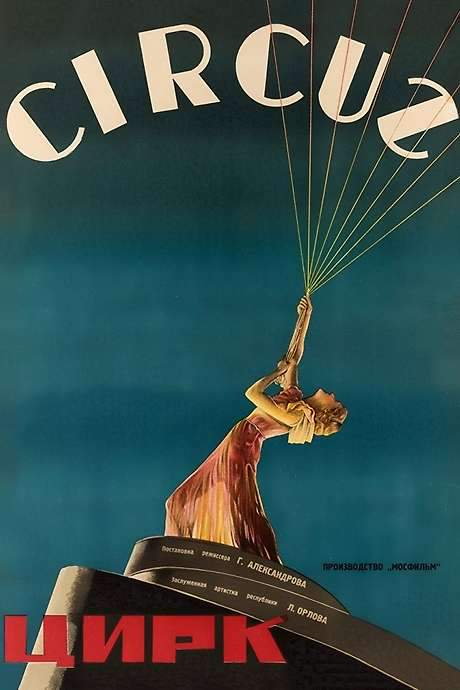
When an American circus performer discovers she is the mother of a mixed‑race child, a wave of racism erupts and she becomes the center of a public scandal. Seeking escape, she relocates to the USSR, where she ultimately finds love, happiness and a new sense of refuge.


Does Circus have end credit scenes?
No!
Circus does not have end credit scenes. You can leave when the credits roll.
Where to Watch Circus
See current US streaming, rental, and purchase options for Circus (1936) via JustWatch.





Streaming availability powered by 
Meet the Full Cast and Actors of Circus
Explore the complete cast of Circus, including both lead and supporting actors. Learn who plays each character, discover their past roles and achievements, and find out what makes this ensemble cast stand out in the world of film and television.

Aleksandr Komissarov
Shurik Skameykin
Emmanuil Geller
The Music Conductor
Lev Sverdlin
Cameo
Lev Ivanov
The whistling hooligan (uncredited)
Lyubov Orlova
Marion Dixon
Sergei Antimonov
Shprekhshtalmejster (uncredited)
Nikolai Orlov
An Old Circus Actor
Yevgeniya Melnikova
Rayechka
Sergei Stolyarov
Ivan Petrovich Martinov
Vladimir Volodin
Ludvig
Robert Ross
Pavel Massalsky
Franz von Kneishitz
Aleksandra Panova
Cameo
Fyodor Kurikhin
Captain Borneo
Solomon Mikhoels
Cameo
Pavel Geraga
Cameo
Vladimir Kandelaki
Cameo
Niki Otto
Chaplin
B. Karlin
Artist
Alfonse Lutz
Horseman
Weyland Rodd Sr.
Cameo
M. Tsybulsky
Farmer
James Lloydovich Patterson
Jimmy
External Links and Streaming Options
Discover where to watch Circus online, including streaming platforms, rental options, and official sources. Compare reviews, ratings, and in-depth movie information across sites like IMDb, TMDb, Wikipedia or Letterboxd.




Take the Ultimate Circus Movie Quiz
Challenge your knowledge of Circus with this fun and interactive movie quiz. Test yourself on key plot points, iconic characters, hidden details, and memorable moments to see how well you really know the film.
Circus (1936) Quiz: Test your knowledge of the 1936 Soviet film *Circus*, covering its characters, plot twists, and themes of unity and tolerance.
What is the name of the infant son that Marion Dixon strives to protect throughout the film?
Full Plot Summary and Ending Explained for Circus
Read the complete plot summary of Circus, including all major events, twists, and the full ending explained in detail. Explore key characters, themes, hidden meanings, and everything you need to understand the story from beginning to end.
Marion Dixon, a celebrated white American circus artist, is forced to flee for her life with her black baby to escape a lynch mob in a rural town. The fate of the baby’s father is left unstated, but it is heavily implied that he was killed. Dixon finds shelter with Franz von Kneishitz, a sinister German theatrical agent whose imposing mustache and commanding demeanor echo the era’s fascist rhetoric. Kneishitz exploits Dixon, coercing her into becoming his lover while using her fame to serve his own ambitions.
Dixon survives, sustained by her deep love for her son, [Jimmy] (the infant at the center of the story). When she travels to Moscow as a guest performer, the arc of her life appears shattered; the Soviet heartland sees her as spiritually worn, a perception shaped by her past hardships. In Moscow’s bustling circus scene, the troupe’s director, Ludvig, proposes a new, dazzling act to outshine Dixon’s famous “Trip to the Moon.” To achieve this, he enlists the Arctic explorer Ivan Petrovich Martynov to design the show’s centerpiece, a spectacle meant to push the boundaries of what the crowds expect from the ring.
Within this charged atmosphere, Rayechka—Ludvig’s fiery daughter—sparks a tumultuous relationship with Shurik Skameykin, a worker in the circus who is drawn into a tangled personal web. As Dixon and Martynov’s collaboration deepens, a forbidden love blossoms between them, igniting Kneishitz’s fury. The agent retaliates with a brutal, punitive lash, a stark reminder of the power he wields over everyone around him.
Dixon yearns to stay in Moscow with Martynov, believing she has found real happiness again. But Kneishitz manipulates the situation by diverting a love letter Dixon means for Martynov to Shurik Skameykin, turning the circus into a powder keg of jealousy and heartbreak. Rayechka’s anger flares against Skameykin, while Martynov’s sorrow deepens at the apparent eclipse of his romance. In a moment of wild improvisation, Skameykin slips into a lion cage and must calm the roaring beasts with nothing but a bouquet, a risky act that underscores the precariousness of the troupe’s world.
As Dixon’s feelings for Martynov intensify, she becomes increasingly reluctant to leave Moscow. When Martynov does not respond to her letter, she teeters on the brink of joining Kneishitz again, only to be saved by Rayechka, who finally reveals the truth and helps her escape the coercive grip of the agent. The circus, meanwhile, must press on. Late for the night’s show, Ludvig forces the program forward and delivers the crowd’s long-awaited spectacle: the top act of 1903, the “miracle of technology,” designed to awe the audience with daring machinery.
The climactic moment arrives when Martynov and Dixon appear in tandem to perform their joint act, now titled the “Trip to the Stratosphere.” Kneishitz interrupts the performance, threatening to reveal Dixon’s secret unless she returns to him. Dixon refuses, provoking a Hitler-like tirade from Kneishitz that the audience immediately recognizes as an exhibition of racial hatred. In a powerful reversal, Ludvig declares that the people of the Soviet Union do not share Kneishitz’s obsession with racial purity; Dixon’s family—especially her black son—receives warmth and acceptance from the crowd.
As Kneishitz makes a last, desperate grab for Jimmy, the audience unites to protect him. In the resulting stand against bigotry, a chorus of courage erupts from the theater’s seats. Red Army soldiers in the audience help block Kneishitz, who retreats in fear, his plan thwarted by a community that refuses to let prejudice win. The film moves to a poignant, unifying finale: a lullaby is sung to Jimmy by representatives of various Soviet ethnicities, each taking a turn to voice the comforting lullaby in different languages.
The lullaby’s lyrics, sung in multiple tongues, resonate as a declaration of inclusivity and shared destiny. The International Lullaby asserts a hopeful message of belonging where differences are celebrated, and the scene is underscored by a striking image: a Black American man dressed in a Soviet naval officer’s uniform, accompanied by his white Russian wife, symbolizing solidarity beyond race. The moment reinforces the film’s core idea—that the Soviet Union embraces diversity rather than fear it.
As the lullaby fades, Dixon and Martynov declare their love for one another, while Rayechka and Skameikin become engaged, signaling a personal reconciliation amid the broader social shift. The movie closes with a public testament to unity: Dixon and Rayechka march together in the May Day parade, proudly carrying banners bearing the faces of Lenin and Stalin, a final tableau that ties personal redemption to a larger national narrative.
Sleep comes to your doorstep/Sleep very, very soundly/A hundred paths, a hundred doorways/Are open to you.

Coming soon on iOS and Android
The Plot Explained Mobile App
From blockbusters to hidden gems — dive into movie stories anytime, anywhere. Save your favorites, discover plots faster, and never miss a twist again.
Sign up to be the first to know when we launch. Your email stays private — always.
Explore the mobile appDiscover Film Music Concerts Near You – Live Orchestras Performing Iconic Movie Soundtracks
Immerse yourself in the magic of cinema with live orchestral performances of your favorite film scores. From sweeping Hollywood blockbusters and animated classics to epic fantasy soundtracks, our curated listings connect you to upcoming film music events worldwide.
Explore concert film screenings paired with full orchestra concerts, read detailed event information, and secure your tickets for unforgettable evenings celebrating legendary composers like John Williams, Hans Zimmer, and more.


Circus Themes and Keywords
Discover the central themes, ideas, and keywords that define the movie’s story, tone, and message. Analyze the film’s deeper meanings, genre influences, and recurring concepts.
Circus Other Names and Titles
Explore the various alternative titles, translations, and other names used for Circus across different regions and languages. Understand how the film is marketed and recognized worldwide.
Similar Movies To Circus You Should Know About
Browse a curated list of movies similar in genre, tone, characters, or story structure. Discover new titles like the one you're watching, perfect for fans of related plots, vibes, or cinematic styles.




Quick Links: Summary, Cast, Ratings, More

What's After the Movie?
Not sure whether to stay after the credits? Find out!
Check out our other apps:

SAT Sphere
Build confidence for the Digital SAT.

Mori Atlas
Discover wild places worth protecting.

Luntero
Search smarter for a home in Amsterdam.

Plot Explained
Unravel movie endings and hidden clues.

Pokechamp
Dive into Pokémon data and battle logic.

Driving Theory
Get ready for your European theory test.

Movie Dust
Plan your next cinema trip with ease.

Musemap
Find art and culture as you travel.

Selkobase
Compare credentials before committing.

Local Manual
Turn an unfamiliar country into practical next steps.

Lernavi
Compare school systems before your next move.

GymRoam
Find a workout stop wherever your plans take you.
Explore Our Movie Platform
New Movie Releases (2026)
Famous Movie Actors
Top Film Production Studios
Movie Plot Summaries & Endings
Major Movie Awards & Winners
Best Concert Films & Music Documentaries
Movie Collections and Curated Lists
© 2026 What's After the Movie. All rights reserved.
Privacy Policy