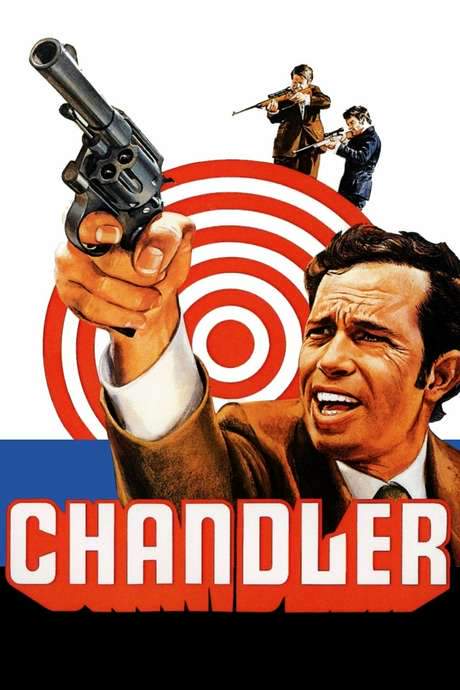
Chandler 1971

Directed by

Paul Magwood
Made by

Metro-Goldwyn-Mayer
Chandler Plot Summary
Read the complete plot summary and ending explained for Chandler (1971). From turning points to emotional moments, uncover what really happened and why it matters.
Chandler, a former private eye from the 1940s, slips back into his old line of work, the kind of sleuthing that moves through rain-soaked streets and dimly lit rooms. He’s anchored by [Warren Oates], whose quiet, hard-edged presence gives the character a cool, deliberate resolve as he drifts between neon glow and shadow. The world around him hums with a deliberate noir rhythm, and old cars creak and gleam under streetlamps as if the era itself remains just out of reach.
Officially, Chandler is hired by the government to protect a witness, Leslie Caron as Katherine Creighton, from gangland boss Gordon Pinsent as John Melchior. Yet behind the official mission lies a duplicity that tilts the scale toward betrayal: a corrupt government agent, Alex Dreier as Ross J. Carmady, uses Chandler as a convenient dupe so Carmady can murder Melchior and install a double agent at the top of the racket. The plot tightens with a cold, calculating precision, turning every gesture into a potential trap and every ally into a possible foe.
After leaving a security guard post, Chandler accepts a line of work offered by an old friend, Bernie Oakman, portrayed by Charles McGraw. This reunion sets the stage for a web of loyalties and lies, as Chandler reconvenes with a city that already feels stacked against him. He retrieves his gun from a pawn shop and begins to shadow Creighton from the moment she arrives in Los Angeles, letting the trail unfold with meticulous patience.
On a train to Monterey, the two slowly begin to connect, though Chandler keeps his true purpose to himself while he learns more about the woman under his watch. When Creighton is assaulted and plunged into the trunk of a car, Chandler’s protective instinct overrides the pretense of his mission, and a tense bond forms between them that will test his resolve and judgment.
You’ll do.
As their uneasy connection deepens, the danger around them intensifies. They seem to inch toward safety, even as Carmady’s scheme tightens its grip, and the final confrontation nears along a desolate coast where secrets surface and loyalties splinter. The ambush near an isolated beach culminates in a brutal shootout with Carmady and his associate, Chuck Kincaid, Mitchell Ryan in a name-and-face clash that crystallizes the hard-edged morality at the heart of the story. The film lingers in the aftermath of that clash, letting the noir mood settle over the characters as they weigh the cost of truth, deception, and a second chance at trust.
In this deliberate throwback, every beat—routine surveillance, quiet standoffs, and the charged glances between Chandler and Creighton—pulls the audience deeper into a tale where duty collides with desire, and the past refuses to stay buried. The script marches with a steady pace, the dialogue keeps its poker-face honesty, and the mood remains unyielding, ever wary of the next twist in a game built on smoke and mirrors.
Chandler Timeline
Follow the complete movie timeline of Chandler (1971) with every major event in chronological order. Great for understanding complex plots and story progression.
Chandler quits his security guard job
Chandler leaves his post as a security guard and steps back toward the gray shadows of his old private-eye days. The decision signals his readiness to take on risky work that blurs legality and loyalty. The film sets the tone for a man pulled back into a dangerous game he hoped to leave behind.
Bernie Oakman offers Chandler a comeback case
Chandler is approached by his old friend Bernie Oakman who offers him a return to the security world. Bernie has, unbeknownst to Chandler, been recruited by Carmady to find a suitable patsy for a covert operation. The invitation places Chandler at the center of a trap masquerading as protection.
Carmady uses Bernie to locate a patsy
Behind the scenes, Carmady orchestrates the setup, instructing Bernie to locate a man to serve as a pawn. The plan frames Chandler as the man to be used in a government scheme. What seems like legitimate work rapidly reveals itself as manipulation and deceit.
Chandler retrieves his gun from a pawn shop
Chandler reacquires his pistol from a pawn shop, rearming himself for the assignment ahead. The return of his weapon signals the practical readiness for dangerous confrontations to come. It also underscores the precariousness of a career built on surveillance and disguise.
Creighton arrives in Los Angeles and becomes the target
Katherine Creighton lands in Los Angeles, drawing Chandler’s attention as the key witness under protection. He begins tailing her movements without revealing his real purpose. The tension tightens as he follows a trail that hints at a larger, unseen danger.
Chandler tails Creighton and they meet on a train to Monterey
Chandler shadows Creighton from her arrival onward and closes in on her on a train bound for Monterey, California. He starts to acquaint himself with her under the cover of casual conversation while keeping his true role hidden. The budding subtle rapport sits alongside the growing sense of risk.
Creighton is assaulted and Chandler rescues her
Creighton is assaulted and suddenly shoved into the trunk of a car, throwing the mission into immediate jeopardy. Chandler intervenes at the crucial moment, risking himself to save her and defuse a lethal threat. The rescue cements their precarious bond as danger closes in.
Chandler and Creighton grow romantically close
Despite his reservations, Chandler grows attached to Creighton as they navigate danger together. He bluntly tells her, 'You'll do,' a line that blends attraction with the pressure of a mission. The relationship adds personal stakes to the already murky political trap.
Ambush on an isolated beach
Chandler and Creighton find themselves trapped near an isolated beach, cornered by Carmady and his associate Kincaid. A fierce shootout erupts as the two sides exchange fire in a fight for survival. The confrontation exposes the double-cross at the heart of Chandler’s supposed protective mission.
Conspiracy revealed: murder Melchior and install a double agent
Within the standoff, the motive behind Chandler’s role is exposed: Carmady intends to murder Melchior and install his own double agent at the top of the racket. Chandler realizes he has been used as a pawn in a corrupt power play. The shootout becomes a clash over truth, loyalty, and control of the criminal enterprise.
Chandler learns he’s been a dupe
The implications of the conspiracy press in on Chandler as the day’s events unfold. He confronts the fact that his professional instincts have been manipulated by a corrupt agent. The knowledge threatens to redefine his identity and future choices.
Aftermath and ongoing threat
With the ambush concluded, Carmady’s scheme remains in force, and Chandler’s role as a dupe persists as a threat looming over Creighton and the underworld. The story leaves the audience pondering what comes next for the characters. The noir atmosphere endures, emphasizing the era’s themes of corruption and moral ambiguity.
Chandler Characters
Explore all characters from Chandler (1971). Get detailed profiles with their roles, arcs, and key relationships explained.
Chandler (Warren Oates)
A former private eye drawn back into the old game, Chandler moves through a world of shadows with wary cynicism. He is manipulated by Carmady as a dupe while secretly trying to do right, and his reunion with Creighton rekindles a dangerous, complicated morality. His skilled instincts are matched by a growing internal conflict between self-preservation and integrity.
Katherine Creighton (Leslie Caron)
A French woman and the protected witness around whom the conspiracy centers. She arrives in Los Angeles under threat and quickly forms a wary alliance with Chandler. Resourceful and determined, she becomes a catalyst for action while navigating peril and romantic tension.
John Melchior (Gordon Pinsent)
A ruthless gangland leader who sits at the heart of the criminal underworld. Melchior represents the peril Chandler seeks to resist, and his vulnerability to Carmady's plot motivates the pursuit and confrontation. His fate is a turning point that heightens the stakes for all involved.
Ross J. Carmady (Alex Dreier)
A corrupt government agent who manipulates events to further his own agenda. He uses Chandler as a pawn to eliminate Melchior and to install a double agent in power. Carmady embodies the systemic rot at the heart of the story, driving the deception and danger.
Bernie Oakman (Charles McGraw)
Chandler's old friend who offers him a job, unaware that he is being used to recruit a patsy. Bernie embodies the brittle loyalty and risky bets of a world where favors are bought and reputations can be ruined in an instant. His role becomes a pawn in Carmady's larger scheme.
Chuck Kincaid (Mitchell Ryan)
Carmady's associate who acts as an enforcer and enabler of the scheme. Kincaid represents the immediate physical threat and the blunt, violent aspect of the criminal operation. His presence intensifies the danger surrounding Chandler and Creighton.
Chandler Settings
Learn where and when Chandler (1971) takes place. Explore the film’s settings, era, and how they shape the narrative.
Time period
1940s
The film channels the 1940s noir era, using period-appropriate dialogue, fashion, and car culture to evoke that time. Smoky offices, rain-soaked streets, and hard-edged loyalties shape the atmosphere. It deliberately mimics the mood and cynicism of classic noir storytelling.
Location
Los Angeles, Monterey
The story moves through Los Angeles, a city with a gritty underworld perfect for noir crime. A train ride brings the action toward Monterey, a coastal setting that provides a moody, isolated backdrop for confrontations. The setting juxtaposes metropolitan intrigue with seaside hideouts, mirroring the film's themes of shadowy loyalties.
Chandler Themes
Discover the main themes in Chandler (1971). Analyze the deeper meanings, emotional layers, and social commentary behind the film.
🕵️
Betrayal
Chandler is used as a patsy by Carmady, highlighting how trust dissolves in a corrupt system. The plot twists reveal that loyalty is a commodity traded by those in power. Duplicitous motives and misdirection push the narrative toward a fatal, inescapable conclusion.
💖
Romance
Chandler and Creighton develop a tense, growing bond that complicates their already dangerous situation. Their connection persists even as danger closes in, forcing them to weigh personal risk against mutual protection. The romance intensifies the stakes and humanizes the hard-edged plot.
💼
Corruption
The central scheme hinges on a corrupt government agent pulling the strings behind the scenes. Carmady uses Chandler to murder Melchior and to install a dummy agent at the top of the racket. The story critiques power structures that prioritize control over truth and justice.

Coming soon on iOS and Android
The Plot Explained Mobile App
From blockbusters to hidden gems — dive into movie stories anytime, anywhere. Save your favorites, discover plots faster, and never miss a twist again.
Sign up to be the first to know when we launch. Your email stays private — always.
Explore the mobile appChandler Spoiler-Free Summary
Discover the spoiler-free summary of Chandler (1971). Get a concise overview without any spoilers.
In a world that drifts between the neon glow of streetlamps and the shadows of a bygone era, Chandler slips back into his old line of work as a private eye. It is a profession defined by rain-soaked streets and dimly lit rooms, a hard way to make a living and an easy way to die. Anchored by a quiet, hard-edged presence, the character moves through a city that hums with a deliberate noir rhythm, where old cars creak and gleam as if the past itself is just out of reach.
The story begins when Chandler accepts a job to follow a mobster’s former mistress. Officially, the assignment seems straightforward, but the world he steps into is stacked with duplicity and hidden agendas. As he retrieves his gun from a pawn shop and begins his surveillance, he finds himself navigating a web where every gesture could be a potential trap and every ally might conceal a hidden motive.
The atmosphere is thick with tension as the case pulls him deeper into a game built on smoke and mirrors. Duty collides with a growing unease, forcing him to rely on his instincts in a landscape where truth is elusive. The narrative maintains a steady, deliberate pace, inviting the audience into a mood unyielding in its caution, where the line between survival and betrayal is razor-thin.
As the stakes rise, Chandler must weigh his resolve against a city that offers few answers and even fewer second chances. It is a tale where the past refuses to stay buried, and the only certainty is the shadow waiting around the next corner.
Movies with Similar Twists and Themes
Uncover films that echo the narrative beats, emotional arcs, or dramatic twists of the one you're exploring. These recommendations are handpicked based on story depth, thematic resonance, and spoiler-worthy moments — perfect for fans who crave more of the same intrigue.


Featured on this page

What's After the Movie?
Not sure whether to stay after the credits? Find out!
Check out our other apps:

SAT Sphere
Build confidence for the Digital SAT.

Mori Atlas
Discover wild places worth protecting.

Luntero
Search smarter for a home in Amsterdam.

Plot Explained
Unravel movie endings and hidden clues.

Pokechamp
Dive into Pokémon data and battle logic.

Driving Theory
Get ready for your European theory test.

Movie Dust
Plan your next cinema trip with ease.

Musemap
Find art and culture as you travel.

Selkobase
Compare credentials before committing.

Local Manual
Turn an unfamiliar country into practical next steps.

Lernavi
Compare school systems before your next move.

GymRoam
Find a workout stop wherever your plans take you.
Explore Our Movie Platform
New Movie Releases (2026)
Famous Movie Actors
Top Film Production Studios
Movie Plot Summaries & Endings
Major Movie Awards & Winners
Best Concert Films & Music Documentaries
Movie Collections and Curated Lists
© 2026 What's After the Movie. All rights reserved.
Privacy Policy