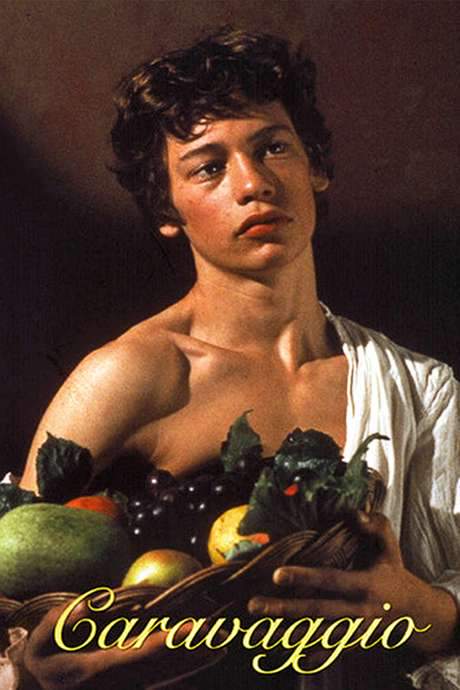
Caravaggio 1986


Directed by

Dexter Fletcher
Made by

BFI
Where to Watch Caravaggio
See current US streaming, rental, and purchase options for Caravaggio (1986) via JustWatch.

BFI Player Amazon Channel
HD
Kino Film Collection
HD
Hoopla
SD
Kanopy
HD
Amazon Video
SD
Apple TV Store
HD
Fandango At Home
SD
Google Play Movies
SD
YouTube
SD Streaming availability powered by 
Caravaggio Plot Summary
Read the complete plot summary and ending explained for Caravaggio (1986). From turning points to emotional moments, uncover what really happened and why it matters.
Caravaggio Nigel Terry dies from lead poisoning while in exile, accompanied by his long-time, mute companion Jerusaleme Spencer Leigh, who was given by his family to the artist as a boy. Caravaggio thinks back to his life as a teenage street ruffian who hustles and paints. While taken ill and in the care of priests, the young Caravaggio catches the eye of Cardinal Francesco Maria del Monte [Michael Gough], who nurtures his artistic and intellectual development but seems to molest him.
As an adult, Caravaggio still lives under the roof of, and paints with the funding of, del Monte. He employs street people, drunks and prostitutes as models for his intense, usually religious paintings. He is depicted as frequently brawling, gambling, getting drunk and is implied to sleep with both male and female models. In the art world, Caravaggio is regarded as vulgar and entitled for his Vatican connections.
One day, Ranuccio [Sean Bean] introduces Caravaggio to his girlfriend Lena [Tilda Swinton], who also becomes a model to the artist. When both Ranuccio and Lena are separately caught kissing Caravaggio, each displays jealousy over the artist’s attentions. Lena announces she is pregnant without stating who the father is and will become a mistress to the wealthy Scipione Borghese [Robbie Coltrane]. Soon, she is found murdered by drowning. Ranuccio weeps as Caravaggio and Jerusaleme clean Lena’s body. Caravaggio is shown painting Lena after she dies and mournfully writhing with her body. Ranuccio is arrested for Lena’s murder, but he claims to be innocent. Caravaggio pulls strings and goes to the pope [Jack Birkett] to free Ranuccio. When Ranuccio is freed, he tells Caravaggio he killed Lena so they could be together. In response, Caravaggio cuts Ranuccio’s throat, killing him. Back on his deathbed, Caravaggio is shown having visions of himself as a boy and trying to refuse the last rites offered him by the priests.
Caravaggio Timeline
Follow the complete movie timeline of Caravaggio (1986) with every major event in chronological order. Great for understanding complex plots and story progression.
Teenage street life and early painting
Caravaggio grows up as a street-riding teen, hustling on the city’s edges while teaching himself to paint. He uses the urban world as his classroom, attracting the first attention of patrons and fellow misfits. Jerusaleme, his mute companion given by his family, accompanies him through these formative years.
Arrival of Cardinal del Monte and mentorship begins
As an adult, Caravaggio comes under the roof and patronage of Cardinal Francesco Maria del Monte. The Cardinal nurtures his artistic and intellectual development, offering support while the relationship also carries disturbing undercurrents of exploitation.
Patronage shapes his bold, vulgar, and controversial art
Under del Monte's funding, Caravaggio paints with unconventional models—street people, drunks, and prostitutes—giving his works a raw intensity. He remains prone to brawling, gambling, and heavy drinking, earning a reputation as vulgar in the art world but valued for his talent. The Vatican connections provide him access few painters could dream of.
Ranuccio and Lena enter Caravaggio’s orbit
Ranuccio, a street fighter for pay, becomes a subject and potential lover, while introducing Lena, his girlfriend, who also becomes one of Caravaggio's models. Their entrances pull Caravaggio into new personal entanglements, testing his loyalties and artistic interests.
Lena’s pregnancy and Borghese arrangement
Lena reveals she is pregnant and hints at becoming a mistress to the wealthy Scipione Borghese, layering deceit and desire into Caravaggio's circle. The pregnancy escalates tensions, foreshadowing tragedy within the quickly shifting dynamics. Caravaggio remains entangled with Lena and Ranuccio while navigating patronage and power.
Lena’s murder and Caravaggio's quiet mourning
Lena is found drowned, a death that shocks the artist and his mute companion. Caravaggio and Jerusaleme help prepare Lena’s body and mourn her loss, with the artist turning to painting her posthumously. The investigation begins to swirl around Ranuccio as a potential suspect.
Ranuccio arrested for Lena’s murder
Ranuccio is arrested on suspicion for Lena’s drowning, while maintaining his innocence. Caravaggio’s influence and connections become crucial as he navigates the political maze to secure a proper outcome for his friend and subject. The mounting tension foreshadows a darker turning point.
Ranuccio freed; confession revealed
Caravaggio uses his influence to secure Ranuccio’s release; in a chilling confession, Ranuccio tells him that he killed Lena so they could be together. The truth fractures Caravaggio’s perception of his circle and deepens the codependent, dangerous bond among them.
Caravaggio destroys Ranuccio
In response to the confession, Caravaggio cuts Ranuccio’s throat, killing him in a stark act of jealousy and possessiveness. The murder marks a final severing of trust among his inner circle and intensifies the artist’s solitary path. Jerusaleme remains a silent witness to the violence.
Final days and visions on his deathbed
Caravaggio experiences visions of himself as a boy during his final moments as illness tightens its grip. He struggles to accept the priests’ last rites and refuses them, remaining defiant to the end. His life closes in exile, with only Jerusaleme by his side.
Caravaggio dies in exile
The film’s opening scene is fulfilled as Caravaggio passes away from lead poisoning, leaving behind a controversial legacy. Jerusaleme, faithful to the very end, remains with him as the world around him looks on. The death marks the closing arc of a life defined by genius and turmoil.
Caravaggio Characters
Explore all characters from Caravaggio (1986). Get detailed profiles with their roles, arcs, and key relationships explained.
Caravaggio (Nigel Terry)
An intense, volatile genius who churns out powerful religious scenes from a marginalized life. He hustles on the streets, paints with a raw immediacy, and drinks, brawls, and gambles as needed. His talent clashes with the tastes and ambitions of powerful patrons, shaping both his rise and his ruthless end.
Lena (Tilda Swinton)
Lena is a model and lover who becomes pregnant and is later drawn into Caravaggio's world of desire and danger. Her relationship with the artist exposes jealousy and risk, and her fate underscores the peril of intimate ties in a patron-driven career.
Scipione Borghese (Robbie Coltrane)
A wealthy patron and art collector who finances Caravaggio's work, offering fame and opportunity while exerting control over his career. His status and taste drive the artist's commissions and reputation within Rome's art world.
Ranuccio (Sean Bean)
A street fighter who becomes a subject and lover for Caravaggio. His jealousy and eventual confession intensify the painter's moral turmoil, culminating in a fatal confrontation.
Jerusaleme (Spencer Leigh)
Caravaggio's mute companion, a boy given to the artist as a child who remains by his side through exile and decline. He embodies loyalty and the human cost of the artist's world.
Cardinal Del Monte (Michael Gough)
A powerful patron who nurtures Caravaggio's talent while also exploiting the relationship. His influence demonstrates how mentorship can blur into coercion within the church's patronage system.
The Pope (Jack Birkett)
A symbol of papal authority who features in the film's political and religious backdrop, reinforcing the era's centralized power and the stakes of Rome's art scene.
Caravaggio Settings
Learn where and when Caravaggio (1986) takes place. Explore the film’s settings, era, and how they shape the narrative.
Time period
Late 16th to early 17th century
Set during the late Renaissance in Rome, a period of intense church politics and patronage. Artists depended on nobles and cardinals for commissions while navigating moral and legal boundaries. The era's atmosphere of opulence and peril provides the backdrop for Caravaggio's volatile rise and fall.
Location
Rome, Vatican City
Caravaggio's world centers on Rome and the power network surrounding the Vatican. The film moves between the Cardinal's palazzo, crowded taverns, and the painter's sunlit studio, all set against the city's ancient streets. It portrays Rome as a place where religious ceremony and street life collide, shaping the artist's uncompromising vision.
Caravaggio Themes
Discover the main themes in Caravaggio (1986). Analyze the deeper meanings, emotional layers, and social commentary behind the film.
🎨
Art & Patronage
Art in the film is inseparable from patronage and power. Caravaggio's raw, emotionally charged paintings arise from his relationships with Del Monte and Borghese. The work is celebrated yet strained by the patrons' influence and expectations.
🔥
Violence & Jealousy
The narrative is driven by intense jealousy and acts of violence. Lena's murder and Ranuccio's later confession and subsequent murder by Caravaggio demonstrate how desire and rivalry spiral into lethal outcomes. The painter's temper and willingness to bend rules lead to fatal consequences.
⚖️
Power & Abuse
The film explores how power shapes Caravaggio's development and the people around him. Cardinal Del Monte mentors the artist while also exploiting the relationship. His influence demonstrates how mentorship can blur into coercion within the church's patronage system.

Coming soon on iOS and Android
The Plot Explained Mobile App
From blockbusters to hidden gems — dive into movie stories anytime, anywhere. Save your favorites, discover plots faster, and never miss a twist again.
Sign up to be the first to know when we launch. Your email stays private — always.
Explore the mobile appCaravaggio Spoiler-Free Summary
Discover the spoiler-free summary of Caravaggio (1986). Get a concise overview without any spoilers.
In the restless streets of 17th‑century Rome, a young artist known as Caravaggio turns his raw, street‑torn instincts into canvases that blaze with light and shadow. Raised among hustlers and thieves, he carries the grit of the alleys into the sacred halls of the Vatican, where his stark chiaroscuro shatters the polished conventions of the Baroque era. Beside him is his long‑time, mute companion, Jerusalem, a figure who has shared the artist’s every triumph and hardship from childhood onward, offering a silent counterpoint to the painter’s turbulent soul.
The world Caravaggio inhabits is a volatile mix of opulent patronage and shadowy underworld dealings. A charismatic and influential patron, Cardinal Francesco Maria del Monte, recognizes the young painter’s fierce talent and draws him into a network of intellectual and artistic elite, while also exposing him to pleasures and provocations that blur the lines between mentorship and manipulation. Within this sphere, the artist becomes entangled with figures such as the tempestuous Ranuccio and the enigmatic Lena, whose presence pulls him deeper into a vortex of desire, jealousy, and the ever‑present threat of scandal. Their relationships, like the models he selects from the streets—drunks, prostitutes, and the downtrodden—reflect his uncompromising vision of humanity in all its messiness.
Through striking visuals and a brooding, almost reverent atmosphere, the film paints a portrait of a man whose genius is inseparable from his reckless pursuits. The relentless clash between luminous artistry and the darkness of his own impulses creates a tension that drives every brushstroke. As Caravaggio pushes the boundaries of religious art, he also navigates a precarious existence where fame, fortune, and the danger of the criminal underworld are forever intertwined, promising a story that is as intense and unforgiving as the canvases he leaves behind.
Movies with Similar Twists and Themes
Uncover films that echo the narrative beats, emotional arcs, or dramatic twists of the one you're exploring. These recommendations are handpicked based on story depth, thematic resonance, and spoiler-worthy moments — perfect for fans who crave more of the same intrigue.


Featured on this page

What's After the Movie?
Not sure whether to stay after the credits? Find out!
Check out our other apps:

SAT Sphere
Build confidence for the Digital SAT.

Mori Atlas
Discover wild places worth protecting.

Luntero
Search smarter for a home in Amsterdam.

Plot Explained
Unravel movie endings and hidden clues.

Pokechamp
Dive into Pokémon data and battle logic.

Driving Theory
Get ready for your European theory test.

Movie Dust
Plan your next cinema trip with ease.

Musemap
Find art and culture as you travel.

Selkobase
Compare credentials before committing.

Local Manual
Turn an unfamiliar country into practical next steps.

Lernavi
Compare school systems before your next move.

GymRoam
Find a workout stop wherever your plans take you.
Explore Our Movie Platform
New Movie Releases (2026)
Famous Movie Actors
Top Film Production Studios
Movie Plot Summaries & Endings
Major Movie Awards & Winners
Best Concert Films & Music Documentaries
Movie Collections and Curated Lists
© 2026 What's After the Movie. All rights reserved.
Privacy Policy