What Is Bound for Glory About?
The premise of Bound for Glory in 315 words, with nothing given away. The full story follows below.
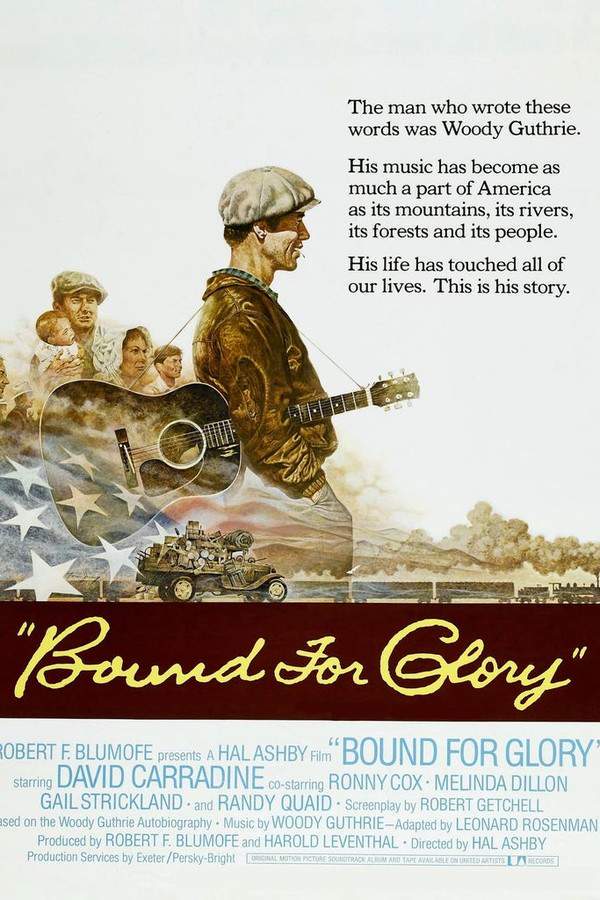
In the bleak summer of the 1930s, the American heartland is cracked by dust and desperation. The Great Depression has turned fertile fields into endless stretches of brown, and families clutch what little they can while the promise of a better life glitters faintly on the horizon of California. The landscape is a mix of rattling trains, crowded shantytowns, and open roads that seem to stretch forever, each mile echoing with the sighs of those forced to wander.
At the center of this restless world is Woody Guthrie, a wiry guitarist whose voice carries the raw pulse of the people he meets. He is a husband and father, yet his restless spirit and deep love for song compel him to leave his Oklahoma home in search of something larger than his own survival. His hands are as familiar with a worn pickaxe as they are with a well‑worn guitar, and his melodies begin to draw a line between personal longing and collective struggle.
Along the way, Woody encounters Ozark Bule, a fervent union organizer whose belief in collective action and protest songs resonates with the musician’s own growing sense of purpose. Their connection hints at a partnership where music becomes a vehicle for social commentary, turning simple verses into rallying cries for workers and migrants scattered across the country. The tone of the story is both gritty and hopeful, a tapestry woven from the dust‑laden wind, the clatter of railcars, and the steady strum of a guitar that refuses to be silenced.
As the journey pushes him westward, Woody stands at the crossroads of family obligations and the dawning of an artistic awakening. The road to California promises both hardship and a stage on which his voice can reach the masses, setting the stage for a tale where personal sacrifice, music, and the fight for dignity intertwine without yet revealing the outcomes of his choices.
What Happens in Bound for Glory?
The complete story of Bound for Glory, from the first scene to the last, in 640 words (about 3 minutes). Spoilers throughout.
Spoilers ahead
In 1936, during the height of the Great Depression, Woody Guthrie [David Carradine] plays his guitar at a roadside gas station. A curious customer offers a dollar to anyone who can ease his worries, and Guthrie rises to the challenge with a thoughtful, heartfelt answer that resonates with him and the crowd. Buoyed by this small moment of connection, he turns his attention to a new task—painting a sign—yet his enthusiasm rides roughshod over his wife, Mary Guthrie [Melinda Dillon], and their precarious finances. Rather than continuing the sign, Guthrie dives back into music, leaving Mary to cope with the family’s fragile income.
From there, the film follows Guthrie through a string of small, defining moments. At a local bar, he performs for a woman named Sue Ann and spends the night with her, while later on the porch he meets Heavy Chandler, a recently released mental patient, encouraging him to vent his thoughts through painting. After a square dance, a dust storm drives everyone indoors, and Guthrie suggests to Mary that he should head out again to seek work, ultimately departing with only a note to mark his exit.
The journey pushes Guthrie onto trains and into the lives of other hobos. He rides with Slim Snedeger and others, but a sudden altercation forces him to jump to a different train; when the rail guards force those without money off, Guthrie continues on foot as Slim finds a way ahead. A later encounter with a middle‑class couple that offers a ride ends poorly, and Guthrie ends up in a bar again, earning a meal and a night with a waitress before joining a family headed for California—only to be turned away at the border when they’re asked for fifty dollars.
Seeking work, Guthrie finds himself at a nearby hobo camp, where he meets Luther and Liz Johnson, a migrant couple struggling to find steady employment. The conditions are harsh and pay is meager, so Guthrie offers to paint a sign at a soup kitchen, receiving only a bowl of soup in return. The visit of Ozark Bule, a union organizer, marks a turning point as Guthrie witnesses the power of collective action, songs that speak to the laboring masses, and the clash with company thugs that follows.
With Ozark’s help, Guthrie lands a radio job that gives his working‑class anthems a wider audience. Yet the station owner, Mr. Locke, insists Guthrie keep his material light and avoid union topics. Guthrie initially agrees but soon returns to protest songs, clashing with the boss and losing his slot. He brings Mary and their children to Los Angeles, but the glittering city life around them makes him feel like an outsider. Luther’s bruised face and his words about how Guthrie’s songs lift workers fuel a growing resolve in him to stay true to his voice.
Frustration boils over as Guthrie tears up a list of “safe” songs, exits the studio, and resumes performing at migrant camps and factories. At a fruit-packing plant, he is assaulted by company enforcers who break his guitar, yet he presses on, boarding trains to travel and perform wherever there is need. When Locke offers one final chance in Los Angeles, Guthrie is terminated again after dedicating a song to farm workers.
Mary and the children have left him behind, and an agent arranges a coast‑to‑coast radio show along with an audition at the Ambassador Hotel. The hotel owner offers a contract, but only if Guthrie wears overalls and is presented as part of a hillbilly act. Refusing to play to the wealthy’s fantasies, Guthrie walks out, returns to the railroad yard, and climbs onto a train once more. From the top of a boxcar, he resumes singing protest songs, staying grounded in his roots and ideals as he continues to speak for the workers who inspired him.
Bound for Glory Timeline: Every Key Event in Order
12 key events in the order they happen, from “Guthrie at the gas station during the Depression” to “Ozark Bule, radio job, and the clash with unions”. 12 events name a place, across 11 locations.
- 1
Guthrie at the gas station during the Depression
In 1936 Guthrie performs his guitar at a gas station while customers listen. A man offers $1 to anyone who can address his worries, and Guthrie provides a satisfying answer that earns the money. The moment foreshadows his later role as a working-class troubadour.
When:1936 Where:Gas station
- 2
Guthrie abandons sign painting to chase his music
Guthrie begins painting a sign but abandons the task—the family's only reliable source of income—in favor of pursuing music. This decision strains his wife Mary and highlights the precarious finances of the Depression era. The choice sets Guthrie on a road of travel and performance rather than steady work.
Where:Home
- 3
Bar encounter with Sue Ann
At a local bar Guthrie performs for a woman named Sue Ann and ends up spending the night with her. The encounter shows his romantic escapades amid constant travel and hardship. It also underscores his restless life on the road.
Where:Local bar
- 4
Porch meeting with Heavy Chandler
On his porch, Guthrie meets Heavy Chandler, a recently released mental patient, and encourages him to express his thoughts through painting. The moment reinforces Guthrie's belief in art as a healing outlet and his empathy for others. It also foreshadows his habit of turning conversations into creative acts.
Where:Guthrie's porch
- 5
Square dance and dust storm
After performing at a square dance, a dust storm forces everyone indoors. The disruption illustrates the harsh, unsettled conditions of the era and the way nature mirrors the characters' instability. Guthrie uses the moment to reflect on his own path.
Where:Square dance location
- 6
Guthrie leaves Mary to seek work
Guthrie tells Mary that he needs to leave to seek work, and he eventually departs, leaving a note behind. The separation underscores the tension between family stability and the pull of labor opportunities during the Depression. Mary stays behind as Guthrie continues his travels.
Where:Home
- 7
Train ride with Slim Snedeger and the hobos
Guthrie rides a train with Slim Snedeger and other hobos; a fight erupts. Railroad enforcers compel those without money to disembark, and Slim can afford the fare while Guthrie cannot. He continues on foot as they part ways, epitomizing the precarious life of the unemployed.
Where:On a train
- 8
A middle-class ride ends in a drop-off
A middle-class couple gives him a ride, but Guthrie offends them and they drop him off along the road. The encounter highlights class tensions and his outsider status. He moves on to find food and shelter elsewhere.
Where:Highway
- 9
Bar earnings and a night with a waitress
In another bar, Guthrie earns a meal by playing the piano and spends the night with a waitress. The scene shows how music provides short-term aid and companionship during endless travel. He remains committed to performing despite the fluctuations of luck.
Where:Bar
- 10
Border stop forces a hobo camp decision
Guthrie travels with a family bound for California until border police demand $50 for entry. He leaves the family and camps with nearby hobos instead, continuing his journey westward. The encounter underscores the barriers faced by migrants seeking a better life.
Where:State border
- 11
Los Angeles meeting with Luther and Liz Johnson
In Los Angeles, Guthrie meets Luther and Liz Johnson, a migrant couple struggling to find work. He offers to paint a sign at a soup kitchen, but their payment is simply a bowl of soup, illustrating how scarce resources are. The scene highlights the paltry rewards for labor in a city that offers little opportunity.
Where:Los Angeles
- 12
Ozark Bule, radio job, and the clash with unions
Ozark Bule, a union organizer, arrives and Guthrie helps him escape disruption, which leads to a radio job where his songs about workers gain some popularity. However, station owner Mr. Locke demands that Guthrie avoid songs about unions, and Guthrie ultimately resists and is dismissed. The sequence marks a turning point as Guthrie refuses to compromise his message.
Where:Radio studio (Los Angeles)
Who Are the Main Characters in Bound for Glory?
7 characters, among them Woody Guthrie (David Carradine), Mary Guthrie (Melinda Dillon) and Ozark Bule (Ji-Tu Cumbuka): who each one is and the part they play in the story. Every profile links to the actor’s page.
-
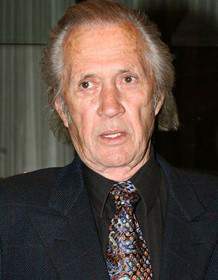
Woody Guthrie (David Carradine)
Played by David Carradine
A restless, idealistic folk musician who channels the suffering and resilience of workers into songs. He refuses to compromise his message for money, even when fame tempts him, and his blunt honesty drives the narrative.
- 🎭 Drama
- 🎵 Music
-

Mary Guthrie (Melinda Dillon)
Played by Melinda Dillon
Guthrie’s wife, torn between supporting her family and backing his unsteady career. She bears the economic strain of his activism and the emotional cost of his wandering, revealing the personal stakes behind social engagement.
- 👩👧👦 Family
- 💪 Resilience
-
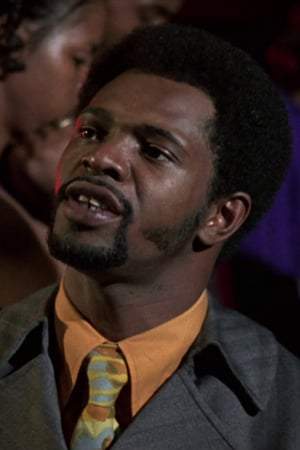
Ozark Bule (Ji-Tu Cumbuka)
Played by Ji-Tu Cumbuka
A union organizer who crosses Guthrie’s path, embodying solidarity and the power of collective action. He helps Guthrie find a platform for his songs within the labor movement.
- 🤝 Activism
- 🎶 Music
-

Liz Johnson (Gail Strickland)
Played by Gail Strickland
A migrant worker and partner within the Johnson family, she represents the pressures of economic survival and the challenges of finding steady work while caring for a family.
- 🌾 Migration
- 💼 Labor
-
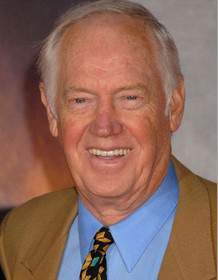
Luther Johnson (Ronny Cox)
Played by Ronny Cox
A migrant laborer who becomes an ally and a voice for how Guthrie’s songs resonate with workers. He embodies dignity, grit, and the enduring hope of collective action.
- 🌾 Migration
- 🛠️ Labor
-

Slim Snedeger (Randy Quaid)
Played by Randy Quaid
A fellow traveler and friend on the road, providing camaraderie and practicality as Guthrie navigates the rails and rough days.
- 🚂 Travel
- 🤝 Friendship
- SA
Sue Ann (Elizabeth Macey)
Played by Elizabeth Macey
A brief bar romance Guthrie encounters on his travels, highlighting the human connections that form amid his relentless wandering and struggle.
- 💞 Romance
- 🎭 Drama
Where and When Is Bound for Glory Set?
Bound for Glory is set in Los Angeles, California, migrant camps and railroad yards (1936). Here is why the time and place matter to the story.
When
1936
Set in 1936 during the Great Depression, the film follows Woody Guthrie as he drifts across towns and trains to perform for hungry crowds. The era is defined by unemployment, strikes, and the rise of grassroots activism, with music serving as a call to solidarity. The period emphasizes personal sacrifice in pursuit of social justice through art.
Where
Los Angeles, California, migrant camps, railroad yards
The film travels through the Depression-era American landscape—from a gas station and local bar to Los Angeles’ soup kitchens, migrant camps, and crowded railroad yards. It captures the shifting environments where work is scarce and hope is scarce but music remains a lifeline. The settings highlight the stark contrast between wealth and poverty and the itinerant life of performers and workers.
- 🏙️ Urban backdrop
- 🚚 Migration
- 🏭 Depression-era landscapes
What Are the Themes of Bound for Glory?
3 ideas the story keeps returning to, among them Protest & Labor, Artistic Integrity and Poverty & Migration.
-
01
Protest & Labor
Guthrie’s songs become anthems for workers and migrants, shaping public sentiment and fueling union momentum. The film portrays clashes with company guards and the suppression of dissent, as well as the personal costs of standing up for the oppressed. It demonstrates how art can mobilize crowds and challenge power structures.
-
02
Artistic Integrity
Guthrie resists ‘safe’ tunes and instead channels workers’ struggles into truthful music. His defiance creates conflict with producers and risks professional setbacks, but preserves authenticity. The story centers on the price and power of maintaining artistic integrity.
-
03
Poverty & Migration
The Depression drives families to migrate for work, pushing Guthrie to perform for migrant camps and factory workers. The film paints hunger, cramped living conditions, and the constant search for opportunity. It contrasts rural hardship with the possibility of change through music.
What Kind of Film Is Bound for Glory?
Melancholic in tone, with steady pacing and a straightforward story, going by the plot summary.
- Tone
- Melancholic
- Pacing
- Steady
- Story
- Straightforward
- Intensity
- Medium
- Ending
- Bittersweet
A melancholic and determined journey through the harsh realities of the Dust Bowl, following Woody Guthrie's gritty transformation into a folk singer whose hopeful activism is shadowed by personal loss and social strife.
- gritty
- melancholic
- hopeful
- lonely
- determined
- harsh
- great depression
- activism
- artistic calling
- migrant struggle
Content notes: labor violence, poverty, family abandonment.
Quiz
How well do you remember Bound for Glory? Test yourself on the story.
Where to Watch Bound for Glory
. US availability and prices from JustWatch.
Streaming availability in the US, powered by