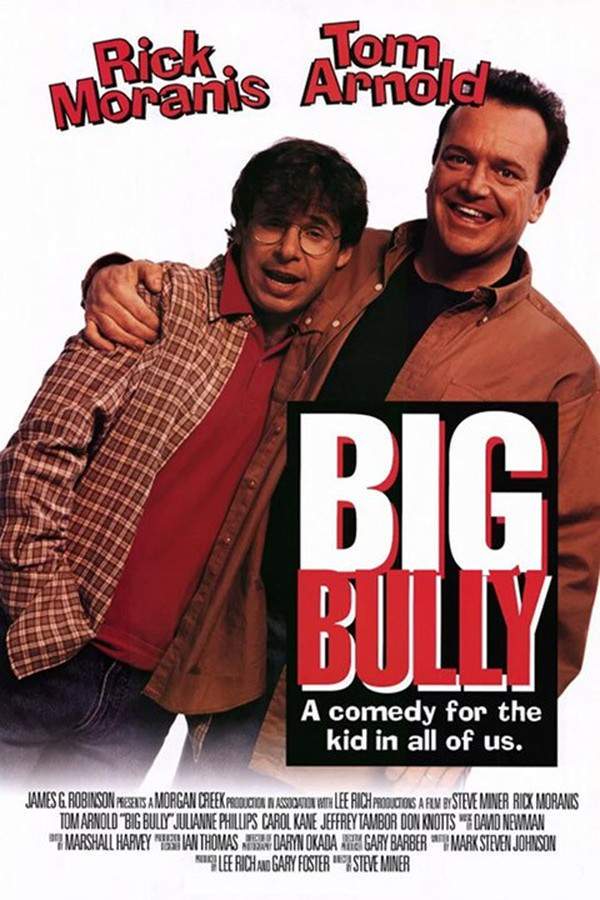
Big Bully 1996


Directed by
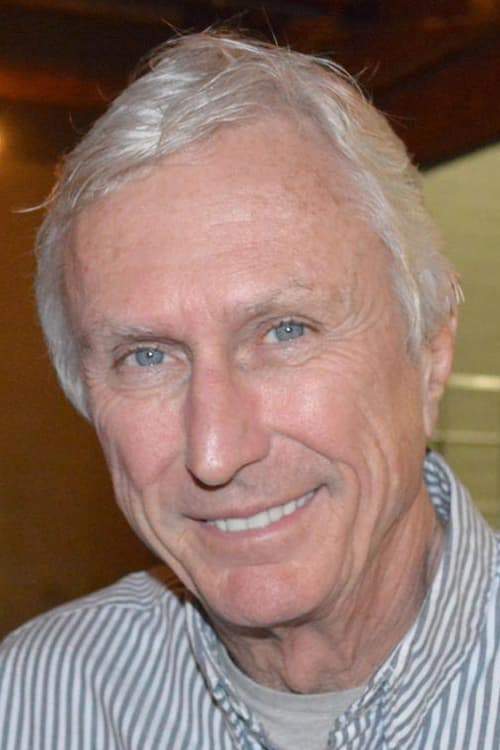
Steve Miner
Made by

Warner Bros. Pictures
Where to Watch Big Bully
See current US streaming, rental, and purchase options for Big Bully (1996) via JustWatch.

Amazon Prime Video
HD
Amazon Prime Video with Ads
HD
YouTube Free
HD
Amazon Video
SD
Apple TV Store
HD
Fandango At Home
SD
Google Play Movies
SD
YouTube
SD Streaming availability powered by 
Big Bully Plot Summary
Read the complete plot summary and ending explained for Big Bully (1996). From turning points to emotional moments, uncover what really happened and why it matters.
Growing up in Hastings, Minnesota in 1970, young David Leary, Rick Moranis, was bullied by Roscoe Bigger, Fang, because of a pointed tooth. David is ecstatic when his parents announce they are moving to Oakland. David informs teachers about Fang stealing a Moon rock and Fang is arrested.
Twenty-six years later in 1996, David is divorced and raising his troubled son Ben as a single parent. A published author (albeit not a popular one), David jumps at an offer from his old school to teach creative writing for the fall semester. He meets wacko neighbors Art and Betty Lundstrum and begins rekindling a relationship with his old flame Victoria. He also encounters the school librarian Mrs. Rumpert who is still waiting for David to return Green Eggs and Ham to the library. After Ben begins picking on a kid named Kirby, David meets the boy’s father Ross Bigger when both are called to the office of Principal Kokelar. Following a fire drill, David meets with his old friend Ulf, a fire fighter. When meeting with Ulf, Alan, and Gerry at a bar, David learns that after Ross got out of juvenile hall, Ross’ parents skipped town which led to him growing up in an orphanage.
When Ross learns who David is, he resumes his old routine of bullying him to make himself feel better. David’s son begins bullying Ross’ son, but after a discussion, they become friends. Ross’ intimidation tactics cause David to become paranoid, which unnerves another teacher named Clark, who thinks David is on crack. When David brings Ross’ actions to Principal Kokelar after a recent pranking, the principal sides with Ross due to his seniority at the school and reveals that he has gotten some complaints from Clark about David. He warns David that if he can’t straighten up his act, he will get another teacher to cover for him for the remainder of the semester.
Later that night, David and Ross meet at the old see-saw, where Ross reaffirms that David has never stood up for himself, while David admits snitching to get Ross put in Juvenile hall. After a game of cat-and-mouse in the school after hours, David flees to his old childhood hiding place in a cave. Ross chases him onto a waterfall and tells David that he always thought of him as a friend, before attacking him. David hits Ross with a piece of driftwood causing him to fall into the river. Fearing that he has killed his enemy, David tries to turn himself over to the police, only to find that the cops are out. Ulf drives David to his home while he tries to find Ross’ body. After a talk with Art, David attempts to go to sleep only to ambushed by Ross. The two men fight once again until Kirby and Ben come in and reveal that they’ve made up and encourage their fathers to do the same. Ross reveals he stole the moon rock because he wanted to be an astronaut. It is also shown that during their recent fight, Ross’ fang was chipped. They finally patch things up.
After finishing the semester, David begins to pack up to move to New York. He has Victoria return Green Eggs and Ham to the school library for him. Ross arrives and has a goodbye present for David: an Evel Knievel action figure identical to the one David had as a child before Ross threw it into a river. David invites them to visit, and the changed family leaves. Ross hooks up his mobile home to his truck, and follows David, telling his family they have been “invited” to come to New York and that’s why they call it a “mobile home.”
Big Bully Timeline
Follow the complete movie timeline of Big Bully (1996) with every major event in chronological order. Great for understanding complex plots and story progression.
Fang's bullying and the Moon rock incident
Young David Leary is tormented by Roscoe 'Fang' Bigger. David actually reports Fang's theft of a Moon rock to his teachers, setting in motion Fang's arrest. The incident marks a pivotal early clash between them.
Move to Oakland
David's parents announce a move to Oakland, and he is openly ecstatic about leaving behind Fang and starting fresh. The relocation signals a new chapter in his life and future. The move shapes the trajectory of his adulthood.
Back at school as a writer-teacher (1996)
Twenty-six years pass and David is now divorced, raising his son Ben. He accepts a teaching gig in creative writing at his old school, hoping to reestablish himself professionally and personally. The new job plunges him back into school life and its currents.
Neighbors and romance rekindled
David meets the eccentric Lundstrums, Art and Betty, and begins rekindling a relationship with his old flame Victoria. The new social circle adds pressure and color to his daily life as a teacher and father. The sequence deepens his involvement in the community.
Green Eggs and Ham returns referenced by Mrs. Rumpert
Librarian Mrs. Rumpert remains a fixture, still waiting for David to return Green Eggs and Ham. The situation becomes a running, light-hearted motif as he juggles writing, teaching, and family life. Her waiting creates a tiny, humorous through-line in the semester.
Ben bullies Kirby; meeting Ross Bigger
Ben starts picking on Kirby, drawing David into a tense encounter with Kirby's father, Ross Bigger. The office meeting marks the return of old tensions in a new generation. The dynamic between the two families quickly intensifies.
Barroom revelations about Ross's past
After a fire drill, David talks with Ulf, and at a bar he, Alan, and Gerry reveal that Ross grew up in an orphanage after his family vanished following juvenile hall. The disclosure casts Ross in a more sympathetic but intimidating light. It helps explain the power dynamics at the school.
Ross's intimidation and David's paranoia
As Ross escalates his bullying at school and at home, David grows increasingly paranoid. A colleague named Clark worries that David is cracking under pressure. The tension tightens around David's professional and personal life.
Ben and Kirby's reconciliation
David's son Ben and Ross's son develop a cautious friendship after a frank discussion, suggesting that younger generations can break the cycle of bullying. The family dynamics begin to shift as the kids find common ground. The change foreshadows a broader resolution between the two households.
Night see-saw confrontation and confession
David and Ross meet by the old see-saw where Ross accuses David of never standing up for himself. David admits snitching to get Ross into Juvenile Hall, revealing a long-buried guilt. The confrontation marks a turning point in their feud.
Cave chase, waterfall, and driftwood strike
In a tense game of cat-and-mouse after hours, David flees to his childhood hiding place in a cave. Ross chases him onto a waterfall where David strikes with a piece of driftwood, sending Ross into the river. Fearing what happened, David contemplates turning himself in.
Moon rock confession and new beginnings
During their fight, Ross's obsession is laid bare when he reveals he stole the Moon rock to become an astronaut, and his fang is chipped in the struggle. The two men reconcile, and their families begin to plan anew. At semester's end, David prepares to move to New York as Victoria returns Green Eggs and Ham, and Ross's family follows, hinting at a shared future.
Big Bully Characters
Explore all characters from Big Bully (1996). Get detailed profiles with their roles, arcs, and key relationships explained.
David Leary (Rick Moranis)
A once-bullied boy who grew into a published but not widely known author and a single father. Returning to teaching, he navigates professional and romantic rekindling while confronting a fear of confrontation stirred by his old bully, Ross. His journey is about reclaiming agency, balancing family life, and learning to stand up for himself without losing his humanity.
Ross Bigger (Tom Arnold)
The adult incarnation of the schoolyard bully, who wields intimidation to mask deep-seated insecurities. He resents David and clings to authority at school, eventually revealing why he stole the moon rock: a misguided dream of becoming an astronaut. His arc exposes how pain and vanity can drive cruelty, while hints of vulnerability emerge when the past catches up with him.
Big Bully Settings
Learn where and when Big Bully (1996) takes place. Explore the film’s settings, era, and how they shape the narrative.
Time period
1970s, 1996
The film juxtaposes two eras: the 1970s childhood in Hastings and the mid-1990s adult life in Oakland. The 1970s section emphasizes schoolyard hierarchies and small-town mores, while the 1996 portion focuses on mature relationships, divorce, and a test of character. Time shifts underscore how childhood experiences echo into adulthood.
Location
Hastings, Minnesota, Oakland
The story unfolds in Hastings, Minnesota during the 1970s, a close-knit small town where David is bullied by Fang. Decades later, the action moves to Oakland in 1996, where David returns to teaching and reconnects with old friends and a former flame. The contrast between a quiet Midwestern town and a bustling city backdrop highlights how past events linger and shape present choices.
Big Bully Themes
Discover the main themes in Big Bully (1996). Analyze the deeper meanings, emotional layers, and social commentary behind the film.
🤝
Reconciliation
Old grievances resurface as David and Ross confront their shared history. Their children, Ben and Kirby, catalyze a turning point by challenging the adults to abandon pride and seek a truce. Through confrontations, real talk, and risky acts, the film suggests that forgiveness is possible even after years of resentment. The ending shows the families choosing to move forward together.
💥
Bullying and Power
The film traces how power dynamics from childhood carry into adulthood, with Ross using intimidation to control his environment. David's fear and paranoia reflect how past abuse can shape a person's present actions. The narrative also reveals the consequences of unchecked dominance on families and students alike. Acceptance and boundaries begin to form only when the cycle is broken.
👨👦
Father-Son Bonds
A central thread is the strained relationship between fathers and their sons, and how mentoring and empathy can heal. David's efforts to support Ben clash with Ross's overbearing style, forcing them to reconsider what it means to be a father. The boys' own friendship becomes the catalyst that nudges their dads toward repair. The story culminates in a shared sense of responsibility and mutual respect.

Coming soon on iOS and Android
The Plot Explained Mobile App
From blockbusters to hidden gems — dive into movie stories anytime, anywhere. Save your favorites, discover plots faster, and never miss a twist again.
Sign up to be the first to know when we launch. Your email stays private — always.
Explore the mobile appBig Bully Spoiler-Free Summary
Discover the spoiler-free summary of Big Bully (1996). Get a concise overview without any spoilers.
In the sleepy Midwestern town where childhood memories linger like the scent of fresh‑cut grass, David Leary returns after decades away, swapping his life as a modestly published author for a stint teaching creative writing at his old high school. The town’s modest streets, the familiar school halls, and the quirky neighbors create a backdrop that feels both nostalgic and a little off‑kilter, hinting at the gentle humor that underpins the story. As David steps back into this world, the everyday rhythm of lesson plans and community interactions quickly reveals that the past has never truly left.
Among the familiar faces is Fang, the nickname of the man who once made David’s school days a struggle. Their paths cross again under the watchful eyes of both their children, prompting a clash of old wounds and new responsibilities. The film balances the warmth of small‑town camaraderie with an undercurrent of tension, as both men grapple with the expectations of fatherhood while confronting the echoes of a rivalry that shaped them. The tone drifts between lighthearted banter and moments of genuine introspection, inviting the audience to wonder how much of who we are is defined by the people we once were.
Adding depth to the picture are the surrounding characters—Victoria, the lingering love interest who still holds a place in David’s heart, and Ben, his teenage son who mirrors many of the challenges his father once faced. Their interactions provide a foil for the central conflict, highlighting the generational ripple effects of past actions. Through classroom chatter, neighborhood gatherings, and quiet moments of reflection, the story paints a portrait of a man trying to reconcile the writer inside him with the teacher and father he now must become.
Ross Bigger—the adult embodiment of Fang—serves as a mirror to David’s own insecurities and hopes, setting the stage for a nuanced exploration of how old grudges can be reshaped by shared duties and the desire to be better parents. In this modest, humor‑laden setting, the film teases the possibility that reconciliation and growth are just as much a part of life as the battles we once thought defined us.
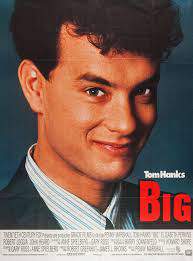
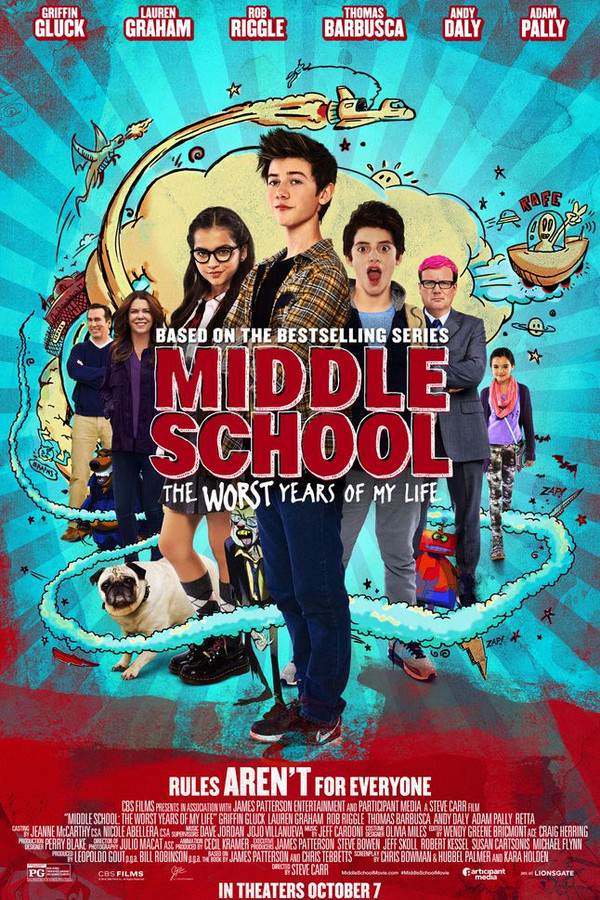
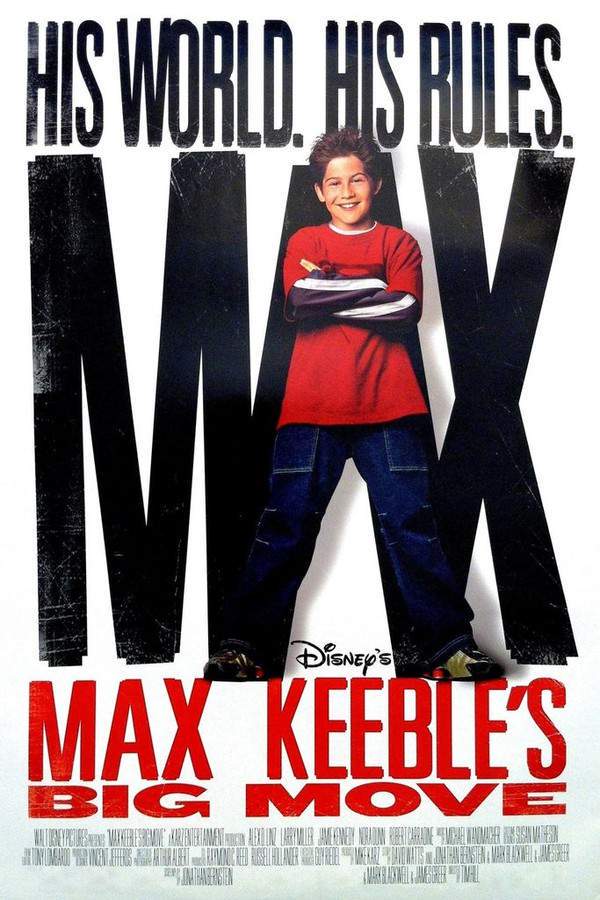
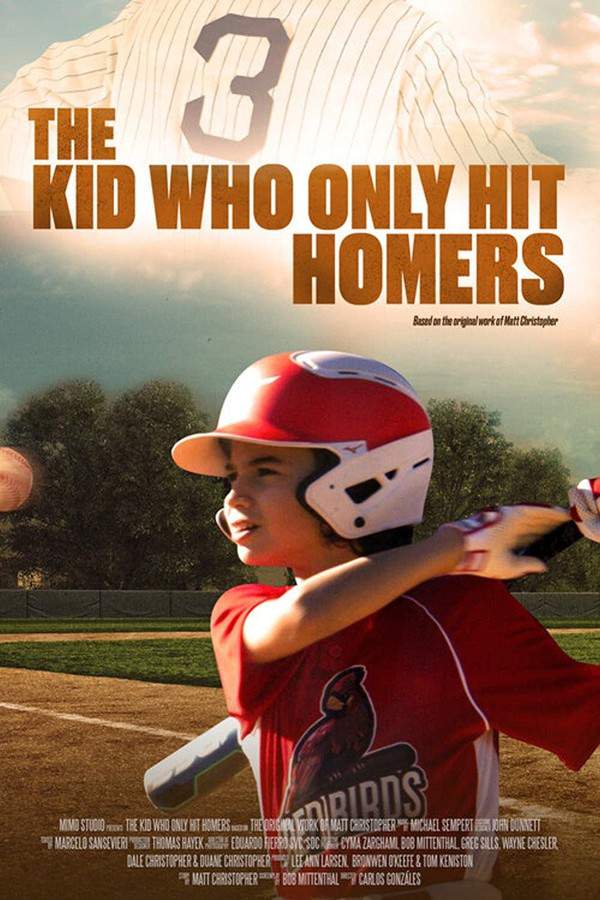
Movies with Similar Twists and Themes
Uncover films that echo the narrative beats, emotional arcs, or dramatic twists of the one you're exploring. These recommendations are handpicked based on story depth, thematic resonance, and spoiler-worthy moments — perfect for fans who crave more of the same intrigue.


Featured on this page

What's After the Movie?
Not sure whether to stay after the credits? Find out!
Check out our other apps:

SAT Sphere
Build confidence for the Digital SAT.

Mori Atlas
Discover wild places worth protecting.

Luntero
Search smarter for a home in Amsterdam.

Plot Explained
Unravel movie endings and hidden clues.

Pokechamp
Dive into Pokémon data and battle logic.

Driving Theory
Get ready for your European theory test.

Movie Dust
Plan your next cinema trip with ease.

Musemap
Find art and culture as you travel.

Selkobase
Compare credentials before committing.

Local Manual
Turn an unfamiliar country into practical next steps.

Lernavi
Compare school systems before your next move.

GymRoam
Find a workout stop wherever your plans take you.
Explore Our Movie Platform
New Movie Releases (2026)
Famous Movie Actors
Top Film Production Studios
Movie Plot Summaries & Endings
Major Movie Awards & Winners
Best Concert Films & Music Documentaries
Movie Collections and Curated Lists
© 2026 What's After the Movie. All rights reserved.
Privacy Policy