

What Is Battles Without Honor and Humanity: Proxy War About?
The premise of Battles Without Honor and Humanity: Proxy War in 292 words, with nothing given away. The full story follows below.
In the simmering streets of post‑war Japan, the yakuza world is a dense web of shifting loyalties and silent power plays. The film paints a stark, almost lyrical portrait of a society where honor is measured in whispered agreements and the weight of a single decision can tilt entire networks. The tone is gritty yet introspective, inviting the viewer to feel the pulse of an underworld that is as much about personal bonds as it is about territorial control.
At the heart of this landscape is Shozo Hirono, a man who has severed ties with the dominant Yamamori clan to carve out his own modest family. Determined to forge a sustainable foothold, he leans on the counsel of his trusted adviser Kenichi Okubo and opens his doors to a promising, restless youth, Takeshi Kuramoto. Hirono’s leadership style balances measured pragmatism with an unmistakable drive to expand his influence without losing the delicate code that governs his world.
Across the same streets moves Noboru Uchimoto, a powerful underboss within the rival Muraoka family. His reputation and strategic mind make him a natural bridge between competing factions, and his willingness to align with Hirono hints at a growing network that blurs old boundaries. The uneasy camaraderie between these two figures underscores a broader theme: alliances in this world are both tools and tests of character, each partnership carrying the promise of strength and the risk of rupture.
Through restrained dialogue and atmospheric visuals, the story immerses the audience in a realm where every handshake is a gamble and every oath is a ledger entry. The film’s mood is one of tense anticipation, leaving us to wonder how these fragile connections will shape the delicate balance of power that hangs over the city’s shadowed alleys.
What Happens in Battles Without Honor and Humanity: Proxy War?
The complete story of Battles Without Honor and Humanity: Proxy War, from the first scene to the last, in 741 words (about 3 minutes). Spoilers throughout.
Spoilers ahead
In September 1960, Fumio Sugihara, the temporary boss of the Muraoka Family, is assassinated while walking alongside Hirono Family patriarch Shozo Hirono [Bunta Sugawara] and Muraoka underboss Noboru Uchimoto [Takeshi Katô]. At Sugihara’s funeral, a guest vomits on the remains and hurries away, a crude sign of disrespect that signals a deeper grudge from a Kyushu-based yakuza. The act triggers a clash among the two families: Hirono and Muraoka officers, including Hiroshi Matsunaga [Mikio Narita] and Akira Takeda [Akira Kobayashi], ask Uchimoto to mete out punishment, but Uchimoto refuses, stoking anger and tension.
Hirono’s world tightens as a chain of personal loyalties and legal hurdles pull the brothers apart. After a rough confrontation with one of his own men, Hirono meets his adviser Kenichi Okubo [Asao Uchida], who explains the delicate politics of parole guarantors and the need to align with a powerful boss. Okubo outlines a path that would stabilize Hirono’s position by reconnecting with Yoshio Yamamori [Nobuo Kaneko], a former ally who has separated from Sugihara’s line. Although Hirono is wary—aware that Yamamori’s push is partly a strategic move to protect his own grip on power—he agrees to consider a partnership, even as he takes in a young delinquent named Takeshi Kuramoto [Tsunehiko Watase] into his family after Kuramoto injures a drunken yakuza associate.
That summer, key figures in the Muraoka camp—Soichi Eda [Shingo Yamashiro], Hirono, Uchimoto, Takeda, and Matsunaga—are drawn closer as Eda is released from prison, and the five men become sworn brothers. In June of the following year, with Hirono’s backing, Uchimoto’s bid to swear loyalty with Akashi Family boss Tetsuo Akashi brings an additional layer of alliance politics: Uchimoto aligns with Shigeo Aihara [Tetsuo End], a sworn brother of the Akashi hierarchy. The Akashi camp then presents a formidable rival to the Kobe-based Shinwa Group, kick-starting a nationwide struggle that stretches from Hiroshima to other fronts.
Aihara’s frank talk reveals a dangerous truth: Uchimoto is trying to cement loyalty to Akashi even though he already swore allegiance to Muraoka, a breach of yakuza code. That evening Hirono learns from Matsunaga and Takeda that Muraoka is transferring control to Yamamori, a decision that shocks Hirono and stirs his defiance. He is told Yamamori’s leadership will be temporary, but Uchimoto bursts in, furious, wrongly believing Hirono had betrayed him. The confrontation leaves Uchimoto disoriented and the broader alliance fraying as his ceremony for joining Akashi is delayed and his confidence collapses. Hirono’s blunt dismissal—calling Uchimoto a coward—drives a deeper rift between them.
Two months later, Yamamori formally succeeds Muraoka and consolidates the two families, igniting fresh tensions. Uchimoto is mocked at the after-party, and a litany of slights pushes him toward a more explosive posture. Convinced that Hirono may have conspired to destabilize him, Uchimoto confronts Hirono and threatens to tear down Yamamori’s position and to kill Hirono himself. He mobilizes his own faction, exploiting his mediator role in disputes between the Hamazaki and Komori Families of Iwakuni to wage a proxy war that would tilt the Yamamori leadership toward the Akashi alliance. Yamamori, meanwhile, ties his fortunes to the Shinwa Group, cementing a fragile but dangerous balance of power.
Hirono refuses to sit idle. After foiling an assassination ordered by Masakichi Makihara [Kunie Tanaka], Hirono pressures Takeda, Matsunaga, and Eda to reconcile with Uchimoto by leveraging Kenichi Okubo’s influence to threaten their standing in Hiroshima. Takeda uncovers the ruse, and Yamamori moves to expel Hirono’s faction to blunt the blow against his alliance with the Shinwa Group. The pressure yields a retreat for Matsunaga and Takeda, while Uchimoto is forced to sever his ties with Yamamori as a penalty for stepping out of line. The heat intensifies when Kuramoto [Tsunehiko Watase] attempts to shoot Makihara at a movie theater but is betrayed by Saijo, who Makihara has paid to turn against Hirono. Kuramoto is gunned down and his cremation ceremony is attacked, shattering the urn as Hirono clutches the broken remains and swears revenge.
Through these twists and betrayals, the deadly game of loyalties, retaliation, and strategic marriages of convenience reveals the precarious power calculus of postwar yakuza politics. The once-tight circle around Hirono and Uchimoto dissolves into competing factions, each move calibrated to tilt the balance of power between the Akashi and Shinwa groups, with Yamamori, Makihara, and their allies navigating a brutal landscape where survival depends on nerve, timing, and the ability to outmaneuver rivals who are only ever a step away from violence.
Battles Without Honor and Humanity: Proxy War Timeline: Every Key Event in Order
15 key events in the order they happen, from “Sugihara assassinated and funeral disruption” to “Kuramoto's murder and cremation attack; Hirono vows revenge”. 2 events name a place, across 2 locations.
- 1
Sugihara assassinated and funeral disruption
In September 1960, Fumio Sugihara, temporary boss of the Muraoka Family, is assassinated while walking with Hirono and Uchimoto. At the funeral, a guest vomits on Sugihara's remains after having been beaten earlier; the act is seen as intentional. The guests discuss punishment, but Uchimoto refuses, signaling dangerous cracks in loyalty.
When:September 1960
- 2
Funeral fallout and call for punishment
Hirono and Muraoka officers urge Uchimoto to punish the man responsible for the disrespect, but Uchimoto refuses. This defiance highlights the brewing tension among the factions and foreshadows future power struggles.
When:September 1960
- 3
Hirono disciplines Saijo and meets Okubo
Hirono beats Saijo for stealing, asserting his control over his men. He then meets Kenichi Okubo, the adviser who oversees his induction, seeking guidance. Okubo explains the political reality of parole guarantors and suggests Yamamori as a suitable ally, which Hirono grudgingly accepts.
When:1960
- 4
Parole guarantor switch and Yamamori aligned
Okubo explains the need to switch parole guarantors to avoid returning to jail and recommends Yoshio Yamamori. Hirono agrees to align his family with Yamamori, shifting his loyalty within the power structure. This sets the stage for Yamamori's rise and Hirono's future moves.
When:1960
- 5
Takeshi Kuramoto joins Hirono's family
At his mother's request, Hirono takes the young delinquent Takeshi Kuramoto into his family after Kuramoto injures a drunken yakuza associate. The inclusion expands Hirono's influence and tests his leadership.
When:Summer 1960
- 6
Soichi Eda released; sworn brothers formed
That summer, Muraoka officer Soichi Eda is released from prison. He joins Hirono, Uchimoto, Takeda, and Matsunaga as sworn brothers, cementing a core alliance within the evolving power structure.
When:Summer 1960
- 7
Uchimoto swears oath with Aihara
In June of the following year, Uchimoto's request to swear loyalty with Akashi boss is approved. He takes an oath with Shigeo Aihara, a sworn brother of Akashi, strengthening Akashi's reach. This sets the stage for the broader Akashi-Shinwa rivalry across Japan.
When:June 1961
- 8
Aihara reveals Uchimoto's loyalty attempt
During a conversation with Hirono, Aihara reveals that Uchimoto is trying to swear loyalty to Boss Akashi despite already pledging to Muraoka, violating traditional rules. The revelation intensifies the rift between Uchimoto and Hirono and destabilizes the alliances.
When:June 1961
- 9
Muraoka hands control to Yamamori; Hirono's reaction
That evening, Hirono learns that Muraoka is transferring control to Yamamori, a move the others say is temporary. Uchimoto storms in, calls Hirono a coward, and believes the truth about him has been exposed, deepening the conflict.
When:June 1961
- 10
Two months later: Yamamori advances; proxy tensions begin
Two months later, Yamamori succeeds Muraoka and merges the two families, reshaping the landscape. Uchimoto mocks him at the after party and then confronts Hirono, threatening to destroy Yamamori and kill Hirono.
When:August 1961
Show the other 5 events of Battles Without Honor and Humanity: Proxy War Hide the last 5 events
- 11
Proxy war forms: Hamazaki vs Komori; Akashi-Yamamori alignments
Uchimoto and Yamamori back rival factions, with Yamamori backing Hamazaki and Uchimoto backing Komori in conflicts that spread from Iwakuni across Japan. The Akashi and Shinwa groups rally their networks to back their chosen sides, raising the stakes for Hiroshima and beyond.
When:1961 Where:Iwakuni
- 12
Hirono pressures reconciliation with Okubo threats
After foiling an assassination order from Makihara, Hirono forces Takeda, Matsunaga, and Eda to reconcile with Uchimoto by using Okubo's influence to threaten their standing in Hiroshima. The maneuver aims to weaken Yamamori's alliance with Shinwa and push Yamamori toward retirement.
When:Late 1961 Where:Hiroshima
- 13
Takeda expelled; Matsunaga retires
Takeda is expelled from the Hirono faction, and Matsunaga retires rather than oppose Hirono. The expulsions consolidate Hirono's power and isolate Yamamori's faction within the Muraoka structure.
When:Late 1961
- 14
Uchimoto cuts ties with Yamamori
In retaliation for Hirono's expulsion, Uchimoto is forced to sever all ties with Yamamori under Akashi pressure. The split marks a significant realignment of loyalties among the major families.
When:Late 1961
- 15
Kuramoto's murder and cremation attack; Hirono vows revenge
Kuramoto attempts to kill Makihara at a movie theater but is gunned down after Saijo, paid by Makihara, betrays him. At Kuramoto's cremation ceremony, attackers shoot again to target Hirono, who clutches the urn and swears revenge.
When:Late 1961
Who Are the Main Characters in Battles Without Honor and Humanity: Proxy War?
6 characters, among them Shozo Hirono (Bunta Sugawara), Noboru Uchimoto (Takeshi Katô) and Yoshio Yamamori (Nobuo Kaneko): who each one is and the part they play in the story. Every profile links to the actor’s page.
- SH
Shozo Hirono (Bunta Sugawara)
Played by Bunta Sugawara
Patriarch of the Hirono family, Hirono is blunt, authoritative, and willing to push aggressive agendas to expand his clan's influence. His decisions drive the alliance shifts and confrontations that thread through the story, revealing a leader who is both protective and ruthless. He clashes with Uchimoto over succession, highlighting his willingness to threaten traditional loyalties for power.
- 🗡️ Power
- 🛡️ Loyalty
-
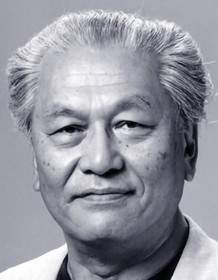
Noboru Uchimoto (Takeshi Katô)
Played by Takeshi Katô
The sworn brother of Sugihara and a rising force within the Hirono faction, Uchimoto harbors ambition and insecurity in equal measure. He seeks to consolidate influence, but his actions reveal a volatile mix of bravado and fear, making him susceptible to strategic manipulation. His evolving relationship with Yamamori and Hirono drives much of the conflict.
- 🎭 Ambition
- ⚔️ Conflict
- YY
Yoshio Yamamori (Nobuo Kaneko)
Played by Nobuo Kaneko
Former boss of the Muraoka family who steps into leadership and merges the Muraoka and Hirono factions under his watch. He is pragmatic and calculating, using alliances to stabilize the landscape while pursuing a stronger hold over western Japan. His maneuvering foreshadows the consolidation of power against rival groups.
- 👔 Power
- 🤝 Alliance
- TK
Takeshi Kuramoto (Tsunehiko Watase)
Played by Tsunehiko Watase
A young delinquent brought into Hirono's fold, Kuramoto embodies impulsive violence. His brutal act against a drunken yakuza and subsequent death illustrate the brutal costs of loyalty and the ruthlessness underlying the power struggles. His presence marks the brutal, sometimes reckless path of youth within the clan system.
- 👶 Youth
- ⚔️ Violence
- SI
Shinichi Iwai (Tatsuo Umemiya)
Played by Tatsuo Umemiya
A key figure connected to the Akashi Family in Kobe, Iwai serves as a strategic ally who influences major decisions at the top. His role underscores how inter-family diplomacy intersects with open conflict, shaping the broader battle for dominance. He exemplifies the political side of organized crime.
- 🤝 Ally
- 🗺️ Strategy
- KO
Kenichi Okubo (Asao Uchida)
Played by Asao Uchida
Hirono's adviser who orchestrates behind-the-scenes moves to secure power. Okubo's influence and willingness to threaten standing within Hiroshima show how manipulation and intimidation function within the yakuza hierarchy. He operates as a master schemer whose plans influence the balance of power.
- 🧠 Strategist
- 🗡️ Manipulation
Where and When Is Battles Without Honor and Humanity: Proxy War Set?
Battles Without Honor and Humanity: Proxy War is set in Hiroshima, Kobe, Iwakuni and Kyushu (1960-1961). Here is why the time and place matter to the story.
When
1960-1961
Set in the early 1960s, the story follows a turbulent period of postwar Japan as yakuza networks realign leadership and alliances. The timeline begins with a assassination at Sugihara's funeral in 1960 and moves through a series of reconfigurations and proxy wars into 1961. The era provides a backdrop of rapid modernization and shifting codes of loyalty within Japanese organized crime.
Where
Hiroshima, Kobe, Iwakuni, Kyushu
The narrative moves across key western Japanese locales, centered on Hiroshima and Kobe with significant action in Iwakuni and the Kyushu region. These port cities serve as backdrops for brutal factional clashes and shifting loyalties within the yakuza. The setting reflects postwar urban centers where power plays unfold amid dense urban streets and docks.
- 🏯 Port cities
- 🌊 Coastal hubs
- 🗺️ Western Japan
What Are the Themes of Battles Without Honor and Humanity: Proxy War?
3 ideas the story keeps returning to, among them Power & Loyalty, Loyalty & Duty and Clan Warfare.
-
01
Power & Loyalty
Power is won and kept through calculated control of families and sworn brothers. Loyalty binds individuals to bosses, yet it is constantly tested by ambition and strategic betrayals. The film centers on how leadership changes ripple through the ranks, reshaping alliances and the violence that accompanies them.
-
02
Loyalty & Duty
Characters navigate conflicting duties to their families, friends, and personal survival. The code of honor within the yakuza clashes with pragmatic decisions that push for survival and dominance. The relationships among bosses, underlings, and mediators reveal how trust is earned, tested, and sometimes broken.
-
03
Clan Warfare
The Akashi, Yamamori, and Shinwa lines engage in a broad proxy war that spans cities and affects civilians. Rivalry drives feuds, alignments shift, and a web of mediators and informants amplifies the violence. The feud economy shows how power is exercised through both direct confrontations and political maneuvering.
What Kind of Film Is Battles Without Honor and Humanity: Proxy War?
Dark in tone, with fast pacing and a complex story, going by the plot summary.
- Tone
- Dark
- Pacing
- Fast
- Story
- Complex
- Intensity
- High
- Ending
- Bleak
A grim and relentless descent into the brutal world of yakuza power struggles, marked by constant betrayals, sudden violence, and a pervasive sense of paranoia that leaves little room for hope or redemption.
- brutal
- tense
- cynical
- betrayal
- gritty
- paranoid
- yakuza politics
- gang war
- loyalty and betrayal
- power struggle
Content notes: murder, gang violence, assassination, betrayal, beating.
Quiz
How well do you remember Battles Without Honor and Humanity: Proxy War? Test yourself on the story.


