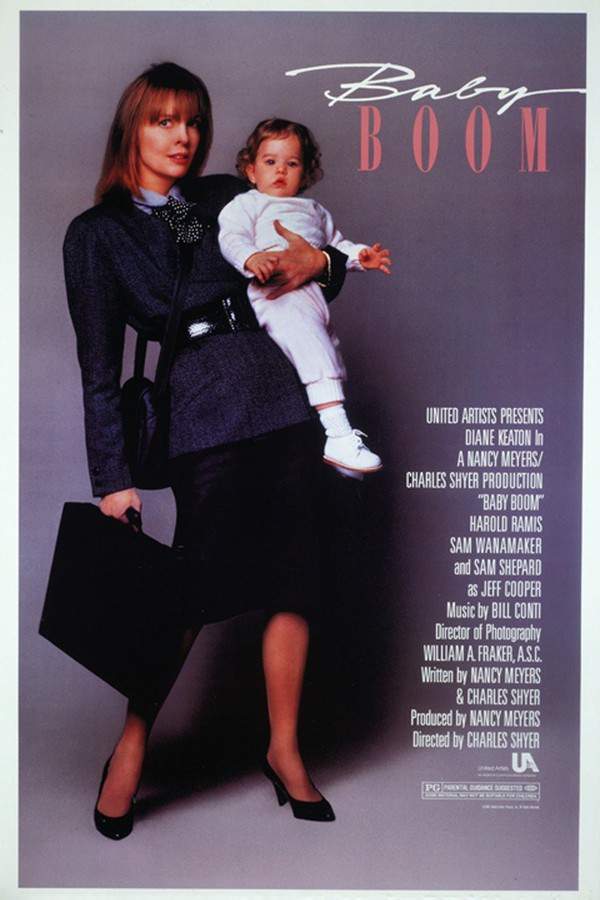
What Is Baby Boom About?
The premise of Baby Boom in 275 words, with nothing given away. The full story follows below.
In the bustling heart of Manhattan, J.C. Wiatt commands boardrooms with a razor‑sharp focus that earns her the nickname “Tiger Lady.” As a high‑powered marketing executive, she thrives amid the relentless rhythm of skyscrapers, power lunches, and relentless ambition, sharing her life with Steven Buchner, an equally driven investment banker whose own priorities keep the idea of children well out of the picture. The city’s pace mirrors J.C.’s own relentless drive, painting a portrait of a woman who has hard‑wired success into every corner of her world.
Everything shifts when a distant relative’s passing leaves J.C. with an unexpected charge: a toddler named Elizabeth. The sudden responsibility forces her to confront a choice that upends her carefully constructed corporate life. Opting to keep the child, she trades Manhattan’s neon glare for the quiet charm of a small Vermont town, where rolling hills and close‑knit neighbors stand in stark contrast to the cut‑throat corporate arena she once ruled. The slower tempo of rural life offers both relief and new challenges, inviting J.C. to explore a side of herself she’s never had room to nurture.
Amid the idyllic New England setting, J.C. meets Dr. Jeff Cooper, the town’s warm‑hearted veterinarian, whose gentle presence hints at a different kind of partnership—one built on community, curiosity, and the simple joys of everyday life. As she settles into motherhood, the film’s tone balances witty humor with heartfelt moments, capturing the delicate dance between ambition and affection. The story promises a journey where a driven citywoman discovers that success can be redefined, blending professional savvy with the rewarding messiness of family, friendship, and the possibilities that bloom when old horizons expand.
What Happens in Baby Boom?
The complete story of Baby Boom, from the first scene to the last, in 585 words (about 3 minutes). Spoilers throughout. Names in the text link to 2 cast member pages.
Spoilers ahead
J. C. Wiatt is a driven Manhattan management consultant, known in the office as the Tiger Lady, and she remains intensely focused on a demanding, high-profile career. She shares her life with her boyfriend Steven Buchner, an investment banker who shares her drive but not her appetite for parenting, and the pair have no plans for children.
That stance is upended when a distant cousin dies and leaves behind Elizabeth, an orphaned toddler. At first, J.C. tries to place the child for adoption to avoid any disruption, but as she spends time with Elizabeth she forms a growing bond and decides to raise her. This decision shatters the couple’s easy arrangement, and Steven chooses a different path, moving out as J.C. commits to motherhood.
Back at work, J.C. faces a pivotal professional turn. Her boss, Fritz Curtis, offers a path to partnership, while CEO Hughes Larrabee wants her to manage a major client, The Food Chain. A capable protégé, Ken Arrenberg, is assigned to her team, signaling a shift that will probe how far she will balance ambition with family life.
To juggle both worlds, J.C. hires a string of nannies and enrolls Elizabeth in early development classes. When she discovers Ken making crucial decisions without her input, she asks to remove him from the account. Fritz counters by explaining that for the good of the company, Ken will lead the account and J.C. will be reassigned to a lower-profile client, giving her more time for Elizabeth. The moment stings her sense of control and Fritz reveals he, too, once faced a choice between career and family. Humiliated, J.C. quits and moves with Elizabeth to a farmhouse in Vermont.
The new home proves a challenge of its own. She buys the house without inspecting it and soon faces serious problems—failing plumbing, heating troubles, no reliable water, and a bad roof. By winter, the repairs drain her finances and patience, and loneliness takes its toll as she tries to keep the dream afloat.
In the midst of this stress, J.C. meets local veterinarian Dr. Jeff Cooper. At first, she is wary of his advances, focused on returning to New York, but a slow, genuine connection develops between them as she grapples with the possibility of a fresh start far from the corporate world.
Amid the mounting pressures, she sees an opportunity to turn a personal venture into a real business. She creates and sells fresh, “country” baby food applesauce—an idea that grows into a thriving company called Country Baby. As the business expands and orders arrive from across the country, a warm romance also blossoms with Jeff, adding a new layer of support to her life.
When Fritz later approaches her with an offer from The Food Chain to acquire Country Baby, the deal promises a multi-million-dollar purchase, a Manhattan apartment, and a prestigious salary. It would return her to the high-powered corporate life she once embraced. But after weighing the option, J.C. declines the offer. She decides she can build and lead her company on her own terms while staying committed to Elizabeth and Jeff, choosing a life that blends motherhood, partnership, and entrepreneurial leadership.
In the end, J.C. has crafted a life that feels authentic and sustainable: a hands-on mother, a loving partner, and the CEO of a flourishing business. Her journey demonstrates that ambitious professional success can coexist with a fulfilling family life, and that happiness can be found by following a path that honors both her career and the people she cherishes.
Baby Boom Timeline: Every Key Event in Order
14 key events in the order they happen, from “Inheriting Elizabeth” to “Choosing independence”. 14 events name a place, across 4 locations.
- 1
Inheriting Elizabeth
J.C. Wiatt learns that a distant cousin has died and left her an orphaned toddler, Elizabeth. The news shocks her and immediately raises questions about balancing a high-powered career with motherhood. She begins to confront the possibility that her life may be changing in unexpected ways.
When:after cousin's death Where:Manhattan
- 2
Plan to place Elizabeth for adoption
She arranges to put the child up for adoption, hoping to keep her lifestyle intact. The plan forces her to confront how motherhood would change her priorities and daily routines. It marks a turning point in how she envisions her future.
Where:Manhattan
- 3
Choosing to become a working parent
Despite the plan to surrender her, J.C. grows attached to Elizabeth and reconsiders her priorities. She decides to raise Elizabeth herself while remaining devoted to her career.
Where:Manhattan
- 4
Breakup with Steven
J.C. and Steven realize they want different things and amicably break up. He moves out as she commits to parenthood.
Where:New York
- 5
Offer of partnership and The Food Chain opportunity
Fritz Curtis, her boss, offers her a path to partnership at the firm. At the same time, Hughes Larrabee is interested in having her manage The Food Chain account.
Where:Manhattan
- 6
Assignment of Ken Arrenberg
Ken Arrenberg is assigned to her team to handle The Food Chain account. This reshapes the team dynamic as she adjusts to leadership changes.
Where:Office
- 7
Balancing work with family
To cope with the growing responsibilities, J.C. hires nannies and enrolls Elizabeth in early development classes. The balancing act becomes central to her daily life as both CEO and mother.
Where:Manhattan
- 8
Conflict over Ken's role
Ken begins making decisions without J.C.'s input, prompting her to push for his removal from the team. Fritz explains the corporate realities, announcing that Ken will lead the account while J.C. is reassigned to a lower-profile client.
Where:Office
- 9
Quits and moves to Vermont
Feeling humiliated, J.C. quits the firm and moves with Elizabeth to a farmhouse in Vermont. The change marks a drastic shift from corporate life to a more hands-on, rural reality.
Where:Vermont
- 10
A failing farmhouse and winter hardship
The house proves riddled with plumbing, heating, and water problems. By winter, repairs drain her finances and patience, leaving her overwhelmed and lonely.
When:winter Where:Vermont
Show the other 4 events of Baby Boom Hide the last 4 events
- 11
Chance meeting with Dr. Jeff Cooper
During this crisis, J.C. meets local veterinarian Dr. Jeff Cooper. Initially annoyed by him, she gradually opens up and begins to envision a future that includes both Elizabeth and a personal relationship.
Where:Vermont
- 12
Country Baby takes off
She turns a homemade, fresh-ingredient applesauce into a viable product that becomes Country Baby. As orders flood in from across the country, the business begins to grow, giving her financial independence and purpose.
Where:Vermont
- 13
Offer from The Food Chain
Fritz contacts J.C. with a multi-million-dollar offer to acquire Country Baby and distribute its products nationwide. The proposal promises a return to Manhattan life and a lucrative corporate career.
Where:Manhattan
- 14
Choosing independence
She declines the offer, choosing to stay with Elizabeth and Jeff and to lead her own company. She returns home to Vermont, content with her evolving life as a mother, partner, and entrepreneur.
Where:Vermont
Who Are the Main Characters in Baby Boom?
6 characters, among them J.C. Wiatt (Diane Keaton), Dr. Jeff Cooper (Sam Shepard) and Elizabeth: who each one is and the part they play in the story. 2 of them link to the actor’s page.
-

J.C. Wiatt (Diane Keaton)
Played by Diane Keaton
A driven Manhattan management consultant known for a sharp, career-first mindset. When Elizabeth enters her life, she reevaluates priorities and attempts to balance motherhood with work, eventually founding Country Baby. She ultimately declines a lucrative corporate offer to return to The Food Chain, choosing a life in Vermont with Elizabeth and Jeff.
- 💼 Career
- 👩👧 Parenthood
- 🌱 Growth
-

Dr. Jeff Cooper (Sam Shepard)
Played by Sam Shepard
A practical, down-to-earth veterinarian in Vermont who becomes J.C.'s partner and emotional anchor. He challenges her skepticism about relationships and family, and their romance deepens as they build a life together in the countryside. He provides stability as Elizabeth and Country Baby transform J.C.'s world.
- 🩺 Veterinarian
- ❤️ Partner
- 🌿 Rural Life
- E
Elizabeth
The infant orphan who triggers J.C.'s life changes; She becomes the catalyst for J.C.'s reconsideration of priorities and the move toward motherhood and entrepreneurship. Her presence forces J.C. to navigate new responsibilities, routines, and the emotional bond of parenthood.
- 🍼 Child
- 🚼 Catalyst
- 👶 Toddler
- FC
Fritz Curtis
J.C.'s boss at the firm who embodies corporate pragmatism. He offers a partnership but ultimately reshapes J.C.'s career path by reallocating responsibilities, underscoring the pressure of balancing ambition with family life.
- 💼 Manager
- 🧭 Corporate politics
- 🔄 Change
- HL
Hughes Larrabee
CEO of The Food Chain who wants J.C. to manage a major national account. He presents a multi-million-dollar deal that tempts J.C. to return to the corporate world, highlighting the lure of prestige against personal happiness.
- 🏢 CEO
- 🎯 Deal-maker
- 🧭 Strategy
- KA
Ken Arrenberg
J.C.'s protégé assigned to her team who sometimes makes decisions without her input. His presence reflects the delegation and power dynamics within a corporate setting as J.C. navigates leadership and collaboration.
- 👔 Protégé
- 🤝 Collaboration
- 🧭 Decision-making
Where and When Is Baby Boom Set?
Baby Boom is set in Manhattan, New York and Vermont countryside (1980s). Here is why the time and place matter to the story.
When
1980s
Set during the 1980s, a decade marked by rapid corporate expansion and evolving gender roles. The era’s emphasis on ambition and high-level careers frames J.C.'s initial priorities. Her shift toward motherhood and entrepreneurship reflects the period's slow move toward more balanced expectations for women in the workplace.
Where
Manhattan, New York, Vermont countryside
Primarily set in Manhattan, New York, and later in rural Vermont after J.C. inherits Elizabeth. The Manhattan scenes emphasize a high-powered consulting culture and the pursuit of prestige. The Vermont portion contrasts a quieter countryside with the emotional and financial challenges of motherhood and building a new business.
- 🏙️ Urban setting
- 🏡 Rural Vermont
- 👩💼 Corporate backdrop
What Are the Themes of Baby Boom?
3 ideas the story keeps returning to, among them Work-Life Balance, Personal Growth and Entrepreneurial Independence.
-
01
Work-Life Balance
J.C.'s life tests the ability to juggle demanding work with caring for a child. The story shows how corporate success can collide with parenting responsibilities. Her experiences with nannies, early development classes, and late-night decisions highlight the delicate negotiation between professional and personal life. Ultimately, balance is portrayed as a personal choice rather than a mere duty.
-
02
Personal Growth
Facing Elizabeth's needs forces J.C. to reassess her priorities beyond a corner office. She grows from a single-minded strategist into a patient, resourceful parent and entrepreneur. Her romance with Jeff deepens as they build a life together in Vermont. Growth here is measured not by titles but by the depth of relationships and the ability to adapt.
-
03
Entrepreneurial Independence
Rejecting the offer from The Food Chain, J.C. chooses to grow Country Baby on her own terms. The business becomes a symbol of independence, balancing profit with care for Elizabeth. Her decision to stay in Vermont shows that success can mean a life outside the corporate ladder.
What Kind of Film Is Baby Boom?
Hopeful in tone, with steady pacing and a straightforward story, going by the plot summary.
- Tone
- Hopeful
- Pacing
- Steady
- Story
- Straightforward
- Intensity
- Medium
- Ending
- Happy
A heartwarming and hopeful journey of a high-powered executive who rediscovers happiness and purpose through motherhood, rural life, and building her own business, despite significant personal and professional challenges.
- hopeful
- heartwarming
- struggle
- determination
- cozy
- lonely
- career vs family
- motherhood
- single parent
- life transformation
Quiz
How well do you remember Baby Boom? Test yourself on the story.