What Is Babul About?
The premise of Babul in 267 words, with nothing given away. The full story follows below.
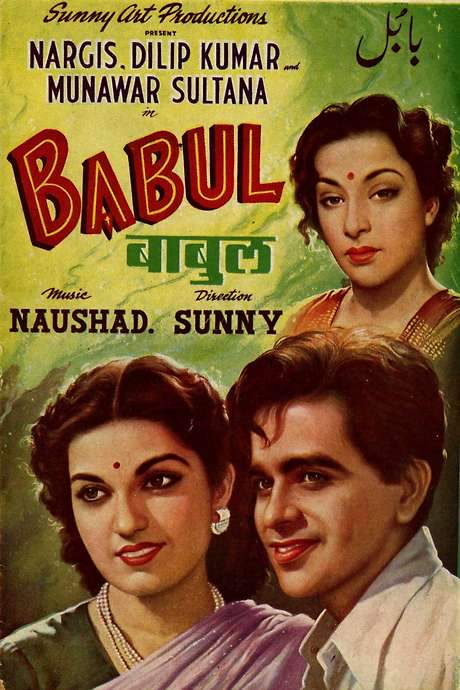
In a quiet corner of the world where the daily pace is slow and labor is light, Ashok enjoys a life of enviable privilege. Portrayed by Dilip Kumar, he serves as the local postmaster—a position that requires little of him beyond the occasional telegram, leaving ample time for cigarettes, painting, and the gentle art of songwriting. He navigates his days with a measured ease, cushioned by wealth and comfort, seemingly untouched by the hardships that define the lives of those around him.
It is this very comfort that draws the eye of Bela, played by Nargis, the simple and earnest daughter of the former postmaster. She finds herself captivated by Ashok’s presence, filling his days with prepared meals and gentle teasing while quietly harboring dreams of a shared future. To Bela, marriage to Ashok represents a distant hope for security and happiness, even if his affection for her remains casual and noncommittal. Her dreams are shadowed by the vast social distance between them, yet she clings to the possibility that his attention might mean something more.
However, the dynamics of the village are complicated by the presence of Usha, portrayed by Munawar Sultana. As the daughter of the wealthy Jamnadas, she lives in a hilltop mansion and moves in a sphere of luxury that aligns neatly with Ashok’s own status. With two fathers—one rich, one poor—hoping to secure a union with the postmaster, a silent rivalry begins to brew. As emotions stir and class distinctions come into sharp focus, Ashok finds himself the center of an emotional triangle where affection, expectation, and fate are poised to intertwine.
What Happens in Babul?
The complete story of Babul, from the first scene to the last, in 443 words (about 2 minutes). Spoilers throughout. Names in the text link to 3 cast member pages.
Spoilers ahead
Ashok, Dilip Kumar hails from a wealthy family and works as a postmaster, a position that looks easy but comes with almost no real labor beyond the occasional telegram. His world is cushioned by privilege, leaving him ample time for small pleasures like cigarettes, painting, and the gentle art of song writing. In this calm, Ashok moves through life with a measured ease, surrounded by comfort and the quiet routines of a man who isn’t pressed by hardship.
Bela, Nargis, the poor and very simple daughter of the former postmaster, finds herself drawn to Ashok’s attention. She prepares his meals, teases him, and amuses him, and in her heart she begins to imagine a future where marriage could bring happiness. She longs for his affection and believes a life with him could be secure, even though Ashok himself likes her only in a fleeting, noncommittal way. Her dreams are tempered by the stark contrast between their worlds, yet she holds on to hope.
Usha, Munawar Sultana, Jamnadas’s daughter, represents a different kind of attraction for Ashok. She lives in a hilltop mansion, enjoys the luxury of a foreign car, and projects an image of a perfect match for the young postmaster. The rivalry between Bela and Usha intensifies as Bela’s prospects feel increasingly uncertain, and Bela’s heart grows heavier with each passing day.
In a moment of jealousy, Bela tells a lie to Usha, claiming that Ashok has confessed his love for her and is playing a double game. The accusation is born from hurt and fear, and it sets off a chain of emotional misjudgments that shroud the situation in doubt. Ashok’s true feelings remain unclear to Bela, who is swept up in the belief that she has lost him to a rival.
Bela’s heartbreak comes to a head when she sees Usha’s wedding from a tree, swaying with the precariousness of her own hopes. She hopes that, soon after, she too will be married to Ashok, but tragedy strikes when the tree branch breaks. She is severely injured and carried back to her father’s home as Ashok arrives, promising Bela’s family that he would marry her. The moment is heavy with sorrow, and it marks a turning point in their lives.
Back at Bela’s bedside, Ashok offers quiet comfort as Bela’s fragile tale nears its end. In the depths of her last moments, Bela dreams of a black-veiled rider coming to claim her, and the dream becomes her final moment as she dies. The story closes on a note of quiet resignation, leaving Ashok and Bela’s father to face the consequences of a love shaped by class, circumstance, and unspoken truths.
Babul Timeline: Every Key Event in Order
10 key events in the order they happen, from “Ashok's privileged life as a postmaster” to “Bela's dream of the rider and her death”. 10 events name a place, across 7 locations.
- 1
Ashok's privileged life as a postmaster
Ashok hails from a wealthy family and works as a postmaster. His job requires little hard labor, leaving him time to enjoy cigarettes, painting, and song writing. The setup underscores a comfortable life rather than a deep, romantic commitment.
Where:Ashok's hometown
- 2
Bela's hopes and her father's support
Bela is the poor daughter of the former postmaster who longs for Ashok's affection. Her father supports her hope of marriage, desiring Bela to secure a dignified future. Bela's daydreams paint Ashok as a protector and partner.
Where:Bela's home
- 3
Bela imagines a happy life with Ashok
Bela prepares Ashok's meals, teases him, and imagines a happy marriage with him. Ashok likes her attention but remains emotionally distant, leaving Bela caught between affection and ambiguity. Her daily routines become a canvas for a possible life together, even as doubt grows.
Where:Bela's home
- 4
Usha enters the competition
Usha, the daughter of wealthy landowner Jamnadas, lives in a lavish hilltop mansion and seems a more suitable match for Ashok. She drives a foreign car and embodies a lifestyle Bela cannot match. Her presence intensifies Bela's insecurity and fuels the rivalry.
Where:Usha's hilltop mansion
- 5
Bela's lie about Ashok's love
Bela, driven by jealousy, tells Usha that Ashok has confessed his love for Bela and is playing a double game. The lie pits rivals against each other and threatens to derail any potential match. The deception heightens the emotional stakes for everyone involved.
Where:Bela's home
- 6
Bela witnesses Usha's wedding
Bela sits in a tree and witnesses Usha's wedding, clinging to the hope of a future with Ashok. The scene exposes Bela's heartbreak and misreading of the situation. She believes her own fate hinges on Ashok's love.
Where:Usha's wedding site
- 7
Bela's accident and injury
During the wedding day, the branch beneath Bela's tree breaks and she falls to the ground, severely injuring herself. The accident abruptly halts Bela's dreams and brings the fragile romance into sharp focus. Ashok's later actions will be shaped by this turning point.
Where:Under the tree near the wedding site
- 8
Ashok promises Bela's father he will marry Bela
Ashok arrives at Bela's father's home, where Bela is recovering, and promises that he will marry Bela. The pledge gives Bela's father relief and signals a possible future for Bela. The promise binds Ashok to a duty that may redefine their relationship.
When:after Bela's injury Where:Bela's father's home
- 9
Ashok sits by Bela's bedside
Ashok stays with Bela at her bedside to offer comfort. Bela drifts between wakefulness and a dream of a black-veiled rider coming for her, a symbol of fate and death that shadows her hope for a normal life. The moment blends care with an ominous premonition.
When:night Where:Bela's bedside
- 10
Bela's dream of the rider and her death
In a final, tragic moment, Bela dreams that the black-veiled rider has come to claim her and she dies. The death culminates Bela's life marked by longing and unrequited love, leaving Ashok with an uncertain future. The timeline closes on a note of irreversible loss.
When:soon after the dream Where:Bela's bedside
Who Are the Main Characters in Babul?
5 characters, among them Ashok (Dilip Kumar), Bela (Nargis) and Usha (Munawar Sultana): who each one is and the part they play in the story. Every profile links to the actor’s page.
- A(
Ashok (Dilip Kumar)
Played by Dilip Kumar
Ashok hails from a wealthy family and works as a postmaster, enjoying comforts like cigarettes, painting, and song writing. He is courteous and cultured but emotionally distant, not in love with Bela initially. He is torn between Bela's affection and Usha's alluring world, navigating a balance between duty and desire.
- 💼
- 🧭
- 💬
- B(
Bela (Nargis)
Played by Nargis
Bela is the poor, simple daughter of the former postmaster who vies for Ashok's attention. She is compassionate and playful, yet capable of jealousy when faced with Usha's rival presence. Her dreams of a happy marriage are challenged by social dynamics and tragedy.
- 💑
- 💖
- 🌟
- U(
Usha (Munawar Sultana)
Played by Munawar Sultana
Usha is the wealthy landowner Jamnadas's daughter, living a lavish hillside lifestyle and driving a foreign car. She appears confident and cultured, seeking a match with Ashok due to status. Her actions embody the pull of wealth and social expectation.
- 💎
- 🏰
- 🎯
- AF
Ashok's Father
Played by Jankidas Mehra
Jankidas Mehra's character embodies the traditional patriarch who shapes the path of his son's life, balancing respect for family honor with evolving desires. He represents the authority of a generation navigating a changing society. He influences Ashok's choices, even as love complicates those decisions.
- 👨👧
- 🕰
- 🗣
- M(
Munshi (Jugnu)
Played by Jugnu
Munshi is a minor yet pivotal figure tied to the post office and the social circle surrounding Ashok and Bela. His presence underscores the town's rules and routines that govern romance and daily life.
- 📜
- 🗺
Where and When Is Babul Set?
Babul is set in India (1950s). Here is why the time and place matter to the story.
When
1950s
The film takes place in a mid-20th century Indian setting where traditional rules shape romance and marriage. Bela, a poor girl, pursues Ashok's affection while Usha embodies wealth and status. The narrative follows the consequences of jealousy, deception, and the societal pressure to wed within one's class.
Where
India
Set in an Indian town, the story unfolds around a hilltop mansion belonging to a wealthy family and a nearby post office where Ashok works. The setting contrasts Bela's modest home with Usha's luxurious lifestyle, highlighting class divides. The hill town atmosphere with a prominent mansion provides the ideal stage for social expectations and romantic tensions.
- 🏰 Hilltop mansion
- 🏬 Post office setting
- 🗺 Indian town
What Are the Themes of Babul?
3 ideas the story keeps returning to, among them Love vs Duty, Wealth & Class and Jealousy & Deception.
-
01
Love vs Duty
Bela's love for Ashok clashes with social expectations and Usha's presence as a rival. Ashok is torn between his feelings and the duties of family and status. The romance unfolds under the weight of arranged-marriage norms, forcing choices with far-reaching consequences.
-
02
Wealth & Class
Two worlds collide: Bela's modest upbringing and Usha's lavish hilltop life. Wealth and social rank influence who Ashok should love, shaping alliances and heartbreak. The story uses material differences to explore desire, security, and status.
-
03
Jealousy & Deception
Bela spreads a lie to Usha that Ashok confessed his love, driven by jealousy and fear of losing him. Deception fuels misunderstandings, leading to tragedy as Bela's dream of marriage turns to ruin. The chain of lies exposes the vulnerability of love under social scrutiny.
What Kind of Film Is Babul?
Melancholic in tone, with slow pacing and a straightforward story, going by the plot summary.
- Tone
- Melancholic
- Pacing
- Slow
- Story
- Straightforward
- Intensity
- Medium
- Ending
- Sad
A slow, melancholic drama centered on romantic longing and class divides, where a young woman's unrequited love culminates in a tragic and emotionally poignant conclusion.
- melancholic
- hopeful
- romantic longing
- jealousy
- tragic
- yearning
- romantic rivalry
- unrequited love
- social class disparity
- sacrifice
Content notes: death of a young person.
Where to Watch Babul
. US availability and prices from JustWatch.
Streaming availability in the US, powered by