
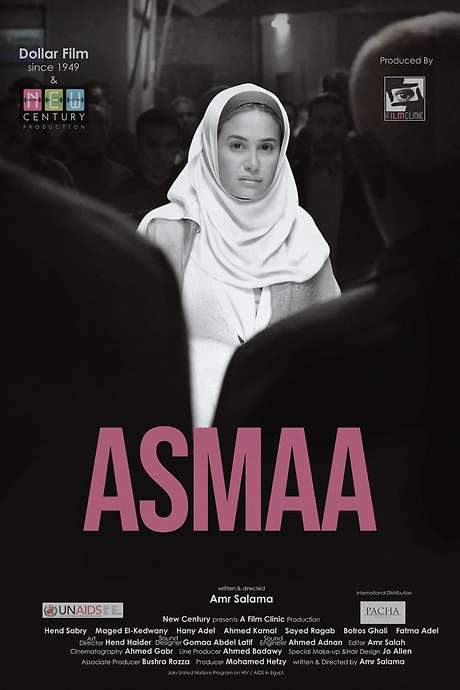
What Is Asmaa About?
The premise of Asmaa in 294 words, with nothing given away. The full story follows below.
In bustling Cairo, Asmaa balances the weight of family and survival, caring for her aging father Hosni and teenage daughter Habiba while stitching together a modest income at the airport. The city’s relentless hum frames her quiet determination to live beyond the diagnosis that labels her as an outlier—HIV/AIDS. Rather than surrendering to the stigma that shadows her, she pursues every avenue of treatment, turning her own health battle into a quiet act of defiance.
The story gently peels back to her roots in a sun‑baked countryside village, where a younger Asmaa once shared a stall with her father, selling the family’s rugs. There she met Mosaad, a conscript whose presence sparked both love and responsibility, shaping her sense of duty and resilience. Their shared past lingers, casting a subtle yet persistent influence over her present choices and the way she views community, legacy, and sacrifice.
Back in the capital, she finds a fragile kinship within an HIV/AIDS support group, a space that offers both solace and the stark reality of a society still learning to look away. When a flamboyant talk‑show host, Mohsen el‑Seesy, approaches her with an offer that could grant the medical care she urgently needs, the tension erupts between personal privacy and public advocacy. The allure of a platform that might amplify hope for countless others clashes with her instinct to protect those she loves most.
Through intimate vignettes and stark urban landscapes, the film paints a portrait of quiet courage set against systemic indifference. The tone is contemplative yet urgent, weaving humor and heartbreak as it follows a woman who refuses to let a diagnosis define the limits of her humanity. In every breath, Asmaa embodies a steadfast belief that hope, once kindled, can illuminate even the darkest corridors.
What Happens in Asmaa?
The complete story of Asmaa, from the first scene to the last, in 731 words (about 3 minutes). Spoilers throughout. Names in the text link to 5 cast member pages.
Spoilers ahead
Asmaa Hend Sabry is a woman in her forties who shares a modest life in Cairo with her aging father Sayed Ragab and her teenage daughter Habiba Fatma Adel. She toils at a low-paying job at Cairo International Airport, doing what she can to keep a roof over their heads while wrestling with a grim medical reality: she is HIV-positive and requires gallbladder surgery to survive. The moment she reveals her status before entering the operating room, the doctors refuse to proceed, setting off a desperate, life-or-death crisis that underscores the precarious balance between stigma, healthcare, and survival.
The film then unfolds in a series of evocative flashbacks that trace Asmaa’s earlier life in the Egyptian countryside. As a young, fiercely independent woman who helps her father sell rugs at the village market, she meets and falls in love with Mosaad Hani Adel, a conscript serving in the Central Security Forces. Their courtship blossoms into marriage, but tragedy intrudes when Mosaad is drawn into a brawl at the market in a moment where he rushes to defend Asmaa. He kills another man and is sent to prison, a sentence that is shorter than the gravity of the act would suggest given the circumstances. After his release, Mosaad returns home changed and distant. He refuses to have sex with Asmaa, yet he keeps his silence about the real reason: he has contracted AIDS during his time in prison. The secret eventually surfaces, reshaping their relationship and setting the stage for a stark moral calculus. Despite this weight, Asmaa still clings to the hope of bearing a son. She agrees that if she gives birth to a son, she will place him with Mosaad’s family to ensure an heir to the land; if she bears a daughter, she will leave with the child rather than stay.
Back in Cairo, the story shifts to the quieter, more subdued life that Asmaa navigates day by day. She becomes part of an HIV/AIDS support group, a community that offers both solidarity and scrutiny. The group is approached by a self-promoting talk show host, Mohsen el-Seesy Maged El Kedwany, who pitches the idea of revealing Asmaa’s true identity on television as a path to securing the surgical operation that would save her life. For years, Asmaa has carried the stigma and fear of disclosure, and only her father knows the full truth about her condition. The prospect of public exposure terrifies her, especially the prospect of telling her daughter Habiba about her status. At work, she faces a long-standing struggle: her employer wants access to her medical records, and although she initially resists, the pressure builds. She discovers that, legally, she might not be fired for having AIDS, yet the social consequence of a public revelation could be devastating. When her medical history is finally produced, the result is not dismissal but social ostracism at work, as colleagues vote against continuing to work with her, effectively forcing her out.
A charitable foundation offers help on one condition—she disclose how she contracted the disease. But Asmaa is adamant that everyone deserves treatment regardless of how the infection occurred and that she should not be compelled to reveal her personal history. The tension between privacy, dignity, and the possibility of life-saving treatment comes to a head as she grapples with a decision that could redefine her future. After a protracted inner conflict, she agrees to appear on Mohsen’s show anonymously, only to be talked into revealing her identity by Mohsen himself. The revelation triggers an emotional climax that tests the bonds of family, faith, and resilience, leaving Asmaa confronted with the consequences of truth-telling in a world where stigma and compassion collide.
Throughout the film, the audience is guided through a nuanced examination of stigma, healthcare access, and the power of personal choice. The narrative weaves together the intimate costs of living with HIV with a broader commentary on public discourse and sensationalism, while still centering Asmaa’s humanity—her courage, her fears, and her unwavering desire to protect her daughter and secure a chance at life. The performance-driven storytelling, anchored by strong performances from the main cast, invites viewers to consider difficult questions about privacy, vulnerability, and the impact of society’s gaze on someone facing a life-threatening illness. The film’s arcs—past and present, private pain and public exposure—converge in a powerful, patient-centered portrait that lingers long after the final scene.
Asmaa Timeline: Every Key Event in Order
15 key events in the order they happen, from “Crisis at the operating room: HIV status revealed” to “Closing reflections: the patient-centered portrait of HIV stigma”. 15 events name a place, across 13 locations.
- 1
Crisis at the operating room: HIV status revealed
In a hospital corridor, Asmaa discloses that she is HIV-positive right before a gallbladder surgery. The medical team refuses to proceed, turning a routine operation into a desperate standoff. The moment lays bare how stigma and fear can threaten a patient's chance at survival.
When:Present Where:Cairo General Hospital Operating Room
- 2
A life in the Cairo airport shadowed by hardship
Back home in Cairo, Asmaa toils at a low-paying job at the airport to support her aging father and teenage daughter Habiba. She lives with the constant undercurrent of stigma around HIV, keeping her status hidden to protect her family. The precarious finances heighten the stakes for any path to treatment.
When:Present Where:Cairo, at the airport and home
- 3
Rural beginnings: meeting Mosaad and a rising romance
The film's flashback follows Asmaa as a young, independent woman selling rugs with her father in the countryside. She meets Mosaad, a conscript whose charm sparks a strong connection and a hopeful future. Their courtship grows into marriage, promising a life beyond village poverty.
When:Earlier life Where:Egyptian countryside village market
- 4
Marriage and a brutal test: prison and a deadly mistake
A market brawl pulls Mosaad into trouble when he defends Asmaa and kills another man, earning a prison sentence. On release, he returns a changed man, emotionally distant and estranged from Asmaa. The distance sows the seeds for a secret that will haunt their relationship.
When:Earlier life Where:Village market; prison; home
- 5
A silent secret: AIDS lurks under the surface
Mosaad keeps his prison-era AIDS diagnosis hidden and avoids intimacy with Asmaa. When the truth eventually surfaces, it reframes their marriage and infuses their family plans with fear and complexity. Asmaa wrestles with whether to share or shield the painful truth.
When:Earlier life Where:Home
- 6
Return to Cairo and daily life resumes
After the past, Asmaa returns to Cairo and continues to raise Habiba while supporting her father. The weight of the secret lingers as she navigates a society wary of AIDS. Her resolve to protect her daughter's future keeps her moving forward, even as the threat of disclosure looms.
When:Present Where:Cairo
- 7
Support group solidarity and scrutiny
Asmaa becomes part of an HIV/AIDS support group, finding connection and stern judgment in equal measure. The group offers mutual care, but the wider community still questions every move. The looming possibility of public exposure intensifies the pressure she feels to stay quiet.
When:Present Where:HIV/AIDS support group meeting, Cairo
- 8
Mohsen el-Seesy enters: a path to treatment via television
A self-promoting talk show host pitches the idea of exposing Asmaa on TV as a spectacle to secure her life-saving surgery. The group contemplates the potential benefits against the crushing cost to privacy and family. The possibility of public revelation becomes central to her dilemma.
When:Present Where:Support group venue and Mohsen's television world
- 9
Workplace clash: medical records demanded
At her airport job, her employer pushes to access her medical records, threatening her continued employment. She resists at first, only to find that privacy can crumble under social pressure. The confrontation foreshadows the wider stigma she faces if her status becomes public.
When:Present Where:Airport workplace, Cairo
- 10
Charitable foundation's condition: disclose or lose access
A charitable foundation offers to help with the needed surgery, but only if she discloses how she contracted HIV. She refuses to surrender her personal history, insisting that treatment should be available without public betrayal. The pressure intensifies as her privacy collides with the chance at life.
When:Present Where:Foundation office, Cairo
Show the other 5 events of Asmaa Hide the last 5 events
- 11
Anonymity planned, then persuasion to reveal
She agrees to appear on Mohsen's show anonymously to shield her family, hoping the exposure will be controlled. Mohsen, however, pushes for a full revelation, testing her resolve and risking everything she values. The plan teeters between private dignity and public catastrophe.
When:Present Where:Planning at home; Mohsen's television studio
- 12
Public reveal goes ahead despite misgivings
Under pressure, her identity is finally disclosed on air. The moment is emotionally charged, forcing Asmaa to confront the consequences of truth-telling in a world where stigma still rules. The show becomes a crucible that tests her bonds with family and community.
When:Present Where:Television studio, Cairo
- 13
Repercussions: ostracism and the cost of disclosure at work
The reveal triggers immediate backlash at work, as colleagues withdraw and are reluctant to continue their collaboration. The professional and social consequences threaten her already fragile livelihood and the safety net she relied upon. The stigma proves as dangerous as the disease itself.
When:Present Where:Airport workplace, Cairo
- 14
Family, faith, and resilience in the wake of exposure
Asmaa grapples with her daughter's future and the shattered trust of those around her. She clings to hope for a life-saving operation and the possibility of protecting Habiba from stigma. The arc emphasizes courage, privacy, and the power of community support in the face of social judgment.
When:Present Where:Home, Cairo
- 15
Closing reflections: the patient-centered portrait of HIV stigma
The film closes on a patient-centered note, underscoring nuanced questions about privacy, dignity, and the human cost of public discourse. Asmaa's journey through love, loss, and perseverance invites viewers to weigh individual rights against sensationalism. The balance between stigma and care remains the central tension, lingering after the final scene.
When:Present Where:Cairo
Who Are the Main Characters in Asmaa?
5 characters, among them Asmaa (Hend Sabry), Mosaad (Hani Adel) and Habiba (Fatma Adel): who each one is and the part they play in the story. Every profile links to the actor’s page.
- A(
Asmaa (Hend Sabry)
Played by Hend Sabry
A woman in her forties who works at the Cairo International Airport while caring for her aging father and teenage daughter. HIV-positive and facing a life-saving surgery, she navigates stigma, privacy, and moral dilemmas as she fights for a chance at life while protecting her family.
- 🎭 Protagonist
- 🏥 Illness & Healthcare
- 👩👧 Family & Mother
- M(
Mosaad (Hani Adel)
Played by Hani Adel
Asmaa's husband, a conscript whose life is shadowed by a secret after a prison incident. He hides his AIDS status, becoming distant and conflicted as the truth strains their marriage and tests trust.
- 🪖 Soldier
- 💔 Strained Marriage
- 🧬 Illness & Secrecy
- H(
Habiba (Fatma Adel)
Played by Fatma Adel
Asmaa's teenage daughter, whose future and safety are central to the mother's choices. She embodies hope, vulnerability, and the push-pull of a child navigating a world of stigma and care.
- 👧 Daughter
- 💪 Resilience
- 👨👩👧 Family Ties
- ME
Mohsen el-Seesy (Maged El Kedwany)
Played by Maged El Kedwany
A self-promoting talk-show host who wants to expose Asmaa's identity on TV to secure her surgery. He embodies the lure and danger of sensationalism, testing the boundaries between compassion and exploitation.
- 🎙️ Media
- 🗣️ Publicity
- 🎭 Controversy
- H(
Hesni (حسني) - Sayed Ragab
Played by Sayed Ragab
Asmaa's father, a steady, protective presence who knows the full truth about his daughter's condition. He anchors the family with quiet strength, guiding decisions and offering moral support.
- 👨 Father
- 🧭 Moral Compass
- 🤝 Family Support
Where and When Is Asmaa Set?
Asmaa is set in Cairo, Egyptian countryside and Cairo International Airport (Contemporary Egypt). Here is why the time and place matter to the story.
When
Contemporary Egypt
The narrative unfolds in modern-day Egypt, with present-day Cairo as the main backdrop and rural flashbacks that illuminate past events. It reflects current healthcare realities, media culture, and social attitudes toward illness and privacy. The blend of urban speed and rural memory frames the urgency of treatment and the cost of disclosure.
Where
Cairo, Egyptian countryside, Cairo International Airport
The story moves between Cairo's busy urban environment and the quieter, textured spaces of a rural Egyptian village. Asmaa balances life near the airport with her family home, while flashbacks reveal the rural roots that shape her choices. The setting includes a hospital and an HIV/AIDS support group, highlighting both metropolitan dynamics and close-knit community norms.
- 🏙️ Urban Life
- 🌾 Rural Village
- ✈️ Airport Hub
What Are the Themes of Asmaa?
4 ideas the story keeps returning to, among them Stigma & Care, Public Image and Family Resilience.
-
01
Stigma & Care
Asmaa's HIV status exposes how life-saving healthcare can be undermined by social judgment. The film interrogates privacy versus care, showing institutions and coworkers responding with discrimination or withdrawal. Access to surgery becomes entangled with social capital, support networks, and the fear of public shame. Stigma permeates family, work, and community life, forcing painful choices between survival and dignity.
-
02
Public Image
A self-promoting talk-show host pushes for Asmaa to reveal her identity on television, turning a private crisis into public spectacle. The film scrutinizes media sensationalism and its impact on dignity, privacy, and safety. Public disclosure could unlock treatment, but at a steep emotional and social cost.
-
03
Family Resilience
At its core is Asmaa’s love for her daughter Habiba and her father’s steadfast presence. The narrative tracks courage, fear, and sacrifice within a family navigating stigma while protecting a child. Resilience is depicted as daily acts of endurance, hope, and safeguarding the future.
-
04
Past & Present
Flashbacks reveal a rural upbringing, a marriage altered by a secret, and a prison sentence that reshaped the family. The past informs present decisions about truth-telling, illness, and lineage. The film uses memory to show how history shapes identity and the choices people make under pressure.
What Kind of Film Is Asmaa?
Dark in tone, with steady pacing and a moderate story, going by the plot summary.
- Tone
- Dark
- Pacing
- Steady
- Story
- Moderate
- Intensity
- High
- Ending
- Bittersweet
A heavy and somber yet profoundly human drama that creates a tense, anxious atmosphere as a woman fights for her life against a backdrop of societal prejudice and personal turmoil.
- somber
- anxious
- resilient
- oppressive
- courageous
- emotionally draining
- hiv/aids
- social stigma
- healthcare access
- personal sacrifice
Content notes: terminal illness, social ostracism, prison, death of a spouse.
Quiz
How well do you remember Asmaa? Test yourself on the story.
