

What Is As Young as You Feel About?
The premise of As Young as You Feel in 244 words, with nothing given away. The full story follows below.
In a bustling mid‑century printing plant where routine meets ambition, a seasoned worker faces an unexpected crossroads. When company policy mandates retirement at sixty‑five, John Hodges decides he won’t slip quietly into the sidelines. Armed with a dash of daring, a coat of black hair dye, and a well‑timed bluff, he assumes the identity of the distant corporate chief, stepping back onto the shop floor under the guise of an important inspection.
The plant’s current leadership is a study in contrast. Louis McKinley, the company’s nervous president, is perpetually on edge, his confidence fraying under the weight of looming decisions. By his side, the poised yet slightly bewildered private secretary, Harriet, attempts to steady the ship, her composure tested by the impostor’s certainty. The atmosphere crackles with a gentle, farcical tension as John navigates the corridors, his seasoned swagger clashing with the executives’ tentative politeness, creating a comedy of manners that feels both timeless and freshly inventive.
Adding another layer of intrigue, Lucille, Louis’s wife, finds herself unexpectedly drawn to the charismatic newcomer, sparking a series of witty misunderstandings that ripple through the office and beyond. The film balances light‑hearted satire with heartfelt moments, painting a portrait of an ordinary man who refuses to be written off by age or bureaucracy. Its tone is buoyant and warm, inviting the audience to wonder how far a little ingenuity—and a well‑placed compliment—can go in a world where the line between respect and revelation is delightfully blurred.
What Happens in As Young as You Feel?
The complete story of As Young as You Feel, from the first scene to the last, in 738 words (about 3 minutes). Spoilers throughout. Names in the text link to 11 cast member pages.
Spoilers ahead
John R. Hodges, a printer approaching retirement at 65 under a company policy, decides to take matters into his own hands. He douses his gray with black dye, hides a beard, and steps into the role of Harold P. Cleveland, the president of his former employer’s parent company. With a mix of mischief and shrewd timing, he leads a tour of the plant, while the firm’s anxious executives trail along, trying to keep up with the imposter’s confident stride. Along the way, he even spots Joe Elliott, the boyfriend of Hodges’ granddaughter, Alice Hodges, and flashes him a conspiratorial wink to let him in on the joke. The lighthearted mischief soon triggers real consequences: Hodges complains about a lack of seasoned workers, and Louis McKinley promises to roll back the retirement policy and rehire all affected employees in the past year.
Before Hodges can slip away, Louis McKinley has arranged for him to address the local chamber of commerce. Yet Hodges doesn’t miss a beat; he delivers a speech that extols the virtues and dependable strength of the older worker. The room erupts in a standing ovation, newspapers celebrate the unexpected upshot, and even the stock market nudges upward on the wave of optimism he has sparked. The public relations windfall seems almost magical, and Hodges is swept into a night of attention that expands beyond his wildest expectations.
That evening, Hodges is taken to dinner by Louis McKinley and his wife Lucille McKinley. McKinley’s attention, and Harriet’s (the firm’s alluring private secretary Harriet), swirl around the table. Harriet shows some interest in another executive, while Hodges himself enjoys a delightful time with Lucille, who is charmed by the compliments and flattery. Back at home, Lucille confides in her husband that she longs for a divorce, swept away by the illusion of romance she has found in Hodges’ persona.
Meanwhile, Joe Elliott is struggling to persuade anyone that Cleveland is an impostor. His case seems hollow in the eyes of Frank Erickson and the entire Hodges clan—George Hodges, Della Hodges, and Alice Hodges—who all doubt him. The situation changes, however, when Hodges returns home with his dyed hair, and Joe’s claims begin to gain traction. Della, worried about her son-in-law’s future prospects, suggests that Joe report the ruse to secure the promotion for himself, but Joe refuses to betray Hodges. The tension increases as Erickson begins to suspect something is afoot and warns their boss, Horace Gallagher. Gallagher, ever the skeptic, writes off Erickson as unstable and instead grants the promotion to Joe, setting up Joe’s chance to propose to Alice Hodges.
The plot thickens when the real Harold P. Cleveland confronts the impersonation and finds Hodges himself to be harmless, even admirable. Cleveland’s visit does more than test Hodges’ motives; it helps solidify Hodges’ unorthodox case for doing good in the world. Cleveland leaves with a respectful view of Hodges, and he even hints at future collaboration in public relations, though Hodges politely declines the idea of swapping his quiet life for a corporate role. Nonetheless, Cleveland promises to send Louis McKinley a memo the next morning, confirming that Hodges can reclaim his job for as long as he desires.
In a climactic moment, Lucille visits Hodges and learns that he will not interfere with a marriage. He reassures her that he would never come between a husband and wife, and that he recognizes the love that still binds them. McKinley arrives, offers a sincere apology to Lucille, and the couple reconciles, sharing a kiss before the fireside finale—only then does McKinley fire Hodges in front of the real Cleveland, making clear that the deception has come to an end. The real Cleveland and Hodges part with mutual respect, and Hodges stands firm in his choice to return to his former life.
What follows is a subtle, hopeful coda: Cleveland, impressed by Hodges’ motives and integrity, briefly reopens the door to a job offering, inviting him to lend expertise in public relations. Hodges respectfully declines this new path, opting to remain with his simple pleasures and family life. Yet the final gesture from Cleveland isn’t rejection—it’s a quiet assurance that, should Hodges ever want to come back to the corporate world, a place will await him. In that sense, the movie closes on a note of quiet possibility, celebrating an ordinary man who used wit and warmth to reveal enduring values in a world of bold impersonations.
As Young as You Feel Timeline: Every Key Event in Order
12 key events in the order they happen, from “Forced retirement sparks plan” to “Firing, meeting, and comeback promise”. 12 events name a place, across 12 locations.
- 1
Forced retirement sparks plan
John R. Hodges is forced to retire at 65 due to a company policy. Rather than quietly accept the layoff, he resolves to take action and change the outcome for himself and others. He begins formulating a plan that will challenge the policy and its consequences.
When:Day of retirement Where:Plant of Hodges' former employer
- 2
Dye and disguise
To execute his plan, Hodges dyes his hair and beard black and begins posing as Harold P. Cleveland, the president of his former employer's parent company. He accompanies a tour of the plant as if he were in charge, with nervous executives in tow. The disguise allows him to observe the operation from a position of authority.
When:During the retirement day Where:Plant floor during inspection tour
- 3
A secret wink
During the tour, Hodges winks at Joe Elliott to let him in on the joke. The moment suggests that the impostor knows someone on the outside who recognizes the ruse. Joe’s awareness adds a personal, humorous note to the corporate misdirection.
When:During tour Where:Plant floor
- 4
A pledge to older workers
Hodges voices concerns about the lack of experienced older workers in the workforce. McKinley vows to rescind the retirement policy and rehire those affected within the past year. The exchange signals a practical turning point born from the impersonation.
When:During tour Where:Plant management area
- 5
Chamber of Commerce appearance arranged
Hodges learns he will address the local chamber of commerce. He accepts the challenge and prepares to speak about the value of older workers. The event foreshadows the impact the impersonation could have on public opinion.
When:Next day Where:Planning room; local chamber of commerce
- 6
The speech and its impact
Hodges delivers a rousing speech before the chamber audience. He receives a standing ovation, and the newspapers praise the message. The stock market even rises on the optimism generated by the speech.
When:During the speech Where:Chamber of commerce hall
- 7
Dinner, desire, and divorce talk
McKinley takes Hodges to dinner with his wife Lucille, who is charmed by the old man’s attention. Harriet, McKinley’s secretary, is pursued by another executive, while Hodges enjoys dancing with Lucille. The evening ends with Lucille declaring she wants a divorce from her husband.
When:Evening Where:Restaurant or McKinley residence
- 8
Joe's doubts and the family’s disbelief
Meanwhile, Joe Elliott cannot convince anyone that Cleveland is an impostor. Frank Erickson and the Hodges family all think Joe is crazy, creating mounting skepticism. The impostor’s ruse remains unexposed to most of Hodges’ circle.
When:Days after Where:Office and home
- 9
Dyed hair revealed; Joe vindicated
The truth behind the disguise becomes more obvious when Hodges returns home with his dyed hair. Joe is vindicated as the impostor theory gains credibility. Della, Joe’s ally, proposes turning Hodges in for the promotion, but Joe refuses.
When:Next day Where:Hodges' home
- 10
Promotion gambit and engagement
Erickson finally believes Joe and warns Horace Gallagher, but Gallagher dismisses the claim and awards the promotion to Joe. Joe then proposes to Alice, sealing the next life step in his personal life.
When:Soon after Where:Office
- 11
McKinley informs Cleveland; visit planned
The real Harold Cleveland learns of Hodges’ impersonation and its effects on the company’s image. McKinley informs Cleveland, who decides to visit Hodges to assess the situation in person. The odd reversal places Hodges at the center of corporate optics.
When:Soon after the Joe promotion Where:McKinley’s office; Cleveland’s location
- 12
Firing, meeting, and comeback promise
In front of the real Cleveland, McKinley fires Hodges, exposing the ruse. Cleveland meets Hodges and is reassured that Hodges had no sinister motives. He offers a PR advisory job, which Hodges declines, preferring his current life. Cleveland promises to send McKinley a memo the next morning stating that Hodges can have his job back, for as long as he wants it.
When:Moment of firing; next morning memo Where:McKinley’s office
Who Are the Main Characters in As Young as You Feel?
12 characters, among them John R. Hodges (Monty Woolley), Harriet (Marilyn Monroe) and Horace Gallagher (Wally Brown): who each one is and the part they play in the story. Every profile links to the actor’s page.
-
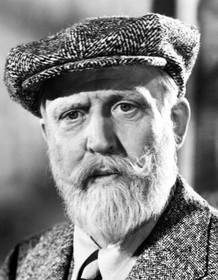
John R. Hodges (Monty Woolley)
Played by Monty Woolley
A retired printer who fakes his own identity to tour his former employer. He is resourceful, benevolent, and mischievous, using humor to expose the company’s treatment of older workers. His impersonation shows how love for family and a sense of justice can override caution.
- 👴 Elder
- 🎭 Impostor
- 🧭 Strategist
-

Harriet (Marilyn Monroe)
Played by Marilyn Monroe
The private secretary to Louis McKinley, she is charming and perceptive, initially courting or dodging the advances of the powerful men around her. She becomes entangled in Hodges's ruse and represents the tension between personal desire and professional loyalty.
- 💃 Secretary
- 💖 Romantic Interest
- 👀 Observer
- HG
Horace Gallagher (Wally Brown)
Played by Wally Brown
The nervous executive director who presides over Hodges's old company; his position is threatened by the impostor’s success. He embodies the anxious middle-management figure who champions results over people.
- 🏢 Boss
- 🧠 Wary
- 💬 Public Face
- LM
Louis McKinley (Albert Dekker)
Played by Albert Dekker
President of the firm and the target of Hodges's deception; ambitious and image-conscious, he sees the impersonator as a tool to revive the company's standing. He harbors romantic tension toward Harriet and makes the decisive call on promotions.
- 💼 CEO
- 🎯 Ambitious
- 🌀 Manipulator
-

Willie McKinley (Russ Tamblyn)
Played by Russ Tamblyn
Louis McKinley’s son, a minor but present member of the family dynamic that frames Hodges's actions.
- 👦 Son
- 🧭 Family
- JE
Joe Elliott (David Wayne)
Played by David Wayne
Alice's boyfriend who refuses to betray Hodges; skeptical of the impostor only to become vindicated. His loyalty to family and integrity clash with career-driven incentives.
- 👦 Boyfriend
- 🕵️ Investigator
- 💪 Loyal
- FE
Frank Erickson (Clinton Sundberg)
Played by Clinton Sundberg
A rival for promotion who initially believes Hodges is delusional and later relents; his skepticism adds tension to the job race.
- 🕴️ Rival
- 🧭 Ambitious
- 🗯️ Skeptical
- HP
Harold P. Cleveland (Minor Watson)
Played by Minor Watson
The real Harold Cleveland, whose identity Hodges adopts; his presence complicates the moral calculus and fuels the resolution.
- 👔 Real Boss
- 🕵️ Hidden Identity
- GH
George Hodges (Allyn Joslyn)
Played by Allyn Joslyn
John R. Hodges's son-in-law, husband to Della, and father to Alice; he anchors the family dynamics within the workplace drama.
- 👨 Father
- 💼 Family Man
- AH
Alice Hodges (Jean Peters)
Played by Jean Peters
Hodges's granddaughter who is dating Joe; her personal life intersects with the corporate intrigue and the impostor’s deception.
- 👧 Granddaughter
- 💘 Romantic
- 👩🎓 Student
-

Della Hodges (Thelma Ritter)
Played by Thelma Ritter
George Hodges’s wife and Joe's mother-in-law; she schemes to use the situation for career advancement while balancing family loyalties.
- 👩👧👦 Daughter-in-law
- 🗣️ Provocateur
- ❤️ Loyal
- LM
Lucille McKinley (Constance Bennett)
Played by Constance Bennett
Louis McKinley’s neglected wife who is swept off her feet by Hodges, triggering marital tensions that echo through the corporate plot.
- 💍 Wife
- 💃 Seductress
- 🎭 Charmer
Where and When Is As Young as You Feel Set?
As Young as You Feel is set in Factory plant, corporate offices and local chamber of commerce (1950s). Here is why the time and place matter to the story.
When
1950s
Set in the early 1950s, the story reflects postwar American industry and the era's belief in progress through appearance and efficiency. Retirement policies and workforce morale are hot topics as corporations navigate aging labor forces. The era's optimism feeds both the plot's climactic stock-market reaction and the characters' pursuit of personal gain.
Where
Factory plant, corporate offices, local chamber of commerce
The action centers on Hodges's old manufacturing plant and the surrounding corporate environment, including visits to the executive offices and a chamber of commerce event. The plant serves as the proving ground for his impostor tour, while the offices reveal the pressure and politics of modern management. The local chamber of commerce scenes illustrate how public relations are crafted to boost a company's image.
- 🏭 Factory plant
- 🏢 Corporate Offices
- 🗺 Chamber of Commerce
What Are the Themes of As Young as You Feel?
4 ideas the story keeps returning to, among them Age & Identity, Public Image and Family & Morality.
-
01
Age & Identity
An older worker's attempt to reclaim agency through disguise exposes how society treats aging laborers. The film interrogates retirement policies and the value placed on experience versus youth. Hodges's impersonation reveals how identity can be crafted for corporate ends, while morality and kinship test the single-minded pursuit of a promotion.
-
02
Public Image
Hodges's ruse demonstrates how a company can manipulate appearances to influence stock and public perception. The narrative critiques PR-driven success, where newsprint and stock prices rise on a sham rather than merit. The resolution suggests that authentic performance and honesty ultimately outweigh manipulated optics.
-
03
Family & Morality
Family dynamics drive much of the plot, with Alice, Joe, and the Hodges clan navigating loyalty, romance, and ambition. The impostor plot stretches marriages and trust, forcing characters to choose between personal happiness and professional advancement. The film uses humor and warmth to affirm the value of sincerity within a family.
-
04
Deception & Integrity
Disguise is central to the plot, as Hodges adopts a false identity to achieve a benevolent goal. The tension between deception and integrity propels the drama and tests the motives of every character. The climax weighs whether good intentions justify deceit, and the resolution favors truth and authentic motives.
What Kind of Film Is As Young as You Feel?
Light in tone, with steady pacing and a straightforward story, going by the plot summary.
- Tone
- Light
- Pacing
- Steady
- Story
- Straightforward
- Intensity
- Low
- Ending
- Happy
A charming and mischievous comedy that feels like a lighthearted romp through corporate absurdity, where a gentle deception sparks amusing chaos and ultimately leads to heartwarming resolutions for all involved.
- whimsical
- charming
- lighthearted
- mischievous
- optimistic
- playful
- impersonation
- retirement
- corporate policy
- ageism
Quiz
How well do you remember As Young as You Feel? Test yourself on the story.


