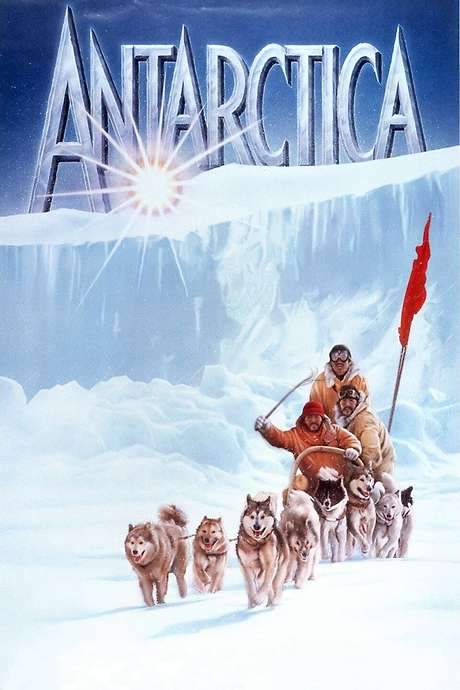
Antarctica 1983

Directed by

Koreyoshi Kurahara
Made by

Kurahara Productions
Antarctica Plot Summary
Read the complete plot summary and ending explained for Antarctica (1983). From turning points to emotional moments, uncover what really happened and why it matters.
In February 1958, the Second Cross-Winter Expedition of the Japanese Antarctic Surveying Team sets out aboard the icebreaker Sōya to take over from the 11-man First Cross-Winter Expedition. The handover is frustrated when the First Expedition retreats by helicopter, leaving Showa Base unmanned and fifteen Sakhalin huskies chained on the ice for the next team. The crew faces brutal weather, and the plan to reach the base is thwarted by the harsh conditions, leaving the hands and dogs in a precarious situation with scarce fuel and limited drinking water.
As the situation tightens, the team grapples with a dire choice: attempt a rescue in the face of freezing winds and dwindling supplies, or accept the failure of the handover and the danger to the dogs. In the end, nothing can be done to avert the grim reality: eight of the fifteen dogs manage to break their chains—Riki, Anko, Shiro, Jakku, Deri, Kuma, Taro, and Jiro—while the remaining seven succumb to the unforgiving cold. The eight survivors are forced to endure by any means possible, hunting penguins and seals on the ice shelves and even resorting to eating seal excrement as they navigate the vast, treacherous wasteland. Months pass, and the harsh arithmetic of survival takes its toll: many dogs disappear or perish, and the fate of each becomes a cold, silent statistic. Among the losses, Riki is fatally injured by a killer whale while bravely trying to shield Taro and Jiro; Anko and Deri fall through the ice and drown; Shiro plunges from a cliff to his death; and Jakku and Kuma vanish into the endless white.
Eleven months later, on 14 January 1959, Kitagawa, a dog handler from the first expedition, returns with the Third Cross-Winter Expedition, bearing the hope of burying his beloved dogs. He is joined by the dog-handlers Ushioda and Ochi, and together they uncover the frozen corpses of the seven chained dogs. To everyone’s surprise, they also discover that eight others have broken free and have somehow endured the brutal polar conditions. They are warmly greeted at the base by Taro and Jiro, two brothers born in Antarctica, whose resilience stands as a poignant, almost mythic reminder of the dogs’ strange survival.
The film leaves the question of how and why these eight dogs endured unanswered, noting simply that an average husky can survive such extreme conditions for only about a month. In presenting the story, the director employs available data and blends it with thoughtful imagination to reconstruct how the dogs struggled against the elements and managed to endure. This reconstruction invites viewers to empathize with the dogs’ endurance, the caretakers’ heartbreak, and the fragile line between life and the void in the Antarctic landscape.
Antarctica Timeline
Follow the complete movie timeline of Antarctica (1983) with every major event in chronological order. Great for understanding complex plots and story progression.
Second Cross-Winter Expedition departs to take over Showa Base
In February 1958, the Second Cross-Winter Expedition sets sail aboard the icebreaker Sōya to relieve the 11-man First Cross-Winter Expedition at Showa Base. The plan is to take over and restore operations at the base, which has been left to the first team. However, brutal weather prevents Sōya from approaching closely enough to complete the handover, leaving Showa Base unmanned.
Handover blocked by weather; Showa Base unmanned
The ice and storms prevent the Sōya from delivering the handover, forcing the base to be left without a relief crew. The situation leaves the Showa Base vulnerable and awaiting a rescue that cannot realistically be attempted immediately. The crew on Sōya weighs options but the weather and fuel constraints make a safe handover impossible.
Dog welfare concerns as food and water run low
With the base unmanned, the team fears for the 15 Sakhalin huskies left chained at Showa. They discover there is only about a week of dog food remaining, and rescue options are limited by fuel and drinking-water shortages. The situation becomes a moral and logistical crisis as winter tightens its grip.
Eight dogs break free from their chains
Eight of the fifteen sled dogs—Riki, Anko, Shiro, Jakku, Deri, Kuma, Taro, and Jiro—break loose and vanish into the frozen wilderness. The remaining seven dogs are left chained and increasingly vulnerable as conditions worsen. The base personnel can only watch and hope for the best from a distance.
The seven chained dogs begin to starve
As the eight escapees disappear into the vast ice, the seven remaining chained dogs begin to starve, their chances of survival shrinking with each passing day. The abandonment by their packmates compounds the harshness of the environment. Rescue seems increasingly unlikely as supplies dwindle.
The eight survivors fight to stay alive in the wilderness
The eight freed dogs survive by adapting to the brutal conditions, hunting penguins and seals on the ice shelves and even scavenging seal excrement for nourishment. Months pass as they roam the icy landscape, with most of the group either dying or fading into the unknown. Their resilience becomes the central mystery of the tale.
Riki is fatally injured protecting companions
Riki sustains fatal injuries from a killer whale while attempting to shield Taro and Jiro, demonstrating the fog of war against nature in the frozen expanse. The dog’s sacrifice underlines the peril that all eight face as they endure the Antarctic winter. The loss adds a somber note to the dogs’ survival story.
Anko and Deri drown after falling through ice
Anko and Deri fall through thinning ice and drown in the freezing waters, further reducing the already diminished group. The remaining dogs press on, navigating a landscape where every step could be life-or-death. The sea and ice continue to test their limits.
Shiro falls off a cliff to his death
Shiro is lost after tumbling from a cliff, a stark reminder of the ever-present dangers of the Antarctic terrain. The death thins the surviving group and leaves the fate of the team even more uncertain. The harsh environment shows little mercy to the animals as well as the humans who study or care for them.
Jakku and Kuma disappear into the wilderness
Jakku and Kuma drift from the pack and vanish into the vast wilderness, their fates unrevealed. The remaining dogs continue to endure the remote and unforgiving conditions, a testament to the unpredictable nature of survival in Antarctica. The mystery of their disappearance lingers as winter deepens.
January 14, 1959: Third Cross-Winter Expedition returns to bury the chained dogs
Eleven months later, Kitagawa, a dog-handler from the first expedition, returns with the Third Cross-Winter Expedition to bury the seven chained dogs. He, along with Ushioda and Ochi, recover the frozen corpses, but are surprised to find that eight others have broken loose and survived, transforming the narrative of loss into a tale of endurance.
Antarctic-born survivors greet the rescuers; survival remains a mystery
At the base, the rescuers are greeted warmly by Taro and Jiro, brothers who were born in Antarctica and survived the ordeal with the other eight. It remains unknown precisely how they endured the extreme conditions for nearly a year. The director-writer of the film uses available data plus imagination to reconstruct the dogs’ struggle and survival under impossibly harsh circumstances.
Antarctica Characters
Explore all characters from Antarctica (1983). Get detailed profiles with their roles, arcs, and key relationships explained.
Iwakiri Sencho (Sô Yamamura)
Base commander overseeing the handover from the First to the Second Cross-Winter Expedition. He faces extreme weather, logistical constraints, and the welfare of the chained dogs, trying to keep the mission focused while caring for living beings in a barren landscape. His resolve under pressure anchors the crew as conditions deteriorate.
Ushioda (Ken Takakura)
A seasoned dog-handler whose loyalty and practical mindset push the team forward. He wrestles with the choice to attempt rescue for the dogs amid fuel and water shortages and the threat of the weather. He embodies perseverance in the face of an unforgiving environment.
Toda Taicho (Koichi Sato)
A senior expedition captain coordinating the mission and contingencies. He keeps discipline and plans in a situation where the handover might not occur, maintaining a focus on survival and mission integrity.
Ochi (Tsunehiko Watase)
One of the dog-handlers accompanying the expedition who shares the heavy burden of survival. He remains vigilant as the crew confronts long, cold days and the risk of losing their way in the vast ice.
Ozawa Taicho (Eiji Okada)
A veteran base commander figure, guiding the team's structure and morale. He embodies a calm, authoritative presence necessary to navigate a mission hampered by weather and resource scarcity.
Kissaten Master (Shin Kishida)
Owner of a local base café providing a human touch amid crisis, offering a momentary respite and a place for crew members to reflect on isolation and resilience.
Ozawa Keiko (Masako Natsume)
A civilian figure connected to the base, representing care and perhaps the distant memory of home that fuels the crew's resolve to endure until rescue or return.
Tokumitsu Taiin (Jun Etoh)
A crew member with a role indicated by 'Taiin' in the expedition, contributing to the ensemble’s dynamic and the complex social structure within the base.
Antarctica Settings
Learn where and when Antarctica (1983) takes place. Explore the film’s settings, era, and how they shape the narrative.
Time period
February 1958 – January 1959
The timeline spans a brutal Antarctic winter and its aftermath. The crew travels by icebreaker Sōya, but the base remains unmanned after the First Cross-Winter Expedition retreats. Scarcity of food and fuel forces hard choices as the dogs fight for survival.
Location
Antarctica, Showa Base
Antarctica serves as the remote stage for the film, centering on the Showa Base during the Second Cross-Winter Expedition. The icebound landscape and isolated base define the tense mission and the crew's struggle to hand over duties. The freezing conditions and limited supplies push the story toward survival and the fate of the sled dogs.
Antarctica Themes
Discover the main themes in Antarctica (1983). Analyze the deeper meanings, emotional layers, and social commentary behind the film.
❄️
Survival
The narrative centers on endurance against the brutal cold, dwindling supplies, and the constant threat of the environment. The crew and dogs must improvise to find food, water, and shelter in a landscape built to erase the faint of heart. Every decision carries weight when life hinges on a fragile balance with nature. Survival becomes a measure of character as much as of luck.
🐕
Dog-Human Bond
The sled dogs are not just tools but integral companions whose fate mirrors the humans who care for them. Loyalty and courage emerge as dogs break free, endure, and sometimes sacrifice themselves for their pack. The relationship between handlers and animals underscores themes of trust and mutual resilience. The dogs’ struggle anchors the emotional core of the story.
🧭
Isolation
The base sits in a remote, wind-swept void where communication and help are distant. The characters grapple with loneliness, uncertainty, and the fear of being forgotten by the outside world. Isolation heightens the moral and logistical complexities of survival, forcing personal and collective reckoning. The setting itself becomes a character in the drama.
🏔️
Harsh Environment
The Antarctic winter tests endurance through extreme weather, perilous ice, and scarce resources. Weather delays, fuel shortages, and the threat of hypothermia shape every choice. The unforgiving landscape amplifies the stakes of the expedition and the unpredictability of outcomes. The environment constantly demands respect and prudent calculation.

Coming soon on iOS and Android
The Plot Explained Mobile App
From blockbusters to hidden gems — dive into movie stories anytime, anywhere. Save your favorites, discover plots faster, and never miss a twist again.
Sign up to be the first to know when we launch. Your email stays private — always.
Explore the mobile appAntarctica Spoiler-Free Summary
Discover the spoiler-free summary of Antarctica (1983). Get a concise overview without any spoilers.
In the merciless white expanse of Antarctica, a Japanese research team arrives to inherit a remote outpost abandoned in haste. The continent’s endless horizon of ice and snow forms a world where silence is punctuated only by howling winds and the distant crack of shifting glaciers. Against this stark backdrop, the film draws you into the rhythm of daily survival—fuel rationing, frozen equipment, and the relentless cold that turns every breath into a visible reminder of fragility.
At the heart of the story are two young researchers, Ushioda and Ochi, tasked with maintaining the scientific station while caring for a pack of sled dogs left behind. Their responsibilities quickly become a delicate balance between rigorous scientific duties and the tender, often unspoken, companionship offered by the huskies. The dogs, bred for endurance and loyalty, embody a living thread of warmth and purpose, their presence a stark contrast to the barren landscape. Through quiet moments on the ice and the shared simplicity of feeding and grooming, the characters discover a bond that transcends language and culture, hinting at an almost mythic resilience.
The film’s tone is simultaneously austere and intimate, using the vast, indifferent environment to amplify the subtle emotional currents flowing between humans and animals. Cinematography captures the ethereal beauty of endless dunes of snow, while the sound design lets the whisper of wind become a character in its own right. This contrast creates a meditative atmosphere where the audience feels both the isolation of the poles and the comforting steadiness of the dogs’ presence.
As the expedition unfolds, the narrative invites viewers to contemplate the thin line between hope and hardship, and how connections forged in extreme circumstances can illuminate the most desolate corners of the world. The story promises a moving exploration of perseverance, companionship, and the quiet heroism found in the most unexpected alliances.
Movies with Similar Twists and Themes
Uncover films that echo the narrative beats, emotional arcs, or dramatic twists of the one you're exploring. These recommendations are handpicked based on story depth, thematic resonance, and spoiler-worthy moments — perfect for fans who crave more of the same intrigue.

Featured on this page

What's After the Movie?
Not sure whether to stay after the credits? Find out!
Check out our other apps:

SAT Sphere
Build confidence for the Digital SAT.

Mori Atlas
Discover wild places worth protecting.

Luntero
Search smarter for a home in Amsterdam.

Plot Explained
Unravel movie endings and hidden clues.

Pokechamp
Dive into Pokémon data and battle logic.

Driving Theory
Get ready for your European theory test.

Movie Dust
Plan your next cinema trip with ease.

Musemap
Find art and culture as you travel.

Selkobase
Compare credentials before committing.

Local Manual
Turn an unfamiliar country into practical next steps.

Lernavi
Compare school systems before your next move.

GymRoam
Find a workout stop wherever your plans take you.
Explore Our Movie Platform
New Movie Releases (2026)
Famous Movie Actors
Top Film Production Studios
Movie Plot Summaries & Endings
Major Movie Awards & Winners
Best Concert Films & Music Documentaries
Movie Collections and Curated Lists
© 2026 What's After the Movie. All rights reserved.
Privacy Policy