
Scott of the Antarctic 1948

Directed by

Dennis Vance
Made by

Ealing Studios
Where to Watch Scott of the Antarctic
See current US streaming, rental, and purchase options for Scott of the Antarctic (1948) via JustWatch.

Amazon Prime Video
HD
Amazon Prime Video with Ads
HD
BFI Player Amazon Channel
HD
Darkroom
HD
Fawesome
HD
Amazon Prime Video Free with Ads
HD
Fandango at Home Free
SD
Plex
HD
Plex Channel
HD
Tubi TV
SD
Amazon Video
SD Streaming availability powered by 
Scott of the Antarctic Plot Summary
Read the complete plot summary and ending explained for Scott of the Antarctic (1948). From turning points to emotional moments, uncover what really happened and why it matters.
Captain R.F. Scott John Mills is entrusted with leading a second Antarctic expedition, but he is given command over the men without securing the funds needed to support the venture. Kathleen Scott Diana Churchill works on a bust of him and reassures him that she is not the least bit jealous about his return to the ice. Dr. E. A. Wilson Harold Warrender hopes to join the mission, but his wife Oriana Wilson Anne Firth is more doubtful, though Wilson agrees to go if the journey is framed as a scientific expedition.
Scott also visits Fridtjof Nansen, who argues that a true polar expedition should rely on dogs rather than motor sledges or ponies. The expedition becomes a fundraising effort with mixed results: Liverpool businessmen show skepticism due to short-term economic concerns, while schoolchildren rally to fund the purchase of sled dogs. A government grant finally comes through, allowing the expedition to proceed with careful economies.
After a stop in New Zealand, the ship heads to Antarctica and establishes a coastal camp. There, the crew spends the winter and holds a ceremonial Midwinter Feast on 22 June 1911. In the spring, a smaller party of men, ponies, and dogs begins the trek toward the pole. About halfway, the ponies are killed for food and some men are sent back with the dogs. At the three-quarter mark, Scott selects the five-man team for the push to the pole, hoping to return by the end of March 1912. They reach the pole only to discover Roald Amundsen’s Norwegian flag already planted there and a note asking Scott to deliver the flag to the King of Norway.
Disappointment weighs heavy as the team begins the long return. When they reach the mountains along the polar plateau, Wilson reveals sea plant and tree fossils he has found, along with a piece of coal, evidence that the Antarctic was once a warmer place. Scott remarks on the potential economic implications, even as concern grows for the health of two crew members: Lt. Teddy Evans [Kenneth More] and Lt. L.E.G. Oates [Derek Bond], the latter suffering a severe frostbite in his foot. Evans eventually collapses and dies, buried beneath the snow. As the strain increases, Evans is laid to rest, and Oates makes a final, selfless decision.
I hope I don’t wake tomorrow
When he wakes, he sacrifices himself by leaving the tent, saying:
I’m just going outside; I may be away some time.
The remaining two men persevere but die just 11 miles from a supply depot, holding to the belief that they have done all they could. Each man writes farewell letters, and Scott, even in frostbite, composes his well-known “Message to the Public,” declaring:
I do not regret this journey…
Months later, a search party finds the tent buried under fresh snow. A glimpse of Scott’s recovered diary precedes the closing image: a wooden cross bearing the five names of the dead and the inscription of a line from Tennyson’s Ulysses:
To strive, to seek, to find and not to yield.
Scott of the Antarctic Timeline
Follow the complete movie timeline of Scott of the Antarctic (1948) with every major event in chronological order. Great for understanding complex plots and story progression.
Funding and planning begin
Captain Scott is given the men but not the funds for a second Antarctic expedition. He faces mixed reactions as fundraising is attempted; Liverpool businessmen are skeptical while schoolchildren rally to fund the dogs. Scott also encounters Fridtjof Nansen, who argues that only dogs should be used for propulsion. A government grant helps push the project over the line, with economies needed to make it work.
Nansen advises dog power
Scott visits Fridtjof Nansen, who insists that a polar expedition must use dogs rather than motor sledges or ponies. The advice creates tension with Scott's evolving plan. The encounter highlights the clash between traditional methods and new technology. The guidance informs later logistical decisions.
New Zealand stop and voyage south
After securing funds, the expedition stops in New Zealand before sailing for Antarctica. The crew readies provisions and equipment for the arduous journey ahead. The voyage marks the transition from planning to the actual expedition.
Coastal camp and Midwinter Feast
The ship reaches the Antarctic coast and the men set up a base camp. They endure the first winter in the harsh climate, celebrating a Midwinter Feast on 22 June 1911 to boost morale. The wintering period returns to a rhythm of work and waiting for the spring.
Spring trek begins with ponies and dogs
In the spring, a small contingent with ponies and dogs heads toward the polar region. At halfway, the ponies are shot for food, and some men are sent back with the dogs, narrowing the expedition's mobile strength. The remaining team continues toward the pole with the aim of reaching it in good time.
Five-man push team selected
At the three-quarter mark, Scott selects a five-man team to push on to the Pole and plans to return by the end of March 1912. The chosen team leaves the main party to undertake the dangerous ascent. The rest of the expedition remains as a support group, aware of the risks.
Pole reached; Amundsen's flag
The five-man team reaches the South Pole to find Roald Amundsen's flag already planted there. They also discover a letter requesting that Scott deliver the news to the King of Norway. The moment dampens their mood and highlights the fierce competition of polar exploration.
Return journey and fossils reveal past warmth
On the return trek, Wilson shows fossils of sea plants and trees and a coal fragment discovered in the ice, proving the Antarctic was once a warmer place. Scott notes that such discoveries could have economic value, even as the party faces hardship. The team struggles with fatigue and dwindling supplies.
Evans dies; Oates' decline begins
Evans suffers a serious hand wound that worsens and he collapses, dying and is buried in the snow. The loss magnifies the strain on the survivors as their health declines and the march toward safety becomes increasingly desperate.
Oates sacrifices himself
Oates, increasingly frostbitten and weak, chooses to leave the tent and walk into the cold, sacrificing himself for the others. His disappearance buys time for the remaining men but seals their fate. The trio continues the struggle in the brutal conditions.
Final march ends in tragedy
With supplies exhausted, the remaining three die in their tent just 11 miles from a supply depot. Each leaves farewell letters documenting their experiences and hopes. Scott's diary entries reflect the resolve to persevere despite the looming catastrophe.
Months later: camp discovered
A rescue party finds the completely snowed-over tent and recovers the explorers' diaries. The discovery fuels public interest in the tragedy and cements their legacy as heroic explorers.
Cross, names, and legacy
The recovered records lead to the erection of a wooden cross bearing the five dead and the inscription honoring their sacrifice. The scene underscores the lasting memory of the expedition and its fallen members.
Final image: perseverance and the pursuit
The film ends with the cross and the enduring message of striving, seeking, and not yielding, honoring the explorers' resolve and the costs of ambition.
Scott of the Antarctic Characters
Explore all characters from Scott of the Antarctic (1948). Get detailed profiles with their roles, arcs, and key relationships explained.
Captain R.F. Scott (John Mills)
An authoritative, determined leader who carries the weight of the mission and the expectations of a nation. He strives to balance ambition with prudence, guiding his men through strategic choices and long vigils in the cold. His resolve is tested as the team faces delays, demands for funding, and the ultimate realization of a failed ascent.
Dr. E. A. Wilson (Harold Warrender)
Scott's medical and scientific ally, deeply invested in the expedition's scholarly aims. He champions evidence and fossils as proof of a once-warm Antarctica, while managing the crew's health and morale. His stance evolves as harsh conditions threaten both the mission and his own safety.
P.O. Evans (James Robertson Justice)
A loyal, capable petty officer whose practical skills keep the camp functioning under strain. He faces a severe hand injury and deteriorating health, embodying the physical toll of polar exploration. His presence underscores the human cost of ambition.
Lt. E.G.R. (Teddy) Evans (Kenneth More)
A vital member of the expedition's crew whose youth and energy contrast with veterans' caution. He endures frostbite and physical decline, becoming a symbol of the expedition's fragility. His fate emphasizes the line between duty and personal sacrifice.
Lt. L.E.G. Oates (Derek Bond)
The quiet, stubborn companion whose frostbitten condition drives a heroic, heartrending act. He embodies the theme of sacrifice, choosing to face the blizzard at the team's most perilous moment. His final words become a lasting emblem of stoic endurance.
Kathleen Scott (Diana Churchill)
Scott's wife who supports the expedition material-wise and emotionally, balancing pride with concern. She helps frame the personal stakes of the journey through her art (a bust) and her response to the mission. Her presence adds a domestic dimension to this tale of exploration and loss.
Scott of the Antarctic Settings
Learn where and when Scott of the Antarctic (1948) takes place. Explore the film’s settings, era, and how they shape the narrative.
Time period
1910s
The events unfold during the Heroic Age of Antarctic Exploration in the early 1910s. The wintering and Midwinter Feast occur in 1911, followed by a pole ascent in 1911-1912. After the failure of the expedition, a careful, months-long wait precedes the discovery of the snowbound tent and the memorial cross, anchoring the historical setting.
Location
Antarctica, New Zealand, Liverpool
The primary setting is Antarctica, where a coastal wintering camp becomes the launch point for a perilous trek toward the pole. The expedition begins with a stop in New Zealand and a funding-driven journey back to Europe, with Liverpool as a hub of skepticism and support from businessmen. The harsh Antarctic environment and the remote camp shape the characters' choices and the story's tragedy.
Scott of the Antarctic Themes
Discover the main themes in Scott of the Antarctic (1948). Analyze the deeper meanings, emotional layers, and social commentary behind the film.
🧭
Endurance
Facing extreme cold, dwindling supplies, and mounting fatigue, the team pushes forward, testing the limits of human stamina. The trek toward the pole is a test of will as decisions about food, dogs, and ponies shape the voyage. The setting forces the characters to endure personal and collective hardship with stubborn resolve.
🎖️
Leadership
Scott's leadership is scrutinized as he balances scientific aims with survival. The cast of officers and scientists must make rapid, high-stakes decisions under pressure, keeping morale alive despite setbacks. The story examines how leadership under extreme conditions can become a legacy, for better or worse.
🕯️
Sacrifice & Memory
As frostbite, injury, and death mount, the expedition becomes a tapestry of personal sacrifices. Letters written to loved ones and the famous final lines memorialize those who gave their lives. The final image of the cross and the poem reinforces how memory and national pride are intertwined with loss.

Coming soon on iOS and Android
The Plot Explained Mobile App
From blockbusters to hidden gems — dive into movie stories anytime, anywhere. Save your favorites, discover plots faster, and never miss a twist again.
Sign up to be the first to know when we launch. Your email stays private — always.
Explore the mobile appScott of the Antarctic Spoiler-Free Summary
Discover the spoiler-free summary of Scott of the Antarctic (1948). Get a concise overview without any spoilers.
In the early‑twentieth century, when the world still believed the poles were uncharted frontiers, a determined British officer is charged with leading a second expedition to the frozen continent. Robert Falcon Scott carries the weight of national pride and personal ambition, intent on planting a Union Flag at the planet’s most remote point. The film opens against a backdrop of icy seas and snow‑blown horizons, where the stark beauty of Antarctica is matched only by the unforgiving cold that tests every breath.
Back home, Kathleen Scott works quietly, sculpting a tribute that reflects both the love she feels and the distance the journey creates. The scientific heartbeat of the venture lies with Dr. Edward A. Wilson, a naturalist whose curiosity about the continent’s hidden past fuels the mission’s purpose. His wife, Oriana Wilson, voices the skepticism that many feel, insisting that the venture retain its scholarly veneer even as it edges toward heroic conquest. Together, this trio navigates a labyrinth of public scrutiny, private doubt, and the relentless need for funding, turning schoolchildren’s enthusiasm and skeptical businessmen’s hesitance into a precarious financial mosaic.
The crew assembles a mix of seasoned soldiers and bright-eyed explorers, including Lt. Teddy Evans and Lt. L.E.G. Oates, whose youthful resolve masks the looming challenges of the ice. Their preparation is a study in compromise: after consulting Fridtjof Nansen, the expedition grapples with the debate over canine power versus the traditional use of ponies and motor sledges. The ship’s departure from New Zealand marks the transition from careful planning to the raw, elemental reality of the Antarctic winter, where even a modest Midwinter feast feels like a celebration of defiance.
Once ashore, the base camp becomes a fragile oasis amid endless white, a place where camaraderie blooms under the aurora’s ghostly glow. Yet beyond the safety of the tents, a silent rivalry simmers with a Norwegian party racing toward the same goal, adding an undercurrent of urgency to every step. The audience is left to wonder how these brave souls will balance scientific curiosity, national expectation, and the relentless force of nature that lies just beyond the horizon.
Movies with Similar Twists and Themes
Uncover films that echo the narrative beats, emotional arcs, or dramatic twists of the one you're exploring. These recommendations are handpicked based on story depth, thematic resonance, and spoiler-worthy moments — perfect for fans who crave more of the same intrigue.
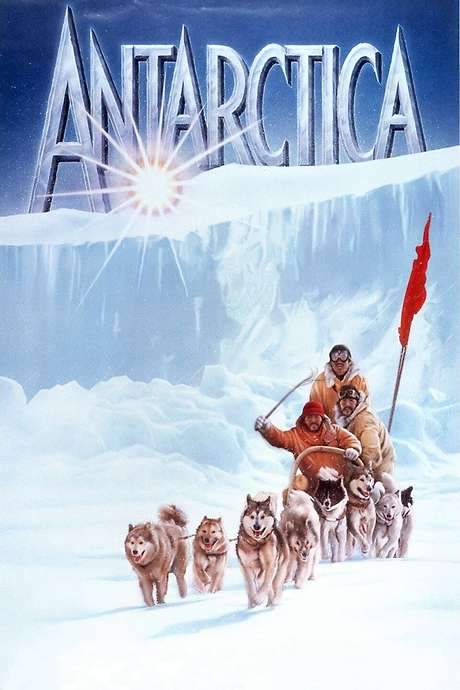
Featured on this page

What's After the Movie?
Not sure whether to stay after the credits? Find out!
Check out our other apps:

SAT Sphere
Build confidence for the Digital SAT.

Mori Atlas
Discover wild places worth protecting.

Luntero
Search smarter for a home in Amsterdam.

Plot Explained
Unravel movie endings and hidden clues.

Pokechamp
Dive into Pokémon data and battle logic.

Driving Theory
Get ready for your European theory test.

Movie Dust
Plan your next cinema trip with ease.

Musemap
Find art and culture as you travel.

Selkobase
Compare credentials before committing.

Local Manual
Turn an unfamiliar country into practical next steps.

Lernavi
Compare school systems before your next move.

GymRoam
Find a workout stop wherever your plans take you.
Explore Our Movie Platform
New Movie Releases (2026)
Famous Movie Actors
Top Film Production Studios
Movie Plot Summaries & Endings
Major Movie Awards & Winners
Best Concert Films & Music Documentaries
Movie Collections and Curated Lists
© 2026 What's After the Movie. All rights reserved.
Privacy Policy