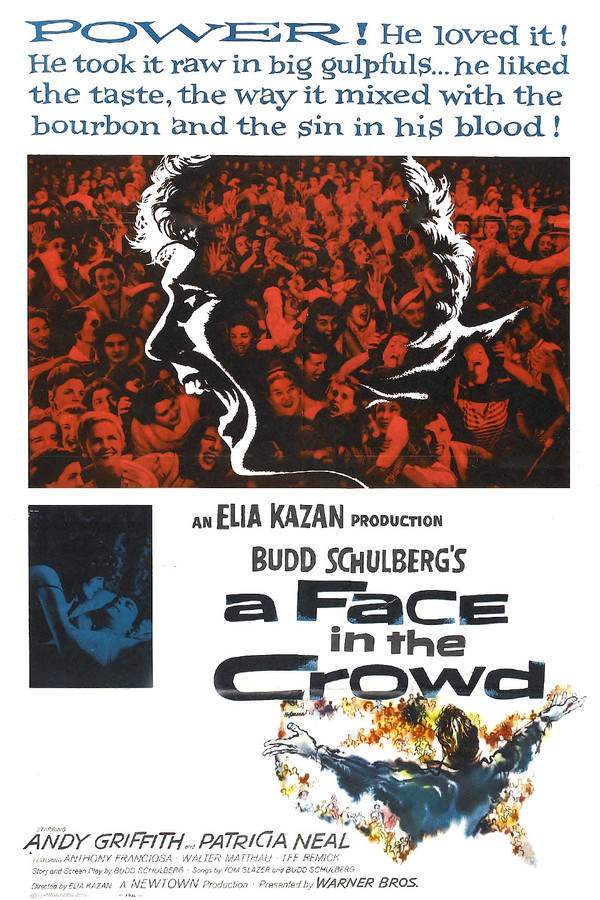
What Is A Face in the Crowd About?
The premise of A Face in the Crowd in 345 words, with nothing given away. The full story follows below.
In the late‑1950s, America stands at a crossroads of sound and vision. Radio, once the heart of every kitchen and farmyard, is watching television claim the spotlight, and the airwaves tremble with the nervous energy of an industry in transition. The small‑town stations that once served as community hearths now double as launch pads for personalities who might just redefine what it means to be heard. The mood is a blend of optimism and anxiety, a world where earnest storytelling collides with the glitter of emerging media.
Marcia Jeffries, a modest radio host with an ear for raw talent, stumbles upon a man whose very presence seems to bend the static of the broadcast tower. In a county jail in rural Arkansas, she meets Lonesome Rhodes, a coarse‑spoken yet magnetic figure whose instinctive performance style captivates anyone who listens. His voice carries the cadence of a working‑class storyteller, and his unapologetic swagger hints at something larger than the humble studio that first records him.
As word of Rhodes’s charisma spreads, the modest frequencies of regional radio begin to echo far beyond their original boundaries. The larger networks sense a commodity in his authenticity, offering a promise of fame that glitters like the new television screens lighting up living rooms across the country. The film bathes this ascent in a satirical tone, weaving together the allure of celebrity with the uneasy suspicion that commercial success may dilute the very honesty that first made him irresistible. The chemistry between Jeffries and Rhodes is charged with both mentorship and an unspoken competition for control of the narrative that now surrounds them.
Against this backdrop of shifting media landscapes, the story teeters on the edge of a larger question: when a plain‑spoken performer is thrust into the glare of national attention, how far can his ego and ambition stretch before the very art that made him a voice for the masses begins to crack? The film invites the audience to watch that tension build, hinting at the fragile balance between talent, fame, and the people who help shape both.
What Happens in A Face in the Crowd?
The complete story of A Face in the Crowd, from the first scene to the last, in 432 words (about 2 minutes). Spoilers throughout. Names in the text link to 5 cast member pages.
Spoilers ahead
The film is set in late 1950s America, a period when television was swiftly taking over radio as the premiere source of entertainment. Enter Lonesome Rhodes, a coarse yet charismatic character who, despite his abrasive nature, quickly captures the hearts of rural audiences. This magnetic allure is discovered by Marcia Jeffries, a small-town radio host, when she stumbles upon Rhodes in a county jail located in the fictional town of Pickett, Arkansas. She promptly secures him a radio show, launching his chaotic journey into the world of broadcasting.
Before long, Rhodes’s talent draws the attention of talent scouts, leading to an appearance on television in Memphis, Tennessee. Here, he meets Mel Miller, a scholarly Vanderbilt alumnus responsible for crafting his on-air scripts. Rhodes’s reputation grows as he unabashedly insults his sponsors, particularly the “Luffler Mattress” company. Surprisingly, this reckless behavior boosts their sales, compelling the company to endure the ridicule they initially found offensive—mainly because of the influence of the owner’s wife, a devoted Lonesome Rhodes fan.
An ambitious office employee, portrayed by Anthony Franciosa, manages to secure Rhodes a lucrative contract in New York City, marking his ascent as the national TV spokesperson for Vitajex, a harmless dietary supplement. One of the film’s standout sequences showcases a frenetic montage of Rhodes’s exaggerated advertisements, illustrating the American public’s naiveté in the face of a cunning charlatan.
In true classical tragedy fashion, Rhodes ultimately succumbs to his insatiable quest for power and is betrayed by Jeffries, who, after nurturing his stardom, can no longer tolerate his open disdain for their audience. During the climax of a “Cracker Barrel” broadcast, Rhodes can be seen smiling and waving at the camera, all the while hurling insults off-air, calling viewers “idiots” and “morons.” Realizing her role in crafting the monster, Jeffries retaliates by broadcasting his scornful remarks live, igniting a storm of outrage from betrayed fans, which floods the network with furious calls.
In a poignant visual metaphor, as audience approval rapidly declines, an oblivious Rhodes descends in an elevator, unaware of his diminishing popularity. The film culminates in chaos at Rhodes’s penthouse, where Jeffries confesses her role in his downfall, and Walter Matthau ominously predicts his future—a return to the airwaves, though far less glamorous than before. There’s also a fleeting moment featuring an uncredited Rip Torn as “Barry Mills,” symbolizing the next potential Lonesome Rhodes waiting in the wings.
In interviews for the 2006 DVD release and the consequential documentary, Andy Griffith, Patricia Neal, and Anthony Franciosa express immense pride in their contributions to this remarkable film, while Schulberg delves into its deeper origins.
A Face in the Crowd Timeline: Every Key Event in Order
13 key events in the order they happen, from “The Rise of Lonesome Rhodes” to “Legacy and Reflection”. 5 events name a place, across 5 locations.
- 1
The Rise of Lonesome Rhodes
In the late 1950s, television begins overshadowing radio as the primary entertainment medium in America. Lonesome Rhodes, a rough-hewn and charismatic figure, emerges as a captivating personality who quickly gains the affection of rural listeners.
Where:Pickett, Arkansas
- 2
Discovery by Marcia Jeffries
Marcia Jeffries, a small-town radio host, encounters Rhodes while he is incarcerated in the local county jail. Recognizing his talent, she secures him a radio show that launches his tumultuous foray into the broadcasting world.
Where:County Jail, Pickett, Arkansas
- 3
Television Breakthrough
Rhodes's charisma and talent catch the eye of talent scouts, propelling him to television in Memphis, Tennessee. There, he collaborates with Mel Miller, a Vanderbilt graduate, who assists in crafting his show scripts.
Where:Memphis, Tennessee
- 4
Controversial Sponsorship
As Rhodes' fame escalates, he infamously insults his sponsors, particularly the 'Luffler Mattress' company. Surprisingly, this brashness increases the company's sales, as the owner's wife, a devoted fan of Rhodes, influences their tolerance of his jibes.
- 5
Launching into National Fame
An ambitious office employee manages to secure Rhodes a prestigious contract in New York City. This opportunity establishes him as the national spokesperson for Vitajex, a dietary supplement, marking a significant milestone in his rising career.
Where:New York City
- 6
Montage of Advertisements
One notable sequence highlights a frenetic montage showcasing Rhodes's over-the-top advertisements for Vitajex. This scene illustrates the American public's unsuspecting gullibility in the face of a manipulative charlatan.
- 7
Descent into Tyranny
As Rhodes's ambition grows, he becomes increasingly ruthlessly power-hungry. His disdain for the audience, whom he once charmed, becomes evident as he loses touch with the very people who elevated him to stardom.
- 8
The Betrayal of Marcia Jeffries
After a long period nurturing his success, Marcia Jeffries can no longer withstand Rhodes's overt contempt for their audience. This climax occurs during a 'Cracker Barrel' broadcast, where he insults viewers off-air while appearing amiable on camera.
- 9
The Live Confession
In a dramatic turn, Jeffries broadcasts Rhodes's derogatory comments live, igniting a fury among viewers who feel betrayed. This revelation floods the network with angry calls, leading to widespread outrage against Rhodes.
- 10
Rhodes's Downward Spiral
As public approval plummets, Rhodes remains oblivious to his waning popularity while descending in an elevator. This moment serves as a poignant visual metaphor for his imminent downfall from stardom.
Show the other 3 events of A Face in the Crowd Hide the last 3 events
- 11
Final Confrontation and Confession
In a chaotic scene at his penthouse, Jeffries confronts Rhodes about her part in his downfall. The tension peaks as Walter Matthau ominously hints at Rhodes's future return to broadcasting, albeit in a far less glamorous capacity.
Where:Rhodes's penthouse
- 12
A New Dawn of Charisma
The film concludes with a fleeting appearance of an uncredited Rip Torn, signaling the emergence of another hopeful personality like Lonesome Rhodes. This moment encapsulates the cyclic nature of fame and the inevitable rise of a new star.
- 13
Legacy and Reflection
In interviews for the 2006 DVD release and a documentary, cast members express pride in their contributions to this iconic film. Schulberg discusses the deeper origins of the storyline, emphasizing the film's cultural significance.
Who Are the Main Characters in A Face in the Crowd?
4 characters, among them Lonesome Rhodes, Marcia Jeffries (Patricia Neal) and Mel Miller (Walter Matthau): who each one is and the part they play in the story. 3 of them link to the actor’s page.
- LR
Lonesome Rhodes
Lonesome Rhodes is a coarse yet charismatic figure who captivates audiences with his blend of charm and abrasive honesty. His journey from obscurity in a county jail to national fame illustrates both his magnetic appeal and the dark side of celebrity culture. As his power grows, so does his disdain for the very audience that elevated him, leading to his tragic downfall.
- 🪄 Charisma
- 📺 Celebrity
- 🎭 Manipulation
-
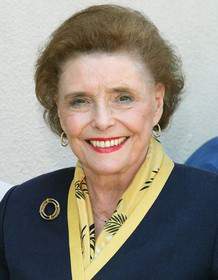
Marcia Jeffries (Patricia Neal)
Played by Patricia Neal
Marcia Jeffries is a small-town radio host who discovers Lonesome Rhodes and propels him to fame. Initially enamored by his talent, she becomes increasingly aware of his toxic nature and the consequences of her actions in promoting him. Her character embodies the struggle between ambition and ethical responsibility, ultimately leading to her betrayal of Rhodes as she seeks to expose his true character.
- 🌟 Ambition
- ❤️ Love
- ⚔️ Conflict
-
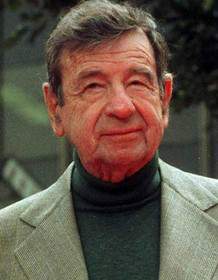
Mel Miller (Walter Matthau)
Played by Walter Matthau
Mel Miller is a scholarly character who serves as Lonesome Rhodes’s scriptwriter. He is portrayed as a voice of reason amidst the chaos surrounding Rhodes's rise to fame. Miller's intellectual background contrasts sharply with Rhodes's raw charisma, making him a crucial figure in the narrative as he attempts to navigate the complex dynamics of fame and morality.
- 📚 Intellect
- 🤔 Reason
- 🎤 Influence
-
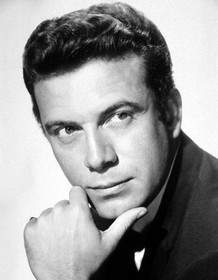
Ambitious Office Employee (Anthony Franciosa)
Played by Anthony Franciosa
The ambitious office employee is a pivotal figure in securing Rhodes's lucrative television contract. His eagerness to exploit Rhodes's talent for personal gain highlights the cutthroat nature of the entertainment industry. His character serves as a representation of ambition devoid of integrity, further complicating the moral landscape of the film.
- 💼 Ambition
- 💰 Greed
- 🕵️ Manipulation
Where and When Is A Face in the Crowd Set?
A Face in the Crowd is set in Pickett, Arkansas, Memphis, Tennessee and New York City (Late 1950s). Here is why the time and place matter to the story.
When
Late 1950s
The film takes place in the late 1950s, a transformative era in America marked by the rapid rise of television as the dominant media platform, overtaking radio. This period was characterized by shifting cultural values and the emergence of celebrity culture, as entertainers began to wield significant influence over public opinion and consumer behavior.
Where
Pickett, Arkansas, Memphis, Tennessee, New York City
The movie is set in the fictional town of Pickett, Arkansas, representing a small rural community that reflects simpler values. It then transitions to Memphis, Tennessee, a bustling city known for its vibrant music and television industry. Finally, New York City represents the pinnacle of entertainment, where Lonesome Rhodes achieves national fame.
- 🌆 City
- 🏞️ Rural
What Are the Themes of A Face in the Crowd?
2 ideas the story keeps returning to, among them Media Manipulation and Betrayal and Consequences.
-
01
Media Manipulation
One of the central themes of the film is the manipulation of media and the audience's perception. Lonesome Rhodes exemplifies how charisma can be weaponized to sell products and shape public opinion, highlighting the ethical dilemmas involved in broadcasting. The film critiques the naiveté of viewers who can be easily influenced by charming personalities, regardless of their true intentions.
-
02
Betrayal and Consequences
The narrative explores themes of betrayal, particularly in the relationship between Rhodes and Marcia Jeffries. As Rhodes's egotism grows, Jeffries faces the moral dilemma of her role in his rise and eventual fall. The film ultimately delivers a cautionary tale about the consequences of ambition and the costs of unchecked power, culminating in a dramatic downfall.
What Kind of Film Is A Face in the Crowd?
Dark in tone, with steady pacing and a moderate story, going by the plot summary.
- Tone
- Dark
- Pacing
- Steady
- Story
- Moderate
- Intensity
- Medium
- Ending
- Bittersweet
A steadily paced, darkly cynical drama that charts the intoxicating rise and humiliating fall of a charismatic media personality, creating an unsettling and morally complex viewing experience.
- cautionary
- cynical
- unsettling
- prophetic
- gripping
- melancholic
- rise and fall
- media manipulation
- celebrity corruption
- political influence
Content notes: psychological manipulation, exploitation.
Quiz
How well do you remember A Face in the Crowd? Test yourself on the story.
Where to Watch A Face in the Crowd
Stream it on Hoopla and Plex, or rent or buy it from Amazon Video and Apple TV Store. US availability and prices from JustWatch.
 Hoopla
  Plex
Plex  Plex Channel
  Tubi TV





Streaming availability in the US, powered by