Who Are You, Polly Maggoo? 1966

This biting satire of the fashion world follows 20‑year‑old Brooklyn native Polly Maggoo, a model navigating Paris runway shows dominated by opinion‑shaping editor Ms. Maxwell. As the absurd is presented as high art, Polly appears in the shallow TV documentary series “Qui êtes‑vous?” and is pursued by an eager filmmaker and the prince of Borodine, a tiny Soviet‑bloc nation.


Does Who Are You, Polly Maggoo? have end credit scenes?
No!
Who Are You, Polly Maggoo? does not have end credit scenes. You can leave when the credits roll.
Meet the Full Cast and Actors of Who Are You, Polly Maggoo?
Explore the complete cast of Who Are You, Polly Maggoo?, including both lead and supporting actors. Learn who plays each character, discover their past roles and achievements, and find out what makes this ensemble cast stand out in the world of film and television.
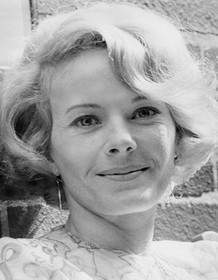
Delphine Seyrig
Une rédactrice
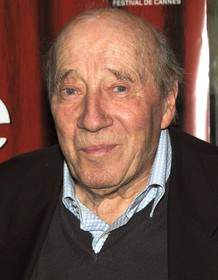
Michel Robin
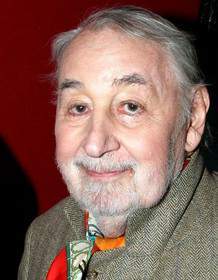
Philippe Noiret
Jean-Jacques Georges, le journaliste
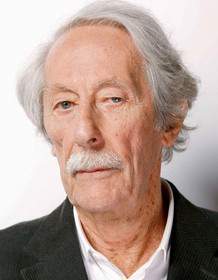
Jean Rochefort
Grégoire Pecque

Paul Bonifas
Roland Topor
Un émissaire du prince
Richard Avedon
Photographe
Sami Frey
Le prince Igor
Grayson Hall
Miss Maxwell
Donyale Luna
Mannequin
Roger Trapp
Le monteur
Bernard Musson
Le ministre
Fernando Arrabal
L'homme au savon à barbe
Jacques Seiler
Le couturier Isidore Ducasse
Jacques Rispal
Alice Sapritch
La reine-mère / The Queen Mother
Peggy Moffitt
Mannequin
Joanna Shimkus
Dorothy McGowan
Polly Maggoo
Guy d'Avout
External Links and Streaming Options
Discover where to watch Who Are You, Polly Maggoo? online, including streaming platforms, rental options, and official sources. Compare reviews, ratings, and in-depth movie information across sites like IMDb, TMDb, Wikipedia or Letterboxd.




Take the Ultimate Who Are You, Polly Maggoo? Movie Quiz
Challenge your knowledge of Who Are You, Polly Maggoo? with this fun and interactive movie quiz. Test yourself on key plot points, iconic characters, hidden details, and memorable moments to see how well you really know the film.
Who Are You, Polly Maggoo? Quiz: Test your knowledge of the 1966 satirical film "Who Are You, Polly Maggoo?" covering characters, plot points, and thematic elements.
Who portrays the title character Polly Maggoo?
Full Plot Summary and Ending Explained for Who Are You, Polly Maggoo?
Read the complete plot summary of Who Are You, Polly Maggoo?, including all major events, twists, and the full ending explained in detail. Explore key characters, themes, hidden meanings, and everything you need to understand the story from beginning to end.
Polly Maggoo (Dorothy McGowan) is a 20-year-old American model who has exploded onto the Paris fashion scene, instantly becoming the center of attention and the object of fevered speculation among photographers, stylists, and critics alike. The film opens with a satirical runway show where models strut in bizarre, metallic outfits that resemble armor more than clothing, a bold misfire from the fictional couturier Isidore Ducasse, whose creations are more spectacle than garment. The moment Polly glides down the catwalk with a poise that seems almost preternatural, the audience erupts in a chorus of praise and fetishistic fascination, signaling how the fashion world has reduced style to spectacle and surface.
The world that Polly inhabits is a carefully choreographed theater of praise and projection. Designers swarm around her, journalists circle in with questions that sound profound but often reveal their own hunger for controversy, and a litany of critics gush over the impracticality of the designs as if daring to dream of a future where art trumps function. Into this dizzying orbit enters a television crew led by the smug and self-assured journalist Jean-Jacques Georges, le journaliste (Philippe Noiret), who arrives with a clipboard full of probing questions and a camera crew ready to chase Polly’s inner life. The documentary they set out to film for the show Qui êtes-vous…? promises to strip away the gloss and illuminate the real person beneath the gloss, but as the film unfolds, it becomes increasingly clear that the project is more a mirror for the crew’s pretensions than a genuine portrait of Polly. The interviews that punctuate the documentary feel staged and performative, each question a rehearsal for a larger narrative about fame, youth, and the elusive meaning of identity.
Within the frame of the documentary, Polly is presented in a series of stylized vignettes that capture the rhythm of her days: glossy photo shoots that resemble tableaux, glossy TV appearances that blur the line between performance and reality, and interactions with a web of industry figures who either adore or exploit her. Polly’s responses, filtered through the documentary’s editing, drift between childlike wonder, dreamlike uncertainty, and a cool, almost clinical detachment. The film quietly underscores a tension between Polly’s inner life and the persona the fashion machine has manufactured around her. In moments of voiceover or dreamlike sequences, we glimpse her thoughts—curious about love, self, and a sense of meaning that might lie beyond the glittering surface—emerging as a counterpoint to the world she inhabits.
Across the Atlantic, the fairy-tale fantasy takes on a new dimension with the arrival of Prince Igor (Sami Frey), heir to the throne of the fictional East European kingdom of Borodine. Obsessed with Polly after spotting her in a magazine, Igor travels to Paris with a retinue that includes government officials and a protective entourage, convinced that he has found his soulmate. Their first encounter at a party is brief and cordial, Polly’s polite laughter meeting his ardent declarations, and Igor misreads her amusement as a sign of destiny. He returns home buoyed by a certainty that their union is inevitable, even as Polly’s reaction—one of amused restraint—highlights the chasm between a world that constructs romance and a life that resists being simplified into a story.
The documentary itself grows increasingly self-parodic as the filmmakers push toward a narrative they can sell. A sequence in which Polly is grilled with pseudo-intellectual questions becomes a study in evasive answers and ironic clarity, while Jean-Jacques cobbles together a potentially uplifting arc—either a modern Cinderella or a tragic icon—yet the film itself betrays its own hunger for dramatic resolution, revealing a producer’s-eye view of truth rather than an unvarnished truth. The tension between Polly’s past and her present is made palpable through flashbacks to her Brooklyn roots, where a different, more grounded life once beckoned. These memories, woven into fantasy sequences, draw a vivid contrast between the rough realities of her working-class beginnings and the surreal, hyperstylized universe she now occupies—an evolution that feels both alluring and unsettling.
As Polly navigates this manufactured fame, the world around her continues to speak for her, sometimes with ardor and sometimes with a chill reminder of how easily a person can be consumed by the machinery of image. The film’s momentum builds toward a finale in which the TV documentary finally airclips, offered as a sleek, seductive portrait that nonetheless stops short of truth. Polly is framed as a symbol of youth, modernity, and enigma—yet the portrait remains a construction, the kind of image that the industry loves because it’s endlessly repeatable and endlessly reinterpretable. The people who orbit her—press, designers, and sociocultural arbiters—treat her as both spotlight and prop, never fully granting her the space to voice a fully formed self beyond the silhouette she casts.
In the quiet aftermath, Polly walks through Paris with an inscrutable expression, a figure who seems to be everywhere and nowhere at once. Prince Igor’s quest, foiled by a neighbor’s seduction and a lack of reciprocated ardor, leaves him returning to his homeland with a misplaced certainty about destiny. Jean-Jacques and his crew move on to their next subject, chasing another moment of glamour and contradiction. Polly endures, a ghostly observer inside the very machine that adores her, forever asking a question the world seems reluctant to answer: who is she really, beyond the image the cameras demand? The city’s glitter and indifference swirl around her, and she remains a complex mélange of innocence, awareness, and quiet inquiry—an emblem of a modern rite of passage that never fully resolves.
Note: Cast references are included via actor links at first mention of the corresponding characters:
Polly Maggoo Dorothy McGowan, Prince Igor Sami Frey, Jean-Jacques Georges, le journaliste Philippe Noiret, Isidore Ducasse (couturier) Jacques Seiler, Grégoire Pecque Jean Rochefort, La reine-mère Alice Sapritch. If you’d like any tweaks or a longer version focusing more on certain characters or motifs, I can adjust accordingly.

Coming soon on iOS and Android
The Plot Explained Mobile App
From blockbusters to hidden gems — dive into movie stories anytime, anywhere. Save your favorites, discover plots faster, and never miss a twist again.
Sign up to be the first to know when we launch. Your email stays private — always.
Explore the mobile appDiscover Film Music Concerts Near You – Live Orchestras Performing Iconic Movie Soundtracks
Immerse yourself in the magic of cinema with live orchestral performances of your favorite film scores. From sweeping Hollywood blockbusters and animated classics to epic fantasy soundtracks, our curated listings connect you to upcoming film music events worldwide.
Explore concert film screenings paired with full orchestra concerts, read detailed event information, and secure your tickets for unforgettable evenings celebrating legendary composers like John Williams, Hans Zimmer, and more.


Who Are You, Polly Maggoo? Themes and Keywords
Discover the central themes, ideas, and keywords that define the movie’s story, tone, and message. Analyze the film’s deeper meanings, genre influences, and recurring concepts.
Who Are You, Polly Maggoo? Other Names and Titles
Explore the various alternative titles, translations, and other names used for Who Are You, Polly Maggoo? across different regions and languages. Understand how the film is marketed and recognized worldwide.
Similar Movies To Who Are You, Polly Maggoo? You Should Know About
Browse a curated list of movies similar in genre, tone, characters, or story structure. Discover new titles like the one you're watching, perfect for fans of related plots, vibes, or cinematic styles.






Quick Links: Summary, Cast, Ratings, More

What's After the Movie?
Not sure whether to stay after the credits? Find out!
Check out our other apps:

SAT Sphere
Build confidence for the Digital SAT.

Mori Atlas
Discover wild places worth protecting.

Luntero
Search smarter for a home in Amsterdam.

Plot Explained
Unravel movie endings and hidden clues.

Pokechamp
Dive into Pokémon data and battle logic.

Driving Theory
Get ready for your European theory test.

Movie Dust
Plan your next cinema trip with ease.

Musemap
Find art and culture as you travel.

Selkobase
Compare credentials before committing.

Local Manual
Turn an unfamiliar country into practical next steps.

Lernavi
Compare school systems before your next move.

GymRoam
Find a workout stop wherever your plans take you.
Explore Our Movie Platform
New Movie Releases (2026)
Famous Movie Actors
Top Film Production Studios
Movie Plot Summaries & Endings
Major Movie Awards & Winners
Best Concert Films & Music Documentaries
Movie Collections and Curated Lists
© 2026 What's After the Movie. All rights reserved.
Privacy Policy