Whitewash 2014


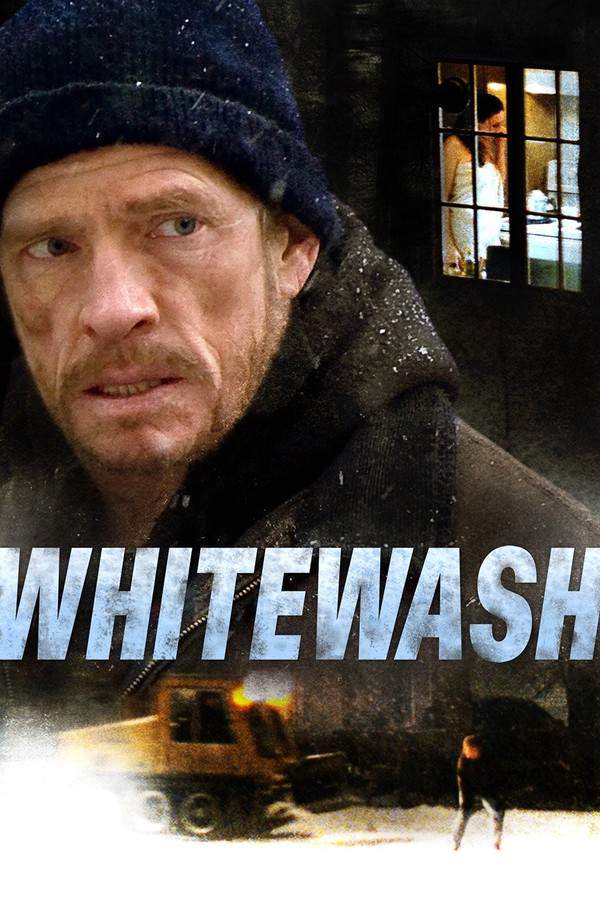
While snowplowing in the remote, frozen wilderness of rural Quebec, Bruce makes a reckless mistake with tragic consequences. He flees into the darkness as authorities pursue him, haunted by his past and the secrets of the victim. As Bruce desperately tries to evade capture, the true nature of the deceased is revealed, forcing him to confront the devastating impact of his actions and the chilling truth about the community he thought he knew.


Does Whitewash have end credit scenes?
No!
Whitewash does not have end credit scenes. You can leave when the credits roll.
Where to Watch Whitewash
See current US streaming, rental, and purchase options for Whitewash (2014) via JustWatch.

Starz Apple TV channel
HD
Fawesome
HD
Hoopla
SD
Kanopy
HD
Pluto TV
SD
Tubi TV
SD
YouTube Free
HD
Amazon Video
HD
Apple TV Store
HD
Google Play Movies
SD
YouTube
SD Streaming availability powered by 
Meet the Full Cast and Actors of Whitewash
Explore the complete cast of Whitewash, including both lead and supporting actors. Learn who plays each character, discover their past roles and achievements, and find out what makes this ensemble cast stand out in the world of film and television.
No actors found
External Links and Streaming Options
Discover where to watch Whitewash online, including streaming platforms, rental options, and official sources. Compare reviews, ratings, and in-depth movie information across sites like IMDb, TMDb, Wikipedia or Rotten Tomatoes.








Ratings and Reviews for Whitewash
See how Whitewash is rated across major platforms like IMDb, Metacritic, and TMDb. Compare audience scores and critic reviews to understand where Whitewash stands among top-rated movies in its genre.

63
Metascore
6.4
User Score


84%
TOMATOMETER

36%
User Score
59
%
User Score

3.17/5
From 6 fan ratings
Take the Ultimate Whitewash Movie Quiz
Challenge your knowledge of Whitewash with this fun and interactive movie quiz. Test yourself on key plot points, iconic characters, hidden details, and memorable moments to see how well you really know the film.
Whitewash (2014) Quiz: Test your knowledge of the 2014 Canadian thriller "Whitewash" with these ten questions ranging from easy to difficult.
What is Bruce's occupation at the start of the film?
Full Plot Summary and Ending Explained for Whitewash
Read the complete plot summary of Whitewash, including all major events, twists, and the full ending explained in detail. Explore key characters, themes, hidden meanings, and everything you need to understand the story from beginning to end.
Bruce is a snowplow driver in a remote Quebec town who faces a fateful night when, after a drunken drive through a fierce snowstorm, he strikes a pedestrian and panics. He hides the body in a snowbank and, in a daze, powers on into the woods, eventually becoming stuck in the cold with no supplies. What begins as a desperate bid to survive becomes a slow immersion into guilt and fear as he tries to figure out what to do next. He abandons any early idea of seeking help, choosing instead to stay near his abandoned snowplow and confront the mounting emotion of his own actions. He rehearses his police statement aloud to himself, and the imagined conversations grow more charged as he is forced to face the possibility that his victim had children.
As the present-day crunch of his situation tightens, Bruce drifts into flashbacks that peel back the layers of what happened before this deadly night. He and the dead man, Paul, were houseguests, and their uneasy relationship spiraled after Paul was discovered attempting to commit suicide by inhaling car exhaust. In those moments, Bruce finds himself drawn into Paul’s world, admiring his vehicle and sharing casual moments that gradually reveal friction and dependence. Paul asks for a loan and pushes for a deeper connection, even as Bruce explains that he cannot help him. Bruce lives with memories of his wife and his job loss, a life turned upside down after a drunken accident with his snowplow that cost him his livelihood. Paul notices Bruce’s collection of highly realistic ocular prostheses, uses his own claimed web-design skills to propose setting up an online storefront for the collection, and then, in a tense moment, Bruce rejects the idea of selling what connects him to his late wife.
Back in the present, Bruce’s search for basic shelter and fuel leads him to a restaurant where he discovers, through a newspaper, that both he and Paul have been reported missing. He stockpiles supplies, returns to the snowplow, and then, when his safeguard runs thin, ventures deeper into the woods to explore a sprawling house by a frozen lake. He breaks into a shed to steal tools and provisions, only to be confronted by the homeowners when they come home. The daughter, Simone, finds him; the moment unsettles them both, and he apologizes to her father, Eric, before slipping away again into the trees. The tension escalates as Bruce injures his ankle during his retreat, forcing him to endure hours of numbness and suffering while he hides on Eric’s land and constructs more imaginary dialogues with the police.
The story peels back more layers through further flashbacks: Bruce had once caught Paul stealing, and pursuing him in the snowplow led to a deadly moment where Paul seems to smile as he is struck. This fuels Bruce’s growing sense that the vehicle itself bears responsibility in the tragedy, and he becomes increasingly hostile toward the machine he once trusted. In a dramatic surge of fear and anger, he douses the snowplow with gasoline and sets it alight, attempting to sever himself from the accident and its aftermath.
With his ankle healed enough to move again, Bruce steals a snowmobile and digs up Paul’s body, discarding it in a frozen lake. He’s caught in the act, witnesses scatter, and he hurries back to his own home where paranoia tightens its grip. He believes two men are converging on him—whether police or accomplices of Eric—and he tries to hide by banging his boot against the snowplow to attract attention, but the threat passes. His skills with machinery are limited, and his body grows weaker as starvation and boredom hollow out the days. The winter drifts toward a temporary ease as the cold recedes briefly, only to snap back with renewed ferocity.
In the film’s quiet epilogue, Bruce’s inner voice returns, offering stark, starkly moral observations about guilt and endurance. The closing reflections crystallize into two lines that linger beyond the image of snow and ice:
every guilty person is his own hangman
…and each new day will be better
Goddamn, it’s freezing.
The story remains focused on a man’s struggle to reconcile a life-altering mistake with the harsh indifference of nature and the anxious scrutiny of a world that won’t easily forget. The atmosphere stays taut and restrained, balancing bleak realism with existential introspection, and leaving readers with a lingering sense of isolation, consequence, and the uncertain possibility of forgiveness.

Coming soon on iOS and Android
The Plot Explained Mobile App
From blockbusters to hidden gems — dive into movie stories anytime, anywhere. Save your favorites, discover plots faster, and never miss a twist again.
Sign up to be the first to know when we launch. Your email stays private — always.
Explore the mobile appWatch Trailers, Clips & Behind-the-Scenes for Whitewash
Watch official trailers, exclusive clips, cast interviews, and behind-the-scenes footage from Whitewash. Dive deeper into the making of the film, its standout moments, and key production insights.
Whitewash Other Names and Titles
Explore the various alternative titles, translations, and other names used for Whitewash across different regions and languages. Understand how the film is marketed and recognized worldwide.
Quick Links: Summary, Cast, Ratings, More

What's After the Movie?
Not sure whether to stay after the credits? Find out!
Check out our other apps:

SAT Sphere
Build confidence for the Digital SAT.

Mori Atlas
Discover wild places worth protecting.

Luntero
Search smarter for a home in Amsterdam.

Plot Explained
Unravel movie endings and hidden clues.

Pokechamp
Dive into Pokémon data and battle logic.

Driving Theory
Get ready for your European theory test.

Movie Dust
Plan your next cinema trip with ease.

Musemap
Find art and culture as you travel.

Selkobase
Compare credentials before committing.

Local Manual
Turn an unfamiliar country into practical next steps.

Lernavi
Compare school systems before your next move.

GymRoam
Find a workout stop wherever your plans take you.
Explore Our Movie Platform
New Movie Releases (2026)
Famous Movie Actors
Top Film Production Studios
Movie Plot Summaries & Endings
Major Movie Awards & Winners
Best Concert Films & Music Documentaries
Movie Collections and Curated Lists
© 2026 What's After the Movie. All rights reserved.
Privacy Policy