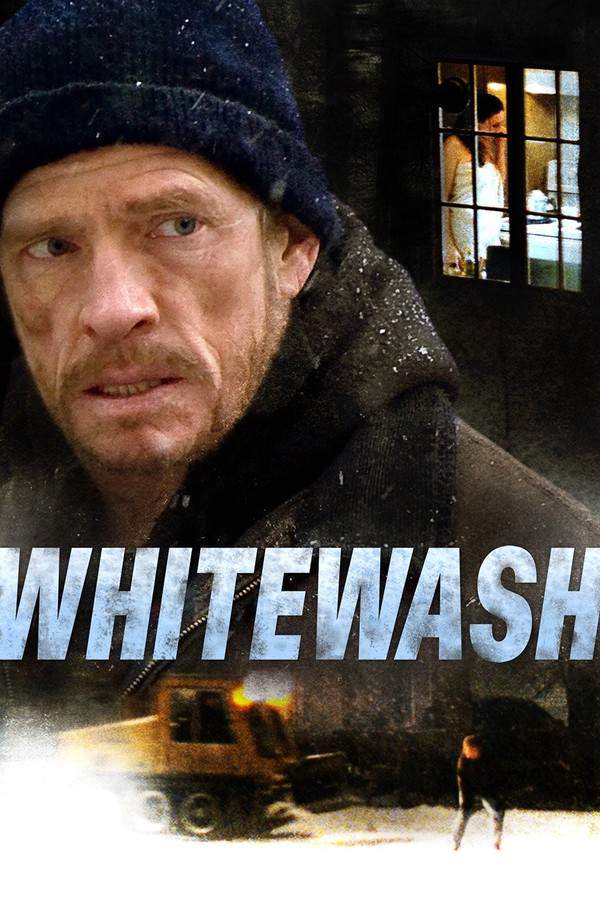
Whitewash 2014


Directed by

Emanuel Hoss-Desmarais
Made by

Oscilloscope Pictures
Where to Watch Whitewash
See current US streaming, rental, and purchase options for Whitewash (2014) via JustWatch.

Starz Apple TV channel
HD
Fawesome
HD
Hoopla
SD
Kanopy
HD
Pluto TV
SD
Tubi TV
SD
YouTube Free
HD
Amazon Video
HD
Apple TV Store
HD
Google Play Movies
SD
YouTube
SD Streaming availability powered by 
Whitewash Plot Summary
Read the complete plot summary and ending explained for Whitewash (2014). From turning points to emotional moments, uncover what really happened and why it matters.
Bruce is a snowplow driver in a remote Quebec town who faces a fateful night when, after a drunken drive through a fierce snowstorm, he strikes a pedestrian and panics. He hides the body in a snowbank and, in a daze, powers on into the woods, eventually becoming stuck in the cold with no supplies. What begins as a desperate bid to survive becomes a slow immersion into guilt and fear as he tries to figure out what to do next. He abandons any early idea of seeking help, choosing instead to stay near his abandoned snowplow and confront the mounting emotion of his own actions. He rehearses his police statement aloud to himself, and the imagined conversations grow more charged as he is forced to face the possibility that his victim had children.
As the present-day crunch of his situation tightens, Bruce drifts into flashbacks that peel back the layers of what happened before this deadly night. He and the dead man, Paul, were houseguests, and their uneasy relationship spiraled after Paul was discovered attempting to commit suicide by inhaling car exhaust. In those moments, Bruce finds himself drawn into Paul’s world, admiring his vehicle and sharing casual moments that gradually reveal friction and dependence. Paul asks for a loan and pushes for a deeper connection, even as Bruce explains that he cannot help him. Bruce lives with memories of his wife and his job loss, a life turned upside down after a drunken accident with his snowplow that cost him his livelihood. Paul notices Bruce’s collection of highly realistic ocular prostheses, uses his own claimed web-design skills to propose setting up an online storefront for the collection, and then, in a tense moment, Bruce rejects the idea of selling what connects him to his late wife.
Back in the present, Bruce’s search for basic shelter and fuel leads him to a restaurant where he discovers, through a newspaper, that both he and Paul have been reported missing. He stockpiles supplies, returns to the snowplow, and then, when his safeguard runs thin, ventures deeper into the woods to explore a sprawling house by a frozen lake. He breaks into a shed to steal tools and provisions, only to be confronted by the homeowners when they come home. The daughter, Simone, finds him; the moment unsettles them both, and he apologizes to her father, Eric, before slipping away again into the trees. The tension escalates as Bruce injures his ankle during his retreat, forcing him to endure hours of numbness and suffering while he hides on Eric’s land and constructs more imaginary dialogues with the police.
The story peels back more layers through further flashbacks: Bruce had once caught Paul stealing, and pursuing him in the snowplow led to a deadly moment where Paul seems to smile as he is struck. This fuels Bruce’s growing sense that the vehicle itself bears responsibility in the tragedy, and he becomes increasingly hostile toward the machine he once trusted. In a dramatic surge of fear and anger, he douses the snowplow with gasoline and sets it alight, attempting to sever himself from the accident and its aftermath.
With his ankle healed enough to move again, Bruce steals a snowmobile and digs up Paul’s body, discarding it in a frozen lake. He’s caught in the act, witnesses scatter, and he hurries back to his own home where paranoia tightens its grip. He believes two men are converging on him—whether police or accomplices of Eric—and he tries to hide by banging his boot against the snowplow to attract attention, but the threat passes. His skills with machinery are limited, and his body grows weaker as starvation and boredom hollow out the days. The winter drifts toward a temporary ease as the cold recedes briefly, only to snap back with renewed ferocity.
In the film’s quiet epilogue, Bruce’s inner voice returns, offering stark, starkly moral observations about guilt and endurance. The closing reflections crystallize into two lines that linger beyond the image of snow and ice:
every guilty person is his own hangman
…and each new day will be better
Goddamn, it’s freezing.
The story remains focused on a man’s struggle to reconcile a life-altering mistake with the harsh indifference of nature and the anxious scrutiny of a world that won’t easily forget. The atmosphere stays taut and restrained, balancing bleak realism with existential introspection, and leaving readers with a lingering sense of isolation, consequence, and the uncertain possibility of forgiveness.
Whitewash Timeline
Follow the complete movie timeline of Whitewash (2014) with every major event in chronological order. Great for understanding complex plots and story progression.
Fatal hit during a snowstorm
Bruce, a snowplow driver in a remote Quebec town, strikes a pedestrian while driving drunk in a raging snowstorm and kills him. Panicking, he hides the body in a snowbank and drives deeper into the woods, where exhaustion knocks him out. He awakes to realize his snowplow is stuck, leaving him stranded in the freezing cold.
Bruce rehearses a police statement
With no help in sight, he practices what he will tell the police, staging imagined conversations in which he confronts his guilt. He grows increasingly emotional as he is told that the victim had children. The scene emphasizes his solitude and mounting anxiety.
Paul's appearance as Bruce's houseguest (flashback)
In a flashback, Paul, who is Bruce's houseguest, leaves a store and tries to commit suicide by inhaling exhaust and Paul’s car. Bruce starts a casual conversation, is drawn to Paul, and ends up commandeering Paul's vehicle for rides, forming a fragile friendship. Paul notices Bruce's collection of ocular prostheses and proposes online sales, but Bruce declines, unable to sell his wife's crafts.
Paul's loan request and tension
The friendship grows tense when Paul asks Bruce for a loan, testing Bruce's dwindling resources. Bruce remains firm that he cannot help, reflecting his own financial hardships. The exchange foreshadows how fragile Bruce's mercy will become when guilt tightens its grip.
Bruce seeks help and discovers the missing reports
Bruce runs out of gas and abandons the snowplow, trudging toward civilization through the cold. He finds a nearby restaurant and hopes to get help, but his suspicions and fear remain high. Inside, a newspaper reveals that he and Paul have been reported missing, heightening his sense of isolation.
Stocking up and returning to the snowplow
After the restaurant, Bruce buys essential supplies and prepares to endure the winter by returning to his snowplow. He resumes the grind of living off the land, gathering what he can to survive. The cold tightens its grip around him as he makes his way back into the woods.
Bruce encounters the lakeside house
Bruce locates a large house near a frozen lake and breaks into the shed to steal supplies he needs. He hides when the owners return, narrowly avoiding confrontation. The cold acts as a silent judgment on his desperation.
Simone discovers the intruder; Eric is alerted
The following morning, Simone, the owner's daughter, spots Bruce and is frightened by his presence. He apologizes to Eric, the father, before retreating into the woods to avoid pursuit. The encounter heightens Bruce's sense that he cannot stay in either world.
Eric and friend search; Bruce injures his ankle
Eric and a friend search the woods for the missing man, and Bruce is forced to hide, injuring his ankle in the process. He remains on Eric's land, unable to hobble back to civilization. The injury intensifies his vulnerability and isolation.
Bruce recalls the Paul incident; the accident unfolds again
Through flashbacks, Bruce remembers catching Paul stealing and pursuing him, leading to the fatal collision with the snowplow. He questions whether the crash was a second suicide attempt or an accident. The memory feeds his growing paranoia and blame toward the snowplow itself.
Destruction and disposal of Paul’s body
In a furious act, Bruce dumps gasoline on the snowplow and sets it on fire to destroy the instrument of his guilt. He digs up Paul’s body and disposes of it in a frozen lake, but is caught in the act as witnesses flee in panic. The act marks a point of no return and accelerates his paranoia.
Bruce is hunted; two men pursue him
Back at his home, Bruce realizes that two men are looking for him—whether police or accomplices of Eric. He tries to hide in the snowplow by banging his boot to attract attention, but the men pass by without noticing. He struggles to repair the snowplow, hampered by his limited mechanical skill and mounting desperation.
Decline to survival: hunger and a lingering winter
Bruce's physical ordeal grows as he starves, even chewing on tree bark to stay alive. The winter ebbs and returns, underscoring his bleak fate. The film closes on his voiceover, reflecting the grim maxim that every guilty person is their own hangman, while insisting that each new day could be better, before the scene ends with the freezing cold.
Whitewash Characters
Explore all characters from Whitewash (2014). Get detailed profiles with their roles, arcs, and key relationships explained.
Bruce (Snowplow Driver)
Bruce is a widowed snowplow driver whose guilt after fatally striking a pedestrian drives him to extreme measures. Isolated by winter and the remote setting, he rehearses his police statements and engages in imagined conversations with authority figures. His mental state deteriorates as paranoia and self-reproach collide, making him brittle and obsessive. The snowbound landscape mirrors his internal weather—cold, silent, and unyielding.
Paul (Houseguest)
Paul is the man Bruce encounters in his vehicle while attempting to commit suicide; he becomes Bruce's houseguest and briefly forges a casual friendship, though he tests Bruce's generosity by asking for a loan. His presence exposes Bruce's fragility and desire for human connection, as well as Bruce's reluctance to give in to desperation. He steals from Bruce, and Bruce accidentally strikes him with the snowplow, catalyzing the fatal turn of events. Paul's interactions spark Bruce's guilt and complicate the trust within an isolated community.
Eric (Owner)
Eric is the owner of the large house near a frozen lake who confronts Bruce and becomes part of a wider search when Bruce goes missing. He embodies wary neighborliness and protective instincts, representing the tension between hospitality and suspicion in a tight-knit, snowbound community. His guarded demeanor reveals the practical, survival-oriented mindset of rural residents when danger intrudes. The woods and shed he inhabits underscore themes of intrusion and confinement.
Simone (Eric's Daughter)
Simone is the owner's daughter who discovers Bruce in the shed, marking a pivotal moment when the intruder is exposed. She embodies innocence confronted by violent intrusion, and her presence heightens the town's sense of vulnerability. Her encounter with Bruce foreshadows the consequences of Bruce's isolation and secrecy in a close-knit community.
Whitewash Settings
Learn where and when Whitewash (2014) takes place. Explore the film’s settings, era, and how they shape the narrative.
Location
Quebec, Canada
Set in a small, remote town in Quebec, the landscape is dominated by harsh winters. Snowbound streets and frozen lakes create a claustrophobic atmosphere that mirrors Bruce's isolation. The location’s seclusion and quiet routines heighten the tension of his moral crisis, turning the environment into a silent antagonist.
Whitewash Themes
Discover the main themes in Whitewash (2014). Analyze the deeper meanings, emotional layers, and social commentary behind the film.
🕯️
Guilt
Bruce's guilt over the fatal accident dominates his actions, driving him to hide the body and rehearse statements to the police. The imagined conversations reveal how conscience can tighten under isolation and fear. Snow and silence around him heighten the weight of his choices, transforming guilt into paranoia. The theme follows his gradual breakdown as he refuses to face accountability.
❄️
Isolation
The film situates Bruce in a frozen landscape where help is scarce and neighbors are distant. Isolation compounds his anxiety, forcing him to rely on memory, improvisation, and self-delusion. The winter setting becomes a character, curtailing movement and eroding trust. This detachment shapes every decision he makes, from hoarding supplies to avoiding contact.
🔥
Survival
Bruce fights to endure the bitter cold with dwindling resources, using the snowplow and stored supplies as lifelines. The harsh environment tests his stamina as he treks through the snow, scavenges, and improvises shelter. Desperation pushes him to violate simple moral boundaries—stealing supplies, then gradually disposing of Paul's body at a frozen lake. This survival drive reveals how fear and isolation can drive a person to desperation.

Coming soon on iOS and Android
The Plot Explained Mobile App
From blockbusters to hidden gems — dive into movie stories anytime, anywhere. Save your favorites, discover plots faster, and never miss a twist again.
Sign up to be the first to know when we launch. Your email stays private — always.
Explore the mobile appWhitewash Spoiler-Free Summary
Discover the spoiler-free summary of Whitewash (2014). Get a concise overview without any spoilers.
In the frozen stretches of rural Quebec, a relentless winter dominates every breath and heartbeat. Snow blankets the landscape, turning roads into white corridors where isolation feels as thick as the cold itself. The town’s quiet is broken only by the steady rumble of a snowplow carving a path through the storm, a solitary beacon of routine against the howling wilderness. This stark, almost monochrome world sets a tone of quiet desperation, where the elements are as unforgiving as the secrets that linger beneath the surface.
Bruce, a snowplow driver who has long relied on the predictable cadence of his work, finds his life upended one night when a careless decision spirals out of control. Already burdened by personal loss and a recent setback in his career, he is forced to confront the consequences of a reckless mistake that shatters the fragile equilibrium he has built. As the night deepens, he becomes both hunter and hunted, slipping deeper into the darkness while unseen forces begin to close in, demanding answers he is not prepared to give.
The film lingers in a tense, almost meditative mood, letting the stark beauty of the Canadian wilderness amplify the internal storm raging within Bruce. He is haunted not only by the icy terrain but also by fragments of his past and the opaque history of the person whose fate became intertwined with his own. The story invites viewers to feel the weight of guilt, the chill of isolation, and the uneasy pull of a community whose surface calm may hide unsettling truths, all while the relentless snow continues its silent, indifferent drift.
Featured on this page

What's After the Movie?
Not sure whether to stay after the credits? Find out!
Check out our other apps:

SAT Sphere
Build confidence for the Digital SAT.

Mori Atlas
Discover wild places worth protecting.

Luntero
Search smarter for a home in Amsterdam.

Plot Explained
Unravel movie endings and hidden clues.

Pokechamp
Dive into Pokémon data and battle logic.

Driving Theory
Get ready for your European theory test.

Movie Dust
Plan your next cinema trip with ease.

Musemap
Find art and culture as you travel.

Selkobase
Compare credentials before committing.

Local Manual
Turn an unfamiliar country into practical next steps.

Lernavi
Compare school systems before your next move.

GymRoam
Find a workout stop wherever your plans take you.
Explore Our Movie Platform
New Movie Releases (2026)
Famous Movie Actors
Top Film Production Studios
Movie Plot Summaries & Endings
Major Movie Awards & Winners
Best Concert Films & Music Documentaries
Movie Collections and Curated Lists
© 2026 What's After the Movie. All rights reserved.
Privacy Policy