We Were Dangerous 2025

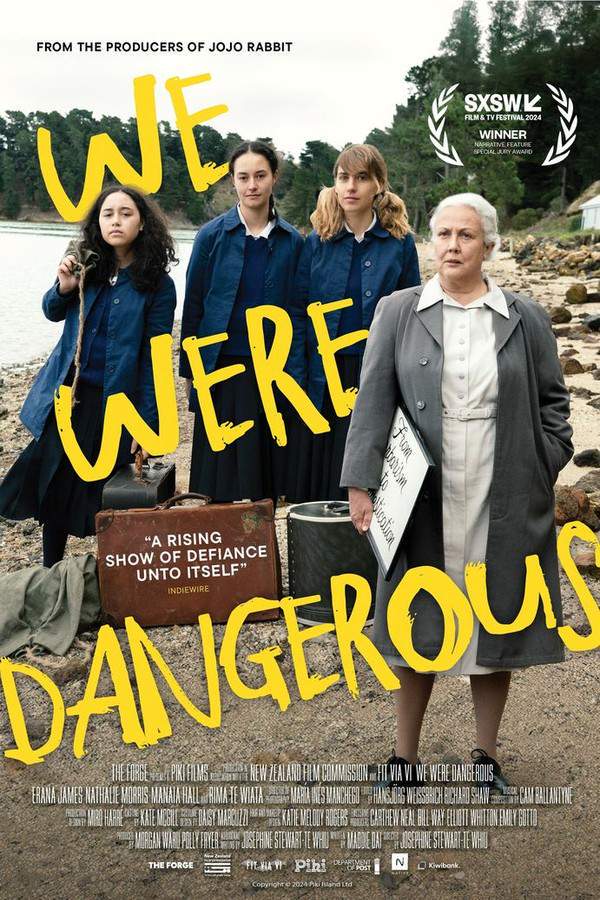
In 1954, Nellie, Daisy, and Lou are sent to a secluded island institution for troubled girls. The close-knit trio find solace and strength in their friendship as they challenge the restrictive environment. However, their bond is threatened when the school’s stern matron attempts to manipulate them, creating divisions within the group and testing their loyalty to one another.


Does We Were Dangerous have end credit scenes?
No!
We Were Dangerous does not have end credit scenes. You can leave when the credits roll.
Where to Watch We Were Dangerous
See current US streaming, rental, and purchase options for We Were Dangerous (2025) via JustWatch.









Meet the Full Cast and Actors of We Were Dangerous
Explore the complete cast of We Were Dangerous, including both lead and supporting actors. Learn who plays each character, discover their past roles and achievements, and find out what makes this ensemble cast stand out in the world of film and television.

Rima Te Wiata
The Matron

Erana James
Nellie
Aaron Jackson
The Captain
Nathalie Morris
Lou
Manaia Hall
Daisy
Molly Jarvis-Taylor
Nora
Tomairangi Paterson-Waaka
Polly
Kylana Peauafi Symonds
Anahera
Isayah Snow
Peggy
Hillary Moulder
Mary
Max Charteris
Freddie
Stephen Lovatt
Government Official
Stephen Tamarapa
Barry
Roy Snow
Silent Official
Charze Wharemate-Edwards
Jean
Billie Nuku
Patricia
Portia Regan
Nancy
Arihia Hoani
Mere
Rosie Leishman
Tracey
Malena Taurima
Anne
External Links and Streaming Options
Discover where to watch We Were Dangerous online, including streaming platforms, rental options, and official sources. Compare reviews, ratings, and in-depth movie information across sites like IMDb, TMDb, Wikipedia or Rotten Tomatoes.








Ratings and Reviews for We Were Dangerous
See how We Were Dangerous is rated across major platforms like IMDb, Metacritic, and TMDb. Compare audience scores and critic reviews to understand where We Were Dangerous stands among top-rated movies in its genre.

The Movie Echo Score
Overall, We Were Dangerous presents a confident directorial debut marked by compelling performances and a visually engaging style. The film’s clear sense of purpose and balanced blend of humor and drama sustain engagement, even as occasional shifts in urgency suggest uneven pacing. Views consistently commend its thematic focus on empowerment and the vivid portrayal of friendship under duress. While moments of episodic structure slightly temper its momentum, the film’s fresh voice and emotional core create a memorable and resonant experience.
The Movie Echo Score Breakdown for We Were Dangerous

Art & Craft
In terms of direction and cinematography, the film offers a vibrant and assured visual approach. The debut direction is praised for its confident framing and coherent visual language, while the location cinematography is noted for its evocative use of landscape. Though some shifts in visual tone arise, the overall craft and aesthetic cohesion reinforce the film’s immersive quality.

Character & Emotion
When it comes to character depth and emotion, the ensemble performances drive the film’s impact. The principal cast delivers nuanced portrayals that convey resilience and camaraderie, supported by strong chemistry among the leads. The writing provides clear arcs for each figure, balancing moments of levity with emotional weight. These elements collectively ensure the interpersonal drama retains its emotional resonance throughout.

Story & Flow
In terms of plot coherence and pacing, the narrative maintains steady momentum through its portrayal of rebellion and empowerment. The screenplay delivers an economically paced coming-of-age arc, though the episodic structure at times feels formulaic. While some shifts in urgency give rise to brief unevenness, the film’s thematic clarity and engaging character journeys sustain overall engagement and narrative cohesion.

Sensory Experience
When evaluating the sensory experience, the visual style and sound design create a cohesive atmosphere. The score and sound cues underscore emotional beats, although some musical moments feel overpowering. Visually, the film employs a rich color palette and varied framing to evoke the period setting. Together, these elements reinforce the film’s immersive quality, even as they occasionally overwhelm subtler narrative moments.

Rewatch Factor
In terms of rewatch value, the film’s thematic depth and character dynamics offer enduring appeal. The balance of humor and drama reveals additional emotional layers on repeat viewings, and the strong thematic focus on empowerment resonates across viewings. Although its episodic structure may limit some rewatch discoveries, the film’s fresh voice and memorable performances encourage revisiting.


%
TOMATOMETER

0%
User Score

6.4 /10
IMDb Rating

71
%
User Score
Take the Ultimate We Were Dangerous Movie Quiz
Challenge your knowledge of We Were Dangerous with this fun and interactive movie quiz. Test yourself on key plot points, iconic characters, hidden details, and memorable moments to see how well you really know the film.
We Were Dangerous Quiz: Test your knowledge on the movie 'We Were Dangerous' and its compelling story of resilience and friendship.
What year is the setting for 'We Were Dangerous'?
Full Plot Summary and Ending Explained for We Were Dangerous
Read the complete plot summary of We Were Dangerous, including all major events, twists, and the full ending explained in detail. Explore key characters, themes, hidden meanings, and everything you need to understand the story from beginning to end.
In 1954, a Māori teen named Nellie faces an unexpected turn of events when her family sends her to Christchurch following the closure of her hometown’s meatworks. With her relative nowhere to be found, Nellie forges a friendship with Daisy, another Māori girl who has endured a harsh upbringing in various foster homes. After an incident involving theft, both girls are dispatched to the Te Motu School for Incorrigible and Delinquent Girls, where they encounter a formidable force in the form of The Matron. This devout Māori woman, having been raised in a Christian orphanage, seeks to mold the girls into ideal subservient housewives through strict reforms, believing that the arrival of Christianity brought by the British aimed to civilize the Māori people.
As the story unfolds, Nellie and Daisy, with the help of a girl named Polly, attempt a daring escape from the reform school but ultimately face capture. In response to advice from a government official, The Matron relocates the entire school to a deserted island that once served as a leper colony. It is here that they meet Lou, a European girl who has been sent to Te Motu after being discovered engaged in a romantic relationship with her female mathematics teacher. Sharing a dilapidated hut, the three girls form a bond while navigating the oppressive environment set by The Matron.
On the island, The Matron’s agenda continues with an unyielding focus on instilling her values through a blend of Christian teachings, housework duties, and other chores. She actively suppresses the girls’ Māori culture and punishes them for showcasing their identity, such as when they lead a rock and roll dance among peers. During this difficult time, the girls find solace in the companionship of Barry, the friendly groundskeeper, who shows them the remnants of a hut that once belonged to a Chinese leper, a ghost from the past.
As resistance to The Matron’s harsh control grows among the girls, her desperation leads her to enlist a doctor who performs involuntary sterilization on two of the girls in the secluded medical hut. Lou desperately tries to alert her father to the alarming situation, but her efforts are thwarted when her letter is intercepted. Due to the escalating tension and mysterious disappearances, Nellie and Daisy contemplate another escape, but they find themselves divided over Lou’s hesitance to rebel against The Matron’s rule. Complicated loyalties come to light as Lou appears to conform to the oppressive environment even while fostering secret plans of resistance.
A pivotal moment arises when Nellie confronts The Matron over her harsh treatment of Daisy, resulting in Lou unexpectedly punishing Nellie. However, Lou’s yoke to The Matron is soon revealed to be mere deception, a clever tactic to distract The Matron while she, Nellie, and Daisy plot their escape. United in their resolve, the trio conspires to set the medical hut ablaze, destroying its malevolent purpose and paving the way to freedom. Under the cover of night, as chaos reigns among the staff, the girls seize their chance, sailing away from the island on a makeshift raft, leaving behind the harsh reality of their confinement and heading toward the horizon, embracing the unknown future as they sail into the sunrise.

Coming soon on iOS and Android
The Plot Explained Mobile App
From blockbusters to hidden gems — dive into movie stories anytime, anywhere. Save your favorites, discover plots faster, and never miss a twist again.
Sign up to be the first to know when we launch. Your email stays private — always.
Explore the mobile appWatch Trailers, Clips & Behind-the-Scenes for We Were Dangerous
Watch official trailers, exclusive clips, cast interviews, and behind-the-scenes footage from We Were Dangerous. Dive deeper into the making of the film, its standout moments, and key production insights.
We Were Dangerous Themes and Keywords
Discover the central themes, ideas, and keywords that define the movie’s story, tone, and message. Analyze the film’s deeper meanings, genre influences, and recurring concepts.
We Were Dangerous Other Names and Titles
Explore the various alternative titles, translations, and other names used for We Were Dangerous across different regions and languages. Understand how the film is marketed and recognized worldwide.
Similar Movies To We Were Dangerous You Should Know About
Browse a curated list of movies similar in genre, tone, characters, or story structure. Discover new titles like the one you're watching, perfect for fans of related plots, vibes, or cinematic styles.




Quick Links: Summary, Cast, Ratings, More

What's After the Movie?
Not sure whether to stay after the credits? Find out!
Check out our other apps:

SAT Sphere
Build confidence for the Digital SAT.

Mori Atlas
Discover wild places worth protecting.

Luntero
Search smarter for a home in Amsterdam.

Plot Explained
Unravel movie endings and hidden clues.

Pokechamp
Dive into Pokémon data and battle logic.

Driving Theory
Get ready for your European theory test.

Movie Dust
Plan your next cinema trip with ease.

Musemap
Find art and culture as you travel.

Selkobase
Compare credentials before committing.

Local Manual
Turn an unfamiliar country into practical next steps.

Lernavi
Compare school systems before your next move.

GymRoam
Find a workout stop wherever your plans take you.
Explore Our Movie Platform
New Movie Releases (2026)
Famous Movie Actors
Top Film Production Studios
Movie Plot Summaries & Endings
Major Movie Awards & Winners
Best Concert Films & Music Documentaries
Movie Collections and Curated Lists
© 2026 What's After the Movie. All rights reserved.
Privacy Policy