Three Colors: Blue 1993


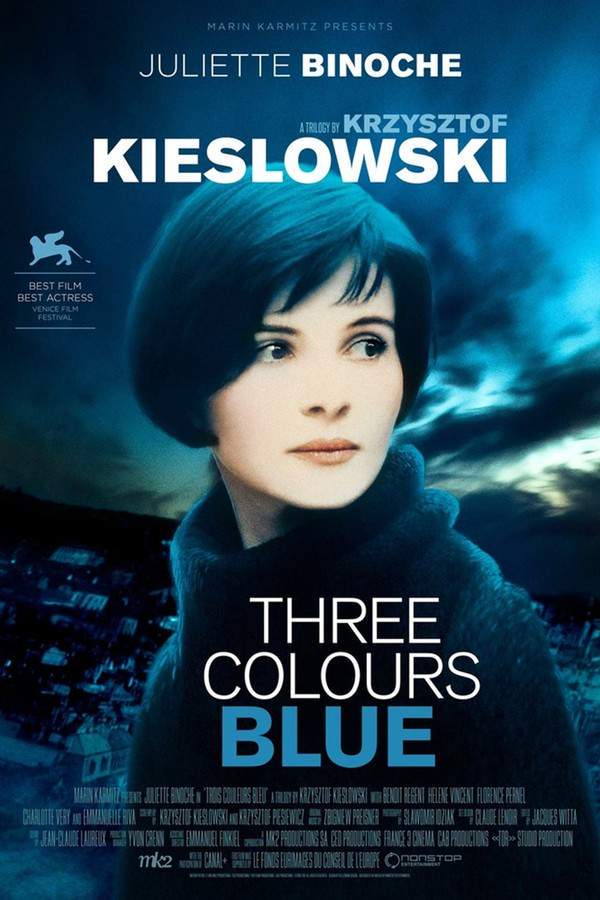
Following a tragic accident that claims the lives of her husband and daughter, successful composer Julie experiences profound grief and isolation. She attempts to distance herself from her past and the memories of her family, severing all ties and seeking solace in a new life. This first film in the Three Colors trilogy explores themes of mourning, freedom, and the search for meaning as Julie confronts her pain and slowly begins to rebuild her existence, set against a striking visual style and a memorable musical score.


Does Three Colors: Blue have end credit scenes?
No!
Three Colors: Blue does not have end credit scenes. You can leave when the credits roll.
Where to Watch Three Colors: Blue
See current US streaming, rental, and purchase options for Three Colors: Blue (1993) via JustWatch.







Meet the Full Cast and Actors of Three Colors: Blue
Explore the complete cast of Three Colors: Blue, including both lead and supporting actors. Learn who plays each character, discover their past roles and achievements, and find out what makes this ensemble cast stand out in the world of film and television.
External Links and Streaming Options
Discover where to watch Three Colors: Blue online, including streaming platforms, rental options, and official sources. Compare reviews, ratings, and in-depth movie information across sites like IMDb, TMDb, Wikipedia or Rotten Tomatoes.










Ratings and Reviews for Three Colors: Blue
See how Three Colors: Blue is rated across major platforms like IMDb, Metacritic, and TMDb. Compare audience scores and critic reviews to understand where Three Colors: Blue stands among top-rated movies in its genre.

87
Metascore
8.4
User Score


%
TOMATOMETER

0%
User Score

77
%
User Score
Take the Ultimate Three Colors: Blue Movie Quiz
Challenge your knowledge of Three Colors: Blue with this fun and interactive movie quiz. Test yourself on key plot points, iconic characters, hidden details, and memorable moments to see how well you really know the film.
Three Colors: Blue Quiz: Test your knowledge on the emotional journey of Julie in 'Three Colors: Blue'.
Who is the main character of the film?
Awards & Nominations for Three Colors: Blue
Discover all the awards and nominations received by Three Colors: Blue, from Oscars to film festival honors. Learn how Three Colors: Blue and its cast and crew have been recognized by critics and the industry alike.

Best Original Score

Full Plot Summary and Ending Explained for Three Colors: Blue
Read the complete plot summary of Three Colors: Blue, including all major events, twists, and the full ending explained in detail. Explore key characters, themes, hidden meanings, and everything you need to understand the story from beginning to end.
Julie, the wife of renowned French composer Patrice de Courcy, faces an unimaginable tragedy when she loses her husband and young daughter in a catastrophic car accident, leaving her as the sole survivor. While she is recuperating in the hospital, she contemplates taking her life by overdosing on pills, but the attempt fails as she cannot bring herself to swallow them. Once discharged, she attempts to erase the remnants of her past, believed to have played a vital role in her husband’s celebrated compositions. In a bold act of defiance, she destroys what is left of his works and reaches out to Olivier, a long-time collaborator of her husband who held an unrequited admiration for her. Their brief encounter leads to an intimate night together, but Julie soon bids him goodbye.
Determined to sever ties with her former life, Julie clears out the family home and puts it up for sale, relocating to a quaint apartment in Paris close to Rue Mouffetard without notifying anyone of her whereabouts. The sole reminder of her daughter is a delicate mobile made of blue beads, which she clings to as her only link to the past.
As she attempts to lead a life of obscurity, now distanced from old friendships and family connections — including a mother suffering from Alzheimer’s who no longer recognizes her — Julie confronts her past. She takes the decisive step of reclaiming and ultimately obliterating the unfinished score of her husband’s last commissioned piece, which was intended to herald European unity in the wake of the Cold War, yet fragments of its melody linger in her mind, haunting her daily.
Despite her efforts to maintain a low profile, her past inevitably resurfaces. A young boy, witness to the tragic accident, hands her a cross necklace discovered at the crash site, inquiring about her husband’s last words. Strangely, his final utterances turned out to be the punchline of an off-color joke he was sharing with the family. Julie chooses to let the boy keep the necklace, symbolizing her slow acceptance of her reality.
Unwillingly, she strikes up a friendship with Lucille, an exotic dancer embroiled in a scandalous affair with a neighbor. Committed as much to supporting each other through the loneliness surrounding them, their bond strengthens. However, their lives intertwine more significantly when Julie spots Olivier on a television interview, revealing that he has retained a copy of her husband’s European composition and aspires to complete it himself. Julie’s emotions swell as she comes across a photograph of Patrice with another woman.
The plot thickens when she confronts Olivier about the unfinished piece and the identity of the woman seen with Patrice. In her quest for the truth, she locates Sandrine, a lawyer and Patrice’s mistress, only to learn that Sandrine is pregnant with her husband’s child. In a surprising act of grace, Julie facilitates Sandrine’s acquisition of the family home and ensures that her husband’s paternity of the child is recognized.
With her pain transmuted into purpose, Julie resumes working on the European composition alongside Olivier. Together, they finalize the piece, with Olivier adamantly insisting that Julie receives credit for her contribution. When she finally reaches out to him again to inquire about his feelings for her, his affirmation prompts a meeting that could alter the course of her healing.
The conclusion of their collaboration is marked by the performance of part of the Unity of Europe piece, featuring a choir alongside a soprano singing in Greek, the lyrics praising the divine love articulated in Saint Paul’s first letter to the Corinthians. In a cascade of emotions, Julie witnesses the ripple effect her choices have had on others, evoking tears that transform into a burgeoning smile, signifying not just acceptance but also the resurgence of hope in her life.

Coming soon on iOS and Android
The Plot Explained Mobile App
From blockbusters to hidden gems — dive into movie stories anytime, anywhere. Save your favorites, discover plots faster, and never miss a twist again.
Sign up to be the first to know when we launch. Your email stays private — always.
Explore the mobile appWatch Trailers, Clips & Behind-the-Scenes for Three Colors: Blue
Watch official trailers, exclusive clips, cast interviews, and behind-the-scenes footage from Three Colors: Blue. Dive deeper into the making of the film, its standout moments, and key production insights.
Cars Featured in Three Colors: Blue
Explore all cars featured in Three Colors: Blue, including their makes, models, scenes they appear in, and their significance to the plot. A must-read for car enthusiasts and movie buffs alike.
Three Colors: Blue Themes and Keywords
Discover the central themes, ideas, and keywords that define the movie’s story, tone, and message. Analyze the film’s deeper meanings, genre influences, and recurring concepts.
Three Colors: Blue Other Names and Titles
Explore the various alternative titles, translations, and other names used for Three Colors: Blue across different regions and languages. Understand how the film is marketed and recognized worldwide.
Similar Movies To Three Colors: Blue You Should Know About
Browse a curated list of movies similar in genre, tone, characters, or story structure. Discover new titles like the one you're watching, perfect for fans of related plots, vibes, or cinematic styles.





Quick Links: Summary, Cast, Ratings, More

What's After the Movie?
Not sure whether to stay after the credits? Find out!
Check out our other apps:

SAT Sphere
Build confidence for the Digital SAT.

Mori Atlas
Discover wild places worth protecting.

Luntero
Search smarter for a home in Amsterdam.

Plot Explained
Unravel movie endings and hidden clues.

Pokechamp
Dive into Pokémon data and battle logic.

Driving Theory
Get ready for your European theory test.

Movie Dust
Plan your next cinema trip with ease.

Musemap
Find art and culture as you travel.

Selkobase
Compare credentials before committing.

Local Manual
Turn an unfamiliar country into practical next steps.

Lernavi
Compare school systems before your next move.

GymRoam
Find a workout stop wherever your plans take you.
Explore Our Movie Platform
New Movie Releases (2026)
Famous Movie Actors
Top Film Production Studios
Movie Plot Summaries & Endings
Major Movie Awards & Winners
Best Concert Films & Music Documentaries
Movie Collections and Curated Lists
© 2026 What's After the Movie. All rights reserved.
Privacy Policy