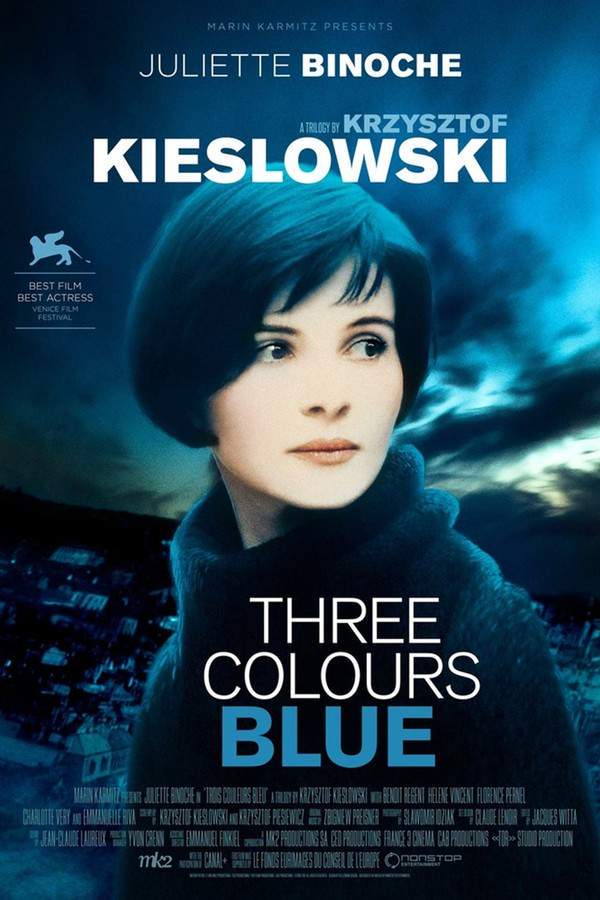
Three Colors: Blue 1993


Directed by

Krzysztof Kieslowski
Made by

Miramax
Where to Watch Three Colors: Blue
See current US streaming, rental, and purchase options for Three Colors: Blue (1993) via JustWatch.







Three Colors: Blue Plot Summary
Read the complete plot summary and ending explained for Three Colors: Blue (1993). From turning points to emotional moments, uncover what really happened and why it matters.
Julie, the wife of renowned French composer Patrice de Courcy, faces an unimaginable tragedy when she loses her husband and young daughter in a catastrophic car accident, leaving her as the sole survivor. While she is recuperating in the hospital, she contemplates taking her life by overdosing on pills, but the attempt fails as she cannot bring herself to swallow them. Once discharged, she attempts to erase the remnants of her past, believed to have played a vital role in her husband’s celebrated compositions. In a bold act of defiance, she destroys what is left of his works and reaches out to Olivier, a long-time collaborator of her husband who held an unrequited admiration for her. Their brief encounter leads to an intimate night together, but Julie soon bids him goodbye.
Determined to sever ties with her former life, Julie clears out the family home and puts it up for sale, relocating to a quaint apartment in Paris close to Rue Mouffetard without notifying anyone of her whereabouts. The sole reminder of her daughter is a delicate mobile made of blue beads, which she clings to as her only link to the past.
As she attempts to lead a life of obscurity, now distanced from old friendships and family connections — including a mother suffering from Alzheimer’s who no longer recognizes her — Julie confronts her past. She takes the decisive step of reclaiming and ultimately obliterating the unfinished score of her husband’s last commissioned piece, which was intended to herald European unity in the wake of the Cold War, yet fragments of its melody linger in her mind, haunting her daily.
Despite her efforts to maintain a low profile, her past inevitably resurfaces. A young boy, witness to the tragic accident, hands her a cross necklace discovered at the crash site, inquiring about her husband’s last words. Strangely, his final utterances turned out to be the punchline of an off-color joke he was sharing with the family. Julie chooses to let the boy keep the necklace, symbolizing her slow acceptance of her reality.
Unwillingly, she strikes up a friendship with Lucille, an exotic dancer embroiled in a scandalous affair with a neighbor. Committed as much to supporting each other through the loneliness surrounding them, their bond strengthens. However, their lives intertwine more significantly when Julie spots Olivier on a television interview, revealing that he has retained a copy of her husband’s European composition and aspires to complete it himself. Julie’s emotions swell as she comes across a photograph of Patrice with another woman.
The plot thickens when she confronts Olivier about the unfinished piece and the identity of the woman seen with Patrice. In her quest for the truth, she locates Sandrine, a lawyer and Patrice’s mistress, only to learn that Sandrine is pregnant with her husband’s child. In a surprising act of grace, Julie facilitates Sandrine’s acquisition of the family home and ensures that her husband’s paternity of the child is recognized.
With her pain transmuted into purpose, Julie resumes working on the European composition alongside Olivier. Together, they finalize the piece, with Olivier adamantly insisting that Julie receives credit for her contribution. When she finally reaches out to him again to inquire about his feelings for her, his affirmation prompts a meeting that could alter the course of her healing.
The conclusion of their collaboration is marked by the performance of part of the Unity of Europe piece, featuring a choir alongside a soprano singing in Greek, the lyrics praising the divine love articulated in Saint Paul’s first letter to the Corinthians. In a cascade of emotions, Julie witnesses the ripple effect her choices have had on others, evoking tears that transform into a burgeoning smile, signifying not just acceptance but also the resurgence of hope in her life.
Three Colors: Blue Timeline
Follow the complete movie timeline of Three Colors: Blue (1993) with every major event in chronological order. Great for understanding complex plots and story progression.
Tragic Accident
Julie experiences a horrific tragedy when her husband, the renowned composer Patrice de Courcy, and their young daughter are killed in a car accident. This leaves her as the sole survivor, plunging her into deep despair as she copes with the loss of her family.
Hospital Contemplation
Recovering in the hospital, Julie grapples with her overwhelming grief and contemplates ending her own life. However, when faced with the prospect of taking an overdose, she finds herself unable to follow through, highlighting her inner conflict and desire to live despite her pain.
Destruction of the Past
Once discharged, Julie resolves to erase the remnants of her previous life, which she believes dominated her husband's celebrated compositions. In an act of defiance, she destroys his works, symbolizing her rejection of the past that haunts her.
A New Encounter
Julie reaches out to Olivier, her husband’s former collaborator who harbors unrequited feelings for her. Their connection leads to an intimate night, but Julie quickly separates from him, showing her struggle to open up to new relationships.
Relocation to Paris
Determined to cut ties with her past, Julie sells the family home and moves to a quaint apartment in Paris near Rue Mouffetard. She opts for isolation, hoping to evade the memories that linger in her former surroundings.
Memories of Her Daughter
The only token of her daughter that Julie clings to is a delicate mobile made of blue beads, symbolizing her grief. This item serves as a constant reminder of her lost family, reinforcing her emotional struggle as she tries to move forward.
Confronting the Past
As Julie attempts to find solace in her new life, memories of her past continue to plague her. She takes a significant step by reclaiming and ultimately destroying the unfinished score of her husband's last commissioned piece, which served as a reminder of her previous life aspirations.
Unexpected Connection
A young boy, who witnessed the tragic accident, returns with a cross necklace found at the crash site and asks about her husband’s last words. Julie learns that the final utterances of her husband were unexpectedly comedic, allowing her to confront her grief in a different light.
Building a New Friendship
Julie unwittingly forms a friendship with Lucille, an exotic dancer involved in her own complex social situations. Their bond deepens as they support each other through their respective loneliness, showcasing the importance of human connection in healing.
Olivier's Revelation
Julie is taken aback when she sees Olivier on television discussing her husband's unfinished European composition, revealing he wishes to complete it. This rekindles a range of emotions in Julie, including jealousy and nostalgia for the relationship she had with her husband.
The Search for Truth
Driven by a desire for closure, Julie confronts Olivier about the composition and the identity of a woman seen with Patrice. This leads her to Sandrine, a lawyer and Patrice’s mistress, who reveals she is pregnant with Patrice’s child.
A Gracious Act
Despite her pain, Julie unexpectedly facilitates Sandrine's ability to claim the family home and ensures the unborn child’s paternity is recognized. This act of kindness marks a turning point in Julie's journey as she begins to find peace with her husband’s betrayal.
Working Together
Finding purpose in her sorrow, Julie collaborates with Olivier to finalize the European composition. Throughout this process, he insists that she receives credit for her contributions, affirming her significance and helping her reclaim her identity.
Emotional Performance
The culmination of their efforts is the performance of part of the Unity of Europe composition, featuring a choir and a soprano. As she listens, tears flow down Julie’s face, symbolizing her emotional catharsis and newfound hope.
A New Beginning
Witnessing the powerful performance, Julie realizes the impact of her decisions on those around her. The event marks not only her acceptance of the past but also the beginning of a hopeful and rejuvenated chapter in her life, filled with possibility.
Three Colors: Blue Characters
Explore all characters from Three Colors: Blue (1993). Get detailed profiles with their roles, arcs, and key relationships explained.
Julie
Julie is a complex character grappling with profound loss and seeking to redefine her identity after tragedy. Her emotional depth is portrayed through her struggles with grief and her efforts to erase the remnants of her past. As she forges new relationships, she begins to reclaim her voice and courage.
Olivier
Olivier, a composer and long-time collaborator of Julie's husband, represents both a connection to her past and a potential future. Initially drawn to Julie due to his unrequited feelings, he evolves into an ally in her journey of healing, helping her navigate the complexities of love and loss.
Lucille
Lucille is an exotic dancer who becomes an unexpected friend for Julie. Their bond highlights themes of companionship and support amidst loneliness, and Lucille's own struggles reflect the broader emotional landscape that both characters must navigate.
Sandrine
Sandrine, Patrice's mistress, adds layers to Julie's understanding of her husband's legacy. Her pregnancy creates a complicated relationship with Julie, but ultimately leads to moments of grace and understanding as they navigate their shared grief.
Three Colors: Blue Settings
Learn where and when Three Colors: Blue (1993) takes place. Explore the film’s settings, era, and how they shape the narrative.
Time period
The film is set in a contemporary period following the tragic events of a car accident. This post-accident phase highlights themes of grief and rebirth as Julie confronts her past while trying to forge a new path forward.
Location
Paris, Rue Mouffetard
The movie takes place primarily in Paris, a city known for its rich history, art, and culture. Rue Mouffetard, a vibrant street in the Latin Quarter, is known for its bustling markets and lively atmosphere, making it a fitting backdrop for Julie's quest for a new life after tragedy.
Three Colors: Blue Themes
Discover the main themes in Three Colors: Blue (1993). Analyze the deeper meanings, emotional layers, and social commentary behind the film.
💔
Grief
Grief is the central theme of the film, manifested in Julie's struggle to cope with the loss of her husband and daughter. Her journey reflects the complexities of mourning and the search for solace in a world that feels irrevocably altered. As she navigates her pain, her story becomes one of reclaiming identity and purpose amidst overwhelming sorrow.
🎶
Music and Identity
The film deeply intertwines music with Julie's identity and her husband's legacy. The unfinished score symbolizes both the weight of their shared past and Julie's journey towards rediscovering herself. Through music, she learns to process her grief and ultimately find a way to honor her husband while forging her path.
🌍
Rebirth
Rebirth serves as a theme as Julie attempts to rid herself of her former life and embrace a new beginning. This theme is evident as she takes bold steps to clear her past and confront her emotions. Ultimately, it culminates in her contributions to the European composition, representing her transformation and acceptance of her reality.

Coming soon on iOS and Android
The Plot Explained Mobile App
From blockbusters to hidden gems — dive into movie stories anytime, anywhere. Save your favorites, discover plots faster, and never miss a twist again.
Sign up to be the first to know when we launch. Your email stays private — always.
Explore the mobile appThree Colors: Blue Spoiler-Free Summary
Discover the spoiler-free summary of Three Colors: Blue (1993). Get a concise overview without any spoilers.
In the muted streets of Paris, a city already steeped in history and melancholy, a quiet tragedy has left a resonant silence in the life of a once‑celebrated composer. The film opens against a palette of cool blues, where the architecture and the ever‑present hum of traffic seem to echo the lingering grief of its protagonist. The visual style is elegant and restrained, allowing each lingering shot to feel like a note held in suspension, while a hauntingly beautiful score weaves through the narrative, underscoring the fragile balance between loss and the yearning for renewal.
Julie navigates this world with the weight of an unimaginable loss that has stripped her of the familiar anchors of family and artistic collaboration. A successful composer in her own right, she now finds herself adrift, seeking solitude in a modest apartment near Rue Mouffetard while attempting to erase the remnants of a life that feels both too distant and ever‑present. Her internal struggle is rendered with a delicate mixture of stoic restraint and fleeting vulnerability, inviting the audience to feel the tension between the desire to forget and the inexorable pull of memory.
Around her, a handful of quietly compelling figures surface, each offering a subtle counterpoint to her isolation. Olivier, a longtime associate of her late husband, appears as a lingering reminder of a shared creative past, while Lucille, a charismatic performer, brings an unexpected spark of companionship that hints at the possibility of connection beyond grief. Even the frail presence of Julie’s mother, struggling with the shadows of Alzheimer’s, adds a poignant layer to the portrait of a woman caught between the present and the echoing past.
The tone remains introspective yet hopeful, a meditation on mourning that gradually unfolds into a search for personal freedom and meaning. Within this richly atmospheric setting, the film promises a journey where music becomes both a refuge and a conduit for healing, inviting viewers to linger in the spaces between sorrow and the quiet emergence of new life.
Movies with Similar Twists and Themes
Uncover films that echo the narrative beats, emotional arcs, or dramatic twists of the one you're exploring. These recommendations are handpicked based on story depth, thematic resonance, and spoiler-worthy moments — perfect for fans who crave more of the same intrigue.



Featured on this page

What's After the Movie?
Not sure whether to stay after the credits? Find out!
Check out our other apps:

SAT Sphere
Build confidence for the Digital SAT.

Mori Atlas
Discover wild places worth protecting.

Luntero
Search smarter for a home in Amsterdam.

Plot Explained
Unravel movie endings and hidden clues.

Pokechamp
Dive into Pokémon data and battle logic.

Driving Theory
Get ready for your European theory test.

Movie Dust
Plan your next cinema trip with ease.

Musemap
Find art and culture as you travel.

Selkobase
Compare credentials before committing.

Local Manual
Turn an unfamiliar country into practical next steps.

Lernavi
Compare school systems before your next move.

GymRoam
Find a workout stop wherever your plans take you.
Explore Our Movie Platform
New Movie Releases (2026)
Famous Movie Actors
Top Film Production Studios
Movie Plot Summaries & Endings
Major Movie Awards & Winners
Best Concert Films & Music Documentaries
Movie Collections and Curated Lists
© 2026 What's After the Movie. All rights reserved.
Privacy Policy