The Rebel 1961


Anthony Hancock quits his desk job to chase a career as an abstract painter, brimming with enthusiasm but lacking any real talent. Critics deride his work, yet he manages to impress a rising, genuinely gifted artist. Using that connection, Hancock dupes galleries and collectors, convincing the art world that he is a groundbreaking genius.


Does The Rebel have end credit scenes?
No!
The Rebel does not have end credit scenes. You can leave when the credits roll.
Meet the Full Cast and Actors of The Rebel
Explore the complete cast of The Rebel, including both lead and supporting actors. Learn who plays each character, discover their past roles and achievements, and find out what makes this ensemble cast stand out in the world of film and television.
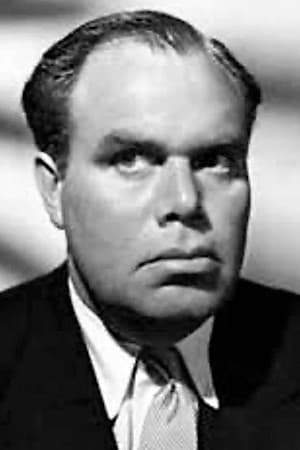
Peter Bull
Manager of Art Gallery, Paris
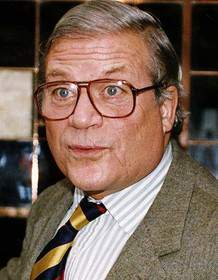
Oliver Reed
Artist in Cafe
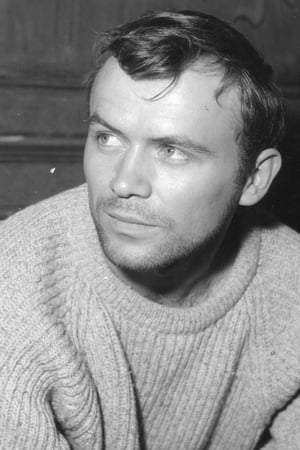
Gary Cockrell
Artist
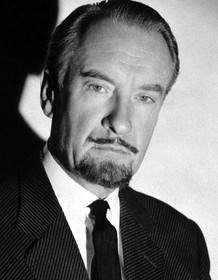
George Sanders
Sir Charles Broward

Marie Devereux
Yvette
Jean Marsh
Strange Woman at Party (Uncredited)
Irene Handl
Mrs. Crevatte
John Le Mesurier
Office manager
Grégoire Aslan
Aristotle Carreras
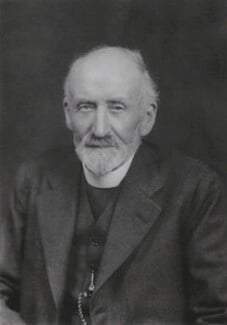
John Wood
Poet
Nanette Newman
Josey
Marie Burke
Madame Laurent
Dennis Price
Jim Smith
Liz Fraser
Waitress
Hugh Lloyd
Man on Train (Uncredited)
Sandor Elès
Artist
Paul Massie
Paul Ashby
Victor Platt
Dock Official
Bernard Rebel
Art Dealer
Mervyn Johns
Manager of Art Gallery, London
Margit Saad
Margot Carreras
Barry Shawzin
Bistro Owner
Mario Fabrizi
Coffee Bar Attendant
Tony Hancock
Anthony Hancock
Neville Becker
Artist
External Links and Streaming Options
Discover where to watch The Rebel online, including streaming platforms, rental options, and official sources. Compare reviews, ratings, and in-depth movie information across sites like IMDb, TMDb, Wikipedia or Letterboxd.





Take the Ultimate The Rebel Movie Quiz
Challenge your knowledge of The Rebel with this fun and interactive movie quiz. Test yourself on key plot points, iconic characters, hidden details, and memorable moments to see how well you really know the film.
The Rebel (1961) Quiz: Test your knowledge of the 1961 film "The Rebel" with these ten varied questions covering characters, plot points, and themes.
What is the name of the London office clerk who rebels by turning his umbrella the opposite way?
Full Plot Summary and Ending Explained for The Rebel
Read the complete plot summary of The Rebel, including all major events, twists, and the full ending explained in detail. Explore key characters, themes, hidden meanings, and everything you need to understand the story from beginning to end.
Tony is a disaffected London office clerk who starts every morning with the same ritual: a train to Waterloo, a city of identical bowler hats, and the small rebellion of turning his umbrella the opposite way from his colleagues. The routine is the quiet heartbeat of a gray, routine-bound life, until a clash with his boss over a ledger of poor caricatures reveals Tony’s true impulse: art as a rupture from the ordinary. In those early scenes, the world is painted in dull grays, and Tony’s doodled faces become a stubborn spark of individuality in a drab, repetitive job.
Back at his mid-terraced Victorian house, Tony adopts an artist’s smock and throws himself into a grand, unwieldy sculpture titled the Aphrodite at the Waterhole. The project is monstrous in scale and ambition, a misfit dream that dwarfs his finances and patience. His landlady, Mrs Crevatte, interrupts with complaints about noise, while Tony insists the statue represents “women as I see them.” Her response—“Oh, you poor man!”—lands with a heavy note of irony as the sculpture crashes through the floor, a dramatic symbol of art pushing through the limits of a cramped life.
A trip to a local cafe ends with a comic sting: Tony requests a coffee “with no froth,” prompting the owner to boast about an expensive frothing machine he has just bought. An impulse to escape, sparked by a poster in the cafe, nudges Tony toward Paris. He loads the colossal statue onto a wagon to the rear of a train to Dover, and the journey is increasingly absurd: the decapitated Aphrodite is damaged in a tunnel, and during loading onto a ship the statue bursts free from its net and sinks into the sea. On the ferry, a poetic, almost theatrical gesture occurs when Tony discards his bowler hat and umbrella—only to discover rain follows him to France.
In Paris, Tony finds a new circle in Montmartre: an English-speaking cohort of artists who breathe fresh air into his ideas. He befriends Paul Ashby, a painter whose passion for art matches Tony’s own stubborn impulse. Paul welcomes Tony into a shared studio and flat, and Tony quickly begins to critique Paul’s canvases with a blunt, childlike honesty—“Your colours are the wrong shape.” Yet Paul admires the raw, “infantile art” in Tony’s approach, and the two form a volatile alliance that propels Tony toward a new kind of success, fueled by a buoyant, almost cult-like studio atmosphere.
Into this sunlit chaos arrives Josey, a red-haired, blue-lipped beatnik who invites them to an immense mansion packed with art. The owner, Jim Smith, looms as a Dalí-esque figure who sleeps on a bookcase while writing a book. A youthful, fashion-forward crowd gathers around Tony, who becomes their oracle, their prophet, his every word followed and echoed by a chorus of admirers. The atmosphere grows wilder as Tony experiments with action painting, while Paul, increasingly disillusioned, decides to leave and gifts Tony a portion of his art—an act that signals the impending turn in Tony’s fortunes.
Tony’s rising star catches the eye of aristocratic buyers, including [Sir Charles Broward], an art collector who arrives with a proposal and a gaze that suggests the world himself is watching. Tony tells a small white lie, claiming that Paul’s works are “gifts,” a misinterpretation that underlines Tony’s growing detachment from his own talent. After his first exhibition, a meal at a posh restaurant becomes a comic display of craving simplicity: eggs and chips lead to a desire for something more refined, and Tony orders snails, egg and chips, and a cup of tea—a small, absurd rebellion against the rhythm of taste.
The plot sails to Monte Carlo, where Sir Charles hosts a dinner with wealthy guests. One guest, Mrs Carreras, longs to be painted, and her husband, Aristotle Carreras, played by [Grégoire Aslan], becomes a patron who wants to purchase Tony’s entire body of work. Tony injures his fingers during hammering, and later, in a crowded restaurant, Mrs Carreras hand-feeds him, blurring the line between muse and meal. Carreras offers a staggering sum—£50,000—for the whole collection, a figure that amplifies Tony’s fear, triumph, and confusion in equal measure.
On the Carreras’ yacht, Tony dresses as a budgerigar for a fancy-dress party, while Mrs Carreras, who dresses as a cat, wields an unsettling power over him. When the moment of truth arrives, the statue on display is again a copy of his Aphrodite, and Mrs Carreras accuses him of assault as the sculpture drops through the ship’s deck and vanishes into the sea. Tony escapes on the yacht’s launch, still in his bird costume, and a wry, almost cosmic irony follows: he longs to return to London, but a ferry-boat attendant informs him that London is further than it seems, prompting a quip about waiting for a plane.
The voyage ends with a quiet, almost domestic catastrophe: Tony returns to Mrs Crevatte’s place, finding Paul living with her and working in an office, though painting remains a hobby for him. Tony asks Paul to lend more paintings, promising to reveal a secret later. The London exhibition becomes a turning point: when Tony unveils the new works, he declares that Paul is the true artist and that the “rubbish” he himself created was, in truth, Tony’s. The revelation fractures the illusion of his own genius, and he allows Paul to bask in the recognition and wealth that Tony has pretended to own. In the final act, Tony returns to Mrs Crevatte’s, once again loses himself in his art, and resumes work on his monumental Aphrodite—the model once again Mrs Crevatte, a symbol of the tether between creator and muse, reality and imagination.
In the end, the story circles back to where it began: art as an impulse that refuses to stay neatly boxed in a desk, in a studio, or in a life that feels too small. Aristotle Carreras and the other fictional circles drift through the margins of Tony’s reality, while the true artist remains elusive, the one who can turn a chaotic, decentered dream into a lasting work—the very pursuit that keeps Tony returning to his sculpture, to the patient, stubborn labor that defines art as much as any finished form.

Coming soon on iOS and Android
The Plot Explained Mobile App
From blockbusters to hidden gems — dive into movie stories anytime, anywhere. Save your favorites, discover plots faster, and never miss a twist again.
Sign up to be the first to know when we launch. Your email stays private — always.
Explore the mobile appWatch Trailers, Clips & Behind-the-Scenes for The Rebel
Watch official trailers, exclusive clips, cast interviews, and behind-the-scenes footage from The Rebel. Dive deeper into the making of the film, its standout moments, and key production insights.
Cars Featured in The Rebel
Explore all cars featured in The Rebel, including their makes, models, scenes they appear in, and their significance to the plot. A must-read for car enthusiasts and movie buffs alike.
The Rebel Other Names and Titles
Explore the various alternative titles, translations, and other names used for The Rebel across different regions and languages. Understand how the film is marketed and recognized worldwide.
Quick Links: Summary, Cast, Ratings, More

What's After the Movie?
Not sure whether to stay after the credits? Find out!
Check out our other apps:

SAT Sphere
Build confidence for the Digital SAT.

Mori Atlas
Discover wild places worth protecting.

Luntero
Search smarter for a home in Amsterdam.

Plot Explained
Unravel movie endings and hidden clues.

Pokechamp
Dive into Pokémon data and battle logic.

Driving Theory
Get ready for your European theory test.

Movie Dust
Plan your next cinema trip with ease.

Musemap
Find art and culture as you travel.

Selkobase
Compare credentials before committing.

Local Manual
Turn an unfamiliar country into practical next steps.

Lernavi
Compare school systems before your next move.

GymRoam
Find a workout stop wherever your plans take you.
Explore Our Movie Platform
New Movie Releases (2026)
Famous Movie Actors
Top Film Production Studios
Movie Plot Summaries & Endings
Major Movie Awards & Winners
Best Concert Films & Music Documentaries
Movie Collections and Curated Lists
© 2026 What's After the Movie. All rights reserved.
Privacy Policy