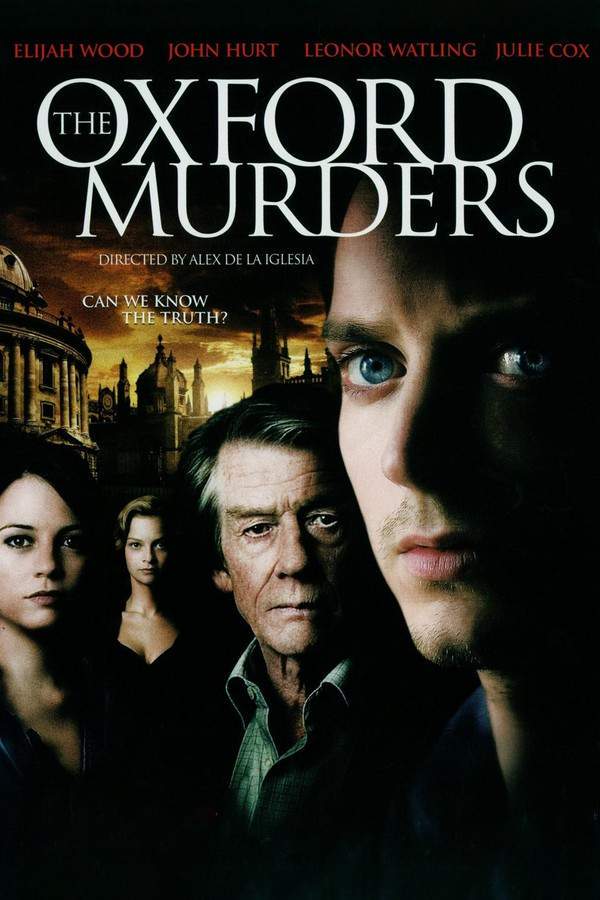
The Oxford Murders 2008



At Oxford University, a mathematics professor teams up with his graduate student to investigate a string of brutal killings whose clues appear as enigmatic mathematical symbols. As the duo races against time, they must decipher the equations, confront hidden motives, and grapple with the unsettling notion that absolute truth may be unattainable.


Does The Oxford Murders have end credit scenes?
No!
The Oxford Murders does not have end credit scenes. You can leave when the credits roll.
Where to Watch The Oxford Murders
See current US streaming, rental, and purchase options for The Oxford Murders (2008) via JustWatch.

fuboTV
HD
Magnolia Selects Amazon Channel
HD
Monsters and Nightmares Amazon Channel
HD
Hoopla
SD
Kanopy
HD
DistroTV
HD
Plex Channel
HD
Amazon Video
SD
Apple TV Store
HD
Fandango At Home
SD
FlixFling
HD
Google Play Movies
SD
YouTube
SD Streaming availability powered by 
Meet the Full Cast and Actors of The Oxford Murders
Explore the complete cast of The Oxford Murders, including both lead and supporting actors. Learn who plays each character, discover their past roles and achievements, and find out what makes this ensemble cast stand out in the world of film and television.
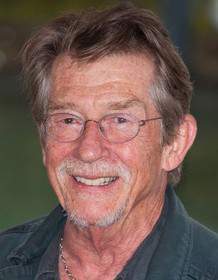
John Hurt
Arthur Seldom

Anna Massey
Julia Eagleton
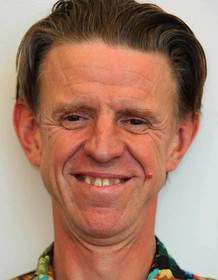
Alex Cox
Kalman
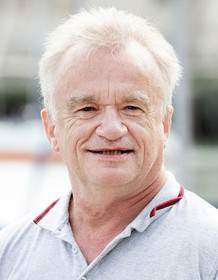
Dominique Pinon
Frank
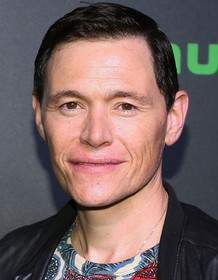
Burn Gorman
Yuri Podorov
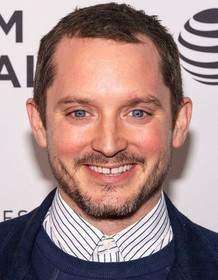
Elijah Wood
Martin

Danny Sapani
Scott
Leonor Watling
Lorna
Alan David
Mr. Higgins

Jim Carter
Inspector Petersen
Julie Cox
Beth
Tim Wallers
Defense Lawyer
James Howard
Newscaster
Duane Henry
Policeman
James Weber Brown
Doctor
Tom Frederic
Ludwig Wittgenstein
Charlotte Asprey
Howard Green's Wife
John Snowden
Professor in Lecture
Ian East
Howard Green
External Links and Streaming Options
Discover where to watch The Oxford Murders online, including streaming platforms, rental options, and official sources. Compare reviews, ratings, and in-depth movie information across sites like IMDb, TMDb, Wikipedia or Rotten Tomatoes.








Take the Ultimate The Oxford Murders Movie Quiz
Challenge your knowledge of The Oxford Murders with this fun and interactive movie quiz. Test yourself on key plot points, iconic characters, hidden details, and memorable moments to see how well you really know the film.
The Oxford Murders Quiz: Test your knowledge of the 2008 film *The Oxford Murders* with these ten questions ranging from easy to challenging.
Which university does the film take place in?
Full Plot Summary and Ending Explained for The Oxford Murders
Read the complete plot summary of The Oxford Murders, including all major events, twists, and the full ending explained in detail. Explore key characters, themes, hidden meanings, and everything you need to understand the story from beginning to end.
Martin, Elijah Wood, a US student at the University of Oxford, arrives hoping to work under John Hurt as his thesis supervisor. He idolises Arthur Seldom and has studied his work intensely. Martin lodges with Mrs. Eagleton, Anna Massey, an old friend of Seldom, at a house that also hosts her daughter Beth, Julie Cox, a caregiver who resents her role and the attention it leaves her with. Beth’s restlessness hints at deeper tensions, and the house becomes a quiet stage for Martin’s worries about his future and his hero-worship of Seldom.
In a public lecture, Seldom cites Wittgenstein’s Tractatus to argue against the possibility of absolute truth. He leaves the room unshaken, but Martin challenges him, declaring his belief in the absolute truth of mathematics with the provocative line, I believe in the number pi. The clash exposes a chasm between mentor and student, and Seldom’s sharp wit humiliates Martin, who leaves the auditorium feeling deflated and foolish. This moment plants the seed for a dangerous game: the idea that intellectual superiority can be weaponized.
That evening Martin returns to his office and encounters his bitter office-mate, Burn Gorman as Yuri Podorov, who himself failed to become Seldom’s pupil. The mood shifts dramatically when Martin, Beth, and the landlady’s household encounter a murder. The landlady dies, and Seldom insists to the police that a note directing attention toward Oxford is the “first of a series.” As an expert in logical series, Seldom suggests a killer is methodically testing his intellect, even if the crime appears to be an ordinary one. The case becomes entangled with a theory of “imperceptible murders”—victims who were already dying, making foul play easier to miss.
Martin’s personal life deepens in complexity. He visits Lorna, Leonor Watling, who works at a hospital and who shares a complicated past with Seldom. There he also encounters a religious fanatic, Dominique Pinon, whose daughter is in urgent need of a lung transplant. At the hospital, Martin meets Kalman, Alex Cox, a former student of Seldom who has fallen into cancer and madness. The death of a patient sharing a room with Kalman, seemingly by injection, adds to a trail of ominous signs—a second symbol, two interlocking arcs, appearing in the investigation.
As Martin’s relationship with Lorna strains, he begins to see that Lorna once had a romantic history with Seldom. On Guy Fawkes Night, a concert turns tense when Podorov is seen acting oddly and a banner is hung from a rooftop, prompting a police pursuit. The incident ends not with a dramatic arrest but with the death of a musician from respiratory failure, and a drawing of a triangular symbol is found at the scene. Seldom tells Martin a cautionary tale about a 19th-century diarist who plotted to kill his wife, a story that he uses to illustrate that the “perfect crime” is not the one that remains unsolved, but the one solved under the wrong assumption.
Oxford’s mathematical community buzzes with excitement when a local researcher claims to have solved Fermat’s Last Theorem. The scholars—including Seldom and Martin—board a bus to attend a conference, but Martin impulsively leaves as he sees Lorna in the street. The two reconcile and decide to take a long break from mathematics and from Oxford. They share a moment of intimacy, and Martin realizes that the sequence of symbols the killer has sent them points toward a tetractys—the ten-point figure—before the investigation closes in on a shocking revelation.
The police suspect Seldom’s influence, but the true killer is someone connected to the hospital visit: a bus driver who sees children as expendable for his own purposes. He detonates a bomb on a school bus, killing the children and himself, hoping to divert suspicion from his real motive. The aftermath pushes Lorna and Martin toward departure, but Martin discovers that Seldom has not been entirely truthful. Beth, overwhelmed by the burden of caregiving, had killed the landlady, hoping to end the responsibility, and Seldom arrived too late to intervene and instead concocted a story to shield Beth. The hospital death was natural, not injected, and the concert death was an accident that Seldom merely exploited.
Martin confronts Seldom, detailing his discoveries and insisting on the truth he believes he has uncovered. Seldom defends his choices, arguing that even if he lied, his actions harmed no one directly, while Martin points out that Seldom’s lies still have consequences—consequences that ripple outward, influencing others. In a final, morally complex exchange, Seldom contends that all actions carry consequences, intentional or not, and that one casual remark of Martin’s to Beth may have influenced her decision to kill. The story closes on a note of ambiguity, leaving the audience to weigh guilt, mentorship, and the unpredictable costs of truth and power.
“I believe in the number pi”

Coming soon on iOS and Android
The Plot Explained Mobile App
From blockbusters to hidden gems — dive into movie stories anytime, anywhere. Save your favorites, discover plots faster, and never miss a twist again.
Sign up to be the first to know when we launch. Your email stays private — always.
Explore the mobile appWatch Trailers, Clips & Behind-the-Scenes for The Oxford Murders
Watch official trailers, exclusive clips, cast interviews, and behind-the-scenes footage from The Oxford Murders. Dive deeper into the making of the film, its standout moments, and key production insights.
Cars Featured in The Oxford Murders
Explore all cars featured in The Oxford Murders, including their makes, models, scenes they appear in, and their significance to the plot. A must-read for car enthusiasts and movie buffs alike.
The Oxford Murders Themes and Keywords
Discover the central themes, ideas, and keywords that define the movie’s story, tone, and message. Analyze the film’s deeper meanings, genre influences, and recurring concepts.

Unlock the World of Movies with Our Comprehensive Wiki
Dive into our Movie Wiki for in-depth film encyclopedia entries, including cast biographies, production trivia, plot synopses, behind-the-scenes facts, and thematic analyses. Whether you’re researching iconic directors, exploring genre histories, or discovering hidden easter eggs, our expertly curated movie database has everything you need to fuel your cinematic passion.

Similar Movies To The Oxford Murders You Should Know About
Browse a curated list of movies similar in genre, tone, characters, or story structure. Discover new titles like the one you're watching, perfect for fans of related plots, vibes, or cinematic styles.




Quick Links: Summary, Cast, Ratings, More

What's After the Movie?
Not sure whether to stay after the credits? Find out!
Check out our other apps:

SAT Sphere
Build confidence for the Digital SAT.

Mori Atlas
Discover wild places worth protecting.

Luntero
Search smarter for a home in Amsterdam.

Plot Explained
Unravel movie endings and hidden clues.

Pokechamp
Dive into Pokémon data and battle logic.

Driving Theory
Get ready for your European theory test.

Movie Dust
Plan your next cinema trip with ease.

Musemap
Find art and culture as you travel.

Selkobase
Compare credentials before committing.

Local Manual
Turn an unfamiliar country into practical next steps.

Lernavi
Compare school systems before your next move.

GymRoam
Find a workout stop wherever your plans take you.
Explore Our Movie Platform
New Movie Releases (2026)
Famous Movie Actors
Top Film Production Studios
Movie Plot Summaries & Endings
Major Movie Awards & Winners
Best Concert Films & Music Documentaries
Movie Collections and Curated Lists
© 2026 What's After the Movie. All rights reserved.
Privacy Policy