The Day the Earth Caught Fire 1961



British journalists uncover an international cover‑up as a worldwide catastrophe unfolds. After the United States and the Soviet Union simultaneously detonate nuclear weapons, the Earth's orbit is thrown off course, sending the planet careening toward the Sun. Panic spreads as humanity faces an unstoppable solar threat. Leaders scramble for answers.


Does The Day the Earth Caught Fire have end credit scenes?
No!
The Day the Earth Caught Fire does not have end credit scenes. You can leave when the credits roll.
Where to Watch The Day the Earth Caught Fire
See current US streaming, rental, and purchase options for The Day the Earth Caught Fire (1961) via JustWatch.

BFI Player Amazon Channel
HD
Cohen Media Amazon Channel
HD
Fandor Amazon Channel
HD
Midnight Pulp Amazon Channel
HD
MovieSphere+ Amazon Channel
SD
Philo
HD
Darkroom
HD
Fawesome
HD
Kanopy
HD
Tubi TV
SD
Amazon Video
SD
Apple TV Store
SD
Fandango At Home
SD
Google Play Movies
SD
YouTube
SD Streaming availability powered by 
Meet the Full Cast and Actors of The Day the Earth Caught Fire
Explore the complete cast of The Day the Earth Caught Fire, including both lead and supporting actors. Learn who plays each character, discover their past roles and achievements, and find out what makes this ensemble cast stand out in the world of film and television.
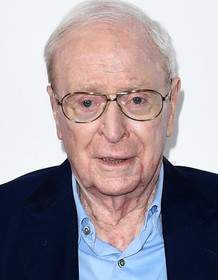
Michael Caine
Checkpoint Policeman (uncredited)
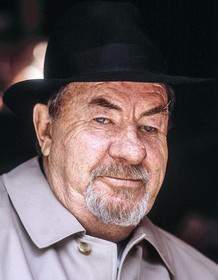
Leo McKern
Bill Maguire

John Adams
Constable (uncredited)
Fred Johnson
Archie (uncredited)
Reginald Beckwith
Harry
Janet Munro
Jeannie Craig
Robert Moore
Air Traffic Controller (uncredited)
Timothy Bateson
Printer (uncredited)
Michael Goodliffe
Jacko Jackson the Night Editor
Aileen Lewis
Demonstrator (uncredited)
Leonard Llewellyn
Editor (uncredited)
Wallace Bosco
Copy Boy (uncredited)
Jim Brady
Man at Water Station (uncredited)
Gene Anderson
May
Bernard Braden
Davis the News Editor
Pamela Green
Nurse at Laundrette (uncredited)
Peter Blythe
Copy Desk (uncredited)
Jim McManus
Man at Water Station (uncredited)
John Dearth
Dick (uncredited)
George Merritt
Smudge (uncredited)
Terry Walsh
Man (uncredited)
Richard Coleman
Partner of Stenning's Divorced Wife (uncredited)
Geoffrey Chater
Pat Holroyd (uncredited)
Maxwell Craig
Harry's Club Patron (uncredited)
Michael McStay
Policeman at Washing Centre (uncredited)
Peter Evans
Man in Pub (uncredited)
Marianne Stone
Miss Evans (uncredited)
Avril Angers
Mother (uncredited)
Norman Chappell
Hotel Receptionist (uncredited)
Geoffrey Frederick
Mitchell (uncredited)
Aidan Harrington
Editor (uncredited)
John Barron
1st Sub-Editor (uncredited)
Guy Standeven
Man at Funfair (uncredited)
Juba Kennerley
Harry's Club Patron (uncredited)
Edward Judd
Peter Stenning
Reginald Marsh
Picture Editor (uncredited)
Renée Asherson
Angela
Edward Underdown
Dick Sanderson (uncredited)
Carmel McSharry
Woman Lost in Fog (uncredited)
Charles Morgan
Foreign Editor (uncredited)
Austin Trevor
Sir John Kelly (uncredited)
Lisa Peake
Girl (uncredited)
Terence Soall
Bit Part (uncredited)
Julie Samuel
Young Girl (uncredited)
Peter Butterworth
2nd Sub-Editor (uncredited)
Frank Phillips
Radio Announcer (uncredited)
John Rae
Sarge the Doorman (uncredited)
Joe Wadham
Man in Crowd (uncredited)
Robin Hawdon
Ronnie (uncredited)
Harold Coyne
Editor (uncredited)
Gerry Judge
Man in Crowd (uncredited)
John Tatham
Policeman at Water Station (uncredited)
Frank Sieman
Print Room Manager (uncredited)
Larry Martyn
Argumentative Man at Washing Centre (uncredited)
Robin Burns
Man in Crowd (uncredited)
Jeff Silk
Policeman (uncredited)
Dave Griffiths
Workman (uncredited)
Cecil Paul
Editor (uncredited)
Charles Price
Man in Crowd (uncredited)
Jane Aird
Nanny (uncredited)
Ian Ellis
Michael Stenning (uncredited)
Verina Greenlaw
Trixie (uncredited)
Graham Skidmore
Bit Part (uncredited)
Bill Rayment
Man in Crowd (uncredited)
Ruth Harrison
Woman in Crowd (uncredited)
William Baskiville
Policeman (uncredited)
Edith Raye
Woman in Crowd (uncredited)
Gordon Humphries
Man at Water Station (uncredited)
Dan Lester
Man in Crowd (uncredited)
Frank Schock
Man in Crowd (uncredited)
Alf Casha
Man in Crowd (uncredited)
George Curtis
Man in Crowd (uncredited)
Arthur Christiansen
'Jeff' Jefferson - Editor
Don McMurray
Man in Fight (uncredited)
Jeff Shane
Man in Crowd (uncredited)
External Links and Streaming Options
Discover where to watch The Day the Earth Caught Fire online, including streaming platforms, rental options, and official sources. Compare reviews, ratings, and in-depth movie information across sites like IMDb, TMDb, Wikipedia or Letterboxd.





Take the Ultimate The Day the Earth Caught Fire Movie Quiz
Challenge your knowledge of The Day the Earth Caught Fire with this fun and interactive movie quiz. Test yourself on key plot points, iconic characters, hidden details, and memorable moments to see how well you really know the film.
The Day the Earth Caught Fire (1961) Quiz: Test your knowledge of the 1961 science‑fiction drama about a journalist, a meteorologist, and a world on the brink of climatic disaster caused by nuclear testing.
Who is the main journalist protagonist of the film?
Full Plot Summary and Ending Explained for The Day the Earth Caught Fire
Read the complete plot summary of The Day the Earth Caught Fire, including all major events, twists, and the full ending explained in detail. Explore key characters, themes, hidden meanings, and everything you need to understand the story from beginning to end.
A lone man walks through the deserted, sweltering streets of an abandoned London, a stark image that opens a story about a world already under pressure. The narrative then rewinds several months to follow Peter Stenning, once an up-and-coming journalist with the Daily Express, whose life has fallen into disarray after a painful divorce. His career falters as he grapples with heavy drinking, and his editor assigns him a string of lackluster jobs that only deepen his sense of stagnation. Yet his only real lifeline is his friend, Bill Maguire, a veteran Fleet Street reporter who offers encouragement and sometimes covers for him by writing the clumsy copy himself. The film threads a mood of fatigue, rueful humor, and stubborn resilience as it moves between newsroom grind and personal doubt, painting a portrait of a man who once believed in his future and is now scrambling to find his footing again.
Across the globe, tensions mount as the United States and the Soviet Union conduct nuclear tests in the same era, and strange meteorological disturbances begin to ripple through the atmosphere. Stenning is dispatched to the British Met Office to gather temperature data, still chasing a spark of significance in a career that has grown dim. It is there that he meets Jeannie Craig, a young typist who is temporarily serving as a telephonist. Their initial banter is sharp and teasing, laced with flirtation, but what begins as a clash of wits soon blossoms into a fragile, tender connection—an antidote to the growing sense of catastrophe that threads through every scene. Jeannie’s quick wit and warmth become a counterpoint to the cold, clinical world of weather data and geopolitical fallout, anchoring Stenning as he confronts questions bigger than his own career.
As the scientists uncover the truth, they realize the nuclear tests have altered Earth in profound ways. Nutation shifts, and the planet’s axial tilt tilts by about 11 degrees, throwing climatic zones into chaos. Rising temperatures turn seas and skies into a loosening net of humidity, and mist begins to cloak Britain as if the weather itself is reacting to a century of human choices. A solar eclipse arrives days ahead of schedule, and soon it becomes clear that the Earth’s orbit has been nudged off its familiar path, setting the scene for an improbable, almost sacramental moment of crisis. The world’s institutions react with a mix of urgency and uncertainty, with governments declaring emergencies, rationing water and supplies, and coordinating mass evacuations as cities grow fragile under the strain of unpredictable weather and dwindling resources.
In response, a radical plan emerges: scientists conclude that detonating a series of nuclear bombs in western Siberia might stabilize the planet’s orbit and avert a planetary catastrophe. The grim calculus of survival—sacrifice, risk, and the possibility of unintended consequences—becomes the film’s central tension. Stenning, Maguire, and Jeannie—now bound by love and a shared urgency—move through crowded bars, crowded streets, and a media world that is both a witness and a participant, gathering information, weighing risks, and trying to keep faith with the future. Their conversations range from the pragmatic to the philosophical, as they confront a world where catastrophe feels imminent yet not entirely predictable, and where human connection becomes a small but vital source of light against the encroaching dark.
The narrative builds toward a climactic moment at a newspaper print room, where two versions of the front page have been prepared: one proclaims “World Saved,” the other “World Doomed.” In the tension between certainty and doubt, the film circles back to the question of what it means to endure and whether humanity will be remembered for its compassion as much as for its power. The story closes not with a definitive verdict about the fate of Earth, but with a contemplative voiceover from Stenning that weighs the consequences of human ambition and the possibility of a gentler, more hopeful future, even as the world keeps spinning toward an uncertain dawn.
So Man has sown the wind – and reaped the whirlwind. Perhaps in the next few hours, there will be no remembrance of the past, and no hope for the future that might have been. All the works of Man will be consumed in the great fire out of which he was created. But perhaps at the heart of the burning light into which he has thrust his world, there is a heart that cares more for him, than he has ever cared for himself. And if there is a future for Man – insensitive as he is, proud and defiant in his pursuit of power - let him resolve to live it lovingly; for he knows well how to do so. Then he may say once more: Truly the light is sweet; and what a pleasant thing it is for the eyes to see the Sun.

Coming soon on iOS and Android
The Plot Explained Mobile App
From blockbusters to hidden gems — dive into movie stories anytime, anywhere. Save your favorites, discover plots faster, and never miss a twist again.
Sign up to be the first to know when we launch. Your email stays private — always.
Explore the mobile appWatch Trailers, Clips & Behind-the-Scenes for The Day the Earth Caught Fire
Watch official trailers, exclusive clips, cast interviews, and behind-the-scenes footage from The Day the Earth Caught Fire. Dive deeper into the making of the film, its standout moments, and key production insights.
Cars Featured in The Day the Earth Caught Fire
Explore all cars featured in The Day the Earth Caught Fire, including their makes, models, scenes they appear in, and their significance to the plot. A must-read for car enthusiasts and movie buffs alike.
The Day the Earth Caught Fire Themes and Keywords
Discover the central themes, ideas, and keywords that define the movie’s story, tone, and message. Analyze the film’s deeper meanings, genre influences, and recurring concepts.
The Day the Earth Caught Fire Other Names and Titles
Explore the various alternative titles, translations, and other names used for The Day the Earth Caught Fire across different regions and languages. Understand how the film is marketed and recognized worldwide.
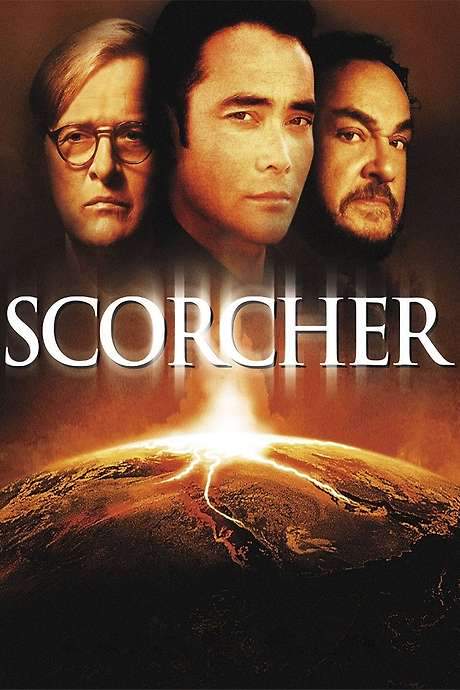
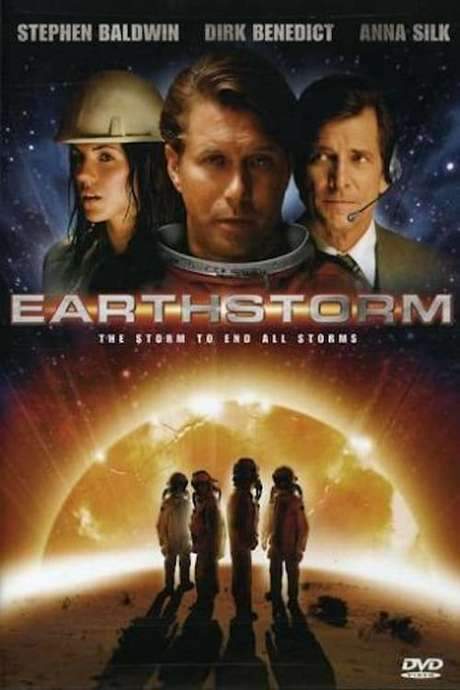
Similar Movies To The Day the Earth Caught Fire You Should Know About
Browse a curated list of movies similar in genre, tone, characters, or story structure. Discover new titles like the one you're watching, perfect for fans of related plots, vibes, or cinematic styles.




Quick Links: Summary, Cast, Ratings, More

What's After the Movie?
Not sure whether to stay after the credits? Find out!
Check out our other apps:

SAT Sphere
Build confidence for the Digital SAT.

Mori Atlas
Discover wild places worth protecting.

Luntero
Search smarter for a home in Amsterdam.

Plot Explained
Unravel movie endings and hidden clues.

Pokechamp
Dive into Pokémon data and battle logic.

Driving Theory
Get ready for your European theory test.

Movie Dust
Plan your next cinema trip with ease.

Musemap
Find art and culture as you travel.

Selkobase
Compare credentials before committing.

Local Manual
Turn an unfamiliar country into practical next steps.

Lernavi
Compare school systems before your next move.

GymRoam
Find a workout stop wherever your plans take you.
Explore Our Movie Platform
New Movie Releases (2026)
Famous Movie Actors
Top Film Production Studios
Movie Plot Summaries & Endings
Major Movie Awards & Winners
Best Concert Films & Music Documentaries
Movie Collections and Curated Lists
© 2026 What's After the Movie. All rights reserved.
Privacy Policy