The Crossing II 2015

A story of three couples and their intertwining love stories set in 1940s Taiwan and Shanghai, centered around the 1949 sinking of Taiping.

Does The Crossing II have end credit scenes?
No!
The Crossing II does not have end credit scenes. You can leave when the credits roll.
Meet the Full Cast and Actors of The Crossing II
Explore the complete cast of The Crossing II, including both lead and supporting actors. Learn who plays each character, discover their past roles and achievements, and find out what makes this ensemble cast stand out in the world of film and television.

Masami Nagasawa
Masako Shimura
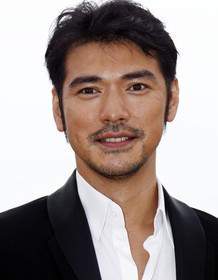
Takeshi Kaneshiro
Yan Zenkun
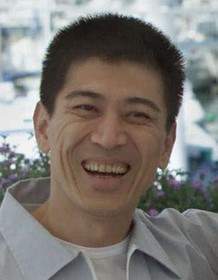
Jack Kao
Yan Cangmeng

Angeles Woo
Mei Fang

Tony Yang
Song Hye-kyo
Zhou Yunfen
Zhang Jiayi
Zhang Ziyi
Yu Zhen
Lin Mei-Shiu
Bowie Lam Bo-Yee
Peter Yuan
Qin Hailu
Tong Dawei
Tong Daqing
Hitomi Kuroki
Huang Xiaoming
Lei Yifang
Wang Zhifei
Captain Chen
Wang Qianyuan
Cong Shan
Yang Kuei-mei
Zhang Guoqing
Old Guo
Yu Feihong
Guan Zeqiang
Classmate
External Links and Streaming Options
Discover where to watch The Crossing II online, including streaming platforms, rental options, and official sources. Compare reviews, ratings, and in-depth movie information across sites like IMDb, TMDb, Wikipedia or Rotten Tomatoes.





Take the Ultimate The Crossing II Movie Quiz
Challenge your knowledge of The Crossing II with this fun and interactive movie quiz. Test yourself on key plot points, iconic characters, hidden details, and memorable moments to see how well you really know the film.
The Crossing II Quiz: Test your knowledge of the 2015 film The Crossing II.
Which officer is promoted to lieutenant general after the battle in Manchuria?
Full Plot Summary and Ending Explained for The Crossing II
Read the complete plot summary of The Crossing II, including all major events, twists, and the full ending explained in detail. Explore key characters, themes, hidden meanings, and everything you need to understand the story from beginning to end.
During a brutal battle in Manchuria in World War II, Major general Lei Yifang, Huang Xiaoming, personally leads a high-stakes assault that overpowers Japanese lines despite stern pushback from his own officers. The victory earns Lei a promotion to lieutenant general, while Dr. Yan Zenkun, Takeshi Kaneshiro), a Chinese field medic conscripted into the Japanese army from Taiwan, is captured and shipped to a prison camp in Fengtian. On the POW train, Yan reads a letter from his Japanese lover Masako Shimura, Masami Nagasawa, a moment that underscores the human toll of a conflict tearing people apart across national lines.
A few years later, as the Chinese Civil War resumes, Yu Zhen, Zhang Ziyi, a poor, illiterate young woman, volunteers as an orderly at a Nationalist hospital in Shanghai and clings to the hope of reuniting with her boyfriend Yang Tianhu, who fights the Communists. At the same time, Lei draws the gaze of Zhou Yunfen, Song Hye-kyo, a wealthy debutante, at a charity event hosted by her affluent family. Their undeniable chemistry leads to a marriage that signals a union between two very different worlds, even as war and social pressure threaten their bond.
The following year, Yu Zhen encounters signal corps sergeant Tong Daqing, Tong Dawei, outside the wedding-studio orbit that linked Lei and Zhou. Tong has brought Yu and a borrowed baby to pose for a “family portrait” intended to secure extra food rations. After the photos are taken, the studio’s owner is approached with an even more delicate request: to craft an altered image that depicts Dr. Yen and Masako together, a fragile fabrication born of wartime desperation. Tong and Yu retreat to a noodle shop, where Tong explains the strange logic of soldier identification numbers and the ways people can be counted as “dead or alive.” Yu’s smile hints at the memory of her lover, but Tong misreads it as something closer to affection.
Zhou, now pregnant, confides in Lei about fears surrounding his plan to send her away to Taiwan. He reassures her, though the prophecy of separation lingers. The Zhou family sees her off on the Taiping, and a photograph captures Lei watching from the shadows, a silent witness to her departure. Tong clutches the idea of a “family portrait” as his comrades pass the image among themselves, while Yu’s own life in Shanghai grows more precarious: she struggles to find work, scavenges discarded fruit, and sleeps under a bridge as the city wades through blackout drills and food shortages.
Meanwhile, Dr. Yan Zenkun reappears in Taiwan, where he and Zhou’s sisters disembark to military bands and nationalist flags. He explains to an official that he was in Shanghai procuring medical supplies, and the official probes his background, recognizing the twist of fate that has brought him home. Yen’s mother burns letters from Masako, a reminder of the painful distances carved by empire and occupation, while Zhou settles into a new house, a space where Masako’s legacy and Yen’s own history intersect through art and memory.
In Shanghai, Yu finds lodgings by passing herself off as married, using the studio photo as proof. She moves into a boardinghouse and then into a club where dancing offers a means to feed herself and, perhaps, to locate her missing lover. The city’s war-drawn energy pulses through the streets as baton-wielding police suppress protests and the club itself is shut down to conserve energy for the war effort. The next step for Yu is a life of prostitution, a harsh route taken to ensure survival while she clings to hope of reunion with Yang.
On the front, Lei’s 12th Army nears encirclement during the Huaihai Campaign; supply lines are severed, and orders to breakout are issued and then countermanded as reports arrive of breakthroughs stifled by the enemy. Lei’s heart aches as he realizes he has wandered back into the same battles where he once fought Japanese troops, this time facing his own countrymen. Up in Taiwan, Zhou confronts a quiet danger of a different kind: a snakebite that lands her in a hospital where Yen, now present as a physician, tends to her. Zhou’s recognition of Yen’s name—reflected back in a painting Masako left behind—sparks a tentative conversation that deepens into a wary friendship between two people bound by a shared longing for loves past and present.
Tong’s care for Lei grows when Lei asks him to help repair a radio, and the two men bond over fragile family portraits that tether their identities to what they have left behind. In the Communist trenches, morale rises as civilians bring food, while in the nationalist lines soldiers grow hungry. Lei, unable to bear witness to more suffering, shoots his warhorse for meat; Tong, on patrol with a fellow enlisted man and a local, shoots a rabbit only to be held at gunpoint by a Communist soldier. The trio negotiates a fragile truce and shares the meal before the fighting resumes.
The Nationalists suffer a brutal blow when the 108th Division defects, and Tong must confront the revelation that a trusted unit has deserted. Lei’s willingness to stand with his men is tested as he learns of the desertion; Tong’s loyalty is put to the test when he ultimately returns to his commander and, in a moment of truth, pleads for the chance to fight on. Lei’s diary—written to his wife Zhou—becomes a symbol of a life he cannot fully live and a memory he cannot abandon. In the chaos, Tong saves Lei’s life, bearing the worst injuries as a tank shell strikes the command post. Lei dies with a memory of his wedding photo in his heart, and Tong is entrusted with ensuring Zhou receives the diary.
Part II
The 1949 Communist Revolution propels three couples from China toward Taiwan, a perilous voyage that ends in disaster when their ship collides with another. Yan Zenkun, surviving the wreck, uses his medical skills to aid the wounded and keep others afloat amid splintered debris. Yu Zhen, who once worked as a nurse, lends her strength to the injured and watches as some passengers are turned against by panic and greed. A small group fights to stay alive on floating debris, while an Australian warship, HMAS, arrives to rescue survivors. Among the rescued, Yu Zhen reclaims a sense of purpose as she helps others and seeks closure with the man she loves, while the notebook Lei Yifang entrusted to Tong Daqing finds its way back to Zhou Yunfen through Yu Zhen’s perseverance.
Four months later, Zhou Yunfen gives birth to Lei Yifang’s son, a quiet marker of life continuing beyond war. Tong Daqing arrives at Zhou’s home with the news of Lei’s fate and with Lei’s diary, a final testament to a life cut short but not forgotten. He offers the diary as a bridge between a mother who has endured loss and a husband who, in another life, might have stood by her side. In the end, the threads of memory, love, and duty intertwine across generations, leaving a testament to the resilience of those who endured the war and its aftermath.

Coming soon on iOS and Android
The Plot Explained Mobile App
From blockbusters to hidden gems — dive into movie stories anytime, anywhere. Save your favorites, discover plots faster, and never miss a twist again.
Sign up to be the first to know when we launch. Your email stays private — always.
Explore the mobile appDiscover Film Music Concerts Near You – Live Orchestras Performing Iconic Movie Soundtracks
Immerse yourself in the magic of cinema with live orchestral performances of your favorite film scores. From sweeping Hollywood blockbusters and animated classics to epic fantasy soundtracks, our curated listings connect you to upcoming film music events worldwide.
Explore concert film screenings paired with full orchestra concerts, read detailed event information, and secure your tickets for unforgettable evenings celebrating legendary composers like John Williams, Hans Zimmer, and more.


The Crossing II Other Names and Titles
Explore the various alternative titles, translations, and other names used for The Crossing II across different regions and languages. Understand how the film is marketed and recognized worldwide.
Quick Links: Summary, Cast, Ratings, More

What's After the Movie?
Not sure whether to stay after the credits? Find out!
Check out our other apps:

SAT Sphere
Build confidence for the Digital SAT.

Mori Atlas
Discover wild places worth protecting.

Luntero
Search smarter for a home in Amsterdam.

Plot Explained
Unravel movie endings and hidden clues.

Pokechamp
Dive into Pokémon data and battle logic.

Driving Theory
Get ready for your European theory test.

Movie Dust
Plan your next cinema trip with ease.

Musemap
Find art and culture as you travel.

Selkobase
Compare credentials before committing.

Local Manual
Turn an unfamiliar country into practical next steps.

Lernavi
Compare school systems before your next move.

GymRoam
Find a workout stop wherever your plans take you.
Explore Our Movie Platform
New Movie Releases (2026)
Famous Movie Actors
Top Film Production Studios
Movie Plot Summaries & Endings
Major Movie Awards & Winners
Best Concert Films & Music Documentaries
Movie Collections and Curated Lists
© 2026 What's After the Movie. All rights reserved.
Privacy Policy