
The Crossing II 2015

Directed by
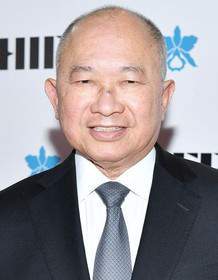
John Woo

The Crossing II Plot Summary
Read the complete plot summary and ending explained for The Crossing II (2015). From turning points to emotional moments, uncover what really happened and why it matters.
During a brutal battle in Manchuria in World War II, Major general Lei Yifang, Huang Xiaoming, personally leads a high-stakes assault that overpowers Japanese lines despite stern pushback from his own officers. The victory earns Lei a promotion to lieutenant general, while Dr. Yan Zenkun, Takeshi Kaneshiro), a Chinese field medic conscripted into the Japanese army from Taiwan, is captured and shipped to a prison camp in Fengtian. On the POW train, Yan reads a letter from his Japanese lover Masako Shimura, Masami Nagasawa, a moment that underscores the human toll of a conflict tearing people apart across national lines.
A few years later, as the Chinese Civil War resumes, Yu Zhen, Zhang Ziyi, a poor, illiterate young woman, volunteers as an orderly at a Nationalist hospital in Shanghai and clings to the hope of reuniting with her boyfriend Yang Tianhu, who fights the Communists. At the same time, Lei draws the gaze of Zhou Yunfen, Song Hye-kyo, a wealthy debutante, at a charity event hosted by her affluent family. Their undeniable chemistry leads to a marriage that signals a union between two very different worlds, even as war and social pressure threaten their bond.
The following year, Yu Zhen encounters signal corps sergeant Tong Daqing, Tong Dawei, outside the wedding-studio orbit that linked Lei and Zhou. Tong has brought Yu and a borrowed baby to pose for a “family portrait” intended to secure extra food rations. After the photos are taken, the studio’s owner is approached with an even more delicate request: to craft an altered image that depicts Dr. Yen and Masako together, a fragile fabrication born of wartime desperation. Tong and Yu retreat to a noodle shop, where Tong explains the strange logic of soldier identification numbers and the ways people can be counted as “dead or alive.” Yu’s smile hints at the memory of her lover, but Tong misreads it as something closer to affection.
Zhou, now pregnant, confides in Lei about fears surrounding his plan to send her away to Taiwan. He reassures her, though the prophecy of separation lingers. The Zhou family sees her off on the Taiping, and a photograph captures Lei watching from the shadows, a silent witness to her departure. Tong clutches the idea of a “family portrait” as his comrades pass the image among themselves, while Yu’s own life in Shanghai grows more precarious: she struggles to find work, scavenges discarded fruit, and sleeps under a bridge as the city wades through blackout drills and food shortages.
Meanwhile, Dr. Yan Zenkun reappears in Taiwan, where he and Zhou’s sisters disembark to military bands and nationalist flags. He explains to an official that he was in Shanghai procuring medical supplies, and the official probes his background, recognizing the twist of fate that has brought him home. Yen’s mother burns letters from Masako, a reminder of the painful distances carved by empire and occupation, while Zhou settles into a new house, a space where Masako’s legacy and Yen’s own history intersect through art and memory.
In Shanghai, Yu finds lodgings by passing herself off as married, using the studio photo as proof. She moves into a boardinghouse and then into a club where dancing offers a means to feed herself and, perhaps, to locate her missing lover. The city’s war-drawn energy pulses through the streets as baton-wielding police suppress protests and the club itself is shut down to conserve energy for the war effort. The next step for Yu is a life of prostitution, a harsh route taken to ensure survival while she clings to hope of reunion with Yang.
On the front, Lei’s 12th Army nears encirclement during the Huaihai Campaign; supply lines are severed, and orders to breakout are issued and then countermanded as reports arrive of breakthroughs stifled by the enemy. Lei’s heart aches as he realizes he has wandered back into the same battles where he once fought Japanese troops, this time facing his own countrymen. Up in Taiwan, Zhou confronts a quiet danger of a different kind: a snakebite that lands her in a hospital where Yen, now present as a physician, tends to her. Zhou’s recognition of Yen’s name—reflected back in a painting Masako left behind—sparks a tentative conversation that deepens into a wary friendship between two people bound by a shared longing for loves past and present.
Tong’s care for Lei grows when Lei asks him to help repair a radio, and the two men bond over fragile family portraits that tether their identities to what they have left behind. In the Communist trenches, morale rises as civilians bring food, while in the nationalist lines soldiers grow hungry. Lei, unable to bear witness to more suffering, shoots his warhorse for meat; Tong, on patrol with a fellow enlisted man and a local, shoots a rabbit only to be held at gunpoint by a Communist soldier. The trio negotiates a fragile truce and shares the meal before the fighting resumes.
The Nationalists suffer a brutal blow when the 108th Division defects, and Tong must confront the revelation that a trusted unit has deserted. Lei’s willingness to stand with his men is tested as he learns of the desertion; Tong’s loyalty is put to the test when he ultimately returns to his commander and, in a moment of truth, pleads for the chance to fight on. Lei’s diary—written to his wife Zhou—becomes a symbol of a life he cannot fully live and a memory he cannot abandon. In the chaos, Tong saves Lei’s life, bearing the worst injuries as a tank shell strikes the command post. Lei dies with a memory of his wedding photo in his heart, and Tong is entrusted with ensuring Zhou receives the diary.
Part II
The 1949 Communist Revolution propels three couples from China toward Taiwan, a perilous voyage that ends in disaster when their ship collides with another. Yan Zenkun, surviving the wreck, uses his medical skills to aid the wounded and keep others afloat amid splintered debris. Yu Zhen, who once worked as a nurse, lends her strength to the injured and watches as some passengers are turned against by panic and greed. A small group fights to stay alive on floating debris, while an Australian warship, HMAS, arrives to rescue survivors. Among the rescued, Yu Zhen reclaims a sense of purpose as she helps others and seeks closure with the man she loves, while the notebook Lei Yifang entrusted to Tong Daqing finds its way back to Zhou Yunfen through Yu Zhen’s perseverance.
Four months later, Zhou Yunfen gives birth to Lei Yifang’s son, a quiet marker of life continuing beyond war. Tong Daqing arrives at Zhou’s home with the news of Lei’s fate and with Lei’s diary, a final testament to a life cut short but not forgotten. He offers the diary as a bridge between a mother who has endured loss and a husband who, in another life, might have stood by her side. In the end, the threads of memory, love, and duty intertwine across generations, leaving a testament to the resilience of those who endured the war and its aftermath.
The Crossing II Timeline
Follow the complete movie timeline of The Crossing II (2015) with every major event in chronological order. Great for understanding complex plots and story progression.
Lei Yifang leads the Manchuria battle
In a brutal World War II engagement in Manchuria, Major General Lei Yifang personally commands a high-stakes assault that overpowers entrenched Japanese lines. The victory demonstrates his resolve and tactical prowess, and it earns Lei a promotion to lieutenant general, marking a turning point in his career.
Yan Zenkun captured and sent to a POW camp
Dr. Yan Zenkun, a Chinese field medic conscripted into the Japanese army from Taiwan, is captured during the fighting and shipped to a prison camp in Fengtian. His capture highlights the personal costs of occupation and the fragility of loyalties in wartime.
Yan reads Masako's letter on the POW train
On the train to the POW camp, Yan reads a letter from his Japanese lover Masako Shimura, a moment that underscores the human toll of a conflict tearing people apart. The intimate note lingers as he endures captivity and separation from loved ones.
Yu Zhen volunteers as an orderly in Shanghai
A few years later, Yu Zhen volunteers as an orderly at a Nationalist hospital in Shanghai, clinging to the hope of reuniting with her boyfriend Yang Tianhu. She faces scarcity, blackout drills, and the city's fragility as war's reach extends into daily life.
Lei and Zhou Yunfen marry amid shifting worlds
Lei meets Zhou Yunfen at a charity event, and their undeniable chemistry leads to a marriage that symbolically unites two very different worlds. The union is tested by war, social expectations, and the pressure of diverging paths.
Tong Daqing arranges a family portrait for rations
The following year, Tong Daqing arranges Yu and a borrowed baby to pose for a 'family portrait' to secure extra food rations. The act showcases wartime improvisation and the ways people stretch resources to survive.
Tong and Yu discuss the soldier ID riddle in a noodle shop
In a noodle shop, Tong explains the odd logic of soldier identification numbers and how people can be counted as 'dead or alive.' Yu's smile hints at a memory of her lost lover, a small beacon amid the war's brutality.
Zhou becomes pregnant; fears of separation
Zhou, now pregnant, confides fears about being sent away to Taiwan as war forces families apart. Lei reassures her, but the prophecy of separation lingers as plans for departure begin to take shape.
The Taiping departure and a remembered wedding portrait
The Zhou family sees Zhou off on the Taiping, while Lei watches from the shadows. A photograph of the moment circulates among Tong and others, anchoring memories of a life that may be left behind.
Yu's life in Shanghai grows precarious
Yu's situation worsens as she scrambles for food, sleeps under a bridge, and eventually enters prostitution to survive. She clings to the hope of reuniting with Yang while the city labors under blackout drills and scarcity.
Huaihai Campaign tests Lei's army and loyalties
On the front, Lei's 12th Army nears encirclement during the Huaihai Campaign; supply lines are severed, and orders to breakout flicker and fail. Lei faces the grim reality of fighting compatriots and the moral weight of decisions made under pressure.
Tong saves Lei's life and Lei dies with a wedding portrait
During a tank strike, Tong saves Lei Yifang's life, taking grave injuries in the process. Lei dies clutching his wedding photo, and Tong is entrusted with delivering Lei's diary to Zhou, preserving a memory that binds two families.
1949 revolution pushes couples toward Taiwan; ship collision
The 1949 Communist Revolution pushes three couples toward Taiwan, but their voyage ends in disaster when their ships collide with another. The disaster tests their resolve and reshapes the futures they had imagined.
Yan Zenkun survives the wreck; HMAS rescues survivors
Yan Zenkun survives the wreck and uses his medical skills to aid the wounded amid debris and panic. An Australian rescue vessel, HMAS, arrives to pull survivors from the wreckage, offering a glimmer of hope amid catastrophe.
Four months later: Zhou gives birth and the diary returns
Four months later, Zhou Yunfen gives birth to Lei Yifang's son, a quiet marker of life continuing beyond war. Tong arrives with Lei's diary, delivering a final testament that links a mother, a child, and a fallen husband across generations.
The Crossing II Characters
Explore all characters from The Crossing II (2015). Get detailed profiles with their roles, arcs, and key relationships explained.
Lei Yifang (Huang Xiaoming)
A high-ranking Nationalist general whose bold tactics and stubborn resolve propel him through the Manchurian campaigns. He commands with authority but is tempered by a genuine concern for his soldiers, even as war demands brutal decisions. His ambition is matched by a personal longing for Zhou Yunfen, and his arc culminates in a fatal moment on the battlefield as the war closes in. His loyalty to his troops remains a defining trait.
Yen Zekun (Takeshi Kaneshiro)
A field medic conscripted into the Japanese army who survives captivity. He maintains a complex, long-distance connection with Masako, his Japanese lover, and carries memories of her with him through Shanghai and Taiwan. His medical skill and empathy stand out in the chaos of war, and his fate becomes intertwined with the lives of those he treats. He dies after a shipwreck, clinging to hope until the end.
Masako Shimura (Masami Nagasawa)
A Japanese partner whose presence anchors Yen Zekun during the wartime years. Her role is linked to Masako's diary and the music behind Zhou's decisions, connecting across borders and generations. Her memory lingers through Zhou’s music and the diaries that survive beyond her era.
Zhou Yunfen (Song Hye-kyo)
A wealthy Shanghai debutante who marries Lei Yifang, projecting grace and influence into the power circle of wartime Shanghai. She becomes a pivotal conduit in the story, discovering Masako’s diary and Masako’s music, and she longs to shape a future with her husband despite the upheavals around them.
Yu Zhen (Zhang Ziyi)
A poor, illiterate woman who becomes an orderly, then a dancer and prostitute, determined to survive and find her missing lover. Her resilience and grit drive her to navigate a dangerous urban landscape, eventually reuniting with Tong and holding onto news of Lei Yifang. Her journey highlights civilian hardship amid war.
Tong Daqing (Tong Dawei)
A signal corps sergeant who forms a bond with Lei Yifang's circle and becomes a key link between front and home. He wrestles with loyalty and honesty, delivering important messages and bearing the diary that ties the narrative together. Wounded and loyal, he fights to protect his commanding officer’s legacy.
The Crossing II Settings
Learn where and when The Crossing II (2015) takes place. Explore the film’s settings, era, and how they shape the narrative.
Time period
1930s–1949
The story unfolds from the late 1930s through to 1949, spanning World War II campaigns in Manchuria, the Chinese Civil War, and the mass migrations that followed. It traces shifting loyalties as Nationalists and Communists fight for control, while civilians grapple with scarcity, propaganda, and displacement. The timeline culminates in the 1949 flight to Taiwan and the lingering questions of those left behind.
Location
Manchuria, Shanghai, Keelung, Taiwan, Taiping (ship)
Set across the Chinese frontlines in Manchuria during World War II, the narrative shifts to the wartime metropolis of Shanghai and then to Taiwan's ports and homes. The journey passes through battlefronts, refugee routes, and the sea lanes that connect mainland China with Taiwan. The Taiping voyage marks a crucial transition from mainland battles to island exile.
The Crossing II Themes
Discover the main themes in The Crossing II (2015). Analyze the deeper meanings, emotional layers, and social commentary behind the film.
🛡️
Loyalty
Loyalty under fire drives the key choices of commanders and ordinary soldiers alike. Lei Yifang remains committed to his troops even when orders fray and morale sags, while Tong Daqing proves fiercely loyal by risking his own safety for comrades. The film shows loyalty tested by betrayal, memory, and the fragility of wartime alliances. This theme threads through battles, personal bonds, and the weight of duty.
📜
Memory
Memory acts as the emotional bridge between lovers separated by nations and wars. Masako’s diary and the sheet music behind Zhou’s momentous decisions heighten the sense that personal histories outlive empires. Yen Zekun’s recollections of Masako shape his present and color his choices in Taiwan. The diary entrusted to Tong becomes a tangible vessel for keeping memory alive.
🌍
Displacement
The characters are uprooted by the tides of war, moving from crowded cities to war-torn villages, and eventually toward Taiwan's shores. Civilians endure rationing, forced labor, and the commodification of relationships as a means to survive. The sinking of ships and the perilous crossing of borders underline the human cost of upheaval. Displacement reshapes identities and future hopes.
🎼
Music
Music and piano tunes become a shared language across borders and generations. Masako’s legacy, the piano passed through families, and Zhou’s plan to craft a song for her husband tie together the personal with the historical. The music acts as a reminder of love, loss, and resilience amid chaos. It serves as a vehicle for connection when words fail.

Coming soon on iOS and Android
The Plot Explained Mobile App
From blockbusters to hidden gems — dive into movie stories anytime, anywhere. Save your favorites, discover plots faster, and never miss a twist again.
Sign up to be the first to know when we launch. Your email stays private — always.
Explore the mobile appThe Crossing II Spoiler-Free Summary
Discover the spoiler-free summary of The Crossing II (2015). Get a concise overview without any spoilers.
In the twilight of the 1940s, a fraught landscape stretches from bustling Shanghai to the turbulent shorelines of Taiwan, where the echo of war still reverberates through crowded streets and dimly lit boarding houses. Against this backdrop, three couples find their lives tangled by circumstance, hope, and the silent pull of a world trying to rebuild itself. The film opens with Lei Yifang, a decorated officer whose reputation carries both admiration and the weight of expectations, and Zhou Yunfen, a privileged debutante whose world of elegance clashes with the harsh realities surrounding them. Their union hints at the fragile bridges forming between contrasting lives during an era of upheaval.
Meanwhile, Yan Zenkun returns to his native island after years of forced service, haunted by a love that transcended borders and a lingering sense of displacement. His quiet determination to reconnect with those he left behind adds another layer to the tapestry of longing. In the bustling heart of Shanghai, Yu Zhen navigates a city scarred by shortages and blackouts, her fierce resolve shaped by a deep‑seated promise to a lover lost to the conflict. Her resourcefulness and quiet courage paint a portrait of survival amid uncertainty.
The story’s tone balances melancholy with glimpses of resilience, weaving personal intimacy into the broader currents of post‑war change. While romance and duty entwine, the characters are drawn toward a pivotal voyage that promises both hope and danger, echoing the historical tragedy of the 1949 sinking of the Taiping. The film captures the delicate dance of memory, longing, and the quiet strength that sustains people as they step forward into an uncertain future, leaving audiences yearning to discover how these intertwined lives will navigate the tides of destiny.
Featured on this page

What's After the Movie?
Not sure whether to stay after the credits? Find out!
Check out our other apps:

SAT Sphere
Build confidence for the Digital SAT.

Mori Atlas
Discover wild places worth protecting.

Luntero
Search smarter for a home in Amsterdam.

Plot Explained
Unravel movie endings and hidden clues.

Pokechamp
Dive into Pokémon data and battle logic.

Driving Theory
Get ready for your European theory test.

Movie Dust
Plan your next cinema trip with ease.

Musemap
Find art and culture as you travel.

Selkobase
Compare credentials before committing.

Local Manual
Turn an unfamiliar country into practical next steps.

Lernavi
Compare school systems before your next move.

GymRoam
Find a workout stop wherever your plans take you.
Explore Our Movie Platform
New Movie Releases (2026)
Famous Movie Actors
Top Film Production Studios
Movie Plot Summaries & Endings
Major Movie Awards & Winners
Best Concert Films & Music Documentaries
Movie Collections and Curated Lists
© 2026 What's After the Movie. All rights reserved.
Privacy Policy