Teiichi: Battle of Supreme High 2017


Teiichi Akaba attends a highly regarded private high school renowned for cultivating future politicians and bureaucrats. Driven by a dream to become prime minister, he sets his sights on the school’s student council presidency. Winning the election offers significant advantages and increased opportunities for advancement in the political sphere, leading to a fierce power struggle amongst the student body as candidates vie for the coveted position.


Does Teiichi: Battle of Supreme High have end credit scenes?
No!
Teiichi: Battle of Supreme High does not have end credit scenes. You can leave when the credits roll.
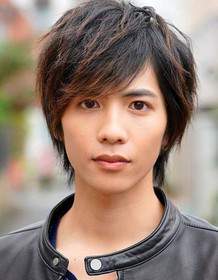
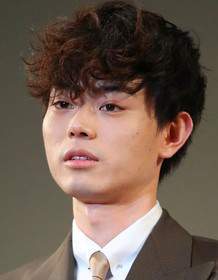
Meet the Full Cast and Actors of Teiichi: Battle of Supreme High
Explore the complete cast of Teiichi: Battle of Supreme High, including both lead and supporting actors. Learn who plays each character, discover their past roles and achievements, and find out what makes this ensemble cast stand out in the world of film and television.

External Links and Streaming Options
Discover where to watch Teiichi: Battle of Supreme High online, including streaming platforms, rental options, and official sources. Compare reviews, ratings, and in-depth movie information across sites like IMDb, TMDb, Wikipedia or Rotten Tomatoes.






Take the Ultimate Teiichi: Battle of Supreme High Movie Quiz
Challenge your knowledge of Teiichi: Battle of Supreme High with this fun and interactive movie quiz. Test yourself on key plot points, iconic characters, hidden details, and memorable moments to see how well you really know the film.
Teiichi: Battle of Supreme High Quiz: Test your knowledge of the 2017 film "Teiichi: Battle of Supreme High" with these ten mixed‑difficulty questions.
Who is the main protagonist who dreams of becoming Japan's prime minister?
Full Plot Summary and Ending Explained for Teiichi: Battle of Supreme High
Read the complete plot summary of Teiichi: Battle of Supreme High, including all major events, twists, and the full ending explained in detail. Explore key characters, themes, hidden meanings, and everything you need to understand the story from beginning to end.
The Kaitei Supreme High School stands as Japan’s most famous aristocratic academy, a place where only about 800 students across the nation have the chance to study. Its powerful ties to major business circles and political figures mean that the person who leads the student union sits close to real influence, potentially stepping into a cabinet-like role. Yet reaching that coveted presidency isn’t easy—the unwritten rule is that you must first be the class monitor of your year, a gatekeeping role that tests leadership, popularity, and cunning.
In April, with the new term underway, Teiichi Akaba—a first-year student dreaming since childhood of becoming Prime Minister—is chosen as the monitor of Class 1. Teiichi’s ascent is helped by more than just his resolve; his father is a dignitary within the political world, which only heightens the stakes and the scrutiny surrounding his every move. Motivated by a mix of ambition and a sense of duty, Teiichi elects to throw his hat into the race for the student union presidency, aiming to mold the future of the school and, by extension, the country.
But Teiichi’s path is blocked by formidable rivals. One is Kikuma Tōgō, the shrewd monitor of Class 2 who carries the burden of being the son of Teiichi’s father’s political rival. Another is Dan Ōtaka, the Class 3 monitor who embodies exceptional academic talent and comes from a lower-middle-class background, a background that contrasts sharply with the school’s gilded milieu. The competition is not merely about grades or eloquence; it’s about alliances, media optics, and the ability to navigate a network where every move could become national news.
To mount an effective challenge, Teiichi chooses a strategic alliance with a rising star from the upper classes: the Class 6 monitor of the second year, Roland Himuro. Roland’s leadership and clout make him a prime ally in the bid to win the presidency, especially as Teiichi’s dream requires not just votes but a broad coalition. Roland faces a real obstacle in the form of Okuto Morizono, the formidable Class 5 monitor who stands as Roland’s main rival within the student hierarchy. The contest is thus framed as a contest of influence among peers who represent different social strata, each with their own agendas, loyalties, and long-term ambitions.
The campaign unfolds in the hallways of power within the school as Teiichi formally offers to be the flag raiser for Roland Himuro, a symbolic gesture meant to rally support and present a unified front. This moment, though, becomes a crucible. During the student convention, Kikuma Tōgō attempts to undermine Teiichi by maneuvering to cut in on the flag line, trying to cast blame on Teiichi for missteps or misdeeds. The maneuver is a test of Teiichi’s resolve and his ability to manage controversy in real time. Yet the plan backfires on the schemer; Kikuma’s trickery fails to dominate the proceedings, and the course of events ends up strengthening Teiichi’s standing, earning him the trust of Roland Himuro and, by extension, a broader base of support within the school.
From that turning point, the campaign evolves beyond mere face-to-face campaigning. Teiichi must grapple with the complexities of strategy, the growing importance of social networks, and the relentless demands of maintaining high academic performance. The narrative makes clear that the road to leadership at The Kaitei Supreme High School is as much about wits and relationships as it is about votes. The pressure to outmaneuver entrenched rivals who are both politically and socially formidable intensifies, and Teiichi flirts with the thought of sacrificing everything—perhaps even his life—to stand against those who oppose him and threaten his path to power.
As the story progresses, the “battle” within The Kaitei Supreme High School becomes a tapestry of shifting loyalties, subtle betrayals, and calculated traps. Each move by Teiichi, each counter-move by Kikuma, Dan, Roland, and Okuto, contributes to a larger drama about ambition, responsibility, and the cost of leadership in a world where the line between student politics and national politics blurs. The stakes are elevated not only by the prestige attached to the presidency but also by the palpable possibility that the game will demand personal sacrifice.
Throughout this high-stakes journey, Teiichi’s character is tested on multiple fronts: his strategic planning, his ability to cultivate allies, his performance in academics to maintain credibility, and his willingness to confront adversaries who see him as a stepping stone or a threat to their own agendas. The environment of The Kaitei Supreme High School—a microcosm of Japan’s political arena—serves as a rigorous proving ground where intellect, loyalty, and nerve are deployed in equal measure. The story weaves together the charm and danger of elite circles, showing how a single class monitor can ignite a multi-year, multi-layered campaign that may redefine who leads the school and, ultimately, what leadership means within this exclusive world.
In the end, Teiichi’s pursuit is as much about shaping the school’s culture as it is about winning the presidency. The path is fraught with alliances, rivalries, and the constant pressure to outthink, outtalk, and outlast the competition. The Kaitei Supreme High School becomes a battleground where strategy, social dynamics, and academic excellence converge, and where the line between triumph and tragedy can be razor-thin. The stage is set for an ongoing struggle, with betrayals and traps awaiting at every turn, as Teiichi and his allies navigate the intricate politics of a school that mirrors a much larger political world. The campaign has begun, and the outcome remains a test of endurance, intellect, and courage.

Coming soon on iOS and Android
The Plot Explained Mobile App
From blockbusters to hidden gems — dive into movie stories anytime, anywhere. Save your favorites, discover plots faster, and never miss a twist again.
Sign up to be the first to know when we launch. Your email stays private — always.
Explore the mobile appWatch Trailers, Clips & Behind-the-Scenes for Teiichi: Battle of Supreme High
Watch official trailers, exclusive clips, cast interviews, and behind-the-scenes footage from Teiichi: Battle of Supreme High. Dive deeper into the making of the film, its standout moments, and key production insights.
Teiichi: Battle of Supreme High Themes and Keywords
Discover the central themes, ideas, and keywords that define the movie’s story, tone, and message. Analyze the film’s deeper meanings, genre influences, and recurring concepts.
Teiichi: Battle of Supreme High Other Names and Titles
Explore the various alternative titles, translations, and other names used for Teiichi: Battle of Supreme High across different regions and languages. Understand how the film is marketed and recognized worldwide.
Similar Movies To Teiichi: Battle of Supreme High You Should Know About
Browse a curated list of movies similar in genre, tone, characters, or story structure. Discover new titles like the one you're watching, perfect for fans of related plots, vibes, or cinematic styles.


Quick Links: Summary, Cast, Ratings, More

What's After the Movie?
Not sure whether to stay after the credits? Find out!
Check out our other apps:

SAT Sphere
Build confidence for the Digital SAT.

Mori Atlas
Discover wild places worth protecting.

Luntero
Search smarter for a home in Amsterdam.

Plot Explained
Unravel movie endings and hidden clues.

Pokechamp
Dive into Pokémon data and battle logic.

Driving Theory
Get ready for your European theory test.

Movie Dust
Plan your next cinema trip with ease.

Musemap
Find art and culture as you travel.

Selkobase
Compare credentials before committing.

Local Manual
Turn an unfamiliar country into practical next steps.

Lernavi
Compare school systems before your next move.

GymRoam
Find a workout stop wherever your plans take you.
Explore Our Movie Platform
New Movie Releases (2026)
Famous Movie Actors
Top Film Production Studios
Movie Plot Summaries & Endings
Major Movie Awards & Winners
Best Concert Films & Music Documentaries
Movie Collections and Curated Lists
© 2026 What's After the Movie. All rights reserved.
Privacy Policy