Tamas 1988

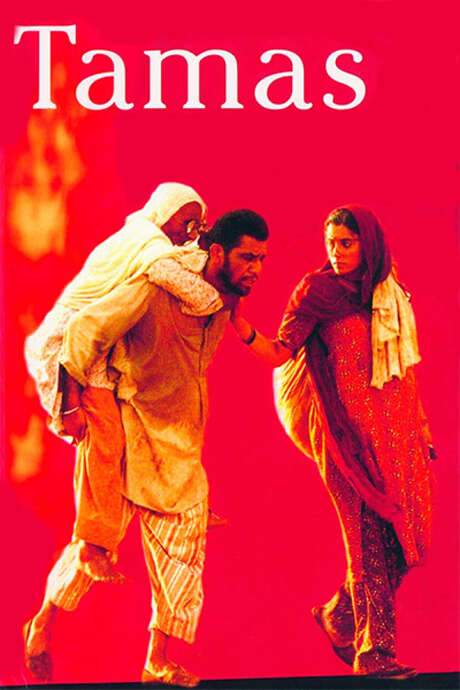
Based on Bhisham Sahni’s novel, this epic drama unfolds in riot‑stricken North India on the eve of the 1947 Partition. Outcast Nathu is hired to kill a pig, only to discover its carcass placed before a mosque, sparking a violent mob. Overcome by guilt, he flees with his ailing mother and pregnant wife, abandoning the town.


Does Tamas have end credit scenes?
No!
Tamas does not have end credit scenes. You can leave when the credits roll.
Meet the Full Cast and Actors of Tamas
Explore the complete cast of Tamas, including both lead and supporting actors. Learn who plays each character, discover their past roles and achievements, and find out what makes this ensemble cast stand out in the world of film and television.

Surekha Sikri
Rajo

Saeed Jaffrey
Karim Khan

Om Puri
Nathu

Veerendra Saxena
Jamail
Dina Pathak
Banto
Pankaj Kapur
Thekedar
Pinchoo Kapoor
Dilawar
Harish Patel
Karada
K.K. Raina
Mirdad
Surendra Pal
Shah Nawaz
Nafisa Ali
Liza
Barry John
Richard
A.K. Hangal
Bakshiji
Akash Khurana
Dr Kapoor
Deepa Sahi
Kammo
Uttara Baokar
Jasbir
Amrish Puri
Sardar Teja Singh
Iftekhar
Ehsan Ali
Manohar Singh
Hayat Baksh
Bhisham Sahni
Harnam Singh
External Links and Streaming Options
Discover where to watch Tamas online, including streaming platforms, rental options, and official sources. Compare reviews, ratings, and in-depth movie information across sites like IMDb, TMDb, Wikipedia or JustWatch.





Full Plot Summary and Ending Explained for Tamas
Read the complete plot summary of Tamas, including all major events, twists, and the full ending explained in detail. Explore key characters, themes, hidden meanings, and everything you need to understand the story from beginning to end.
Nathu, a Chamar, is finishing his work in his shop when the thekedar walks in and asks him to kill a pig for the veterinary doctor who needs it for medical purposes. Nathu declines, saying he has never killed a pig before and doesn’t possess the necessary skill, offering instead to tan the hide if the piggery people kill it. The thekedar presses him, hands over 5 rupees, and walks away, promising that by morning the jamadar will come to take the carcass.
Early the next morning, Bakshiji and a small band of political supporters go to a Muslim mohalla to clean drains as propaganda, singing patriotic songs to win goodwill. The residents welcome them and join in the communal cleanup, but the mood shifts when an old Muslim man asks them to leave for their own safety. Soon, stones fly from neighboring houses and the party members flee in confusion. The attackers later discover someone has thrown a pig carcass at the steps of a mosque, deepening the tension and fear around the neighborhood.
Fearing wider unrest, Hayat Baksh, the spokesman of the Muslim League, and Bakshiji visit Deputy Commissioner Richard at his home and urge preemptive measures to restore order. Richard, however, refuses to deploy police or impose a curfew, telling the party leaders to urge their communities to maintain peace and calm instead. This decision props up a fragile sense of normalcy that soon shows cracks as rumors and suspicions spread.
Nathu, having seen the pig carcass and witnessing the growing unease, wonders whether it was the same pig he killed the previous night. When he encounters the thekedar in the street, the man dashes away, a moment that confirms Nathu’s guilt in his mind. He returns home and confesses everything to his pregnant wife, Kammo. From a distance, the scene shows burning houses and the couple’s fear and shame, underscoring how one act of guilt can inflame an entire town into violence.
With danger looming, Nathu decides to flee the city, taking Kammo and his aging, crippled mother along. Their march is brutal and heartbreaking: the mother dies during the journey and must be burned in the forest without proper funeral rites, a cruel blow that brutalizes Nathu’s conscience and deepens his sense of responsibility for the unfolding disaster.
In a nearby village, Harnam Singh and his wife, Banto, the sole Sikh family, seek safety as they too travel toward a Sikh village. They find shelter briefly in the home of a Muslim, Ehsan Ali, but are forced to flee again when they are discovered by Ehsan’s son. They continue their journey with Nathu and Kammo, eventually reaching a gurudwara where Jasbir and other Sikhs have taken refuge.
Inside the gurudwara, the tension rises as the Sikh leadership, headed by Teja Singh (the leader of the Sikh council), learns that Muslims are arming themselves and advises arming the Sikhs in return. A junior granthi informs Teja Singh that the Muslims know the Sikhs are outnumbered and proposes a truce for a hefty price—2 lakh rupees. The council deems the demand unacceptable and sends the granthi and Nathu to negotiate with the Muslims. From the terrace, the leaders watch as the negotiation turns violent: the Muslim mob closes in, and the Sikhs are forced into battle, shouting their slogans in defiance. In a desperate act of courage and despair, Jasbir guides Sikh women to a tragic collective suicide by leaping into a well, some with their children in their arms.
Later, Deputy Commissioner Richard addresses a gathering of city leaders, outlining relief measures and proposing the creation of an Aman Committee to promote peace. Bakshiji and Hayat Baksh are named vice presidents of this committee, signaling a shift toward reconciliation even as the city remains scarred by fear and division. The film then pivots back to the fates of those who sought shelter and safety as the conflict rages—the thekedar’s calls for communal harmony echoing despite the violence around him.
At the refugee camp, the fates of Nathu, Kammo, and their companions become starkly personal. Harnam Singh, Banto, and Kammo await news of Nathu, hoping to be reunited with him; a government employee is asked to help locate him. Kammo, peering through the rows of dead bodies, recognizes Nathu’s corpse and collapses in grief. Her labor begins moments later, and she is rushed into a hospital tent by nurses. Outside the tent, the muffled cries of a newborn mingle with distant cries of “Allahu Akbar” and “Har Har Mahadev,” a haunting reminder of the violent collision of faiths that has engulfed the community.
In the end, the film lingers on the human cost: guilt that gnaws at those who survive, the brutal toll on families who lose loved ones, and the uneasy aftershocks of communal hatred that refuse to fade. The final images reveal a country divided and the fragile thread of peace stretched to its limit, the echoes of suffering and resilience resonating long after the flames have died down.

Coming soon on iOS and Android
The Plot Explained Mobile App
From blockbusters to hidden gems — dive into movie stories anytime, anywhere. Save your favorites, discover plots faster, and never miss a twist again.
Sign up to be the first to know when we launch. Your email stays private — always.
Explore the mobile appDiscover Film Music Concerts Near You – Live Orchestras Performing Iconic Movie Soundtracks
Immerse yourself in the magic of cinema with live orchestral performances of your favorite film scores. From sweeping Hollywood blockbusters and animated classics to epic fantasy soundtracks, our curated listings connect you to upcoming film music events worldwide.
Explore concert film screenings paired with full orchestra concerts, read detailed event information, and secure your tickets for unforgettable evenings celebrating legendary composers like John Williams, Hans Zimmer, and more.


Tamas Themes and Keywords
Discover the central themes, ideas, and keywords that define the movie’s story, tone, and message. Analyze the film’s deeper meanings, genre influences, and recurring concepts.

Unlock the World of Movies with Our Comprehensive Wiki
Dive into our Movie Wiki for in-depth film encyclopedia entries, including cast biographies, production trivia, plot synopses, behind-the-scenes facts, and thematic analyses. Whether you’re researching iconic directors, exploring genre histories, or discovering hidden easter eggs, our expertly curated movie database has everything you need to fuel your cinematic passion.
Similar Movies To Tamas You Should Know About
Browse a curated list of movies similar in genre, tone, characters, or story structure. Discover new titles like the one you're watching, perfect for fans of related plots, vibes, or cinematic styles.









Quick Links: Summary, Cast, Ratings, More

What's After the Movie?
Not sure whether to stay after the credits? Find out!
Check out our other apps:

SAT Sphere
Build confidence for the Digital SAT.

Mori Atlas
Discover wild places worth protecting.

Luntero
Search smarter for a home in Amsterdam.

Plot Explained
Unravel movie endings and hidden clues.

Pokechamp
Dive into Pokémon data and battle logic.

Driving Theory
Get ready for your European theory test.

Movie Dust
Plan your next cinema trip with ease.

Musemap
Find art and culture as you travel.

Selkobase
Compare credentials before committing.

Local Manual
Turn an unfamiliar country into practical next steps.

Lernavi
Compare school systems before your next move.

GymRoam
Find a workout stop wherever your plans take you.
Explore Our Movie Platform
New Movie Releases (2026)
Famous Movie Actors
Top Film Production Studios
Movie Plot Summaries & Endings
Major Movie Awards & Winners
Best Concert Films & Music Documentaries
Movie Collections and Curated Lists
© 2026 What's After the Movie. All rights reserved.
Privacy Policy