Spider’s Web 1989


Ulrich Mühe portrays a ruthless German businessman born without a conscience, thriving in the turbulent aftermath of World I. His unprincipled rise is set against the starkly opposite worldview of a Jewish anarchist, highlighting the clash of morality and ambition in a stormy, chaotic era.

Does Spider’s Web have end credit scenes?
No!
Spider’s Web does not have end credit scenes. You can leave when the credits roll.
Meet the Full Cast and Actors of Spider’s Web
Explore the complete cast of Spider’s Web, including both lead and supporting actors. Learn who plays each character, discover their past roles and achievements, and find out what makes this ensemble cast stand out in the world of film and television.
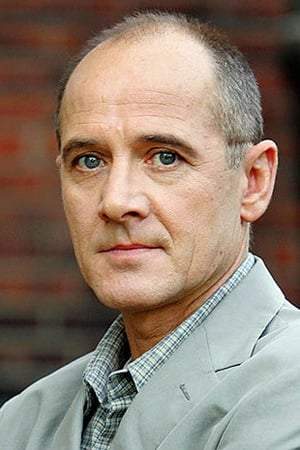
Ulrich Mühe
Theodor Lohse

Ernst Stötzner
Günter

Bernhard Wicki
Herr Waizenbaum

Irm Hermann
Gefangene

Klaus Abramowsky
Literat
Klaus Maria Brandauer
Benjamin Lenz
Hark Bohm
Dada-Künstler
Martin Umbach
Schlomje
Horst Sachtleben
Kommissar
Kyra Mladeck
Frau von Köckwitz
Marquard Bohm
Roter
Armin Mueller-Stahl
Baron von Rastchuk
Andrea Jonasson
Rahel Efrussi
Joachim Bliese
Staatssekretär Hilper
Norbert Schwientek
Pisk
András Fricsay
Klitsche
Peter Roggisch
Prinz Heinrich
Hans Korte
Geheimrat Hugenberg
Agnes Fink
Mutter Lohse
Rainer Penkert
Herr von Badewitz
Rainer Rudolph
Otto von Köckwitz
Ullrich Haupt
Baron von Köckwitz
Elisabeth Endriss
Anna
Rolf Henniger
Aaron Efrussi
Alfred Hrdlicka
Klaften
Herbert Tennigkeit
Oberst Pauli
External Links and Streaming Options
Discover where to watch Spider’s Web online, including streaming platforms, rental options, and official sources. Compare reviews, ratings, and in-depth movie information across sites like IMDb, TMDb, Wikipedia or Letterboxd.




Full Plot Summary and Ending Explained for Spider’s Web
Read the complete plot summary of Spider’s Web, including all major events, twists, and the full ending explained in detail. Explore key characters, themes, hidden meanings, and everything you need to understand the story from beginning to end.
The film centers on young right-wing Leutnant Theodor Lohse [Ulrich Mühe], who endures personal and national humiliation during the downfall of the German Empire and the German Revolution of 1918, the aftermath of World War I. From that moment he vows revenge on those he blames for the upheaval: Democrats, socialists, and Jews, and he drifts into the right-wing underground of the early Weimar Republic. He joins an organization called S II (a nod to real-world political violence) where his immediate superior is Baron von Rastchuk [Armin Mueller-Stahl]. This baron introduces Lohse to Prince Heinrich in order to get Lohse employed, a favor the homosexual prince demands as a one-time bodily obligation from Lohse. Despite his initial shock and disgust, Lohse yields to the prince’s demand out of opportunism and a wish to please his superiors.
Lohse becomes a full-time spy for the organization, moving with unprecedented, relentless ambition and unscrupulousness. He spies on Communist plots, partakes in the organization’s plans to undermine the new German democracy, and disposes of his own right-wing colleagues when it serves his ascent within the movement. Along the way he meets Benjamin Lenz [Klaus Maria Brandauer], a Jewish man who trades in information about criminal and underground political dealings, selling to anyone who will pay—left, right, or police. Although Lohse harbors deep-seated anti-Semitism, he finds Lenz’s services useful, yet Lenz’s knowledge grows, and he gradually gains leverage over Lohse’s schemes.
When Lenz learns that Lohse ordered a pogrom against the local Jewish ghetto, he confronts Lohse in private, beating him close to unconsciousness and nearly forcing him to jump from a window to evade punishment. In the end, Lenz is murdered by Lohse’s henchmen, pushed in front of an oncoming train, because he knew too much. The film closes in late 1923 with Lohse leaving a festivity of conservatives and monarchists, and, with glowing eyes, declaring that restoring the monarchy has become “old hat,” while hinting at a looming threat led by a “new man” preparing a putsch in Munich to count on — a man named Adolf Hitler.
old hat
“new man” preparing a putsch in Munich to count on — a man named Adolf Hitler.

Coming soon on iOS and Android
The Plot Explained Mobile App
From blockbusters to hidden gems — dive into movie stories anytime, anywhere. Save your favorites, discover plots faster, and never miss a twist again.
Sign up to be the first to know when we launch. Your email stays private — always.
Explore the mobile appDiscover Film Music Concerts Near You – Live Orchestras Performing Iconic Movie Soundtracks
Immerse yourself in the magic of cinema with live orchestral performances of your favorite film scores. From sweeping Hollywood blockbusters and animated classics to epic fantasy soundtracks, our curated listings connect you to upcoming film music events worldwide.
Explore concert film screenings paired with full orchestra concerts, read detailed event information, and secure your tickets for unforgettable evenings celebrating legendary composers like John Williams, Hans Zimmer, and more.


Spider’s Web Themes and Keywords
Discover the central themes, ideas, and keywords that define the movie’s story, tone, and message. Analyze the film’s deeper meanings, genre influences, and recurring concepts.
Spider’s Web Other Names and Titles
Explore the various alternative titles, translations, and other names used for Spider’s Web across different regions and languages. Understand how the film is marketed and recognized worldwide.
Similar Movies To Spider’s Web You Should Know About
Browse a curated list of movies similar in genre, tone, characters, or story structure. Discover new titles like the one you're watching, perfect for fans of related plots, vibes, or cinematic styles.









Quick Links: Summary, Cast, Ratings, More

What's After the Movie?
Not sure whether to stay after the credits? Find out!
Check out our other apps:

SAT Sphere
Build confidence for the Digital SAT.

Mori Atlas
Discover wild places worth protecting.

Luntero
Search smarter for a home in Amsterdam.

Plot Explained
Unravel movie endings and hidden clues.

Pokechamp
Dive into Pokémon data and battle logic.

Driving Theory
Get ready for your European theory test.

Movie Dust
Plan your next cinema trip with ease.

Musemap
Find art and culture as you travel.

Selkobase
Compare credentials before committing.

Local Manual
Turn an unfamiliar country into practical next steps.

Lernavi
Compare school systems before your next move.

GymRoam
Find a workout stop wherever your plans take you.
Explore Our Movie Platform
New Movie Releases (2026)
Famous Movie Actors
Top Film Production Studios
Movie Plot Summaries & Endings
Major Movie Awards & Winners
Best Concert Films & Music Documentaries
Movie Collections and Curated Lists
© 2026 What's After the Movie. All rights reserved.
Privacy Policy