Serial (Bad) Weddings 2 2019

-Weddings 2-OQk4EOZEF8bGCQ.jpg)
Claude and Marie Verneuil encounter a fresh challenge when the husbands of their daughters—David, Rachid, Chao, and Charles—decide to leave France and pursue new lives abroad. Each man has his own reasons for seeking opportunities elsewhere, leading the couple to grapple with the unexpected departures and contemplate the future of their family.


Does Serial (Bad) Weddings 2 have end credit scenes?
No!
Serial (Bad) Weddings 2 does not have end credit scenes. You can leave when the credits roll.
Meet the Full Cast and Actors of Serial (Bad) Weddings 2
Explore the complete cast of Serial (Bad) Weddings 2, including both lead and supporting actors. Learn who plays each character, discover their past roles and achievements, and find out what makes this ensemble cast stand out in the world of film and television.

Salimata Kamate
Madeleine Koffi
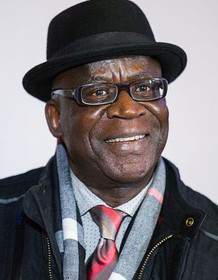
Pascal N'Zonzi
André Koffi

Julia Piaton
Odile
Hedi Bouchenafa
Arash
Christian Clavier
Claude Verneuil
Ary Abittan
David Benichou
Tatiana Rojo
Viviane Koffi
Gilles Cohen
Patrick
Noom Diawara
Charles Koffi
Xavier Pottier
L'agriculteur
Medi Sadoun
Rachid Benassem
Claudia Tagbo
Nicole
Marie-Hélène Lentini
Guilaine
Philippe Beglia
Le directeur de la banque
Frédéric Chau
Chao Ling
Loïc Legendre
Le curé
Nouritza Emmanuelian
L'interne
Émilie Caen
Ségolène
Chantal Lauby
Marie Verneuil
Frédérique Bel
Isabelle
Bertrand Combe
L'agent immobilier
Josette Ménard
Clotilde, la pharmacienne
Élodie Fontan
Laure
Michel Emsalem
L'homme agence juive
Hugues Martel
Le maire
Selim Draoui
Lucas
Eugénie You
Jumelle 2
Lucie You
Jumelle 1
Fatoumata Ouedraogo Camus
La bonne
Patson
Faux Vigneron
Inan Cicek
Le barman
Clément Vieu
Le serveur du café parisien
Hervé Masquelier
Le touriste
Christelle Burger
Karine
Matthieu Burnel
Monsieur Martineau
Florian Spitzer
L'armurier
Ary Gabison
Lprofesseur Rabbin
Nicolas Guillaume
Le clerc
Jacques Guenni
Le responsable agence juive
Yongsou Cho
Le fonctionnaire chinois
Izabelle Maya
La voyageuse TGV
Sarah Layssac
La femme en niqab
Ricardo
Le chauffeur de taxi
Audrey Biel
Sonia
Marie-Hélène Nicquevert
La sage-femme
Nicolas Besnard
L'agent de Charles
Ruben Blazquez
Benjamin
External Links and Streaming Options
Discover where to watch Serial (Bad) Weddings 2 online, including streaming platforms, rental options, and official sources. Compare reviews, ratings, and in-depth movie information across sites like IMDb, TMDb, Wikipedia or Letterboxd.




Ratings and Reviews for Serial (Bad) Weddings 2
See how Serial (Bad) Weddings 2 is rated across major platforms like IMDb, Metacritic, and TMDb. Compare audience scores and critic reviews to understand where Serial (Bad) Weddings 2 stands among top-rated movies in its genre.

The Movie Echo Score
Serial (Bad) Weddings 2 delivers a familiar comedic experience that divides opinion. While the film succeeds in generating consistent laughter for viewers who enjoy broad cultural jokes, its reliance on clichés and a thin narrative reduces its overall impact. Critics note competent direction and strong performances, yet the story’s lack of originality and occasional offensive stereotypes hinder broader appeal. Consequently, the sequel offers moderate entertainment value, especially for fans of the original, but falls short of a compelling cinematic achievement.
The Movie Echo Score Breakdown for Serial (Bad) Weddings 2

Art & Craft
In terms of direction and visual craft, the sequel shows competent execution. Reviewers commend the director for maintaining a successful comedic formula and highlight the appealing production design of the garden setting. While the cinematography and editing are not singled out for innovation, they support the film’s humor without distraction. Overall, the technical aspects are solid enough to sustain the comedic tone.

Character & Emotion
When evaluating acting and character presence, the ensemble receives strong praise. Performances by the lead actors are described as hilarious and effective, with particular commendation for the chemistry among the cast. Reviewers note that the actors elevate the material, delivering memorable comedic beats despite the script’s simplicity. The character work contributes positively to the film’s entertainment value, though depth remains limited.

Story & Flow
The narrative structure is viewed as the weakest component. Critics point out a predictable plot, heavy reliance on cultural stereotypes, and a lack of originality in jokes. The storyline is described as simple and occasionally flat, reducing engagement for viewers seeking depth. While some find the premise sufficient for occasional laughs, the overall pacing and originality fall short of expectations for a sequel.

Sensory Experience
Sensory elements such as visual style receive modest acknowledgment. The film’s setting, notably the garden scenery, is highlighted as a pleasant visual detail. However, there is little discussion of the soundtrack or sound design, indicating they play a minimal role. The sensory experience adequately complements the comedy but does not enhance the film beyond its basic visual appeal.

Rewatch Factor
Rewatch potential is mixed but leans toward moderate. Many viewers anticipate repeat enjoyment due to the film’s laugh-driven format and familiar characters, recommending it for fans of French comedic traditions. Conversely, several critics label the sequel a waste of time, suggesting limited appeal beyond an initial viewing. The overall replay value is acceptable for audiences seeking light entertainment, though not compelling for broader audiences.
Take the Ultimate Serial (Bad) Weddings 2 Movie Quiz
Challenge your knowledge of Serial (Bad) Weddings 2 with this fun and interactive movie quiz. Test yourself on key plot points, iconic characters, hidden details, and memorable moments to see how well you really know the film.
Serial (Bad) Weddings 2 Quiz: Test your knowledge of the key events, characters, and twists in the 2019 film Serial (Bad) Weddings 2.
What is Beverly Sutphin's outward occupation as described in the film?
Full Plot Summary and Ending Explained for Serial (Bad) Weddings 2
Read the complete plot summary of Serial (Bad) Weddings 2, including all major events, twists, and the full ending explained in detail. Explore key characters, themes, hidden meanings, and everything you need to understand the story from beginning to end.
Beverly Sutphin appears to be an unassuming upper-middle-class housewife living with her dentist husband Eugene and their teenage children, Misty and Chip, in Towson, Maryland. On the surface, she embodies suburban calm, but beneath the routine lies something far more dangerous: a serial killer who targets people over trivial slights or offenses. In this stark contrast between image and impulse, the film invites us into a portrait of a woman who sees punishment as a daily necessity, delivered with chilling precision.
The trouble begins with a petty grievance against their neighbor, Dottie Hinkle, whose vulgar telephone harassment becomes the first crack in Beverly’s veneer. The tension escalates at a PTA meeting when Mr. Stubbins, Chip’s math teacher, condemns Chip’s fascination with horror films, prompting Beverly to enact a brutal and explicit retaliation. The family’s peace is further shattered when Misty’s heartbreak over a missed date leads Beverly to a cold, calculated act—she fatally stabs Carl with a fire poker after spotting him with another girl at a swap meet. As the murders accumulate, the man she shares her life with, Eugene, uncovers a cache of serial killer memorabilia beneath their mattress, including recordings from Ted Bundy made in the week of his execution, a discovery that intensifies the tension around their home and hints at Beverly’s long-standing complicity with violence.
Dinner that evening becomes a turning point, as Chip mentions his friend Scotty’s suspicions about Beverly. The family, already on edge, realizes Beverly may be willing to silence anyone who could expose her. Their fears are realized when she targets Ralph and Betty Sterner, a couple who had called Eugene for a toothache on a day Beverly and Eugene had planned to spend birdwatching. Beverly’s weapon of choice—scissors for Betty and an air conditioner hurled to strike Ralph—demonstrates a chilling mix of domestic normalcy and brutal immediacy. The police close in on Scotty’s home after discovering his suspicions, only to find him engaged in a disturbing scene, which Beverly uses to further manipulate and threaten those around her. The Sutphins converge on Scotty’s house, and Beverly sets a deadly course that ends with Scotty meeting a brutal end at a heavy metal bar, a moment that cements the sense that evil wears a familiar, everyday face.
As the net tightens, the Sutphins become central to a public spectacle when Beverly is named the prime suspect in the Sterners’ murders. A church service erupts into chaos as Beverly’s sneezes trigger panic, allowing her to slip away as law enforcement moves in. She hides at the video store where Chip works, and a tense encounter with a regular customer—who insults him for not rewinding tapes—reaffirms Beverly’s resolve to use others’ flaws against them. A new encounter with Mrs. Jenson leads Beverly to strike with a leg of lamb while she watches a film, pushing the envelopes of fear and control even further. Scotty, who observed the attack from nearby, is tracked down, and Beverly chases him to a heavy-metal venue, where she ultimately destroys him in a blaze of fury and flames.
The arrest becomes an abrupt, almost anticlimactic release of pressure for the family, as Beverly is apprehended and the Sutphins negotiate life under the shadow of their matriarch’s notoriety. The trial that follows becomes a sensational spectacle, with Beverly’s cunning and self-assertion turning the courtroom into a stage. Her strategy centers on dismantling each witness’s credibility by exposing their vices or casting doubt on their testimony. The key witness who actually saw a crime, Luann Hodges, is discredited when she appears intoxicated, while the courtroom is distracted by a surprising pop-culture moment when Suzanne Somers is cast to portray Beverly in a television film. Despite the jury’s initial unease, Beverly backs herself into a position of plausible insanity defense, and her legal team is quickly dismissed when she insists on representing herself.
Against this backdrop of theatrics and violence, Beverly manages to secure an acquittal, a conclusion marked by a sharp, almost gleeful contempt for the juror who wore white shoes after Labor Day—an act she notes with chilling satisfaction. The aftermath intensifies when Beverly tracks down that juror in a payphone alcove and ends her life with another brutal strike. The film’s capstone moment comes with a final, knowing exchange: Somers’s on-screen presence and Beverly’s icy glare seal a sense of almost gleeful deception that lingers with the audience. A postscript reveals that Beverly Sutphin resisted cooperation with the making of this film, leaving a marker on the story’s legacy and on the memory of what she represents for those who watch.
This is a dark comedy that blends suburban normalcy with shocking acts of violence, inviting viewers to examine the uneasy boundaries between civility and savagery, and between a mother’s love and a terrifying refusal to let anything—or anyone—interfere with her sense of order. The film maintains a steady, unsettling tone that leans into satire while never letting the horror dissolve into mere caricature, offering a fearless, unflinching look at a woman who turns everyday life into an arena for punishment and performance.

Coming soon on iOS and Android
The Plot Explained Mobile App
From blockbusters to hidden gems — dive into movie stories anytime, anywhere. Save your favorites, discover plots faster, and never miss a twist again.
Sign up to be the first to know when we launch. Your email stays private — always.
Explore the mobile appWatch Trailers, Clips & Behind-the-Scenes for Serial (Bad) Weddings 2
Watch official trailers, exclusive clips, cast interviews, and behind-the-scenes footage from Serial (Bad) Weddings 2. Dive deeper into the making of the film, its standout moments, and key production insights.

Unlock the World of Movies with Our Comprehensive Wiki
Dive into our Movie Wiki for in-depth film encyclopedia entries, including cast biographies, production trivia, plot synopses, behind-the-scenes facts, and thematic analyses. Whether you’re researching iconic directors, exploring genre histories, or discovering hidden easter eggs, our expertly curated movie database has everything you need to fuel your cinematic passion.

Quick Links: Summary, Cast, Ratings, More

What's After the Movie?
Not sure whether to stay after the credits? Find out!
Check out our other apps:

SAT Sphere
Build confidence for the Digital SAT.

Mori Atlas
Discover wild places worth protecting.

Luntero
Search smarter for a home in Amsterdam.

Plot Explained
Unravel movie endings and hidden clues.

Pokechamp
Dive into Pokémon data and battle logic.

Driving Theory
Get ready for your European theory test.

Movie Dust
Plan your next cinema trip with ease.

Musemap
Find art and culture as you travel.

Selkobase
Compare credentials before committing.

Local Manual
Turn an unfamiliar country into practical next steps.

Lernavi
Compare school systems before your next move.

GymRoam
Find a workout stop wherever your plans take you.
Explore Our Movie Platform
New Movie Releases (2026)
Famous Movie Actors
Top Film Production Studios
Movie Plot Summaries & Endings
Major Movie Awards & Winners
Best Concert Films & Music Documentaries
Movie Collections and Curated Lists
© 2026 What's After the Movie. All rights reserved.
Privacy Policy