Reign: The Conqueror Movie 2000


Alexander, son of King Philip and heir to the Macedonian empire, must battle saboteurs, assassins and his father's jealousy to claim the throne. Once king, he launches a campaign to conquer nations and claim the title of Great King, even as an ancient prophecy warns he will become the world's destroyer and be remembered as the Devil King.


Does Reign: The Conqueror Movie have end credit scenes?
No!
Reign: The Conqueror Movie does not have end credit scenes. You can leave when the credits roll.
Meet the Full Cast and Actors of Reign: The Conqueror Movie
Explore the complete cast of Reign: The Conqueror Movie, including both lead and supporting actors. Learn who plays each character, discover their past roles and achievements, and find out what makes this ensemble cast stand out in the world of film and television.
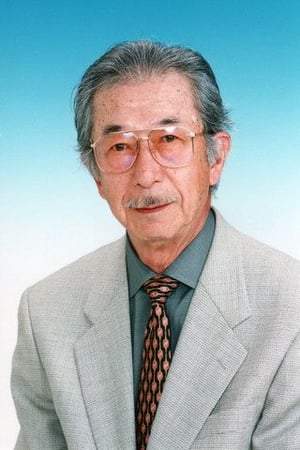
Tadashi Nakamura
Parmenion

Atsuko Tanaka
Cassandra

Kazuo Kumakura
Diogenes
Toshihiko Seki
Alexander
Toru Furuya
Philippos
Shuichi Ikeda
Ptolemy
Ryusei Nakao
Dinocrates
Hochu Otsuka
Cleitus

Koichi Yamadera
Darius III
Yoshisada Sakaguchi
Philip II
Yuko Minaguchi
Roxanne
Koji Tsujitani
Hephaestion
Nachi Nozawa
Aristotle
Daisuke Gori
Antigonos
Junko Mashina
Olympias
Kohsuke Meguro
Philotas
External Links and Streaming Options
Discover where to watch Reign: The Conqueror Movie online, including streaming platforms, rental options, and official sources. Compare reviews, ratings, and in-depth movie information across sites like IMDb, TMDb, Wikipedia or Rotten Tomatoes.





Take the Ultimate Reign: The Conqueror Movie Movie Quiz
Challenge your knowledge of Reign: The Conqueror Movie with this fun and interactive movie quiz. Test yourself on key plot points, iconic characters, hidden details, and memorable moments to see how well you really know the film.
Reign: The Conqueror Quiz: Test your knowledge of the key characters, events, and symbols from the movie "Reign: The Conqueror" (2000).
Who is Alexander's mother in the film?
Full Plot Summary and Ending Explained for Reign: The Conqueror Movie
Read the complete plot summary of Reign: The Conqueror Movie, including all major events, twists, and the full ending explained in detail. Explore key characters, themes, hidden meanings, and everything you need to understand the story from beginning to end.
Alexander Toshihiko Seki is born the son of King Philip II of Macedon and Olympias, a feared queen described as a snake-witch and priestess. Driven by a hunger for speed and conquest, he heads into the woods with trusted companions Philotas and Hephaestion. There, he tames Bucephalus, a wild, man-eating horse, a symbol of the daring that will define his later campaigns. Around him, he befriends Cleitus and Ptolemy I Soter Shuichi Ikeda, who join his cavalry as the seeds of a legendary force.
Macedonia soon marches to war with Athens, led by King Philip II Yoshisada Sakaguchi and his foremost advisers—Attalus, Parmenion Tadashi Nakamura (Philotas’s father), and Antipater. Philip’s interest in Alexander’s whereabouts grows as the young warrior and his riders arrive just in time, breaking Athens’ lines and steering Macedonia to a decisive victory. Following the defeat, Athenian ambassadors repair to Persia, hoping to seal an alliance with the new king, Darius III. In a daring twist, Alexander and his friends slip into Babylon as Athens slaves, slay the guards, and provoke Darius to doubt Athens’ loyalty. Darius orders the execution of the ambassadors, while Alexander wanders into the Hanging Gardens of Babylon and meets Roxanne Yuko Minaguchi, a moment that intertwines beauty, fate, and ambition.
Ptolemy is captured by the Persian army and suspended in the air, yet Alexander saves him at the last moment by unleashing the horses in the city’s stables, creating chaos that allows the escape with his companions. Attalus schemes to drive a wedge between Olympias and Alexander, driving Philip to exile Olympias and to wed Eurydice, Attalus’s daughter, who becomes a potential heir to the throne. A grand ceremony to present the new prince—and a towering statue of Philip himself—ends in tragedy when the statue crumbles and a guard under Olympias’ influence assassinates Philip. It’s implied that Olympias then drives Eurydice and her baby to death, deepening the palace intrigue and bloodline struggles.
With Philip dead, Alexander ascends the throne and Attalus is executed. Athens, under Demosthenes, questions Alexander’s strength but is forced to yield after Macedonia’s crushing victory over Thebes. Alexander’s encounter with the philosopher Diogenes of Sinope, who embodies a starkly simple life and piercing wisdom, tempers his impatience and broadens his view of leadership [Kazuo Kumakura]. Soon after, Aristotle—Alexander’s former teacher—sends his niece Cassandra to join the cavalry, creating a bridge between philosophy and military power [Atsuko Tanaka].
As Alexander pushes east, his campaign sweeps through Persia’s territories with rapid, successive victories. He recruits the physician Phillipas to his side and slices through the Gordian Knot with his sword, a symbol of his willingness to break old limits. The Persian king’s forces strike a heavy blow, but a covert intervention by members of the Pythagorean cult prompts a deadly clash where Darius withdraws.
In Egypt, Alexander envisions a grand city, Alexandria, and encounters Dinocrates within his army, who inspires him with the dream of a lasting metropolis. Before leaving Egypt, the travelers visit the Temple of Ammon, where an oracle foretells that Alexander might be killed by someone he trusts most. Ptolemy later sees a prophecy that he will rise as a “Great King of the World.” A renewed threat from the Pythagorean cult targets Alexander during a wedding to Roxanne; a dancer carrying poison nearly ends his life, but the plot falters and the dancer is slain. Satibarzanes betrays Parmenion and Philotas, leading to the brutal execution of both Parmenion and Philotas.
Phillipas, who aided in healing Alexander, ultimately sacrifices himself after revealing the truth about the plot. Satibarzanes is dealt with, and Alexander resumes the campaign, marching toward India. Aristotle provides Cassandra with a parchment to deliver a crucial message when India is reached. In India, the expedition encounters a formidable Brahman army. Cleitus grows suspicious of Alexander’s aims and is slain in the ensuing clash while Cassandra’s parchment topples the spell that might have killed Alexander.
The march continues into India, where Alexander confronts a colossal army of those he has slain over the years. Hephaestion dies amid a spectral confrontation with the ghost of Darius, and Alexander faces a doppelgänger of King Porus in a symbolic duel that tests his resolve. After a confrontation with Pythagoras at the world’s edge, the mentor’s line—echoing Diogenes—suggests that destroying the world might birth something anew. Yet the world does not end: Alexander walks into a new westward destiny, a future charted by science and reason, and he departs toward Macedonia.
Back home, Aristotle receives a letter from Cassandra—she has chosen to stay with Alexander of her own will—yet the old philosopher is left with amnesia and cannot recognize his own niece. A handmaiden hints that Roxanne is pregnant, while a child named Euclid appears, carrying a Platohedron that hints at a future shaped by geometry and the sciences. The dark prophecy of destruction seems to transform into a dawning era, where Euclid’s Platohedron holds a place of honor in a world rebuilt by knowledge.
As Alexander’s forces prepare to depart for Arabia, the final image centers on Euclid’s Platohedron catching the dying sun’s glow, a symbol of a world reborn through mathematics and discovery. A statue of Alexander atop his horse stands in silhouette against a crimson sky, a reminder of a life spent chasing destiny and a future shaped by the new pillars of Euclidean geometry and Ptolemy’s enduring legacy.

Coming soon on iOS and Android
The Plot Explained Mobile App
From blockbusters to hidden gems — dive into movie stories anytime, anywhere. Save your favorites, discover plots faster, and never miss a twist again.
Sign up to be the first to know when we launch. Your email stays private — always.
Explore the mobile appDiscover Film Music Concerts Near You – Live Orchestras Performing Iconic Movie Soundtracks
Immerse yourself in the magic of cinema with live orchestral performances of your favorite film scores. From sweeping Hollywood blockbusters and animated classics to epic fantasy soundtracks, our curated listings connect you to upcoming film music events worldwide.
Explore concert film screenings paired with full orchestra concerts, read detailed event information, and secure your tickets for unforgettable evenings celebrating legendary composers like John Williams, Hans Zimmer, and more.


Reign: The Conqueror Movie Themes and Keywords
Discover the central themes, ideas, and keywords that define the movie’s story, tone, and message. Analyze the film’s deeper meanings, genre influences, and recurring concepts.
Reign: The Conqueror Movie Other Names and Titles
Explore the various alternative titles, translations, and other names used for Reign: The Conqueror Movie across different regions and languages. Understand how the film is marketed and recognized worldwide.
Similar Movies To Reign: The Conqueror Movie You Should Know About
Browse a curated list of movies similar in genre, tone, characters, or story structure. Discover new titles like the one you're watching, perfect for fans of related plots, vibes, or cinematic styles.






Quick Links: Summary, Cast, Ratings, More

What's After the Movie?
Not sure whether to stay after the credits? Find out!
Check out our other apps:

SAT Sphere
Build confidence for the Digital SAT.

Mori Atlas
Discover wild places worth protecting.

Luntero
Search smarter for a home in Amsterdam.

Plot Explained
Unravel movie endings and hidden clues.

Pokechamp
Dive into Pokémon data and battle logic.

Driving Theory
Get ready for your European theory test.

Movie Dust
Plan your next cinema trip with ease.

Musemap
Find art and culture as you travel.

Selkobase
Compare credentials before committing.

Local Manual
Turn an unfamiliar country into practical next steps.

Lernavi
Compare school systems before your next move.

GymRoam
Find a workout stop wherever your plans take you.
Explore Our Movie Platform
New Movie Releases (2026)
Famous Movie Actors
Top Film Production Studios
Movie Plot Summaries & Endings
Major Movie Awards & Winners
Best Concert Films & Music Documentaries
Movie Collections and Curated Lists
© 2026 What's After the Movie. All rights reserved.
Privacy Policy