Alexander the Great 1956



A sweeping historical epic set in the 4th‑century BC, following Alexander of Greece as he leads his army across the known world, driven by the conviction that Hellenic culture will enlighten conquered peoples. Son of the fierce Macedonian ruler Philip, Alexander’s brief but meteoric career is portrayed with grand battles, political intrigue and the relentless pursuit of glory.


Does Alexander the Great have end credit scenes?
No!
Alexander the Great does not have end credit scenes. You can leave when the credits roll.
Where to Watch Alexander the Great
See current US streaming, rental, and purchase options for Alexander the Great (1956) via JustWatch.

ScreenPix Amazon Channel
HD
ScreenPix Apple TV channel
HD
Fandango at Home Free
HD
Tubi TV
SD
YouTube Free
HD
Amazon Video
SD
Apple TV Store
HD Fandango At Home
HD
Google Play Movies
SD
YouTube
SD Streaming availability powered by 
Meet the Full Cast and Actors of Alexander the Great
Explore the complete cast of Alexander the Great, including both lead and supporting actors. Learn who plays each character, discover their past roles and achievements, and find out what makes this ensemble cast stand out in the world of film and television.

Julio Peña
Arsites

Claire Bloom
Barsine

Christopher Lee
Nectenabus (voice)

Harry Andrews
Darius

Michael Hordern
Demosthenes

Peter Wyngarde
Pausanias

Niall MacGinnis
Parmenio

Peter Cushing
Memmon

Fredric March
Philip of Macedonia

Helmut Dantine
Nectenabus

Danielle Darrieux
Olympias
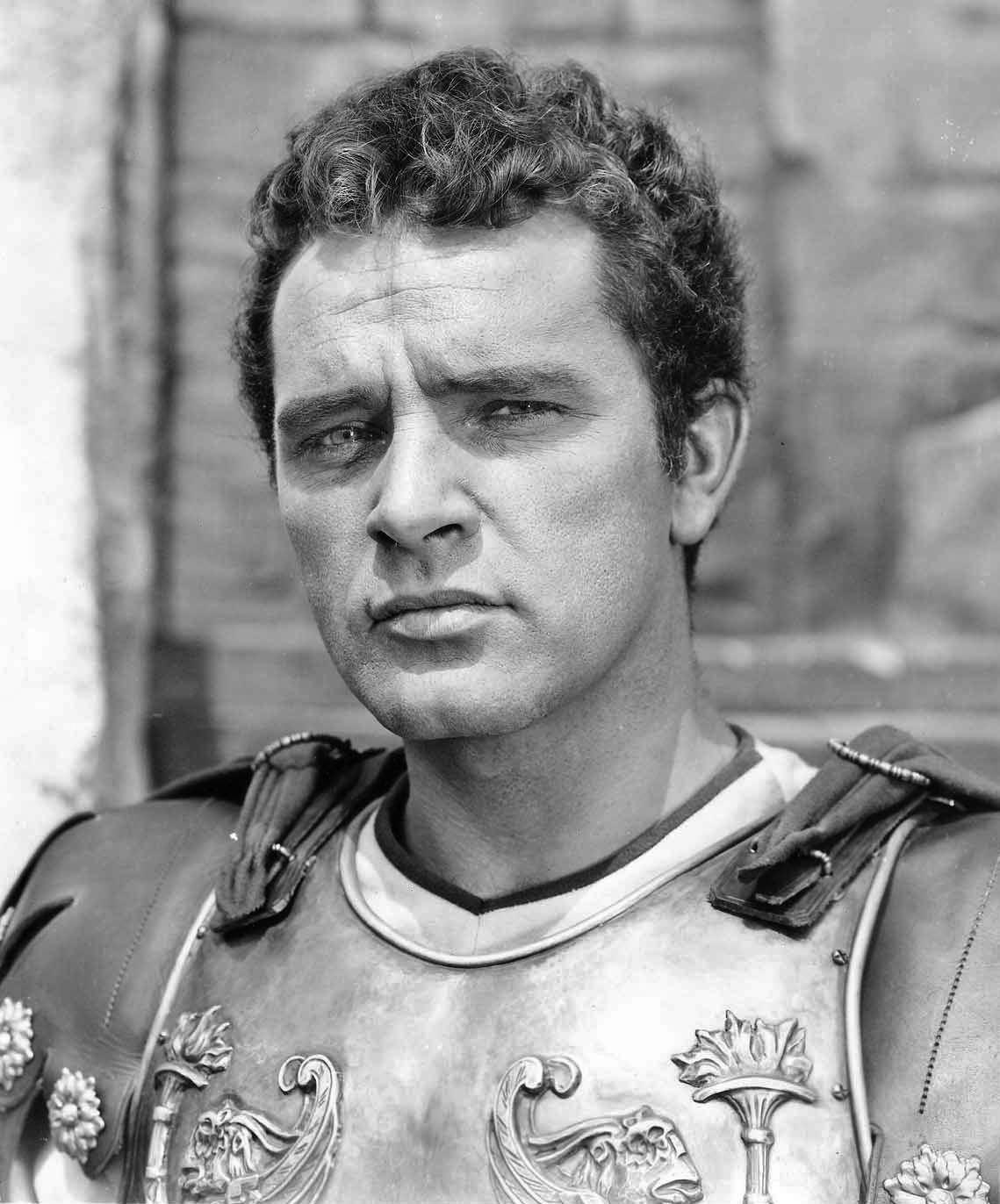
Richard Burton
Alexander
Stanley Baker
Attalus
Gérard Tichy
(no acreditado)
Friedrich von Ledebur
Antipater (as Friedrich Ledebur)
William Squire
Aeschenes
Barry Jones
Aristotle
Gustavo Rojo
Cleitus
Marisa de Leza
Eurydice (as Marisa De Leza)
Ramsay Ames
Drunken Woman (as Ramsey Ames)
Rubén Rojo
Philotas (as Ruben Rojo)
José Nieto
Spithridates (as Jose Nieto)
Larry Taylor
Perdiccas
Virgílio Teixeira
Ptolemy
Carlos Acevedo
Ochus
Manuel Arbó
(no acreditado)
Teresa del Río
Roxane (as Teresa Del Rio)
José Marco
Harpalus (as Jose Marco)
Enrique Diosdado
(no acreditado)
Ricardo Valle
Hephaestion
Sergio Orta
(no acreditado)
Mario Barros
(no acreditado)
Carmen Carulla
Stateira
Jesús Luque
Aristander (as Jesus Luque)
Ellen Rossen
Amytis
External Links and Streaming Options
Discover where to watch Alexander the Great online, including streaming platforms, rental options, and official sources. Compare reviews, ratings, and in-depth movie information across sites like IMDb, TMDb, Wikipedia or Rotten Tomatoes.







Take the Ultimate Alexander the Great Movie Quiz
Challenge your knowledge of Alexander the Great with this fun and interactive movie quiz. Test yourself on key plot points, iconic characters, hidden details, and memorable moments to see how well you really know the film.
Alexander the Great (1956) Quiz: Test your knowledge of the 1956 film Alexander the Great, covering characters, events, and key moments from the story.
Who portrays the young Alexander in the film?
Full Plot Summary and Ending Explained for Alexander the Great
Read the complete plot summary of Alexander the Great, including all major events, twists, and the full ending explained in detail. Explore key characters, themes, hidden meanings, and everything you need to understand the story from beginning to end.
In a sweeping, deeply textured retelling of a pivotal era, the film unfolds against a chorus of power struggles between the rising Macedonian kingdom and the fractured Greek city-states. At the center is Alexander, a magnetic figure who grows from a spirited youth into a formidable conqueror, while the shadow of Philip II looms large—ambitious, pragmatic, and relentless in his drive to mold Greece into a unified force and push it toward a broader, perilous ambition. The drama opens with the tension between war and statecraft, as Demosthenes of Athens argues for resistance, warning that Philip’s design threatens the very soul of the Greek world.
Olympias, the king’s wife, carries a volatile rumor that will seed a tragic course: she claims that their son is “a god born of a god.” This proclamation is not just a personal boast but a political spark, a spark that will inflame factions, alliances, and grudges for years to come. Philip’s initial reaction is suspicion and anger, but wise counsel from trusted generals like Parmenio counsels patience—let the boy mature, let him learn, and let him decide his own path when the time is right. The boy grows under a gilded roof, but his education is anything but comfortable: at the school at Mieza, he studies history, mathematics, logic, and rhetoric under the tutelage of Aristotle, who frames a hunger for glory in the young prince. Alexander’s own voice expresses a fierce longing for glory, telling his teacher that, like Achilles, he would rather endure a brief, shining life than a long one without distinction.
When Philip advances, he makes a bold move, sending Alexander to rule as regent in the Macedonian capital, Pella, to stave off gossip about the succession and to concentrate power. The boy learns the realities of leadership in the crucible of campaign life, and the two leaders—father and son—move together on the campaigns that will become legend. The Battle of Chaeronea marks a turning point in Greek affairs, a brutal signal that the old city-states must recognize Macedonian supremacy. After the victory, Alexander demands loyalty and resources from all Greece to fund his father’s grand designs, insisting that they be ready to stand with Pella against Persia.
The family drama intensifies as Philip, in a strategic but ruthless reshuffling of alliances, divorces Olympias and marries Eurydice, a move that deepens the chasm between father and son and casts doubt on Alexander’s future. The tension inside the royal court erupts when Pausanias, once a devoted supporter of Alexander, is mocked for his loyalty. Olympias’s influence is implied as Pausanias’s fate takes a dark turn: he assassinates Philip, and Alexander acts quickly, killing Pausanias in the moment. Eurydice’s death follows—either suicide or a forced disappearance—while Olympias’s fingerprints, whether direct or indirect, cast a long shadow over Eurydice’s infant son, Caranus, and the succession question itself. In the wake of these murders, Alexander consolidates power, winning the loyalty of the Macedonians and taking up the mantle of leadership with newfound resolve.
The political chessboard shifts again as Memnon, an influential adviser from Darius’s court, is exiled for failing to pledge loyalty to Alexander, marking the Persian side of the looming conflict. The young conqueror then sets his sights on Asia, leading a clash of civilizations that will test his nerve, strategy, and almost mythic self-belief. In the Persian realm, Memnon counsels prudent, waiting warfare, while the Persian lords underestimate the “boy” who has already begun to feel invincible. The campaign begins with bold strides, including the legendary crossing into Asia and the decisive confrontations that follow.
A series of pivotal moments define the road to empire: the daring encounter at the Granicus River, where Alexander’s audacity and tactical brilliance begin to reshape the map; the solving of the Gordian Knot with a single, decisive sword stroke; and the mounting belief among his troops that a lunar omen can be read as a signal that the Macedonian sun will outshine the Persian moon. Before Babylon, a cunning seer named Aristander proclaims his prophecies, and a young king whose faith in the heavens grows bolder with each victory begins to see the world as his own domain.
When Darius III finally falls, his own will becomes part of the myth—the king bequeaths Roxane, the daughter of the Persian noble house, to Alexander in a bid to fuse two worlds into one. Roxane herself becomes a crucial figure in this saga, and the alliance is forged in the heart of Babylon, with the prior regicides in the Persian court avenged in the wake of Darius’s downfall. Throughout these triumphs, the Macedonian camp holds to a grim realism: epic deeds do not erase old feuds, and loyalty is a volatile currency. The story tracks not only military triumphs but also the moral and psychological costs of power.
In the glow of Babylon’s fires, Alexander raises his banner of invincibility and declares exacting, almost blasphemous dreams: > I am the son of God. > the world is my domain…We will march to the end of the world. These pronouncements, half prophecy, half swagger, echo through the ranks as the army presses on toward more distant horizons. In India, the news travels back to Athens and to the wider Greek world, where [Aeschines] might voice reverence and skepticism alike, while the growing legend of Alexander’s triumph fuels both awe and fear: > He has outdone the gods.
Yet the fever of conquest carries with it heavy human costs. In a drunken, fateful quarrel in the camp, the brilliant general Cleitus loses his life at Alexander’s hands, a blow that sobers the young king and exposes the vulnerabilities behind his ascent. Grief and reflection follow as he returns to Babylon, where alliances shift and personal life tightens its grip on political power. He marries Roxane in a union that cements his hold over the conquered territories, but illness soon returns and the dream of a seamless empire begins to fray. As death approaches, Alexander longs for the world and his own power to be carried beyond the river that has witnessed so much blood: he whispers a final, almost paradoxical wish that his body be cast into the Euphrates to mislead the world about his final rest—and he confesses the brutal, irreversible truth that will define his legacy: to the strongest.
This is not merely a chronicle of battles and treaties, but a meticulous portrait of how ambition, destiny, family, and politics collide to forge one of history’s most enduring legends. The film threads together intimate moments of education and doubt with sweeping, panoramic scenes of conquest, showing how a prince’s education, his father’s cunning, and the brutal calculus of empire propel a man toward becoming a legend whose shadow stretches across time.

Coming soon on iOS and Android
The Plot Explained Mobile App
From blockbusters to hidden gems — dive into movie stories anytime, anywhere. Save your favorites, discover plots faster, and never miss a twist again.
Sign up to be the first to know when we launch. Your email stays private — always.
Explore the mobile appWatch Trailers, Clips & Behind-the-Scenes for Alexander the Great
Watch official trailers, exclusive clips, cast interviews, and behind-the-scenes footage from Alexander the Great. Dive deeper into the making of the film, its standout moments, and key production insights.
Alexander the Great Themes and Keywords
Discover the central themes, ideas, and keywords that define the movie’s story, tone, and message. Analyze the film’s deeper meanings, genre influences, and recurring concepts.

Unlock the World of Movies with Our Comprehensive Wiki
Dive into our Movie Wiki for in-depth film encyclopedia entries, including cast biographies, production trivia, plot synopses, behind-the-scenes facts, and thematic analyses. Whether you’re researching iconic directors, exploring genre histories, or discovering hidden easter eggs, our expertly curated movie database has everything you need to fuel your cinematic passion.

Similar Movies To Alexander the Great You Should Know About
Browse a curated list of movies similar in genre, tone, characters, or story structure. Discover new titles like the one you're watching, perfect for fans of related plots, vibes, or cinematic styles.



Quick Links: Summary, Cast, Ratings, More

What's After the Movie?
Not sure whether to stay after the credits? Find out!
Check out our other apps:

SAT Sphere
Build confidence for the Digital SAT.

Mori Atlas
Discover wild places worth protecting.

Luntero
Search smarter for a home in Amsterdam.

Plot Explained
Unravel movie endings and hidden clues.

Pokechamp
Dive into Pokémon data and battle logic.

Driving Theory
Get ready for your European theory test.

Movie Dust
Plan your next cinema trip with ease.

Musemap
Find art and culture as you travel.

Selkobase
Compare credentials before committing.

Local Manual
Turn an unfamiliar country into practical next steps.

Lernavi
Compare school systems before your next move.

GymRoam
Find a workout stop wherever your plans take you.
Explore Our Movie Platform
New Movie Releases (2026)
Famous Movie Actors
Top Film Production Studios
Movie Plot Summaries & Endings
Major Movie Awards & Winners
Best Concert Films & Music Documentaries
Movie Collections and Curated Lists
© 2026 What's After the Movie. All rights reserved.
Privacy Policy