Onibaba 1964


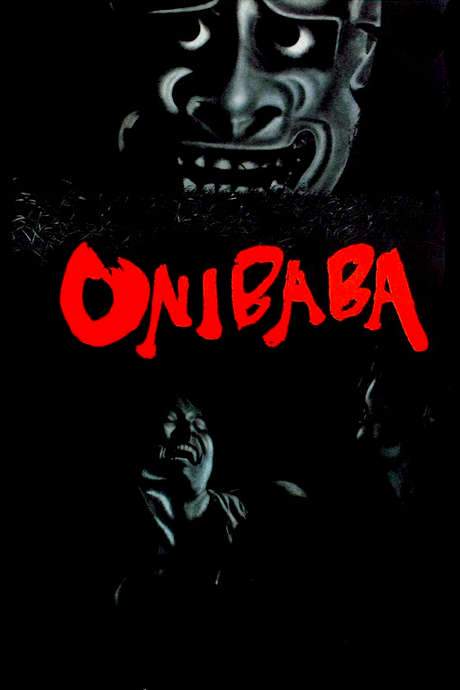
While her son Kichi fights abroad, a mother and her daughter‑in‑law survive in a swamp by ambushing stray samurai and selling the loot. The news of Kichi’s death devastates them, and the daughter‑in‑law begins an affair with the surviving neighbor Hachi. The mother, jealous and angry, tries to frighten her with a mask from a dead samurai.


Does Onibaba have end credit scenes?
No!
Onibaba does not have end credit scenes. You can leave when the credits roll.
Where to Watch Onibaba
See current US streaming, rental, and purchase options for Onibaba (1964) via JustWatch.

Criterion Channel
HD
HBO Max
HD
HBO Max Amazon Channel
HD
Amazon Video
HD
Apple TV Store
HD
Fandango At Home
SD
Google Play Movies
SD
YouTube
SD Streaming availability powered by 
Meet the Full Cast and Actors of Onibaba
Explore the complete cast of Onibaba, including both lead and supporting actors. Learn who plays each character, discover their past roles and achievements, and find out what makes this ensemble cast stand out in the world of film and television.

Kei Satô
Hachi

Taiji Tonoyama
Ushi

Hiroshi Tanaka
Horse Riding Samurai
Jitsuko Yoshimura
Young Woman
Kentarô Kaji
Runaway Warrior
Nobuko Otowa
Woman
Jūkichi Uno
The Samurai
Someshō Matsumoto
Runaway Warrior
Michinori Yoshida
Samurai with Blood
Fudeko Tanaka
Old Woman
Kanzō Uni
Horse Riding Samurai
Hiroyoshi Yamaguchi
Horse Riding Samurai
Hosui Araya
Ushi's Follower
Nobuko Shimakage
Child
External Links and Streaming Options
Discover where to watch Onibaba online, including streaming platforms, rental options, and official sources. Compare reviews, ratings, and in-depth movie information across sites like IMDb, TMDb, Wikipedia or JustWatch.






Take the Ultimate Onibaba Movie Quiz
Challenge your knowledge of Onibaba with this fun and interactive movie quiz. Test yourself on key plot points, iconic characters, hidden details, and memorable moments to see how well you really know the film.
Onibaba (1964) Quiz: Test your knowledge of the 1964 Japanese film Onibaba.
Who is the older woman in the film?
Full Plot Summary and Ending Explained for Onibaba
Read the complete plot summary of Onibaba, including all major events, twists, and the full ending explained in detail. Explore key characters, themes, hidden meanings, and everything you need to understand the story from beginning to end.
In a rugged landscape near Kyoto, Japan, during the mid‑14th century and at the dawn of the Nanboku-chō period, the film threads a stark, somber tale rooted in war, hunger, and fragile human ties. It opens with two fleeing soldiers being ambushed in a vast field of tall reeds, where an older woman and her young daughter‑in‑law murder them and toss their bodies into a deep, hidden pit. The next day, the two women haul the fallen armor and weapons to a local merchant named Ushi, trading their loot for food. The encounter with Ushi unfurls a microcosm of the era’s desperation—news of ongoing conflict, disrupted livelihoods, and a society that keeps marching forward, even as individuals falter under its pressures.
Ushi’s stall becomes a crossroads where danger and desire collide. After the trade, the older woman voices a sharp warning as she rebuffs a sexual proposition from the merchant, underscoring the precarious balance between survival and moral compromise. A neighbor named Hachi, who has been off at war, returns to the area, stirring old loyalties and new temptations. The two women question him about Kishi, who had been their son and younger woman’s husband, and who was drafted along with Hachi. Hachi reveals that they deserted the war, and that Kishi was later killed after they were caught stealing food from farmers. The older woman’s protective instincts flare as she warns the younger woman to keep her distance from Hachi, blaming him for her son’s death.
Despite the warning, a gossamer thread of attraction begins to pull the younger woman toward Hachi. She secretly answers that pull, slipping away every night to the hut where he resides, where their clandestine meetings become physical. The older woman watches with a blend of anger and jealousy as the affair takes shape. Her attempts to intervene are thwarted when she herself tries to seduce Hachi, only to be curtly rejected. Desperate to preserve her household’s quiet, she pleads with him not to lure her daughter‑in‑law away, insisting that she cannot continue to survive by killing and robbing passing soldiers without her help.
Then a nightmarish event intrudes on the fragile peace: a lost samurai, wearing a fearsome Hannya mask, forces the older woman to guide him out of the field. He explains that the mask protects his painfully handsome face from harm. In a cruel twist, she deceives him into stepping into the pit where their victims disappear, ensuring his death. Down in the pit, she claims the samurai’s possessions and, with great effort, wrests the mask from him, exposing a face so grievously scarred that it seems a punishment in itself.
Once more the night unsettles the village. The younger woman tries to reach Hachi, but the older woman blocks her path, dressed in the samurai’s robes and the Hannya mask, a terrifying symbol that seems to confirm the demonish rumor she’s been stoking. By day, she reinforces the tale, convincing the younger woman that the “demon” is a punishment for her affair with Hachi. The younger woman guards her secrets during daylight, but she continues to seek him by night. During a thunderstorm the older woman terrifies the younger woman again with the mask, yet Hachi, weary of being ignored, finds the younger woman and makes love to her in the grass while the mother‑in‑law watches in silence.
As the affair deepens, the older woman confronts a dawning realization: her daughter‑in‑law’s desire for Hachi cannot be extinguished. Returning to his hut, Hachi is suddenly stabbed by another deserter who steals his food, and the dream of reconciliation sinks into a harsher reality. The older woman learns that rain has made the mask impossible to remove; she confesses her scheme to her daughter‑in‑law and pleads for help in taking off the mask. The younger woman agrees to attempt removal, provided the older woman stops meddling in their relationship. Yet the attempt ends in tragedy: the mask cannot be pulled off, and the younger woman shatters it with a mallet, revealing the disfigured face of the older woman beneath.
What follows is left largely to interpretation, as the film hints at supernatural punishment but never fully explains its origin. The mask’s curse seems to bind itself to the wearer through the power of rain, a Buddhist-inflected symbol of consequence and justice. The younger woman, convinced that her mother‑in‑law has transformed into a demon, flees in terror. The older woman chases after, crying that she remains human and remembers her humanity. In a final, bleak reversal, the young woman leaps over the pit, and as the older woman lunges after her, the film closes on their fates intertwined in a field that has long concealed the secrets of war, guilt, and punishment.
- Hachi emerges as a crucial figure whose presence rekindles desire amidst war’s wreckage, presenting a fragile anchor for the younger woman while intensifying the older woman’s possessive fear.
- Young Woman is drawn into a dangerous romance that tests loyalties and exposes the fragility of human trust when survival trumps propriety.
- Older Woman drives much of the action through jealousy, cunning, and an insistence on control, only to have the truth of her own life reflected back as a cruel mask.
- Ushi acts as a catalyst in the film’s early scenes, embodying the era’s harsh economics and the rough sexual dynamics that occur at the margins of grace and greed.
- The Samurai appears as a terrifying, almost spectral figure whose encounter with the women anchors the film’s central motif: the mask as both protection and punishment, a symbol that threads through the narrative’s violence and ambiguity.

Coming soon on iOS and Android
The Plot Explained Mobile App
From blockbusters to hidden gems — dive into movie stories anytime, anywhere. Save your favorites, discover plots faster, and never miss a twist again.
Sign up to be the first to know when we launch. Your email stays private — always.
Explore the mobile appWatch Trailers, Clips & Behind-the-Scenes for Onibaba
Watch official trailers, exclusive clips, cast interviews, and behind-the-scenes footage from Onibaba. Dive deeper into the making of the film, its standout moments, and key production insights.
Onibaba Themes and Keywords
Discover the central themes, ideas, and keywords that define the movie’s story, tone, and message. Analyze the film’s deeper meanings, genre influences, and recurring concepts.
Onibaba Other Names and Titles
Explore the various alternative titles, translations, and other names used for Onibaba across different regions and languages. Understand how the film is marketed and recognized worldwide.
Similar Movies To Onibaba You Should Know About
Browse a curated list of movies similar in genre, tone, characters, or story structure. Discover new titles like the one you're watching, perfect for fans of related plots, vibes, or cinematic styles.












Quick Links: Summary, Cast, Ratings, More

What's After the Movie?
Not sure whether to stay after the credits? Find out!
Check out our other apps:

SAT Sphere
Build confidence for the Digital SAT.

Mori Atlas
Discover wild places worth protecting.

Luntero
Search smarter for a home in Amsterdam.

Plot Explained
Unravel movie endings and hidden clues.

Pokechamp
Dive into Pokémon data and battle logic.

Driving Theory
Get ready for your European theory test.

Movie Dust
Plan your next cinema trip with ease.

Musemap
Find art and culture as you travel.

Selkobase
Compare credentials before committing.

Local Manual
Turn an unfamiliar country into practical next steps.

Lernavi
Compare school systems before your next move.

GymRoam
Find a workout stop wherever your plans take you.
Explore Our Movie Platform
New Movie Releases (2026)
Famous Movie Actors
Top Film Production Studios
Movie Plot Summaries & Endings
Major Movie Awards & Winners
Best Concert Films & Music Documentaries
Movie Collections and Curated Lists
© 2026 What's After the Movie. All rights reserved.
Privacy Policy