Netaji Subhas Chandra Bose: The Forgotten Hero 2005


Directed by Shyam Benegal, this 2005 biographical drama stars Sachin Khedekar, Kulbhushan Kharbanda, Rajit Kapur, Arif Zakaria and Divya Dutta. It chronicles the final five years of Indian nationalist Netaji Subhas Chandra Bose, from his resignation as INC president, his trek across Afghanistan into Europe, his liaison with a German secretary, meetings with Adolf Hitler, and his drive to recruit Indian POWs of the Punjab Regiment to fight the British, punctuated by stirring patriotic speeches.

Does Netaji Subhas Chandra Bose: The Forgotten Hero have end credit scenes?
No!
Netaji Subhas Chandra Bose: The Forgotten Hero does not have end credit scenes. You can leave when the credits roll.
Meet the Full Cast and Actors of Netaji Subhas Chandra Bose: The Forgotten Hero
Explore the complete cast of Netaji Subhas Chandra Bose: The Forgotten Hero, including both lead and supporting actors. Learn who plays each character, discover their past roles and achievements, and find out what makes this ensemble cast stand out in the world of film and television.
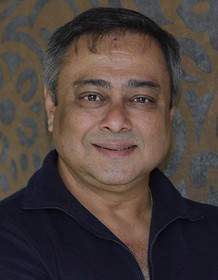
Sachin Khedekar
Subhas Chandra Bose

Gen Seto
Ambassador Oshima
Arif Zakaria
Gurbaksh Singh Dhillon
Rajit Kapoor
Abid Hasan
Rajpal Yadav
Bhagat Ram Talwar
Ila Arun
Ranu
Kulbhushan Kharbanda
Uttamchand Malhotra
Sonu Sood
Lt. Col. Shah Nawaz Khan
Zakir Hussain
Divya Dutta
Ila Bose
Florian Panzner
Alexander Werth
Udo Schenk
Hitler
Jisshu Sengupta
Sisir Bose
Arindam Sil
Jail Warden
Kelly Dorji
Prime Minister Tojo
Alokananda Roy
Prabhavati Bose
Chris England
CID Chief
Rohan Nichol
CID Officer
Howard Lee
Governor of Bengal
Rajeshwari Sachdev
Capt. Lakshmi Sehgal
Narendra Jha
Raja Habib ur Rahman Khan
Shyam Benegal
Ashiesh Roy
Spy Police 2
Surendra Rajan
Gandhiji
Lalit Tiwari
Checkpost Policeman
Manish Wadhwa
Captain Inayat Gyani
Nicolas Chagrin
General Auchinlek
Pankaj Berry
Aabid Khan
Kunal Mitra
Sandeep Srivastava
Nambiar
External Links and Streaming Options
Discover where to watch Netaji Subhas Chandra Bose: The Forgotten Hero online, including streaming platforms, rental options, and official sources. Compare reviews, ratings, and in-depth movie information across sites like IMDb, TMDb, Wikipedia or Rotten Tomatoes.





Take the Ultimate Netaji Subhas Chandra Bose: The Forgotten Hero Movie Quiz
Challenge your knowledge of Netaji Subhas Chandra Bose: The Forgotten Hero with this fun and interactive movie quiz. Test yourself on key plot points, iconic characters, hidden details, and memorable moments to see how well you really know the film.
Netaji Subhas Chandra Bose: The Forgotten Hero (2005) Quiz: Test your knowledge of the 2005 film about Subhas Chandra Bose, his daring escape, alliances, and the Indian National Army.
Who is the main protagonist of the film?
Full Plot Summary and Ending Explained for Netaji Subhas Chandra Bose: The Forgotten Hero
Read the complete plot summary of Netaji Subhas Chandra Bose: The Forgotten Hero, including all major events, twists, and the full ending explained in detail. Explore key characters, themes, hidden meanings, and everything you need to understand the story from beginning to end.
Set in British India amid a tense political backdrop, Subhas Chandra Bose [Sachin Khedekar] navigates a clash with Mahatma Gandhi that tightens around him as arrest and release set the stage for a daring escape. He retreats from public life, tucks away from British guards, and lets a beard grow as part of a calculated ruse. On the night of his escape, he dresses as a Pathan to avoid recognition, slipping out of Calcutta on 16 January 1941 in a car with his nephew Sisir Bose. What follows is a carefully orchestrated odyssey that threads through borders, wartime politics, and shifting loyalties, all in service of a singular aim: to champion India’s fight for independence through unconventional alliances.
Across the frontier town of Peshawar, Bose is placed in the care of the Abwehr and is soon met by figures like Akbar Shah and Bhagat Ram Talwar. From there, Bose is steered toward the North-West Frontier Province and into Afghanistan with the support of Forward Bloc leaders such as Mian Akbar Shah. A brilliant ruse emerges: Bose must appear deaf and dumb and let a beard do the talking, a disguise intended to blend with Pashtun tribesmen. Bhagat Ram Talwar accompanies him as guide, though Bose remains unaware that Talwar harbors his own secret as a Soviet agent, a twist that underscores the film’s layered web of loyalties.
Support from supporters of the Aga Khan III helps Bose cross into Afghanistan, where an Abwehr unit masquerades as a Todt road-construction crew and aids his passage toward the Soviet border. Bose assumes the Pashtun disguise of a insurance agent named “Ziaudddin,” then transitions to a far different identity as he travels to Moscow on the Italian passport of Count Orlando Mazzotta. From Moscow, he makes his way to Rome and eventually Germany, moving through a sequence of states as fate and strategy reshape his path. In Moscow, Bose’s hopes for Soviet support dim as the NKVD delivers him to Berlin via a high-profile courier flight at the dawn of April, ushering him into a corridor of diplomacy and propaganda.
In Germany, Bose is attached to the Special Bureau for India under Adam von Trott zu Solz, a unit charged with broadcasting the German-sponsored Azad Hind Radio. He launches the Free India Center in Berlin and helps assemble the Indian Legion—roughly 4,500 Indian prisoners of war who had fought for the British in North Africa and were re-purposed under Axis auspices. The legion is initially attached to the Wehrmacht and later shifts to the Waffen-SS, with members pledging an oath that ties their allegiance to both Hitler and Bose. Those moments of loyalty are crystalized in a stark vow that echoes across the narrative:
I swear by God this holy oath that I will obey the leader of the German race and state, Adolf Hitler, as the commander of the German armed forces in the fight for India, whose leader is Subhas Chandra Bose.
The oath line is a turning point, revealing Bose’s controversial strategy and the personal toll of pursuing independence through improbable alliances. Bose presides over a controversial experiment: the Indian Legion’s existence becomes a battlefield of political ambition, military calculation, and the uneasy question of whether Axis support could translate into genuine freedom for Indians.
As the war landscape shifts, the legion reaches about 3,000 soldiers who sign on, and Bose’s perspective grows increasingly wary. A cold reality check comes with a meeting with Hitler in May 1942, after which Bose confronts the limitations of German support for India’s cause. The realization that axis ambitions may be more about propaganda than practical aid leads Bose to reassess his options. By February 1943, he withdraws from direct oversight of his legionnaires and secretly departs aboard a submarine bound for Japan, leaving the rank-and-file leadership to drift without him.
Bose remains in Berlin from 1941 to 1943, a period that intertwines his personal life with his political mission. Earlier in 1934 his paths crossed with Emilie Schenkl, whom he would marry in 1937, and their daughter Anita Bose Pfaff later enters this history. In 1943 Bose travels onward to Japan, leaving Germany by submarine through the Cape of Good Hope toward Madagascar, where he transfers to the I-29 for the rest of the journey to Imperial Japan. The INA’s first commitments begin as Japanese forces push toward eastern Indian frontiers in Manipur, and the Bahadur Group’s special operations weave behind enemy lines during the Arakan campaign and the thrust toward Imphal and Kohima, alongside the Burmese National Army led by Ba Maw and Aung San.
Across the Indian mainland, a banner of independence flickers to life with the raising of an Indian Tricolor in Moirang, Manipur—an emblem that signals possibility despite the looming battles around Kohima and Imphal. Operation U-GO and the broader campaign push the British Indian Army to counterattack, inflicting heavy losses on besieging forces. INA troops surrender in varying degrees under Lt Col Loganathan, while others retreat with the Japanese army toward Malaya or Thailand. The broader war ends with Japan’s surrender, the dissolution of the INA, and the repatriation of troops to India as the subcontinent moves toward freedom.
The narrative culminates in a sequence of political and military reckonings: the INA trials at Red Fort, the Royal Indian Navy mutiny, and, ultimately, India’s independence in 1947. Bose’s complex legacy—part freedom fighter, part international strategist—lingers over the film’s final frames, inviting viewers to weigh the costs and ambitions of a revolutionary path that sought to redefine India’s future through extraordinary alliances and extraordinary risks.

Coming soon on iOS and Android
The Plot Explained Mobile App
From blockbusters to hidden gems — dive into movie stories anytime, anywhere. Save your favorites, discover plots faster, and never miss a twist again.
Sign up to be the first to know when we launch. Your email stays private — always.
Explore the mobile appDiscover Film Music Concerts Near You – Live Orchestras Performing Iconic Movie Soundtracks
Immerse yourself in the magic of cinema with live orchestral performances of your favorite film scores. From sweeping Hollywood blockbusters and animated classics to epic fantasy soundtracks, our curated listings connect you to upcoming film music events worldwide.
Explore concert film screenings paired with full orchestra concerts, read detailed event information, and secure your tickets for unforgettable evenings celebrating legendary composers like John Williams, Hans Zimmer, and more.


Netaji Subhas Chandra Bose: The Forgotten Hero Themes and Keywords
Discover the central themes, ideas, and keywords that define the movie’s story, tone, and message. Analyze the film’s deeper meanings, genre influences, and recurring concepts.
Netaji Subhas Chandra Bose: The Forgotten Hero Other Names and Titles
Explore the various alternative titles, translations, and other names used for Netaji Subhas Chandra Bose: The Forgotten Hero across different regions and languages. Understand how the film is marketed and recognized worldwide.
Similar Movies To Netaji Subhas Chandra Bose: The Forgotten Hero You Should Know About
Browse a curated list of movies similar in genre, tone, characters, or story structure. Discover new titles like the one you're watching, perfect for fans of related plots, vibes, or cinematic styles.







Quick Links: Summary, Cast, Ratings, More

What's After the Movie?
Not sure whether to stay after the credits? Find out!
Check out our other apps:

SAT Sphere
Build confidence for the Digital SAT.

Mori Atlas
Discover wild places worth protecting.

Luntero
Search smarter for a home in Amsterdam.

Plot Explained
Unravel movie endings and hidden clues.

Pokechamp
Dive into Pokémon data and battle logic.

Driving Theory
Get ready for your European theory test.

Movie Dust
Plan your next cinema trip with ease.

Musemap
Find art and culture as you travel.

Selkobase
Compare credentials before committing.

Local Manual
Turn an unfamiliar country into practical next steps.

Lernavi
Compare school systems before your next move.

GymRoam
Find a workout stop wherever your plans take you.
Explore Our Movie Platform
New Movie Releases (2026)
Famous Movie Actors
Top Film Production Studios
Movie Plot Summaries & Endings
Major Movie Awards & Winners
Best Concert Films & Music Documentaries
Movie Collections and Curated Lists
© 2026 What's After the Movie. All rights reserved.
Privacy Policy