Escape from Sobibor 1987



The true story of WWII’s notorious Sobibor Nazi death camp, where a courageous inmate orchestrates and leads the escape of over 300 prisoners.


Does Escape from Sobibor have end credit scenes?
No!
Escape from Sobibor does not have end credit scenes. You can leave when the credits roll.
Where to Watch Escape from Sobibor
See current US streaming, rental, and purchase options for Escape from Sobibor (1987) via JustWatch.

Artiflix
4K
Best of British Tv Amazon Channel
SD
FlixFling
SD
Philo
HD
Darkroom
HD
Fawesome
HD
FlixHouse
HD
Amazon Prime Video Free with Ads
HD
Mometu
HD
Plex
HD
Plex Channel
HD
The Roku Channel
HD
Tubi TV
SD
Xumo Play
HD
Fandango At Home
SD
MovieMe
HDStreaming availability powered by 
Meet the Full Cast and Actors of Escape from Sobibor
Explore the complete cast of Escape from Sobibor, including both lead and supporting actors. Learn who plays each character, discover their past roles and achievements, and find out what makes this ensemble cast stand out in the world of film and television.

Howard K. Smith
Narrator (voice)

Alan Arkin
Leon Feldhendler
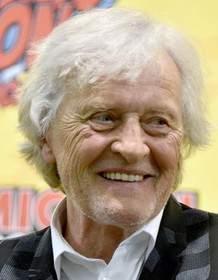
Rutger Hauer
Alexander 'Sasha' Pechersky
Joanna Pacula
Luka
David Miller
Mundek
Jack Shepherd
Itzhak Lichtman
Patti Love
Eda
Mihailo 'Miša' Janketić
Kapo Berliner
Klaus Grünberg
Sgt. Bauer
Eric P. Caspar
Capt. Franz Reichleitner
Linal Haft
Oberkapo Porchek
Hartmut Becker
Hauptscharführer Gustav Wagner
Jack Chissick
Hershel
Kurt Raab
Oberscharführer Karl Frenzel
Irfan Mensur
Kalimali
Jelena Žigon
Shlomo's Mother (uncredited)
Miroljub Lešo
Prisoner (uncredited)
Erol Kadić
Gardener (uncredited)
Ned Vukovic
Morris
Simon Gregor
Shlomo
Svetislav 'Bule' Goncić
Gardener
Wolfgang Bathke
Sgt. Hurst
Dragomir Stanojević
Guard (uncredited)
Predrag 'Preža' Milinković
Kapo Jacob
Božidar Pavićević 'Longa'
SS-Sturmmann Ivan Klatt (uncredited)
Rastislav Jović
Shlomo's Father (uncredited)
Peter Jonfield
Kapo Sturm
Emil Wolk
Samuel
Robert Gwilym
Chaim Engel
Hugo Bower
Sgt. Beckmann
Svetolik Nikačević
Old Man
Milan Erak
SS Corporal (uncredited)
Henning Gissel
Sgt. Fallaster
Predrag Todorović
Guard (uncredited)
Jason Norman
Toivi Blatt
Eli Nathenson
Moses Szmajzner
Henry Stolow
Lt. Niemann
Ullrich Haupt
Unterscharführer Wolf
Ellis van Maarseveen
Selma
Judith Sharp
Bajle
Zoran Stojiljković
Boris
Dijana Kržanić
Esther
Dejan Čavić
Kapo Spitz
Zlatan Fazlagić
Weiss
External Links and Streaming Options
Discover where to watch Escape from Sobibor online, including streaming platforms, rental options, and official sources. Compare reviews, ratings, and in-depth movie information across sites like IMDb, TMDb, Wikipedia or JustWatch.






Full Plot Summary and Ending Explained for Escape from Sobibor
Read the complete plot summary of Escape from Sobibor, including all major events, twists, and the full ending explained in detail. Explore key characters, themes, hidden meanings, and everything you need to understand the story from beginning to end.
A fresh train arrives at Sobibor, and the German commandant maintains the grim pretense that the camp is a work camp. A handful of prisoners with trades are spared to help run things—sorting the victims’ belongings, repairing shoes, recycling clothing, and melting precious metals into jewellery for the SS—while the rest are moved to a harsher part of the camp where a constant pillar of smoke marks the crematorium. Leon Feldhendler [Alan Arkin] emerges as a measured, careful leader among the prisoners, recognizing that the system’s cruel utilitarian logic will eventually seal the fate of all who remain. Alexander ‘Sasha’ Pechersky [Rutger Hauer], a new arrival with a Red Army background, brings military discipline and a galvanized resolve, and together they begin to organize resistance in the shadow of brutal daily routine.
The camp’s brutality is overseen by the commandant and his most sadistic officers, including Gustav Wagner [Hartmut Becker] and Karl Frenzel [Kurt Raab], who oversee the guards and enforce terror with relentless precision. The prisoners understand that their only chance lies in a bold plan: use the trust built among the workers, lure the German guards into the prisoners’ barracks and work huts one by one, and kill them quietly so the rest can be disabled or overwhelmed. If the guards can be eliminated, the question becomes whether the prisoners can simply march out when the moment arrives, trusting the Ukrainian guards to remain oblivious without orders or a clear threat to raise the alarm. Sasha and Feldhendler marshal the dissent and the determination of their fellow inmates, and the revolt gains a new dimension when a fresh wave of Red Army prisoners arrives, their leaders and combat experience proving invaluable to the insurgents.
For a time, the camp’s commanding officers depart with Wagner, leaving the most brutal officers away from the day-to-day pressure. On 14 October 1943, the trap is sprung: the prisoners lure the officers into the traps, and two dozen are killed in the initial strikes. Eleven Germans fall before the mutiny seems to falter; when Karl Frenzel uncovers one of his men’s bodies and raises the alarm, the plan looks doomed. Yet Pechersky and Feldhendler urge the inmates to carry on, and the prisoners surge toward the perimeter to escape. Some seize rifles from guards and fire toward the Ukrainian posts, but machine-gun fire from the towers and the surrounding minefield cut a deadly swath through the escaping crowd. Still, more than 300 Jews break into the forest, joining a perilous, sprawling escape that becomes the largest breakout from a European WWII prison camp.
Newscaster Howard K. Smith [Howard K. Smith] narrates the fates that the survivors recount on screen, grounding the assault in real voices and memories. Of the roughly 300 who escaped, only about 50 survive to see the war’s end in 1945. Pechersky makes it back to Soviet lines and survives the conflict, while Feldhendler is killed soon after the war by anti-Semitic Poles. Wagner ultimately flees to Brazil, where he is stabbed to death in 1980. In the aftermath, Sobibor is bulldozed and trees planted on the site to erase the memory of what happened there, leaving behind the grim legacy of Europe’s largest escape from a prisoner camp during World War II.

Coming soon on iOS and Android
The Plot Explained Mobile App
From blockbusters to hidden gems — dive into movie stories anytime, anywhere. Save your favorites, discover plots faster, and never miss a twist again.
Sign up to be the first to know when we launch. Your email stays private — always.
Explore the mobile appDiscover Film Music Concerts Near You – Live Orchestras Performing Iconic Movie Soundtracks
Immerse yourself in the magic of cinema with live orchestral performances of your favorite film scores. From sweeping Hollywood blockbusters and animated classics to epic fantasy soundtracks, our curated listings connect you to upcoming film music events worldwide.
Explore concert film screenings paired with full orchestra concerts, read detailed event information, and secure your tickets for unforgettable evenings celebrating legendary composers like John Williams, Hans Zimmer, and more.


Cars Featured in Escape from Sobibor
Explore all cars featured in Escape from Sobibor, including their makes, models, scenes they appear in, and their significance to the plot. A must-read for car enthusiasts and movie buffs alike.
Escape from Sobibor Themes and Keywords
Discover the central themes, ideas, and keywords that define the movie’s story, tone, and message. Analyze the film’s deeper meanings, genre influences, and recurring concepts.
Escape from Sobibor Other Names and Titles
Explore the various alternative titles, translations, and other names used for Escape from Sobibor across different regions and languages. Understand how the film is marketed and recognized worldwide.
Similar Movies To Escape from Sobibor You Should Know About
Browse a curated list of movies similar in genre, tone, characters, or story structure. Discover new titles like the one you're watching, perfect for fans of related plots, vibes, or cinematic styles.





Quick Links: Summary, Cast, Ratings, More

What's After the Movie?
Not sure whether to stay after the credits? Find out!
Check out our other apps:

SAT Sphere
Build confidence for the Digital SAT.

Mori Atlas
Discover wild places worth protecting.

Luntero
Search smarter for a home in Amsterdam.

Plot Explained
Unravel movie endings and hidden clues.

Pokechamp
Dive into Pokémon data and battle logic.

Driving Theory
Get ready for your European theory test.

Movie Dust
Plan your next cinema trip with ease.

Musemap
Find art and culture as you travel.

Selkobase
Compare credentials before committing.

Local Manual
Turn an unfamiliar country into practical next steps.

Lernavi
Compare school systems before your next move.

GymRoam
Find a workout stop wherever your plans take you.
Explore Our Movie Platform
New Movie Releases (2026)
Famous Movie Actors
Top Film Production Studios
Movie Plot Summaries & Endings
Major Movie Awards & Winners
Best Concert Films & Music Documentaries
Movie Collections and Curated Lists
© 2026 What's After the Movie. All rights reserved.
Privacy Policy