
I Used to Be Funny (2024): Cast, Ratings, Box Office & Where to Watch
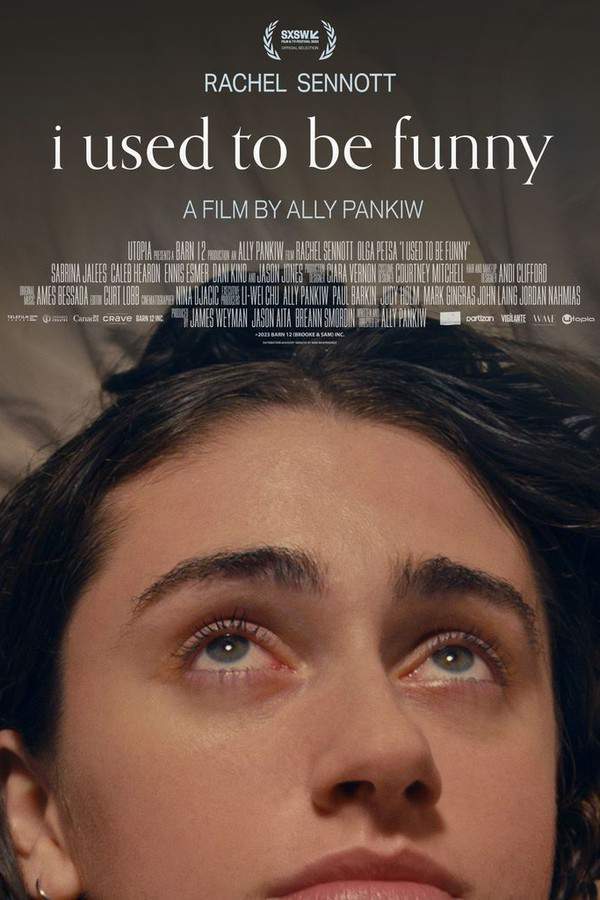
I Used to Be Funny is a 2024 comedy drama directed by Ally Pankiw, starring Rachel Sennott as Sam Cowell, Olga Petsa and Jason Jones. It runs 1 hour 45 minutes and earned $171,756 worldwide on a $2 million budget. Critics gave it 74 on Metacritic, and IMDb users rate it 6.6/10. Stream it on Amazon Prime Video and Kanopy, or rent or buy it on Amazon Video and Apple TV Store.
- Released
- Runtime
- 1h 45m (105 min)
- Director
- Ally Pankiw
- Original language
-
 English
 - Studio
- Barn 12
- Budget
- $2M
- After the credits
- No No extra scene
What Is I Used to Be Funny About?
The premise of I Used to Be Funny without spoilers. The whole story and the ending explained are in the plot summary further down.
When a former charge unexpectedly goes missing, aspiring comedian and au pair Sam Cowell’s life is thrown into turmoil. Haunted by PTSD and grappling with anxieties, she must confront her inner demons while joining the search for Brooke. This journey forces her to face her past and offers a chance to rediscover her voice and find her way forward.
I Used to Be Funny Themes & Keywords
· 43 tags- based on short film
- dramedy
- friendship
- pop star
- life
- piano
- drum
- city
- song
- friend
- buddy comedy
- autism
+31 more Show fewer
- autistic man
- young
- 18 year old man
- 19 year old man
- 15 year old boy
- year 2002
- year 2022
- 20 years later
- 19th birthday
- birthday
- boy band
- concert
- reference to tiktok
- reference to john lennon
- reference to paul mccartney
- reference to dave grohl
- reference to chad smith
- reference to jack dejohnette
- reference to keith jarrett
- reference to johann sebastian bach
- smoothie
- taking a selfie
- jammie dodgers
- music therapy
- drummer
- keyboard
- cemetery
- funeral
- ironing board
- fistfight
- bar fight
Where to Watch I Used to Be Funny
Stream it on Amazon Prime Video and Kanopy, or rent or buy it from Amazon Video and Apple TV Store. US availability and prices from JustWatch.
Stream 5
 Amazon Prime Video
  Amazon Prime Video with Ads
  Kanopy
  Netflix
  Netflix Standard with Ads



Streaming availability in the US, powered by 
I Used to Be Funny Cast & Characters
Rachel Sennott leads the cast as Sam Cowell, with Olga Petsa as Brooke Renner and Jason Jones as Cameron Renner. Directed by Ally Pankiw; 20 actors are credited in all.
- Director Ally Pankiw
-
 Rachel Sennott as Sam Cowell
 -
 Olga Petsa as Brooke Renner
 -
 Jason Jones as Cameron Renner
 -
 Dan Beirne as Tim
Also Starring in I Used to Be Funny
· 16 more- Dani Kind Jill
- Ennis Esmer Noah
- Kathy Imrie Judge Mathers
- Caleb Hearon Philip
- Sabrina Jalees Paige
- Marvin Kaye Officer Jim Gerrard
- Stephen Alexander Nathan
- Janice Mendes Female Police Officer
- Miguel Rivas Officer Conrad Lawrence
- Paloma Nuñez Female Defense Lawyer
- Matia Jackett Candace
- Hannah Spear Laura Renner
- Hoodo Hersi Zara
- Daniel Woodrow Waiter
- D.J. Mausner School Receptionist
- Anna Floros News Anchor
I Used to Be Funny Reviews & Ratings
Critics gave I Used to Be Funny 74 on Metacritic, and IMDb users rate it 6.6/10. Our Echo Score gives it 78/100, strongest in character & emotion (90) and weakest in rewatch factor (60).
I Used to Be Funny Echo Score Breakdown
A strong lead performance and assured direction anchor a film whose narrative structure occasionally falters. Reviews consistently note Rachel Sennott’s nuanced portrayal and Ally Pankiw’s adept visual storytelling, while also pointing to predictable plot turns and an uneven third act. The film’s emotional depth and moments of tension often shine, even as non-linear pacing can feel disjointed. Overall, the combination of character work and thematic ambition leaves a favorable impression.
Our own 0–100 rating, built from five aspects: art, character, story, the sensory experience and how well a film rewatches.
- Art & Craft 80
In terms of Art & Craft, Pankiw’s direction consistently earns praise for its confident staging and thoughtful use of setting. Cinematography captures both intimate close-ups and scenic backdrops, notably around Niagara Falls. Some critics note occasional editorial clumsiness in the third act, but production design and visual framing provide a cohesive aesthetic. The overall craft contributes positively despite sporadic moments of uneven execution.
- Character & Emotion 90
When it comes to Character & Emotion, Rachel Sennott’s lead performance stands out for its vulnerability beneath a confident exterior. Supporting roles deliver believable chemistry and a grounded sense of camaraderie among roommates. Emotional resonance is heightened by authentic dialogue and nuanced shifts between humor and trauma. Overall, character depth remains a central strength that anchors the film’s thematic journey.
- Story & Flow 65
In terms of Story & Flow, the narrative earns points for thematic ambition and a mystery-like structure that unfolds gradually. Reviews highlight thoughtful reveals and emotional realism but also point to predictable third-act twists and occasionally convoluted pacing. Non-linear transitions sometimes create confusion around timelines. Overall, the story balances engagement and thematic depth while suffering from uneven coherence.
- Sensory Experience 70
When considering Sensory Experience, the film offers an effective blend of audio and visual elements. The haunting score and naturalistic sound design support the emotional tone, while cinematography alternates between intimate interiors and striking location shots of Niagara Falls. Some viewers note occasional overuse of profanity impacting tonal consistency. Overall, the sensory palette enhances mood, even if it can feel occasionally abrasive.
- Rewatch Factor 60
Regarding Rewatch Factor, the film’s layered themes and strong performance suggest potential rewards on subsequent viewings. Subtle details in dialogue and the gradual unfolding of plot elements may gain clarity with familiarity. However, uneven pacing and narrative predictability could limit repeated enjoyment for some audiences. Overall, the movie offers enough nuance for a second look, though its structural flaws may temper full rewatch appeal.
-
 IMDb
IMDb 6.6 /10
12667 votes
See on IMDb -
 Metacritic
 74 Metascore
User score 6.9
See on Metacritic -
 TMDB
TMDB 67% User score
See on TMDB
I Used to Be Funny Plot Summary & Ending Explained
What happens in I Used to Be Funny from start to finish, spoilers included, with a timeline of 15 key events and the ending explained. The opening is below; the full summary is a 3-minute read.
Spoilers ahead
While Vince, portrayed by Ed Skrein, once reveled in the spotlight with his band Stereo Dreams alongside Austin (Eoin Macken), two decades later, he finds himself struggling as an unemployed musician. Determined to reignite his passion for music, Vince begins busking on the streets but faces constant rejection when seeking gigs at local bars. Despite his attempts to showcase his new compositions to music shops, he receives no positive feedback. In stark contrast, Austin has skyrocketed to fame, preparing to release his final album and embark on a farewell tour.
Full summary
The whole story of I Used to Be Funny, scene by scene, with the ending explained
I Used to Be Funny Box Office & Budget
I Used to Be Funny grossed $171,756 worldwide on a $2 million budget, 9% of what it cost.
Worldwide gross
$171.8K
9% of its budget back
- US & Canada
- $171.8K
- Budget
- $2M
I Used to Be Funny Trailers & Videos
2 videos: 1 trailer and 1 featurette.
- Featurette Q&A with Dan Levy & Ally Pankiw
How Well Do You Know I Used to Be Funny?
10 questions about the story, each with a hint if you get stuck. Pick an answer to see whether you were right.
Question 1 of 10
- Question 1: not answered
- Question 2: not answered
- Question 3: not answered
- Question 4: not answered
- Question 5: not answered
- Question 6: not answered
- Question 7: not answered
- Question 8: not answered
- Question 9: not answered
- Question 10: not answered
What was Vince's former band called?
I Used to Be Funny Also Known As
12 alternative titles, including “Brooke & Sam” and “Bývala jsem vtipná”.
- Also known as
-
- Brooke & Sam
- Bývala jsem vtipná
- Antes era divertido
- Régen vicces voltam
- Раньше я была смешной
- 我以前很有趣
- Колись я була смішною
- Sam fait plus rire
- Būdavau juokinga
- Żarty się skończyły
- Am fost amuzantă
- Преди бях забавна
Seen I Used to Be Funny?
Movies Like I Used to Be Funny
Films with a similar story, tone or audience, including I Used to Be Famous, I Used to Be Darker and I Used to Go Here.








I Used to Be Funny FAQ: Where to Watch, Cast & Box Office
Runtime, release date, director, cast, where to watch, box office, ratings and post-credit scenes of I Used to Be Funny, each answered in a sentence.
How long is I Used to Be Funny?
I Used to Be Funny runs 1 hour 45 minutes (105 minutes).
When was I Used to Be Funny released?
I Used to Be Funny was released on June 7, 2024.
Who directed I Used to Be Funny?
I Used to Be Funny was directed by Ally Pankiw.
More films by Ally Pankiw Who is in the cast of I Used to Be Funny?
I Used to Be Funny stars Rachel Sennott as Sam Cowell, Olga Petsa as Brooke Renner and Jason Jones as Cameron Renner, among 20 credited actors.
Where can I watch I Used to Be Funny?
In the US, I Used to Be Funny is streaming on Amazon Prime Video, Kanopy and Netflix and available to rent or buy on Amazon Video, Apple TV Store and Fandango At Home (availability from JustWatch).
How much did I Used to Be Funny make at the box office?
I Used to Be Funny grossed $171,756 worldwide on a budget of $2 million.
How is I Used to Be Funny rated?
I Used to Be Funny has 6.6/10 on IMDb, 74 on Metacritic and 67% on TMDB.
Does I Used to Be Funny have a post-credit scene?
No. I Used to Be Funny has no extra scene during or after the credits.
Coming soon to your phone
The Plot Explained Movie Summary App
From blockbusters to hidden gems: plot summaries, endings explained and timelines on your phone. Save your favorites and never miss a twist again.
Be the first to know when it launches. Your email stays private, always. Learn more about the app
