Harbin 2024


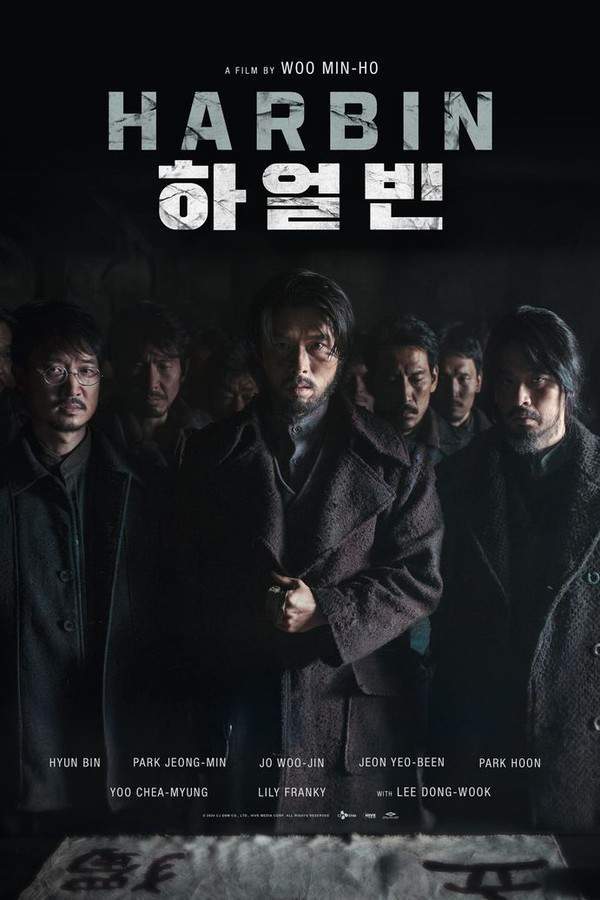
Following Korea's forced colonization by Japan in 1909, a group of freedom fighters conspires to assassinate the Japanese prime minister in a bold attempt to reclaim their independence.

Does Harbin have end credit scenes?
No!
Harbin does not have end credit scenes. You can leave when the credits roll.
Where to Watch Harbin
See current US streaming, rental, and purchase options for Harbin (2024) via JustWatch.

Amazon Prime Video
HD
Amazon Prime Video with Ads
HD
Hi-YAH Amazon Channel
HD
Hulu
HD
Fawesome
HD
Hoopla
SD
Kanopy
HD
Amasian TV
HD
Plex
HD
Plex Channel
HD
The Roku Channel
HD
Tubi TV
SD
YouTube Free
HD
Amazon Video
HD
Apple TV Store
4K
Fandango At Home
SD
FlixFling
HD
Google Play Movies
SD
OnDemandKorea
HD
YouTube
SD Streaming availability powered by 
Meet the Full Cast and Actors of Harbin
Explore the complete cast of Harbin, including both lead and supporting actors. Learn who plays each character, discover their past roles and achievements, and find out what makes this ensemble cast stand out in the world of film and television.

External Links and Streaming Options
Discover where to watch Harbin online, including streaming platforms, rental options, and official sources. Compare reviews, ratings, and in-depth movie information across sites like IMDb, TMDb, Wikipedia or Rotten Tomatoes.









Ratings and Reviews for Harbin
See how Harbin is rated across major platforms like IMDb, Metacritic, and TMDb. Compare audience scores and critic reviews to understand where Harbin stands among top-rated movies in its genre.

The Movie Echo Score
Harbin delivers a visually striking historical drama that resonates with many viewers through its atmospheric cinematography and strong lead performance, yet its narrative pacing and character depth divide opinion. Positive remarks highlight the film's meticulous production design, compelling music score, and Hyun Bin's nuanced acting, while criticism centers on a sluggish storyline and occasional lack of narrative complexity. The combined effect yields a solid but imperfect experience that appeals especially to audiences interested in Korean history.
The Movie Echo Score Breakdown for Harbin

Art & Craft
In terms of art and craft, the film excels with striking lighting and camera work that create a distinctive noir ambience. Reviewers commend the realistic battle sequences and meticulous visual detail, noting the effective use of low-key illumination. However, some find the prolonged, low-light shots difficult to follow and occasionally superfluous. Overall, the direction and production design are regarded as a strong component of the film.

Character & Emotion
When evaluating character and emotion, the lead actor receives widespread praise for a nuanced portrayal, and the supporting cast is noted as capable. Nonetheless, several comments point to insufficient backstory and depth for many figures, citing a shallow emotional core. The mixed feedback reflects both compelling performances and a perceived lack of character development, resulting in a moderately positive assessment of this aspect.

Story & Flow
Story and flow receive mixed reactions; the plot’s historical premise and occasional suspenseful twists are acknowledged as engaging. Critics, however, describe the pacing as deliberately slow and the narrative as overly linear and simple, leading to moments of dull exposition. The combination of solid thematic material with uneven execution places the storytelling in a middling range.

Sensory Experience
Sensory experience is largely praised, with the film's soundtrack, sound design, and visual style contributing to an immersive atmosphere. Reviewers highlight the effective use of stark lighting, period-appropriate music, and authentic location shooting that reinforce the historical setting. Minor complaints about low visibility in some scenes do not outweigh the overall positive sensory impression.

Rewatch Factor
Rewatch factor appears moderate; many viewers find the film’s suspenseful moments and historical significance compelling enough for a second viewing. Some consider it overrated or overly straightforward, which may reduce repeat interest. The balance of strong visual and emotional elements against a slower narrative yields a fair but not enthusiastic replay value.


%
TOMATOMETER

0%
User Score

6.3 /10
IMDb Rating

/5
Take the Ultimate Harbin Movie Quiz
Challenge your knowledge of Harbin with this fun and interactive movie quiz. Test yourself on key plot points, iconic characters, hidden details, and memorable moments to see how well you really know the film.
Harbin (2024) Quiz: Test your knowledge of the 2024 film Harbin, which dramatizes the Korean independence struggle and the assassination of Itō Hirobumi.
Who is the main Korean resistance fighter leading the plot to assassinate Itō Hirobumi?
Full Plot Summary and Ending Explained for Harbin
Read the complete plot summary of Harbin, including all major events, twists, and the full ending explained in detail. Explore key characters, themes, hidden meanings, and everything you need to understand the story from beginning to end.
In 1909, Ahn Jung-geun, Hyun Bin, a steadfast resistance fighter opposing Korea’s subjugation by Japan, endures the brutal chill of the Tumen River as he presses toward a bold, dangerous plan. The journey is only the beginning of a larger test of loyalty and strategy, because his comrades in the resistance begin to doubt his whereabouts and his intentions. When Ahn finally returns, his authority is questioned; many of the fighters who once followed him have fallen in a recent, audacious strike against Japanese forces, leaving the group raw and uncertain about its leadership.
Ahn’s most principled stance—his refusal to commit war crimes by executing prisoners of war, including the officer Tatsuo Mori, and his decision to free them—haunts the present danger, and Mori relentlessly tracks the group, closing the circle with a brutal, cannon-blasted defeat. This brutal memory of past choices drives Ahn to seek a form of redemption through action that could shift the balance of power: assassinate Itō Hirobumi, the Prime Minister of Japan and a former Resident General of Korea. Itō is moving toward Harbin, traveling by train from China to Russian-controlled Harbin, where he plans to meet with Vladimir Kokovtsov, the Russian Finance Minister, to discuss Korea’s future in a tense regional balance of power. Here, Ahn’s mission intersects with a larger geopolitical chess game.
The mission rises in complexity as a small, determined team forms around him. Ahn leads a group that includes Woo Deok-soon, and Kim Sang-hyun, toward Vladivostok by train, hoping to intercept Itō before he can reach Harbin. A safety check at a first-class carriage becomes a spark for disaster: a brawl erupts after the conductor overhears their Korean conversation, and Kim is knocked out of the train window while Ahn escapes, setting off a chain of regroupings and relay arrivals at a Vladivostok safehouse. There, the team gathers with reinforcements from Korea, only to see a shift in leadership as new voices push forward, with Woo arriving last to join the renewed group.
The search for explosive devices grows urgent, and the team turns to Ms. Gong, a former associate in the independence movement who has become an arms smuggler. Gong, [Jeon Yeo-been], tries to provide the needed explosives, but the clock runs short; when an expedient is found, Gong secures them from her connections in Jilin through her brother-in-law, a former Korean independence fighter-turned bandit. The delay complicates plans, making it unlikely that Itō’s train carriage can be attacked at Changchun as originally hoped, forcing the operation to shift toward a broader theater in China.
The window to act narrows further as Mori and Japanese troops close in, aided by Russian forces, and the team fears a mole among their ranks. On the train toward Harbin, a sting operation is launched with false information to probe whether Itō would be targeted at a railway station where he would switch trains. The operation exposes a betrayal: Kim Sang-hyun is the traitor.
As the altered plan unfolds, Woo and Kim converge at the change station, only to be met by Mori’s troops. A confrontation erupts, and Kim breaks down under the pressure before Woo can act. A flashback reveals Kim’s capture and torture by Mori, including exposure to gas, and Mori’s relentless interrogation about Ahn’s whereabouts. The pursuit continues, and Mori realigns his focus, realizing that Harbin is now the likely focal point of the conspiracy.
At Harbin’s railway station, Ahn receives a briefing from Gong and then stalks the dignitaries as they move through a crowded platform. Mori closes in, yet Gong interrupts the pursuit by knocking him aside, creating an opening for Ahn. In a decisive moment, Ahn shoots Itō repeatedly, shouting a defiant declaration in Russian—Long live Korea!—before being detained by authorities.
The news of Itō’s assassination reverberates through the region, sealing Ahn’s fate as a martyr of the independence cause by March 1910 when he is hanged. In the aftermath, Mori seeks to use Kim to infiltrate Kim Ku’s independence movement, but Kim defeats him, rejoining Gong and a recently released Woo. A pivotal flashback hints that Ahn had urged Woo to give Kim a second chance, underscoring the complexities of trust and redemption in a struggle marked by sacrifice and hard-won courage.
The film closes with Ahn back on the frozen Tumen River, reflecting on the stubborn, unyielding need to keep fighting for Korea’s freedom, even when the outlook seems bleak. The landscape—white and encasing—echoes a life spent in the margins of larger powers, where acts of resistance must endure across time, space, and the ever-present threat of betrayal and loss.

Coming soon on iOS and Android
The Plot Explained Mobile App
From blockbusters to hidden gems — dive into movie stories anytime, anywhere. Save your favorites, discover plots faster, and never miss a twist again.
Sign up to be the first to know when we launch. Your email stays private — always.
Explore the mobile appWatch Trailers, Clips & Behind-the-Scenes for Harbin
Watch official trailers, exclusive clips, cast interviews, and behind-the-scenes footage from Harbin. Dive deeper into the making of the film, its standout moments, and key production insights.
Harbin Themes and Keywords
Discover the central themes, ideas, and keywords that define the movie’s story, tone, and message. Analyze the film’s deeper meanings, genre influences, and recurring concepts.
Harbin Other Names and Titles
Explore the various alternative titles, translations, and other names used for Harbin across different regions and languages. Understand how the film is marketed and recognized worldwide.
Similar Movies To Harbin You Should Know About
Browse a curated list of movies similar in genre, tone, characters, or story structure. Discover new titles like the one you're watching, perfect for fans of related plots, vibes, or cinematic styles.







Quick Links: Summary, Cast, Ratings, More

What's After the Movie?
Not sure whether to stay after the credits? Find out!
Check out our other apps:

SAT Sphere
Build confidence for the Digital SAT.

Mori Atlas
Discover wild places worth protecting.

Luntero
Search smarter for a home in Amsterdam.

Plot Explained
Unravel movie endings and hidden clues.

Pokechamp
Dive into Pokémon data and battle logic.

Driving Theory
Get ready for your European theory test.

Movie Dust
Plan your next cinema trip with ease.

Musemap
Find art and culture as you travel.

Selkobase
Compare credentials before committing.

Local Manual
Turn an unfamiliar country into practical next steps.

Lernavi
Compare school systems before your next move.

GymRoam
Find a workout stop wherever your plans take you.
Explore Our Movie Platform
New Movie Releases (2026)
Famous Movie Actors
Top Film Production Studios
Movie Plot Summaries & Endings
Major Movie Awards & Winners
Best Concert Films & Music Documentaries
Movie Collections and Curated Lists
© 2026 What's After the Movie. All rights reserved.
Privacy Policy