Goya's Ghosts 2007


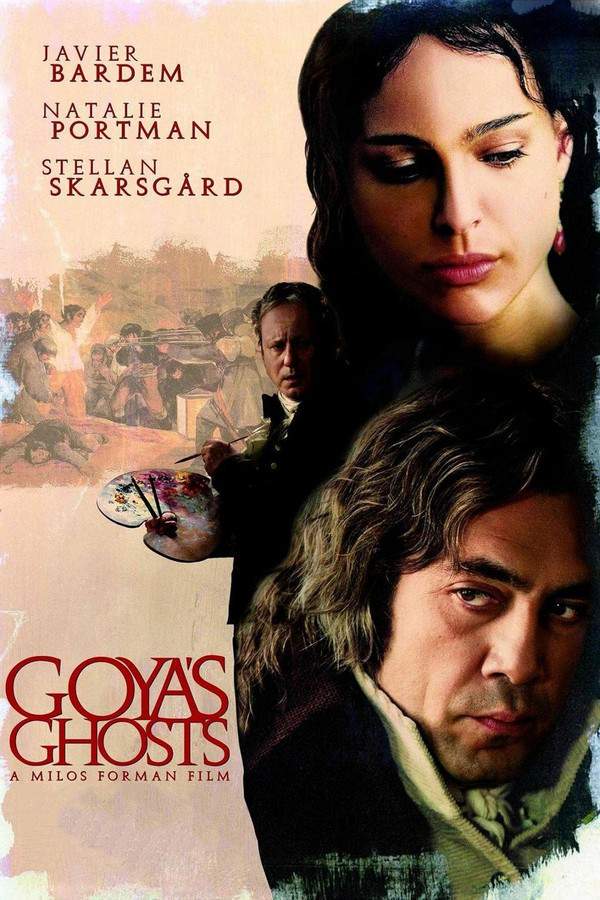
During Napoleon's invasion of 18th-century Spain, the life of artist Francisco Goya is profoundly affected by the conflict and its impact on the nation. As he documents the beauty and violence surrounding him, Goya becomes entangled in a complex mystery when his muse, Ines, is wrongly accused of heresy. A shadowy and enigmatic Brother Lorenzo leads the accusations, drawing Goya into a dangerous web of intrigue and forcing him to confront the dark side of human nature.


Does Goya's Ghosts have end credit scenes?
No!
Goya's Ghosts does not have end credit scenes. You can leave when the credits roll.
Where to Watch Goya's Ghosts
See current US streaming, rental, and purchase options for Goya's Ghosts (2007) via JustWatch.











Meet the Full Cast and Actors of Goya's Ghosts
Explore the complete cast of Goya's Ghosts, including both lead and supporting actors. Learn who plays each character, discover their past roles and achievements, and find out what makes this ensemble cast stand out in the world of film and television.



External Links and Streaming Options
Discover where to watch Goya's Ghosts online, including streaming platforms, rental options, and official sources. Compare reviews, ratings, and in-depth movie information across sites like IMDb, TMDb, Wikipedia or Rotten Tomatoes.











Ratings and Reviews for Goya's Ghosts
See how Goya's Ghosts is rated across major platforms like IMDb, Metacritic, and TMDb. Compare audience scores and critic reviews to understand where Goya's Ghosts stands among top-rated movies in its genre.

52
Metascore
6.5
User Score


30%
TOMATOMETER

57%
User Score

66
%
User Score
Take the Ultimate Goya's Ghosts Movie Quiz
Challenge your knowledge of Goya's Ghosts with this fun and interactive movie quiz. Test yourself on key plot points, iconic characters, hidden details, and memorable moments to see how well you really know the film.
Goya's Ghosts Quiz: Test your knowledge on the historical drama 'Goya's Ghosts' and its complex characters and themes.
In what year is 'Goya's Ghosts' set?
Full Plot Summary and Ending Explained for Goya's Ghosts
Read the complete plot summary of Goya's Ghosts, including all major events, twists, and the full ending explained in detail. Explore key characters, themes, hidden meanings, and everything you need to understand the story from beginning to end.
In the tumultuous year of 1792, Spain is gripped by the turbulence of the French Revolution. Francisco Goya, a celebrated painter, is tasked with capturing the likenesses of Spain’s elite as the Official Court Painter. Yet, his artistry becomes a point of contention for the Spanish Inquisition, which takes issue with some of Goya’s provocative works.
When Brother Lorenzo Casamares, portrayed by Stellan Skarsgård, comes to Goya’s defense, he later enlists him to paint his portrait. Lorenzo argues that Goya’s art is not malicious but merely reflects the darker aspects of humanity. He urges the Church to combat anti-Catholic sentiments more aggressively and is granted authority to intensify the Inquisition’s activities.
During the portrait sitting, Lorenzo observes a painting of Inés, the daughter of wealthy merchant Tomás Bilbatúa. Shortly thereafter, Inés is apprehended by Holy Office spies—trained by Lorenzo—for allegedly “Judaizing” by refusing to eat pork. She endures a harrowing ordeal involving torture until she confesses and is subsequently imprisoned.
Her desperate father turns to Goya for assistance. In a complex game of deception and desire, Lorenzo visits Inés in her dungeon cell, offering her a semblance of comfort, yet he is internally conflicted by his lust for her. She prays with him, embodying a moment of fragile hope.
Later at a dinner hosted by the Bilbatúa family, Lorenzo passionately defends the use of torture, claiming that innocence will be upheld by divine intervention. In contrast, Goya and Bilbatúa assert that coerced confessions do not imply guilt. In an act of retaliation, Bilbatúa subjects Lorenzo to the same torture he endorses, forcing him to confess to ridiculous claims, including that he is a monkey. As a pact for Inés’s freedom, a hefty donation is offered to the Church, but it is all in vain as the Inquisitor-General, Father Gregorio, refuses to release her.
In an abhorrent twist, Lorenzo again visits Inés under the pretense of prayer, but he commits the atrocity of raping her. Meanwhile, the document of Lorenzo’s ludicrous confession finds its way into the hands of King Charles IV, who finds it amusing yet solemnly promises to consider Inés’s plight. However, when the Holy Office comes to apprehend Lorenzo, he narrowly escapes, and Goya’s portrait of him meets a grim fate as it is burned publicly.
Fast forward fifteen years, Goya—now deaf—finds himself at the pinnacle of his artistic expression. The invasion of Spain by French forces results in the eradication of the Inquisition and the liberation of its prisoners. Lorenzo, having fled to France, has become a fervent supporter of the French Revolution, now prosecuting his former comrades in the Inquisition. This ideological shift echoes the historical character Juan Antonio Llorente, who also turned against the Inquisition.
Inés, however, languishes in a dungeon—the ravages of time have taken their toll on her sanity. After giving birth to a daughter whose fate remains unknown, she returns to find her family dead and implores Goya for aid in locating her child. Unbeknownst to her, Lorenzo is the father, and he subsequently commits her to an asylum to conceal his shame.
While on a quest for his lost daughter, Lorenzo learns from the Inquisitor-General that any child born in captivity would have likely been abandoned. As Goya sketches in a park, he encounters a prostitute named Alicia, who bears a striking resemblance to Inés. Driven by compassion, he seeks to reunite Inés with her daughter, but Lorenzo, ever fearful, attempts to persuade Alicia to leave Spain instead.
Tragedy unfolds when soldiers—under Lorenzo’s orders—raid a tavern where Goya attempts to spirit Inés away, capturing the prostitutes and putting their fates in jeopardy. Amidst the chaos, the mentally deteriorating Inés stumbles upon a newborn left behind during the raid, mistaking it for her lost child.
As the tides of war turn against the French, the British, bolstered by Spanish allies, press on. The desperate state of affairs leads to Lorenzo being caught as he attempts to escape. As Spain reinstates the Inquisition, Lorenzo faces a trial that flips their roles, with the former Inquisitor-General now urging him to repent as he is led to execution, draped in a sanbenito adorned with flames—a symbol of his eternal damnation.
On the gallows, Lorenzo notices Alicia, now beside a British officer, openly mocking him. Inés emerges from the crowd, revealing the child she believes to be their daughter—a poignant moment filled with twisted irony. Despite pleas for repentance, Lorenzo remains defiant as he meets his grim fate, the dose of justice served cold. The film concludes with a haunting image of Inés carrying his child while Goya, heartbroken yet resolute, trails behind, calling for her, and she glances back, a fleeting smile gracing her face, before walking alongside the cart bearing Lorenzo’s lifeless body.

Coming soon on iOS and Android
The Plot Explained Mobile App
From blockbusters to hidden gems — dive into movie stories anytime, anywhere. Save your favorites, discover plots faster, and never miss a twist again.
Sign up to be the first to know when we launch. Your email stays private — always.
Explore the mobile appWatch Trailers, Clips & Behind-the-Scenes for Goya's Ghosts
Watch official trailers, exclusive clips, cast interviews, and behind-the-scenes footage from Goya's Ghosts. Dive deeper into the making of the film, its standout moments, and key production insights.
Cars Featured in Goya's Ghosts
Explore all cars featured in Goya's Ghosts, including their makes, models, scenes they appear in, and their significance to the plot. A must-read for car enthusiasts and movie buffs alike.
Goya's Ghosts Other Names and Titles
Explore the various alternative titles, translations, and other names used for Goya's Ghosts across different regions and languages. Understand how the film is marketed and recognized worldwide.
Quick Links: Summary, Cast, Ratings, More

What's After the Movie?
Not sure whether to stay after the credits? Find out!
Check out our other apps:

SAT Sphere
Build confidence for the Digital SAT.

Mori Atlas
Discover wild places worth protecting.

Luntero
Search smarter for a home in Amsterdam.

Plot Explained
Unravel movie endings and hidden clues.

Pokechamp
Dive into Pokémon data and battle logic.

Driving Theory
Get ready for your European theory test.

Movie Dust
Plan your next cinema trip with ease.

Musemap
Find art and culture as you travel.

Selkobase
Compare credentials before committing.

Local Manual
Turn an unfamiliar country into practical next steps.

Lernavi
Compare school systems before your next move.

GymRoam
Find a workout stop wherever your plans take you.
Explore Our Movie Platform
New Movie Releases (2026)
Famous Movie Actors
Top Film Production Studios
Movie Plot Summaries & Endings
Major Movie Awards & Winners
Best Concert Films & Music Documentaries
Movie Collections and Curated Lists
© 2026 What's After the Movie. All rights reserved.
Privacy Policy